


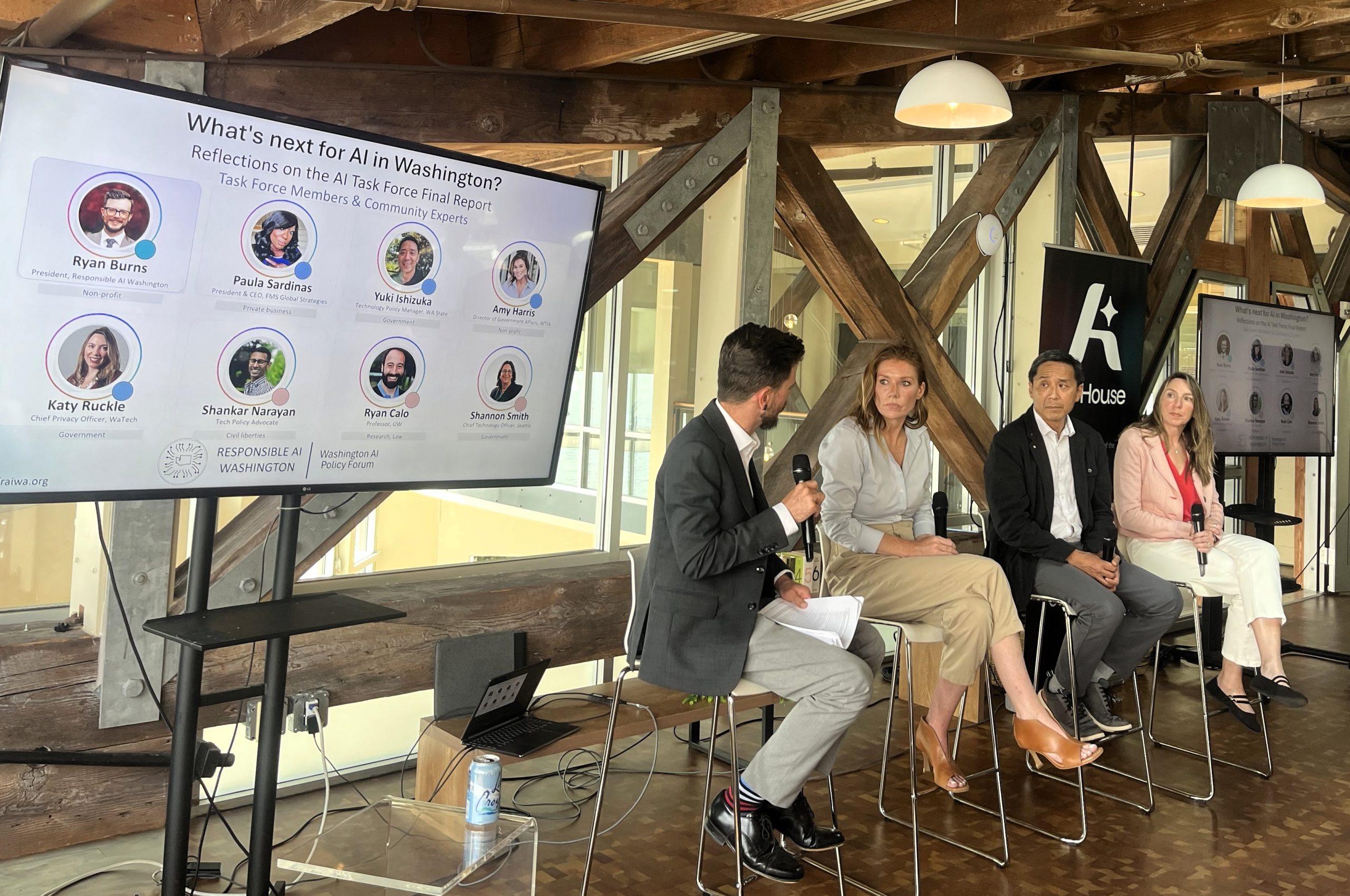
The friction between lofty ideals and political reality became unmistakable when looking at which recommendations actually survived the legislative gauntlet. Washington state did manage to pass its first pioneering AI regulations, but they were notably narrow, consumer-centric interventions. These new laws require companion chatbots to explicitly remind vulnerable users that they are interacting with lines of code rather than a flesh-and-blood human, and they prevent medical insurance companies from turning down critical patient coverage based solely on cold, automated algorithmic assessments. While these are vital human protections, the broader, more systemic changes proposed by the task force were quietly smothered in the legislative shadows. Crucial recommendations aimed at regulating AI in “high-risk” decision-making arenas—such as hiring algorithms, rental housing applications, criminal justice sentencing, and dynamic pricing—failed to make it to a vote, leaving Washington lagging behind states like California and Colorado. Efforts to force developers to disclose the proprietary datasets used to train their massive models were rejected, as were comprehensive guidelines designed to protect workers from invasive algorithmic surveillance in the office. State Representative Mia Gregerson openly lamented this gap, pointing out that as a tech-heavy powerhouse home to global giants, Washington bears an elevated moral responsibility to lead, yet currently finds itself lagging behind. Yuki Ishizuka of the Attorney General’s Office explained that broad governance bills suffer from a lack of public empathy; it is incredibly difficult to rally ordinary citizens around abstract concepts of algorithmic transparency, whereas the tangible dread of an AI denying your cancer treatment or a chatbot tricking a lonely teenager instantly commands political willpower. Consequently, the tech lobby succeeded in framing systemic regulations as burdensome “procedural hoops,” leaving the state with a fragmented patchwork of laws that address the symptoms of technological disruption rather than its root causes.
This legislative divide directly reflects the deep anxiety felt by the entrepreneurial community, particularly the founders of small-scale AI startups who crowded into the AI House. For these creators, the threat of overregulation is not an abstract corporate grievance, but an existential threat to their survival. Managing Director Jacob Colker highlighted a critical distinction that policymakers often overlook: a nimble, five-person startup operating on a shoestring budget simply does not possess the army of compliance officers, corporate lawyers, and policy advisors that a trillion-dollar behemoth like Microsoft or Meta employs. Every new compliance hurdle, every mandatory disclosure, and every threat of litigation represents a massive financial drain that could easily bankrupt a young company before it even launches its first product. Yet, advocates for public safety warn against creating convenient legal loopholes for self-proclaimed “small tech.” Jai Jaisimha, a veteran startup founder and co-founder of the Transparency Coalition, argued passionately that claiming exemptions based on proprietary “trade secrets” or data complexity is a dangerous cop-out that implies AI should somehow be exempt from the basic ethical standards that govern every other mature industry on earth. He reminded the audience that consumer protection and data transparency are standard, non-negotiable costs of doing business, not unfair punishments. Even though the most sweeping, costly bills failed to pass this session, the narrow regulations that did become law still carry devastating legal weight. For instance, the new companion chatbot law is poised to become a goldmine for class-action attorneys. Under the legal principle of “negligence per se,” any developer who fails to provide the required human-identity disclosure will find themselves legally defenseless, as plaintiffs will no longer need to prove complex harm, but merely point to the statutory violation. Furthermore, non-compliance is automatically classified as a deceptive practice under the state’s Consumer Protection Act, exposing small developers to massive financial penalties.
To navigate this perilous new legal landscape, startup founders must understand how the state plans to wield its enforcement power, a dynamic colorfully illustrated by University of Washington law professor Ryan Calo. He compared the state Attorney General’s formidable enforcement apparatus to the mythical “Eye of Sauron” from fantasy literature. The Attorney General, despite possessing immense statutory power, operates with limited resources and cannot possibly police every minor infraction committed across the digital landscape. Consequently, the “Eye” is far more likely to focus its intense, destructive gaze on high-profile targets like Meta or Google rather than an obscure, five-person startup working out of a local co-working space. However, this offers little comfort to small-scale developers who must still live in the shadow of potential ruin, knowing that any disgruntled customer or opportunistic plaintiff’s attorney can weaponize the new Consumer Protection Act against them. The psychological toll of this uncertainty is profound, fostering a culture of defensive engineering where developers spend more time consulting with lawyers than writing innovative code. This legal friction highlights a deeper, systemic failure: our regulatory models are still built for the physical era, trying to apply rigid, punitive frameworks to a highly fluid, decentralized digital medium. The task force’s ultimate legacy may not be the laws it helped pass, but the stark realization that traditional enforcement mechanisms are ill-equipped for the AI age. By turning simple regulatory infractions into automatic avenues for high-stakes litigation, the state has created an environment of heightened hostility. While this may successfully deter bad actors and force a degree of ethical caution among the tech elite, it also risks chilling the very spirit of grassroots experimentation that made the Pacific Northwest a global hub of technological progress in the first place, leaving local innovators feeling caught in a political pincer movement.
Adding to this intense domestic struggle is a brewing geopolitical storm originating from the federal government in Washington, D.C., which threatens to dismantle state-level efforts entirely. A sweeping executive order issued by the Trump administration has sent shockwaves through state capitols across the nation by calling for a “minimally-burdensome” national AI policy designed to preempt and invalidate localized state regulations. Under the aggressive banner of preserving and enhancing “the United States’ global AI dominance,” the federal government has established a dedicated AI Litigation Task Force to actively challenge any state laws deemed too restrictive. To enforce compliance, the administration has even threatened to withhold vital federal broadband infrastructure funding from non-compliant states, explicitly targeting pioneering states like Colorado, which had passed the country’s first comprehensive AI governance law in 2024. The impact of this federal pressure campaign has been swift and chilling: Colorado lawmakers recently retreated, repealing their landmark regulations in favor of a much weaker, highly conciliatory version; Virginia legislators abandoned their regulatory bills citing the federal threats; and Utah lawmakers abruptly withdrew a crucial bill targeting frontier models after receiving an explicit warning memo from federal officials accusing them of opposing the national economic agenda. Despite this intimidating federal backlash, Washington state regulators remain resolutely defiant. Yuki Ishizuka of the Attorney General’s Office emphasized that if the federal government refuses to enact meaningful, comprehensive national guardrails, it must not strip away the states’ fundamental constitutional authority to protect their own citizens from algorithmic exploitation. This escalating showdown between local consumer protection rights and federal economic nationalism paints a highly volatile picture for the future of AI governance, leaving local businesses trapped in a chaotic crossfire of conflicting legal mandates, federal threats, and uncertain regional enforcement.
Despite the daunting federal pressure and unresolved internal debates, the end of the formal task force does not mark the conclusion of Washington’s journey, but rather the beginning of a more mature phase of technological stewardship. As the task force officially disbands, its critical mission is being institutionalized within the state’s Attorney General’s Office through a newly established, permanent Tech Policy Team led by Ishizuka, designed to continuously monitor emerging technologies and integrate diverse external expertise. Looking ahead, forward-thinking lawmakers and academic advocates are shifting the conversation from mere hazard mitigation to a more radical concept of economic justice and wealth redistribution. Figures like Ryan Calo argue that the immense financial gains generated by AI developers should be actively harnessed to pay for the massive societal externalities the technology creates—funding cyber-security upgrades, updating outdated public school curricula, and retraining displaced workers. State Representative Mia Gregerson is already championing this deeply human-centric approach, striving to secure state funding specifically dedicated to retraining vulnerable gig workers, such as rideshare drivers, whose livelihoods are directly threatened by the rapid rollout of autonomous vehicles. Meanwhile, State Representative Clyde Shavers is focusing on establishing clear legal liability frameworks to ensure that when complex AI systems cause tangible real-world harm, there is direct accountability and a clear path to justice for victims. Ultimately, Washington’s experiment proves that the path to responsible AI is not a static destination reached via a single report, but an ongoing, deeply human process of dialogue, compromise, and moral courage. As machines continue to learn how to mimic human intelligence, the true challenge for Washington’s policymakers will be to ensure that the human beings who build, use, and are impacted by these systems are never left behind in the relentless march of progress.