





The Grind of the Pennant Race: Navigating Injuries and Hope in the Yankees Clubhouse
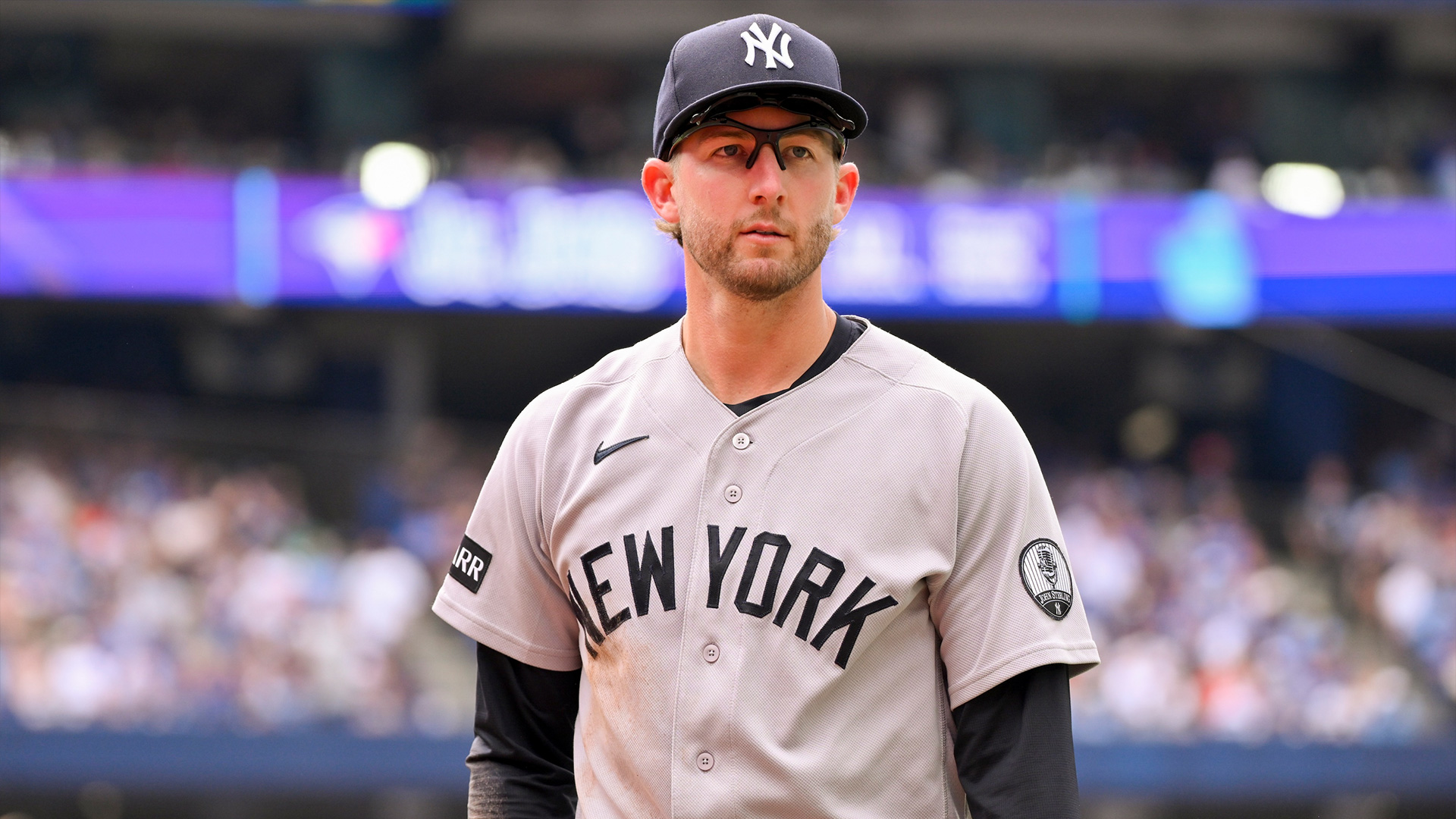
The air in the Yankees clubhouse was thick with a peculiar mix of frustration and relief on Friday afternoon, as the team prepared to open a crucial three-game series against the Toronto Blue Jays. The source of this emotional pendulum swing was third baseman Ryan McMahon, who had just been placed on the 10-day injured list with a Grade 2 left thumb sprain. For a player who has fought through countless aches and pains over a long season, hearing the words “injured list” is never easy, but as he stood in front of his locker, his expression suggested that he had braced himself for something far worse. “Not great news. Could have been worse,” McMahon said, his voice carrying the weight of a man who understands the precarious nature of a baseball career and the critical importance of every game down the stretch. The 10-day minimum stint feels like an eternity under normal circumstances, but in the heat of a pennant race, every single day away from the diamond can feel like a lifetime. Yet, there was an undercurrent of gratitude in his tone, a quiet thankfulness that he would not require surgery and that his absence from the lineup might be limited to the absolute minimum amount of time.
The injury itself occurred during Wednesday’s 5-3 victory over the Baltimore Orioles, in one of those split-second moments that define the game’s inherent violence and risk. In the second inning, McMahon laced a single into the outfield and immediately tested the defense by rounding first base, attempting to stretch the hit into a double. It was a heads-up baseball play, the kind of aggressive baserunning that can ignite an offense opportunistically. But as he dove into second base in a desperate slide, his left thumb jammed hard against the bag, sending a sharp jolt of pain through his hand. What felt like a moment of triumph turned into a lingering concern. The initial adrenaline rush masked the severity, but the swelling and discomfort that followed days later told a different story. He tried to shake it off, tried to convince himself that it was just a minor stinger, but the reality of the damage became undeniable as he struggled to grip a bat properlytarjet. Manager Aaron Boone, ever the tactician when it comes to player health, revealed that McMahon might have been able to play through the pain for a few more days, but the team made the calculated decision to pull him from the lineup rather than risk a prolonged issue. “I kind of don’t want to create anything habit-wise that’s bad,” Boone explained, hinting at the subtle mechanics that can be permanently altered when a hitter compensates for an injury.
McMahon’s injury occurred in the most innocuous of ways, as these things often do, during Wednesday’s 5-3 victory over the Baltimore Orioles. It was a simple single to right field in the second inning, followed by an aggressive but standard attempt to stretch it into a double. As he slid headfirst into second base, his thumb jammed awkwardly against the bag, sending a sharp bolt of pain through his hand. The kind of play that happens a hundred times a season, without a second thought, suddenly became the source of a significant setback. “Just felt like it probably would have been a couple more days where he’s maybe a little bit compromised,” manager Aaron Boone explained, his tone measured and thoughtful. “So I kind of don’t want to create anything habit-wise that’s bad, so just felt like probably the right thing to do here.” This is the careful calculus that managers and medical staffs must perform daily, weighing the immediate need for a player’s performance on the field against the long-term health of their bodies and the integrity of their swings. McMahon, for his part, admitted that while he felt completely fine in the field—able to track down ground balls and make the tough throws across the diamond—the real problem manifested itself at the plate. “I feel like with what these games meaning as much as they are down the stretch, me going out there at 50% probably wasn’t the best,” he conceded, revealing the internal conflict that every ballplayer faces when the team needs them but their body is screaming for a break.
The specifics of the injury paint a picture of a classic baseball fluke, a moment of aggressive baserunning that turned sour in an instant. During Wednesday’s 5-3 victory over the Baltimore Orioles, McMahon laced a single in the second inning and immediately thought about putting pressure on the defense by stretching it into a double. As he rounded first base and bore down on second, he slid feet-first, his left hand jamming awkwardly against the bag or the fielder’s tag. The sharp, shooting pain that followed was unmistakable, a searing reminder that even the most routine-looking plays can have lasting consequences. In the heat of the moment, with adrenaline pumping through his veins, he was able to continue the game, but the true severity of the injury revealed itself in the following days. Manager Aaron Boone, ever the pragmatist when it comes to player health, explained the decision to hold his third baseman out, noting that McMahon might have been able to give the team a few more days at, in his words, “a little bit compromised.” The hesitancy in Boone’s voice was palpable as he elaborated, saying, “Just felt like probably the right thing to do… I kind of don’t want to create anything that’s bad, so just felt like probably the right thing to do.” The manager’s philosophy is rooted in the long game, understanding that a week of diminished production or, worse, a more severe injury that could sideline him for a month during the playoffs is not an acceptable trade-off. For McMahon, who has been a model of durability and grit this season—slogging through a .218 batting average with 10 home runs and 32 RBIs across 108 games—sitting out goes against every competitive instinct he has. This is a player who fought through a painful throat infection earlier in the year, missing 10 games only when his body essentially gave him no choice. The hesitation to take a seat now, even with a sprained thumb, speaks volumes about his character and his desire to be on the field for his teammates. Yet, deep down, he knows that Boone’s caution is not just about protecting him but about protecting the team’s chances in October. The stands at Yankee Stadium were buzzing with anticipation for the series against Toronto, but the lineup card suddenly had a glaring void, a reminder that the baseball gods are rarely kind during the most critical junctures of a season.
In the wake of McMahon’s injury, the Yankees’ front office had to act quickly, reaching into the minor league system to find an immediate replacement. That call came for Ryan’s teammate, utility player out of Triple-A Scranton/Wilkes-Barre, who was brought up to fill the big league roster spot. This is the reality of a 25-man squad in the major leagues—the constant shuffling of players between levels, the late-night phone calls that send a player scrambling to pack a bag and catch the earliest flight to join the big club. For the newcomer, this is the opportunity of a lifetime, a chance to prove he belongs. He arrived with a modest .194 batting average over 40 games in the majors earlier this season, but those numbers belie the hunger and desperation that defines a player fighting for a permanent place in the show. His stay, however, might be incredibly short-lived, as the roster situation is fluid and dependent on the health of another key piece. Cody Bellinger, the dynamic outfielder who has been sidelined with a left hamstring strain, is making significant strides in his rehabilitation. The plan is for Bellinger to test his leg in a minor league game on Friday, taking at-bats and tracking fly balls in the outfield, before taking the day off Saturday and potentially rejoining the active roster as early as Sunday. The logistics are complicated, often resembling a high-stakes game of musical chairs where players have to wonder if their locker will still be occupied when they walk in the next morning. For the newly promoted infielder, every day spent in the Major League clubhouse is a gift, but he knows that his performance and the health of others dictate his fate. The Yankees’ front office and coaching staff pride themselves on their depth, but they also understand that a team’s true mettle is tested not in April when everyone is healthy, but in the dog days of August and September when injuries mount and fatigue sets in. The clubhouse chemistry has been remarkably resilient this season, with veteran players assuming leadership roles to steady the younger guys through the turbulence of a 162-game schedule. McMahon’s injury, while significant, is not season-ending, and the team’s collective sigh of relief echoed through the hallways after the MRI results came back. The focus now shifts to physical therapy, ice baths, and the monotonous work of rehabilitation—all in the hope of returning to the field sooner rather than later.
The sum of those parts brings us to the pitching staff, where a different kind of cautious optimism is brewing around left-hander Max Fried. The ace has been navigating his own recovery journey, dealing with a recurrence of the same injury that cost him 57 games earlier in the season. Fried was placed on the 15-day injured list this past Monday, with the move made retroactive to the day after his last start—a gritty five-inning effort in a heartbreaking 1-0 loss to the Seattle Mariners. In that outing, Fried battled through discomfort, laboring through the early innings before finally giving way to the bullpen. It was a performance that showcased his toughness, but it also reinforced the fragility of a pitcher’s arm and the constant, nagging fear of something more serious. Speaking to reporters on Friday, Fried projected an air of confidence that belied the severity of his injury history. “I’ve been feeling good,” he stated, offering a simple but reassuring message to a fan base desperate for good news. The left-hander is scheduled to throw a side session on Saturday, a critical test to gauge how his body responds to increased throwing intensity. If all goes according to plan, and the session goes off without a hitch, Fried could be activated from the injured list as soon as his 15 days are up, slotting back into a starting rotation that has desperately missed his presence at the top. The difference in his recovery this time versus the initial injury is notable, and Fried is quick to distinguish between the two occurrences. “Before, it was definitely more intense, you know, more pain overall,” he explained, reflecting on the original strain that sidelined him for nearly two months. “This time, it’s a little different. I would say I feel it more in a specific area, but it’s not the same acute feeling. It’s something we’re monitoring and something I’m being smart about.” That intelligence—knowing when to push and when to back off—is a lesson hard-learned by many veteran pitchers, but it’s one that Fried seems to have grasped completely. His stats this season—a sparkling 2.81 ERA accompanied by a 0-1 record in just five starts since his return on July 22—prove that when he’s on the mound, he’s still an elite arm. But the missed time has been frustrating, both for him and for a team that has had to cobble together its rotation with makeshift solutions and bullpen games. The upcoming schedule provides a sliver of hope, as Fried is scheduled to throw a side session on Saturday, a crucial test that will determine whether he can ramp up his throwing program and begin preparing for a return to game action.
For Fried, this latest stint on the injured list feels hauntingly familiar, but also distinctly different. The first time around, in late May, the pain was acute and alarming, a sharp reminder of the physical toll that throwing a baseball at 95 miles per hour takes on the human body. That injury cost him a significant chunk of the season, forcing him to watch from the dugout as his teammates fought through the summer grind without their reliable left-hander. “Before, it was a lot worse,” he reflected, comparing the two injuries. “It was a smaller scale this time. I just wanted to be honest with the medical staff and the coaches about what I was feeling.” This candidness is crucial in a sport where players are notoriously tough, often willing to push through pain to avoid letting their team down. But the reins are on him now, with the organization adopting a more patient approach, prioritizing his long-term health over the short-term gain of having an extra arm for a few crucial regular-season games. The plan is simple: if Saturday’s side session goes smoothly, with no unexpected tightness or discomfort in his throwing shoulder and elbow, he will progress to a more intense throwing program early next week. That could involve a bullpen session, then a simulated game or a rehabilitation assignment, before he is finally deemed ready to take the mound at Yankee Stadium. Manager Aaron Boone, who has navigated this injury minefield with a steady hand all season, expressed cautious optimism. “We’re encouraged,” Boone said, choosing his words carefully in front of the assembled media. “The last couple days have been good for him. Hopefully this side session goes well on Saturday, and we can start mapping out a timeline for his return. We’re not going to rush it, because the last thing we want is a setback. We need him healthy for the long haul.” This sentiment is echoed by the entire organization, from the front office to the training staff, all of whom understand that a fully healthy Fried is a game-changer in a potential playoff series.
Stepping back and looking at the bigger picture, the Yankees are navigating a critical inflection point in their season. They are in the thick of the playoff hunt, where every win and loss carries significant weight, and the margins for error are razor-thin. Having both McMahon and Fried healthy for the final stretch and the postseason is of paramount importance. McMahon provides a steadying presence in the middle of the lineup and a reliable glove at the hot corner, while Fried represents a frontline starting pitcher capable of shutting down a potent offense on any given night. But baseball is a marathon, not a sprint, and the organization has learned the hard way that rushing players back from injuries often leads to catastrophic results. The decision to place McMahon on the 10-day IL rather than letting him play through discomfort is a testament to a modern front office that prioritizes data, long-term health, and sustainability over short-term gain. It is a calculated gamble, a reminder that smart teams win championships in October, not in August. As the clubhouse empties and the players take the field for batting practice, there is a palpable sense of resolve. The injuries have tested the team’s depth, but they also present an opportunity for other players to step up and prove their worth. The Yankees have navigated through murky waters before, and they have the talent and the mental fortitude to survive this stretch without their third baseman and their number three starter. The key, as always, is patience—allowing the body to heal correctly rather than rushing back too soon and risking a more severe injury. For McMahon, the immediate future involves a series of rehab exercises, ice packs, and the lonely grind of the trainer’s room. For Fried, it’s about the rhythm of a bullpen session, the feel of the ball slipping out of his hand cleanly one more time Cummings. And for the manager and the front office, it’s about making the difficult decisions that prioritize October glory over August convenience蓬莱. The clubhouse remains optimistic, not because the injuries aren’t concerning, but because the team’s depth and resilience have been tested before. They have learned to navigate the storm, patching holes with rotational players, trusting the next man up, and keeping their collective eyes fixed on the ultimate prize. The road is long, the grind is relentless, but the Yankees understand that championships are not won in July or early August. They are won by the teams that can survive the attrition of a 162-game season and enter the playoffs with their core intact, healthy, and hungry. McMahon will sit, potentially heckle from the bench as the club’s unofficial cheerleader, and work diligently with the trainers to get back on the field. Fried will throw his side session, hold his breath, and hope for a pain-free result. And the Yankees will take the field against Toronto, knowing that their depth will be tested, but confident that their resilience will carry them through the storm, one game at a time, as they march toward October.