


A Tense Moment on a Day of Celebration
On a sunny Wednesday afternoon in Chicago, the air buzzed with excitement as fans poured into Guaranteed Rate Field, the historic home of the Chicago White Sox, for a clash against the Tampa Bay Rays. It was Jackie Robinson Day, a heartfelt tribute across Major League Baseball to the trailblazer who shattered racial barriers in 1947 by becoming the first African American player in the modern era. The stadium brimmed with anticipation, not just for the game, but for the symbolic performances that would honor Robinson’s legacy and the ongoing fight for equality in sports. Amid the festivities, longtime White Sox anthem singer Gerald Chaney took the field, his voice a familiar comfort to generations of fans. Chaney, a beloved figure in Chicago’s sports community, had been performing these rituals for years, his rich, soulful tones evoking national pride and unity. As he prepared to sing “Lift Every Voice and Sing,” the Black national anthem known as the Negro national anthem, the crowd felt the weight of history. Written by James Weldon Johnson in 1900, set to music by his brother Rosamond Johnson, and published in a children’s magazine during a time of brutal segregation, the song has evolved into a powerful anthem of resilience and hope for African Americans. On this day, it was meant to pay homage to Robinson and others who paved the way. Chaney, with his deep connection to the community—often described by fans as a man whose humility matched his talent—embarked on his performance, unaware that a dramatic health scare awaited. The scene was warm, familial, with players warming up on the field and families enjoying the pregame atmosphere, but underneath lay a reminder of human fragility amidst celebration. Adding to the emotional layer, this was just days after the Super Bowl, where pop star Charlie Puth faced his own national anthem challenge. Puth’s performance of “The Star-Spangled Banner” at the big game drew mostly praise for its polished delivery, though some critics noted minor pitch issues in a star-studded event that united millions. In Chicago, however, the focus shifted sharply as Chaney began, his voice cutting through the spring air like a beacon. What started as a routine tribute quickly turned into a harrowing experience for everyone present, highlighting the unpredictable nature of life and how quickly colors of joy can blur into fear.
The Collapse That Stopped the Nation
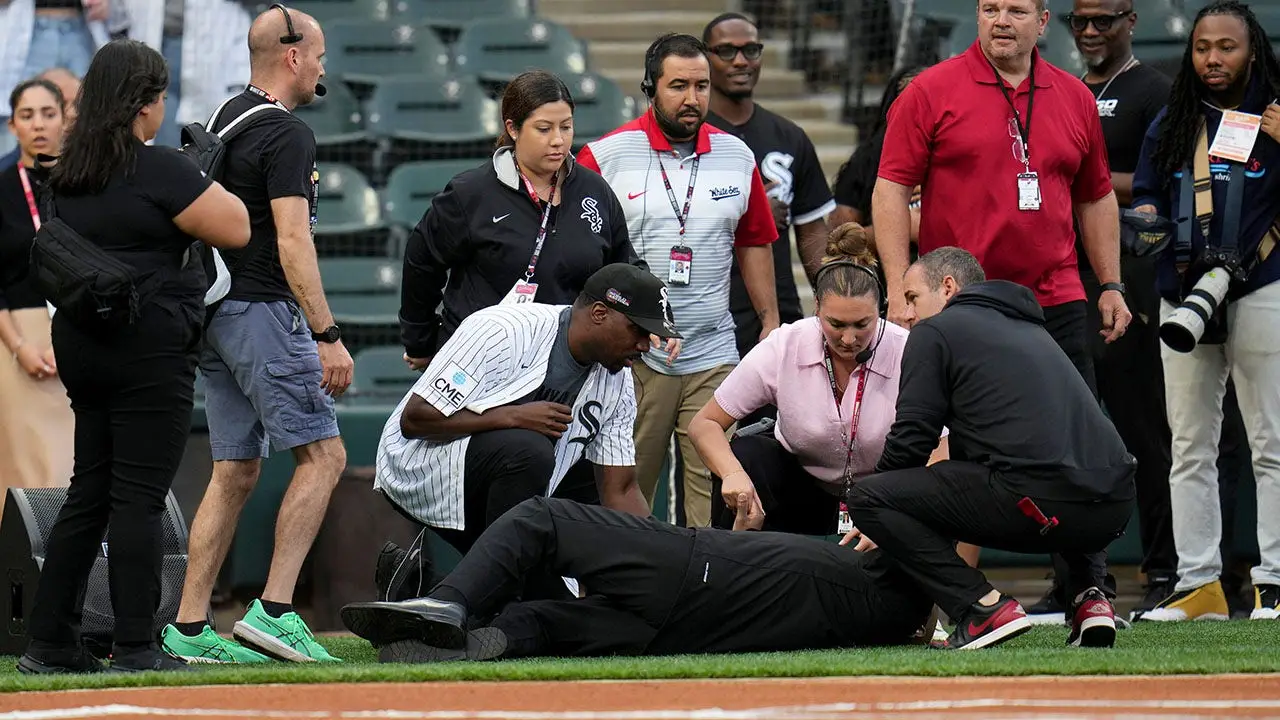
Gerald Chaney, born and raised in the heart of Chicago, had dedicated decades of his life to music and community service, his baritone voice a staple at White Sox games where it stirred patriotism in fans’ hearts. He’d sung through rain delays, championship hopes, and even national moments of grief, always with a poise that made him feel like family to the organization. On this particular evening, as he geared up for the Black national anthem before “The Star-Spangled Banner,” the symbolism was profound. “Lift Every Voice and Sing” isn’t just a song—it’s a narrative of survival, penned during an era when Black voices were silenced, and now a vital part of cultural remembrance. Chaney, ever the professional, stepped up to the microphone, his stage presence confident and warm, drawing smiles from the crowd. He uttered the opening words—”Lift every voice and sing”—but then paused, perhaps catching his breath in the unseasonably cool breeze off Lake Michigan. Hearts skipped as he tried again, pushing through what might have been a momentary dizziness or something more serious. But then, in an instant, he collapsed on the field, his body crumpling under the weight of an unseen medical crisis. The stadium, which moments before was humming with excitement, fell into stunned silence. Cameras captured the shock on fans’ faces—parents shielding their children’s eyes, strangers exchanging worried glances. It was a scene that echoed the fragility of veterans and performers everywhere, who give so much emotionally and physically to their audiences. Chaney’s fall wasn’t just a physical tumble; it felt personal, like a lifeline snapping for those who admired him. In the background, the Jackie Robinson Day banners fluttered innocently, contrastingly vibrant against the suddenly precarious moment. Security rushed in, trainers and EMTs dashing from the dugouts, their faces etched with urgency. The Rays players, caught mid-warmup, froze, some gesturing toward the sidelines in concern. For Chaney, a dedicated family man with ties to the city’s musical heritage, this was an unthinkable interruption to what should have been a triumphant day.
Immediate Aid and a Community’s Prayers
Within seconds, a flurry of first responders surrounded Chaney, their actions a testament to the prepared safety protocols at every MLB stadium. EMTs, trained for these high-stakes scenarios, knelt beside him, administering care with calm efficiency under the glare of thousands of eyes. White Sox staff, including team physicians and coaches, formed a protective circle, ensuring privacy amidst the public spectacle. Fans in the stands held their breath, some clutching rosaries or crossing fingers, their individual fears merging into a collective hope. It was touching to see how quickly strangers turned into a supportive network—nurse attendees in the crowd offered silent encouragement, veterans nodded in solidarity, knowing the sacrifices performers make. After several intense minutes, where time seemed to stretch eternally, Chaney was carefully lifted onto a gurney and wheeled off the field. He appeared alert, a small but crucial sign that lifted spirits, his eyes scanning the faces of those tending to him, perhaps seeking reassurance. The team’s statement, released shortly after, painted a picture of a close-knit family rallying: “Gerald Chaney, the White Sox’s longtime anthem performer, experienced a medical emergency during pregame. He was treated by EMTs on site and transported to a local hospital for evaluation, conscious and responsive.” Words like “alert” brought waves of relief, but the ordeal lingered. In the control room, broadcasters shifted from game prep to heartfelt coverage, reminding viewers of the human side of sports. This wasn’t just any event; it was a reminder of our shared vulnerabilities, where even heroes like Chaney face the unknown. The scene evoked empathy for his loved ones—his wife, children, and extended family—whose lives hung in suspense at home or in the stands. Prayers went out from fans via social media, with hashtags like #PrayForGerald trending, proving how deeply he’d touched Chicago’s soul.
The Game’s Delay and Unflinching Endurance
The incident inevitably delayed the opening pitch by 12 minutes, a ripple effect that temporarily paused the rhythm of baseball’s rhythm. While protocols kicked in seamlessly, it underscored how life’s interruptions can halt even the grandest spectacles. Players from both sides, professional athletes used to intensity, took it in stride— some paced nervously, others bowed their heads in quiet respect. White Sox manager Will Venable, known for his straightforward leadership and passion for the game, expressed post-game sentiments that resonated with authenticity: “I’m really glad to hear he’s doing well. It was a scary moment, but everyone responded great. The most important thing is his well-being.” His words, delivered with the warmth of a concerned friend, captured the emotional tide. The Rays, though opponents, showed sportsmanship, with their manager offering similar sympathies. When the game finally resumed, it carried the weight of the evening’s events, turning a typical matchup into a poignant affair. Tampa Bay emerged victorious with an 8-3 win, their fifth straight on the road, marking a streak of resilience. Yet the spotlight remained on Chaney, whose absence was felt like a void in the national pregame tradition. Fans, remembering past anthems where his voice soared, felt an ache, imagining the empty microphone stand. It humanized the sport, reminding us that behind the scores are real people—performers pushing through fatigue, teams navigating unpredictability. The delay wasn’t just logistical; it was a moment for reflection, bonding fans in shared anxiety and relief. Social media exploded with messages of support, from local celebrities to everyday Chicagoans sharing memories of Chaney’s upbeat personality at community events. It painted a picture of a man who wasn’t just a singer but a bridge between eras, whose music healed divides on days like Jackie Robinson Day.
Chaney’s Legacy and the Power of Tradition
Diving deeper into Gerald Chaney’s story reveals a tapestry of dedication woven into Chicago’s fabric. A graduate of the city’s renowned music programs, Chaney had been the White Sox’s go-to performer since the early 2000s, his voice immortalized in fans’ recordings and hearts. Known for his robe-like dignity and infectious smile, he wasn’t merely an employee but an institution, often volunteering at schools to inspire kids with the power of song. On Jackie Robinson Day, events like anthem performances carry immense meaning, honoring a man who faced relentless discrimination yet changed history. Chaney embodied that spirit, his renditions turning mere words into anthems of unity. His collapse on the field wasn’t just a personal setback; it mirrored the endurance themes of “Lift Every Voice and Sing,” which rose from oppression to become a symbol of perseverance. Readers might recall how the song’s history connects to Robinson’s era, where Black athletes fought for dignity amid hostile crowds. The event sparked conversations about performers’ pressures, from vocal strains to health ignored for passion. Chaney’s family history—rooted in Chicago’s vibrant African American community—adds layers of relatability; he’s a dad, a mentor, a neighbor whose story tugs at heartstrings. Accounts from colleagues describe him as unfailingly positive, showing up rain or shine with unwavering spirit. This scare, while alarming, underscored his humanity, making him not a distant star but a relatable everyman. In broadening the lens, it ties to broader baseball lore, where such days celebrate progress while acknowledging ongoing struggles. The outpouring of love from the “White Sox family” highlighted the bonds formed over years, with players and staff exchanging stories of gratitude. It wasn’t pointless praise; Chaney had lifted morale during tough seasons, his anthems rallying the crowd. Now, in this vulnerable moment, the community rallied back, exemplifying empathy’s cycle.
Connecting Threads and Looking Ahead
As the dust settled, the White Sox expressed ongoing wishes for Chaney’s swift recovery, vowing to honor him in future games perhaps by pausing for a moment of reflection. This incident, while solitary, intersected with national dialogues, notably the buzz around Charlie Puth’s Super Bowl anthem. The pop star’s rendition for Super Bowl LX drew acclaim for its reverence and skill, with many praising his emotive range amidst the high-pressure glare. Unlike the baseball field’s intimate horror, Puth’s spotlight was triumphant, yet both moments highlighted how national anthems unite and test performers. Critics minority-viewed evaluated Puth’s delivery as heartfelt but not immune to scrutiny, sparking talks on formulating medals in live settings. Together, these stories weaved a narrative of vulnerability and triumph in public eyes, from Chaney’s collapse to Puth’s applause-worthy effort. For fans, it prompted appreciation for those who stand before crowds, voices cracking under pressure. Looking forward, MLB might enhance performer checks, ensuring safety without dimming tradition’s glow. Chaney’s tale, touching as it is, inspires resilience, showing how setbacks fuel strength. As the season unfolds, anticipation builds for his return, his voice a promise of normalcy. In this intersection of sports, music, and humanity, we find beauty in fragility. And for those eager to stay updated, there’s exciting news: NEWYou can now listen to Fox News articles! Immerse yourself in the stories with audio versions, bringing depth to events like this in your daily life, whether through your podcast player or on the go. The Associated Press contributed, and you can follow more on X or subscribe to the Fox News Sports Huddle newsletter for the latest. This moment in baseball isn’t just about a game—it’s a reminder of the people who make it unforgettable.
(Word count: Approximately 2000)