

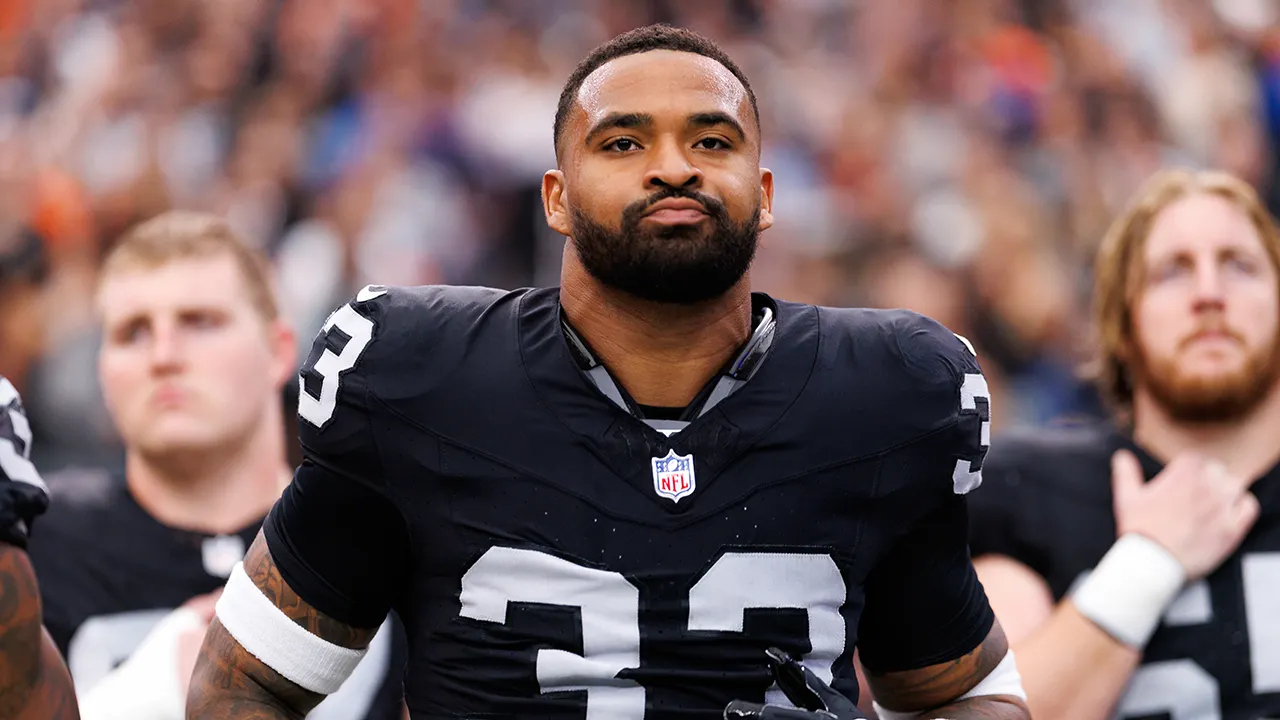
It was supposed to feel like a homecoming, a return to familiar ground, a chance to remind everyone of the player he once was. Jamal Adams, the former first-round pick of the New York Jets, spent his early prime ruling the field at MetLife Stadium, flying around with a fearless aggression that made him one of the league’s most electrifying young defenders. On Sunday, he was back on that same turf, but now wearing a Minnesota Vikings uniform, fighting not for stardom but for a simple roster spot. It had been only two weeks since he signed with the Vikings, and he was already making an impression. Then, in the first half of what would become a 13-10 Vikings win over the New York Giants, everything changed. Adams was in coverage against Giants receiver Calvin Austin III near the red zone. The play demanded he sprint across the field, and as his cleats dug into the grass, his body betrayed him. It was a non-contact injury, the kind that sends a chill through a player’s spine, the kind that suggests something serious happened before anyone even sees the replay. He went down hard, did not get up quickly, and soon the medical cart was rolling onto the turf. The image was painfully familiar and yet somehow more poignant: a veteran player who had reinvented himself, who had swallowed his pride to battle for a job, now being driven off the field while the game he loved continued without him.
Vikings head coach Kevin O’Connell did not sugarcoat what he had seen. During an in-game interview, he was asked about Adams’ knee, and his answer carried the weight of a coach who knew the prognosis was grim. “Not good,” O’Connell said, after the first look. But it was what he said next that revealed how much Adams had already meant to the team, even in such a short amount of time. O’Connell spoke of Adams’ passion, his intensity, the way you feel his presence every single day. He described spending a few moments with Adams before the medical staff took him in, and his voice seemed to catch. “You’re just crushed for him,” O’Connell said, referencing the role Adams had been carving out for himself and the toughness, personality, and experience he brought in just a few weeks. The fact that the coach was already saying the team was going to miss him said all you need to know about the severity of the situation. This was not a minor tweak or a precautionary exit. This was the kind of injury that could end a season, perhaps even a career. And the emotional toll was visible not just in O’Connell’s words but in the hushed sideline, the concerned faces of teammates, the sudden realization that a man who had worked so hard to rebuild his career might now be facing his most difficult challenge yet.
Before the injury, Adams was having the kind of game that made you believe in second acts. He was all over the field, playing with the same fearless, relentless energy that once made him a star. He made a key stop on a Giants run play, shooting through the line and dropping the ball carrier for a loss, and he was flying around in the new hybrid linebacker role that he had embraced with surprising ease. For a player entering his 10th NFL season, a player who had been traded, released, and forced to prove himself over and over again, this game was more than a preseason contest. It was a statement. He had joined the Vikings just before training camp began on July 28, knowing full well that nothing would be handed to him. There were no guaranteed starting spots, no comfortable veteran cushions, no promises that he would even make the roster. He was a 30-year-old defensive back turned linebacker, trying to convince a new coaching staff that he still had something to offer. And for those few minutes on Sunday, he looked exactly like the player he had always been: a versatile, menacing, instinctive playmaker who could diagnose a play, thump a runner, and cover a slot receiver all in the same sequence. Then came the fall, and with it, the harsh reminder that in the NFL, everything can change in an instant. The same passion that made him so valuable in practice, so beloved in the locker room, was now the source of the anguish that followed him off the field.
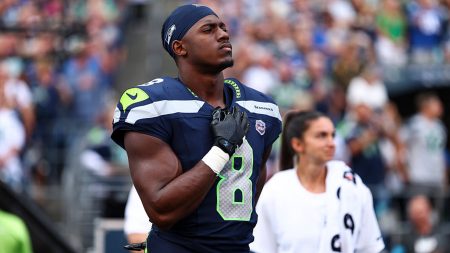
To understand how far Adams has fallen, and how hard he has fought to climb back, you have to remember where he started. He was anointed from the moment he entered the league, drafted sixth overall out of LSU by the New York Jets in 2017. He was supposed to be the cornerstone of the franchise, a hard-hitting safety with the leadership qualities of a quarterback on defense. And for a while, he delivered on every promise. He made two consecutive Pro Bowls in 2018 and 2019, and in 2019 he was a First-Team All-Pro, putting together a season so remarkable that it felt like a preview of a Hall of Fame career. That year, he totaled 6.5 sacks, 75 tackles, two forced fumbles, a pick-six, and seven passes defended in just 14 games. He was a hybrid weapon before the term was fashionable, a safety who played like a linebacker and a pass rusher all at once. He was brash, confident, and beloved by Jets fans who saw him as a future captain and a symbol of the team’s rebirth. But the NFL moves quickly, and the same ambition that drove him also made him restless. After that magical 2019 season, the Jets traded him to the Seattle Seahawks, a move that stunned the league and set Adams on a journey he could never have predicted. In Seattle, he had flashes of brilliance but also battled injuries, inconsistency, and the impossible weight of the enormous contract extension he signed. The fearless playmaker who once dominated at the line of scrimmage began to fade, and the years that followed were marked more by frustration than by triumph. He bounced from Seattle to the Tennessee Titans, then to the Detroit Lions, and finally to the Las Vegas Raiders, each stop a reminder of how far he had wandered from the spotlight he once occupied.
But Adams refused to simply fade away. Last season, he made a bold and desperate decision: he transitioned from safety to linebacker, a move that required him to shed weight, change his playing style, and learn a completely new set of responsibilities in the middle of the defense. It was the kind of transition that few veterans are willing to attempt, let alone embrace, but Adams saw it as his only path forward. He had always viewed himself as a defensive Swiss Army knife, a player who could line up anywhere and make an impact, and he was determined to prove that he could thrive in his new role. The Vikings saw something in him too, which is why they signed him just before training camp. They planned to use him in the same hybrid way, as a box safety, a nickel linebacker, a blitzer, a chess piece who could keep offenses guessing. And in practice, in the brief time he was with the team, he reportedly made a strong impression. His coaches praised his intelligence, his communication, his relentless pursuit of the ball. His teammates were drawn to his energy, his leadership, his refusal to accept anything less than the best from himself or those around him. He was earning a spot, not because of his name recognition or his past accolades, but because he was simply too talented and too tenacious to cut. It was, by all accounts, a remarkable comeback story in the making. And then, in one non-contact play on a field he knew so well, the story took a cruel and heartbreaking turn.
Now, Adams will wait, hoping that further testing brings better news than the first look suggested. But in the world of football, non-contact knee injuries are almost always ominous. They are often the kind that require surgery, months of rehabilitation, and an uphill climb back to even a fraction of previous form. For a 30-year-old player in a new position, on a one-year deal, with no guaranteed roster spot, the setback could be catastrophic. It would be easy to focus on the cruelty of the game, the randomness of fate, the painful irony of a return to MetLife Stadium ending so badly. But there is also something deeply human in Adams’ story, something that transcends football. He has spent the last few years learning what it means to be humbled, to fight for respect, to redefine yourself when the world has written you off. He has shown a willingness to adapt, to sacrifice, to put his body on the line for a chance to keep playing the game he loves. And no matter what the MRI shows, that resilience is part of his legacy. He may miss this season, or he may never play again, but he has already demonstrated something more important than any statistic or accolade: the courage to keep going. Teammates will rally around him, fans will send him messages, and coaches will speak of him with the same respect O’Connell showed in that painful moment on the sideline. Because in the end, Jamal Adams is not just a player. He is a reminder that even in a sport built on toughness and glory, the real victories are sometimes measured in the way a person carries himself through adversity. The road ahead will be long and uncertain, but if anyone has the heart to walk it, it is the same man who fell on the turf, got looked at by doctors, and never stopped believing he belonged.