





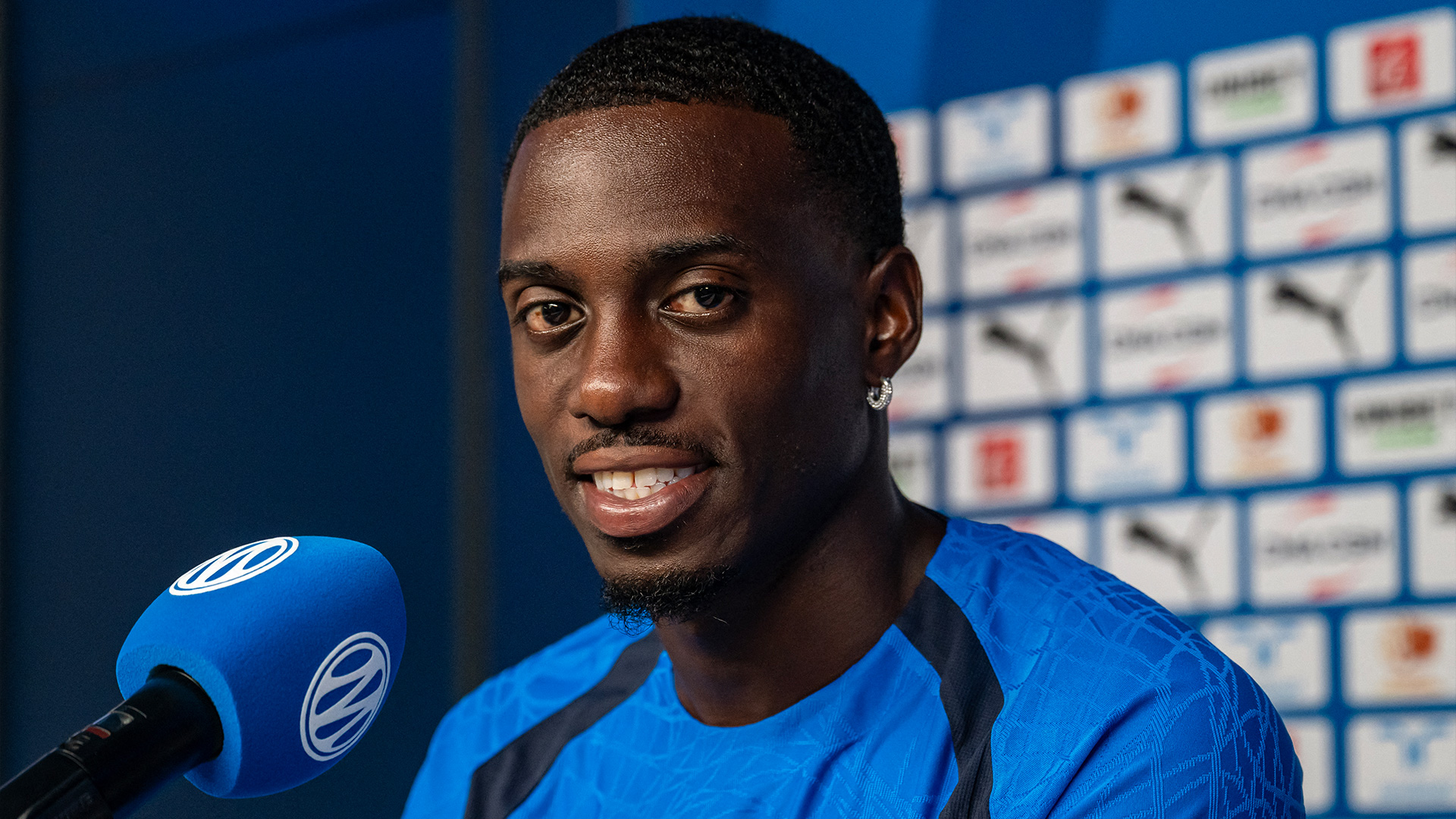
Paragraph 1: The Cathedral of Fire and the Unlikely Commander
The Stade Vélodrome is not merely a stadium; it is a cauldron of raw, unadulterated emotion, a French football cathedral built on the tectonic plates of passion, fury, and unwavering loyalty. On a balmy Friday evening in August, as the Ligue 1 season dawned, the air inside this ancient amphitheater crackled with the electric hum of expectation. The fans, a quilt of blue and white, roared their defiance against the night, but on this particular occasion, the pre-match energy was focused on something far more symbolic than a mere victory. As Olympique de Marseille took the pitch to face RC Strasbourg Alsace, the television cameras found a familiar face on the right flank—an American, Tim Weah—but something was different. There, wrapped around his bicep, glittering under the harsh floodlights, was the captain’s armband. For the uninitiated, it might have seemed like a curious managerial gambit, but for those who had followed his journey, it was a profound testament to the human spirit’s ability to evolve. Weah, once a dynamic winger with bursts of pace but plagued by inconsistency and injury, had transformed himself into the bedrock of this historic club. Leading out a team filled with South American flair and European pedigree is a daunting task, yet Weah walked with the poise of a man who had finally found his purpose. The roar that greeted his first touch was not for a superstar signing, but for a worker, a man who had earned the respect of an unforgiving fanbase through sheer grit. The 4-0 scoreline that followed was emphatic, but the real narrative was the quiet triumph of a young man carrying his nation’s hopes on his arm, proving that leadership is not born solely of talent, but of perseverance through the darkest valleys of doubt.
Paragraph 2: The Weight of a Dynasty and the Fire Within
To understand the magnitude of this moment, one must peel back the layers of Tim Weah’s extraordinary lineage. He is the son of George Weah, a deity in world football—the only African to have ever lifted the Ballon d’Or, a former FIFA World Player of the Year, and the current President of Liberia. Growing up in the shadow of such monumental greatness could have crushed a lesser spirit, leaving them paralyzed by comparison. Yet, for Timothy Tarpeh Weah, that shadow became a forge. His early career was a nomadic journey through the elite academies of Europe—Paris Saint-Germain, Celtic, and Lille—each stop offering tantalizing glimpses of his electrifying pace and raw technical promise, but each also interrupted by the cruel lottery of physical misfortune. Hamstring tears, muscle strains, and mysterious niggles seemed to arrive at the worst possible times, stalling his trajectory and forcing him to watch from the treatment table as others seized the limelight. There were dark moments where the whispers of “he’s only there because of his name” followed him like a shadow. The loan move to Marseille last season was intended as a final audition, a chance to prove he could handle the volcanic pressure of a club where every dropped point is a national crisis. Initially deployed as a winger, he discovered a new destiny. His versatility, his willingness to sacrifice individual glory for tactical structure, and his astonishing work rate began to convert skeptics into believers. The permanent transfer this June was a declaration of intent, but even in his most ambitious dreams, he likely couldn’t have envisioned receiving the captaincy so swiftly. This armband was not a vanity prize handed out to appease a famous father; it was a recognition of the hard-won maturity forged through years of hardship, a human triumph over the imposter syndrome that plagues so many in his position.
Paragraph 3: The Tactical Evolution and the Trust of Génésio
The decision to award Weah the armband was a bold statement from Marseille’s new manager, Bruno Génésio. Génésio, a tactician renowned for his meticulous preparation and high standards, saw beyond the goal-scoring statistics and looked into the soul of a competitor. What he found was a player who had undergone one of the most fascinating positional metamorphoses in modern football. Weah’s transition from a natural left-winger to a reliable right-back is a masterclass in humility and tactical intelligence. Many players would view a move to the defense as a step down, a demotion of their creative license, but Weah embraced it as an intellectual challenge. He spent endless hours studying the positioning of legendary full-backs—the delicate timing of a slide tackle, the discipline of holding a defensive line, the brute aerobic capacity required to sprint up and down the flank for ninety relentless minutes. On the pitch, his voice became a constant, calming yet authoritative presence, directing the midfield, encouraging a young center-back after a misplaced pass, and setting the aggressive, pressing tone that is the lifeblood of Marseille’s philosophy. Génésio recognized that true leadership is not about screaming until your voice hoarsens; it is about the silent acts of consistency—arriving early at training, staying late for extra repetitions, and volunteering to mentor the academy graduates. Weah embodied all of this. He became the bridge between the fiery, expressive South American forwards and the disciplined European structure the coach demanded. By handing him the armband, Génésio sent a thunderous message to the entire locker room: meritocracy prevails at the Velodrome. A foreigner, an American, could embody the values of the club more profoundly than any entitled local, simply by earning it through dedication and loyalty, humanizing the often sterile player-manager transaction into a partnership built on mutual respect.
Paragraph 4: The Ninety Minutes of Leadership and Catharsis
As the match against Strasbourg unfolded, Weah’s captaincy transcended the symbolic. He was a colossus defensively, shutting down his flank with a combination of raw athleticism and refined positioning. When opposing wingers attempted to isolate him, he stood firm, his body low, his eyes reading the attacker’s intentions. He made critical interceptions, breaking up dangerous counters before they could materialize, and his composure on the ball was a calming virus that spread throughout the backline. But he was equally potent in attack, timing his overlapping runs with the precision of a metronome, dragging defenders out of position, and providing an outlet for the midfielders to switch play. His distribution was crisp, ranging from short, incisive passes to long, diagonal switches of play that stretched the Strasbourg defense. The 4-0 rout was a clinic in attacking fluidity, but the connoisseurs in the crowd understood that it was built upon the unglamorous foundation of their new captain’s defensive solidity. Watching him play the full ninety minutes was cathartic for anyone who had followed his career. The physical toll was written on his face in the final minutes—the heavy legs, the sweat-soaked, grass-stained jersey—but the smile that broke through as he marshalled his colleagues through the final whistle was one of pure, unadulterated joy. He was not a fading star trying to recapture a former glory; he was the cornerstone of a new era. The label of “just a winger” or “the President’s son” had been vaporized by the reality of his performance. In that moment, the human connection between a player and a city was forged in the crucible of sweat and passion, a bond that went beyond the ninety minutes, promising loyalty and effort for years to come.
Paragraph 5: The Crossroads of American Destiny – Gio Reyna’s Quiet War
Yet, the narrative of the night was not solely owned by Weah. Across that same green battleground, another American story simmered on the hostile sidelines. Gio Reyna, once the golden child of American youth prodigies, was preparing to enter the fray for the visitors. The two Americans, former teammates in the USMNT youth setup, now faced each other as adversaries in a major European league. Reyna’s move from Borussia Dortmund this month was audacious, a leap of faith born from a desperate need to reignite a career stalled by injuries and lost confidence. He had traded the familiar Bundesliga pastures for the unpredictable pressures of Ligue 1, and he had done so by claiming the mythical No. 10 shirt. This number is not just a digit; it is a burden, a legacy of creative genius, and an invitation for the opposition to target you. His recent past had been a cruel cycle of promise and breakdown—a hamstring here, a muscle tear there—each setback eroding the confidence of a once-unstoppable dribbler. When he was finally summoned from the bench with a little over twenty minutes left on the clock, the game was already decided, but his personal battle was just beginning. He wasn’t walking out to rapturous applause like his captain counterpart; he was walking out to a challenge—to prove to the world, and to himself, that he still possessed the magic that had once made him a sensation. His touches were purposeful, his vision sharp, as he tried to orchestrate a futile comeback. He looked hungry, his movements carrying the pent-up frustration of years spent watching from the sidelines. Gazing across the field at Weah, there was an unspoken kinship. Both had endured their own personal hells—Weah with the weight of legacy, Reyna with the curse of what-ifs. This fleeting crossover was a microcosm of the new American soccer identity: players no longer content with just participating, but seeking defining roles in European giants. Reyna will have to wait for his captain’s armband, but his journey is no less compelling. Watching the two men, one leading, one fighting for a spark, highlighted the beautiful complexity of their paths—the human drama of ambition, resilience, and the relentless, often unforgiving, pursuit of greatness.
Paragraph 6: A New Dawn for the Red, White, and Blue
Zooming out from the Mediterranean coast, the implications of that Friday night are seismic for the United States men’s national team. For decades, the image of the American soccer player was that of an athletic overachiever, technically inferior, relegated to bit-part roles in mid-table European clubs. That era is fading into the rearview mirror. Having a captain of a Ligue 1 powerhouse is a monumental achievement, a resounding refutation of outdated stereotypes and a testament to the exponential growth of soccer in America. Weah’s captaincy, coupled with Reyna’s presence in a historic jersey, is not an anomaly but the fruit of a generation raised on the sport, blessed with better coaching, more exposure, and a genuine belief that they belong on the grandest stages. As the 2026 World Cup approaches, to be played on home soil, the leadership skills honed in the cauldron of Marseille will be invaluable. Weah has learned how to manage a hostile European crowd, how to referee the game in the middle of a heated derby, and how to inspire ten other men to run through figurative walls. This experience cannot be quantified in goals or assists; it is the intangible currency of champions. Reyna, too, will grow from wearing that oppressive No. 10, learning to carry the creative burden of a nation without buckling. The sight of these two young men, representing the red, white, and blue in separate jerseys, fighting for supremacy on a Friday night in France, is a dream realized for the US Soccer Federation. It humanizes the journey from youth tournaments in Florida to the electrifying atmospheres of European football. It offers a renewed sense of hope that the American player is no longer a novelty to be tolerated, but a leader to be emulated. As the full-time whistle echoed around the Vélodrome, Weah gathered his teammates for the traditional lap of appreciation, embracing each one with the warmth of a natural leader. Halfway across the Atlantic, young American children were watching, their dreams igniting with every replay of Weah raising his hand to direct the defense. The armband he wore was not just his property; it belonged to an entire nation, a symbol of a thrilling new dawn where American excellence on the soccer pitch is not just an occasional surprise, but a sustained, proud expectation.