


The electrifying atmosphere of a World Cup knockout tournament represents an entirely different beast altogether, a relentless pressure cooker where years of sweat, sacrifice, and immense national expectation are condensed into ninety agonizing minutes of tactical warfare. For the United States Men’s National Team, their high-stakes Round of 32 clash against Bosnia and Herzegovina was not just another standard fixture on the international calendar; it was a defining, career-shaping litmus test for a highly touted golden generation of American soccer talent. At the absolute epicenter of this brewing drama was Folarin Balogun, the dynamic and incredibly gifted striker whose monumental decision to represent the red, white, and blue had previously sent massive waves of optimism cascading through American soccer communities across the globe. Balogun, possessing a unique blend of explosive pace, elegant spatial intelligence, and a predatory, clinical instinct in front of the goal, represents the elusive missing piece in a complex tactical puzzle that the USMNT has desperately been trying to solve for several decades. As the opening whistle echoed through the stadium under the brilliant floodlights, the dreams of an entire nation rested squarely on his young shoulders, with fans and pundits alike expecting him to be the sharp spearhead that would propel the underdog Americans deep into the tournament brackets. The tension hanging in the air was thick, almost suffocating, charged with the shared anxiety and hope of millions of fans watching from bars, homes, and public squares across the United States, all praying that this young squad could finally transition from a group with mere potential into a bona fide powerhouse on the global stage.
From the very opening whistle of the encounter, Folarin Balogun played like a man possessed, clearly determined to stamp his authority on the match and validate his status as one of the tournament’s most exciting and explosive offensive stars. He immediately began testing the integrity of the Bosnian defense with sharp, darting runs, carving out early chances and keeping the opposing backline in a state of constant, chaotic retreat. An early effort saw him put the ball cleanly into the back of the net, only for the linesman’s raised flag to cruelly cut his passionate celebrations short, ruling him offside by the slimmest and most agonizing of margins. Undeterred by the disappointment of that disallowed goal, Balogun continued to probe, fight through contact, and collaborate fluidly with his fellow attacking maestro, Malik Tillman. Their chemistry on the pitch was sheer poetry in motion, a beautiful testament to hundreds of hours spent running training ground drills and sharing an innate, telepathic understanding of each other’s spaces and movements. That connection reached its stunning crescendo later in the first half when Tillman, displaying remarkable vision and composure under pressure, delivered a delicate, perfectly weighted touch directly into the path of an oncoming Balogun. With the supreme poise of a seasoned veteran playing on the world’s biggest stage, Balogun latched onto the ball, set his feet with conviction, and buried a pinpoint strike past the keeper to give the United States a crucial 1-0 lead. The stadium erupted in a symphony of pure, unbridled joy, and it truly felt as though the script was being written perfectly for both Balogun and this surging American squad.
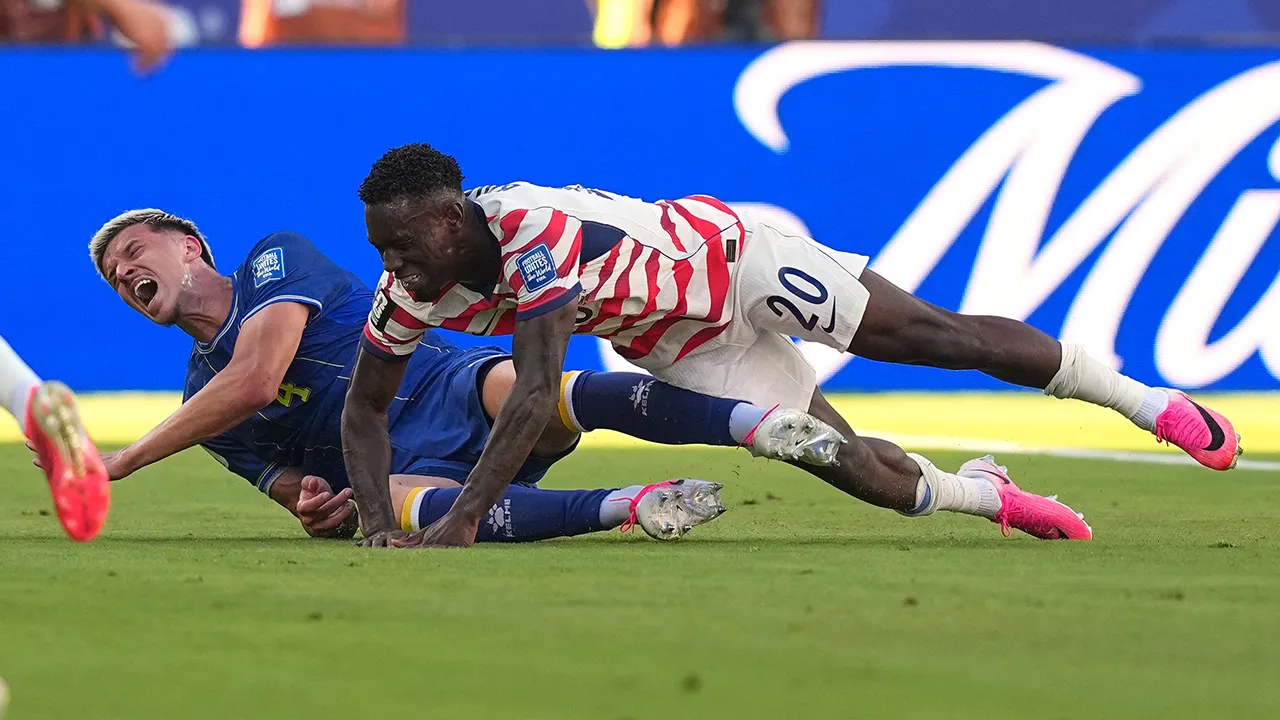
However, association football is a sport governed by razor-thin margins and sudden, devastating shifts in fortune, a harsh reality that came crashing down upon the Americans during the highly contested second half of the match. In a split-second sequence of high-tempo physical play, Folarin Balogun competed fiercely for a loose ball, committing to a challenge with the raw, aggressive intensity that has come to define his highly competitive signature style. In the absolute chaos of the physical challenge, his boot traveled slightly over the ball and inadvertently stepped directly onto the leg of a Bosnian player, leaving the opponent crumpled on the turf in what appeared to be significant agony. While play initially continued past the incident, the sudden, sharp blow of referee Raphael Claus’s whistle signaled a chilling halt to the match, as the official indicated he would be consulting the Video Assistant Referee (VAR) system to review the challenge. The ensuing minutes felt like an absolute eternity for the nervous players on the pitch and the millions of spectators holding their collective breath worldwide, as Claus stared intently at the pitchside monitor, analyzing the point of contact in slow motion from multiple angles. When he finally walked back onto the pitch with a stern expression and brandished a controversial red card to Balogun, the stadium fell into a state of stunned silence before being quickly consumed by an absolute storm of boos. Across various social media platforms, the reaction was instantaneous and overwhelmingly hostile, as furious fans erupted in anger, accusing the officiating crew of a harsh, overly punitive decision that lacked common-sense context and threatened to completely derail American momentum.
The deeply human element of this sudden turning point was heavy and heartbreaking to witness, as the sheer shock and utter devastation were etched clearly across Folarin Balogun’s face as he was forced to make the lonely, agonizing walk off the pitch and into the tunnels. In an instant, the ecstatic joy of scoring a pivotal World Cup goal was completely replaced by the crushing weight of knowing he had left his remaining teammates to fight a desperate defensive battle shorthanded for the remainder of the evening. Even more painful was the realization of the administrative cruelty attached to the red card: if his compatriots managed to hold onto their fragile leads and survive the match, Balogun would be automatically suspended for the highly anticipated Round of 16 matchup. The dream of leading his adoptive country onto the field in the knockout rounds of the world’s most prestigious sporting tournament was suddenly hanging by a thread, snatched away by a controversial split-second decision reviewed on a television screen. In the quiet confines of the locker room, away from the roaring crowds and the flashing media cameras, Balogun was left entirely alone with his thoughts, grappling with the agonizing duality of being both the hero who had put his country ahead and the catalyst for a defensive crisis that could potentially spell the end of their cherished World Cup journey.
Back out on the pitch, the structural dynamics of the contest underwent a dramatic and harrowing transformation, as the Bosnian side sensed a golden opportunity to turn the tide of the game. Armed with a crucial one-man advantage and fueled by a massive surge of adrenaline, Bosnia and Herzegovina immediately seized control of the midfield, launching wave after wave of intense, high-octane offensive pressure against the depleted American defensive line. The U.S. Men’s National Team, now operating with just ten active players, had to completely abandon their preferred expansive attacking style and retreat instead into a deeply organized, resilient defensive block, throwing their bodies in front of incoming shots and battling for every loose ball with absolute desperation. Yet, in the face of this relentless Bosnian onslaught, the true character of this young, heavily criticized American squad shone brighter than ever before, refusing to crack under the mounting weight of the pressure. Then came a moment of sheer artistic magic that relieved the immense psychological burden carrying over the squad, courtesy of the brilliant and tireless Malik Tillman. Facing a free kick opportunity in a highly contested area of the pitch, Tillman stepped up with immense focus, tuned out the hostile noise of the stadium, and unleashed a breathtaking, curving strike that elegantly bypassed the defensive wall and nested beautifully in the upper corner of the net, extending the U.S. lead to a comfortable 2-0.
This stunning 2-0 cushion did far more than just pad the scoreboard; it served as a defiant, triumphant declaration of this young team’s maturity, depth, and unwavering mental fortitude in the face of extreme adversity under the brightest lights. While the spectacular goal by Malik Tillman all but secured their passage into the next round, the looming absence of Folarin Balogun remains a massive, bittersweet cloud hanging over the team’s immediate future in the tournament. Navigating a crucial Round of 16 clash without their premier striker and emotional focal point on the pitch will test the tactical limits of the coaching staff and demand that someone else step up to fill the massive void left in their starting attacking lineup. Yet, this entire roller-coaster of an evening serves as a poignant, beautiful reminder of why the global community remains so deeply enamored with the beautiful game—it is an unpredictable, deeply human theater of joy, heartbreak, perceived injustice, and unexpected heroism rolled into one. As the final whistle blew, confirming a hard-fought and courageous victory, the USMNT showed the world that while individual stars can be sidelined by controversial events, the collective spirit of a united team is a force that cannot be easily broken. They marched onward to the next round, battered but unbowed, ready to face whatever tactical challenges await them on their historic quest for glory with a renewed sense of pride, resilience, and belief.