






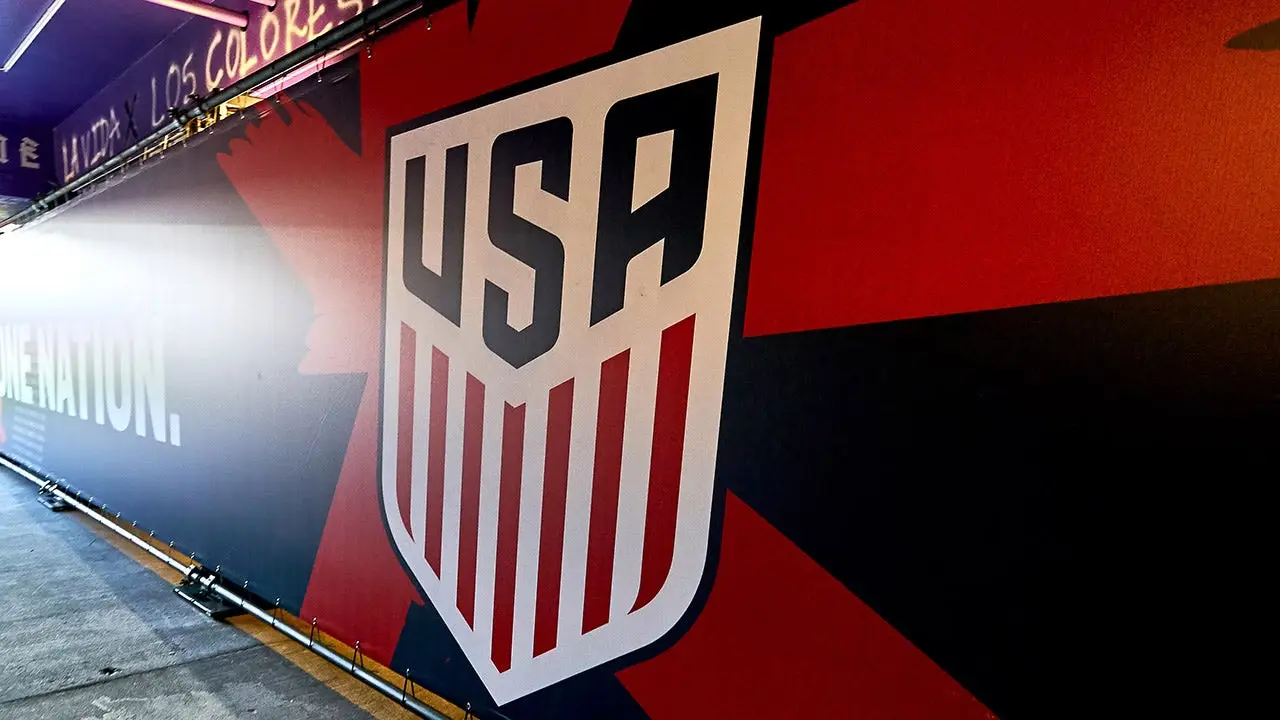
The beautiful game was met with a storm of behind-the-scenes drama just as the United States Men’s National Team prepared for one of its most critical matches on the global stage. Behind the scenes of the highly anticipated 2026 World Cup matchup against Belgium, FIFA—the tournament’s all-powerful governing body—quietly handed down suspensions to two integral figures within the U.S. Soccer Federation. According to breaking reports from ESPN, the targeted individuals were team administrative manager Sam Zapatka and Frank Pannell, the organization’s Vice President of Security. Denied access to the stadium, these crucial staff members could only watch from afar as their team’s historic tournament run unravelled on the pitch. Stripped of key logistical and security leadership, the American squad struggled to find its rhythm, ultimately falling in a devastating 4-1 defeat to a clinical Belgian side that shattered their dreams of World Cup glory.
While FIFA remained tight-lipped and declined to officially detail what prompted the sudden disciplinary action, insiders quickly began to piece the puzzle together. Sources close to the situation indicates that the bans were directly linked to bureaucratic infractions during the Americans’ tense and emotionally charged victory over Bosnia and Herzegovina in the Round of 32. Rather than any kind of physical altercations or malice, the violations reportedly centered on strict FIFA match-day protocols. Specifically, there were allegations that unauthorized personnel entered highly restricted, credential-only designated areas of the stadium during the post-match celebrations. For Zapatka, who worked his way up the federation’s ranks since 2015 to become the team’s organizational backbone in 2020, and Pannell, a seasoned security veteran, the strict enforcement of these invisible boundaries proved to be a costly procedural misstep at the worst possible moment.
In the sports world, nature abhors a vacuum of information, and speculation immediately began to swirl that these backroom suspensions were somehow retaliatory or connected to another massive controversy threatening to derail the team. Fans and analysts wondered if the bans were tied to the high-stakes appeal process surrounding star striker Folarin Balogun, who had received a highly disputed red card in the previous match against Bosnia. However, the U.S. Soccer Federation moved quickly of Tuesday morning to douse those flames, releasing a firm statement clarifying that the administrative suspensions of Zapatka and Pannell were entirely unrelated to Balogun’s disciplinary saga. It was a chaotic double-front for American soccer officials, who found themselves fighting a war of words with FIFA on multiple boardrooms while trying to keep their players focused on the looming threat of the Belgian defense.
The drama surrounding Balogun itself read like a political thriller, reaching all the way to the highest office in the United States. Following the striker’s red card, U.S. Soccer launched a frantic appeal to have the suspension overturned so their star forward could play. Though the Belgian soccer federation launched a bitter counter-challenge to keep Balogun sidelined, FIFA ultimately upheld the decision to rescind the red card, clearing the way for the forward to start. The controversy even caught the attention of President Donald Trump, who took a break from state affairs to weigh in on the beautiful game. Speaking to reporters at the White House, Trump revealed he had personally phoned FIFA President Gianni Infantino to advocate for the American star, framing his intervention as a simple request for a fair review of a play he felt was badly misjudged by the referee on the field.
“I spoke with Gianni,” Trump explained to the press corps gathered in Washington, displaying his trademark confidence in his own analytical skills. “All I did was, I asked for a review, because I didn’t think it was a foul. And again, I’m good at this stuff. I didn’t think it was a foul. I thought it was two great athletes who crashed into each other and got entangled.” While the presidential phone call highlighted just how much national pride was riding on the tournament, all the political maneuvering and boardroom debates could not translate to success on the pitch. Even with Balogun cleared to play, the emotional toll of the off-field distractions, coupled with the absence of their veteran administrative and security leaders, seemed to leave the American team step slow against a ruthless Belgian squad that capitalized on every defensive mistake and dominated the midfield from the opening whistle.
With the final whistle blowing on both the match and the United States’ ambitious World Cup journey on home soil, the narrative quickly shifted from what could have been to what lies ahead. While the Americans are left to pick up the pieces, dissect the administrative errors that led to their staff suspensions, and rebuild for the next cycle, Belgium marches on with immense momentum. The Red Devils have officially booked their ticket to the prestigious quarterfinals, where they are scheduled to clash with a formidable Spain team in a heavyweight European showdown at Los Angeles Stadium this Friday. For the U.S., the tournament ends not with a bang, but with a sobering reminder of how quickly dreams can slip away when focus is divided between the whiteboard of the locker room and the strict, unforgiving bureaucracy of international sports governance.