

Imagine you’re at a cozy winter gathering, maybe huddling around a fire in a charming cabin, sipping hot cocoa after a day of skiing. That’s the vibe the U.S. Olympic team was aiming for with their hospitality space at the 2026 Winter Games in Italy – a place of warmth and celebration, far removed from the chill of controversy. But in a twist that shows how global events can get tangled up in politics, that space, originally dubbed the “Ice House,” was quietly renamed to “Winter House” to steer clear of the storm brewing over the involvement of U.S. Immigration and Customs Enforcement (ICE) in security measures. This decision, reported by USA Today and echoed through various outlets like Reuters and The Associated Press, highlights the delicate balance between sporting excellence and international sensitivities. As an American, I can’t help but feel a twinge of pride for our athletes preparing to dazzle on the ice and snow, yet I also understand the broader human stories that intersect with their triumphs. The 2026 Milan-Cortina Olympics are shaping up to be a spectacle, with figure skaters gliding in ethereal beauty, speedskaters blurring across tracks, and ice hockey players battling with fierce passion. Yet, amid the excitement, this name change serves as a reminder that even in the high-stakes world of international competition, everyday concerns like immigration, human rights, and public perception can rise to the surface. It’s a bit surreal, isn’t it? We’re talking about elite athletes chasing Olympic glory, but a simple word association turns into a diplomatic dance. The original “Ice House” sounded fun and thematic, evoking snowy adventures, but protests tied it too closely to ICE’s mission, sparking debates that could overshadow the medals and personal bests. As someone who loves watching these games, I think it’s fascinating how something so seemingly trivial can spark global conversations – it’s like realizing your favorite holiday tradition unexpectedly connects to world affairs. Ultimately, the rename was a proactive step by U.S. officials to keep the focus on the athletes’ joy, ensuring the space remains a sanctuary for families and friends amidst the pageantry of Milan and Cortina. In a world where media amplifies every detail, choosing “Winter House” feels like a gentle nod to unity, distancing the events from divisive acronyms and inviting everyone to appreciate the pure magic of winter sports without unnecessary baggage.
Diving deeper into what this “Winter House” concept truly represents, it’s easy to visualize it as the beating heart of the American Olympic experience in Italy. Picture this: a relaxed, private retreat tucked away from the frenzy of the venues, where figure skaters like the graceful likes of those who leave you breathless with their spins and jumps can unwind. Speedskaters, pushing human limits in their aerodynamic suits, might gather here to reminisce over hot meals and laughs. Ice hockey players, after intense smackdowns on the rink, could cheer on teammates or celebrate hard-won goals with their loved ones. The space is designed for meet-and-greets that feel intimate, like family reunions in a beautiful Italian setting, and medal ceremonies that pop with Champagne and cheers. It’s also slated for watch parties, where you could almost hear the collective heartbeat of fans rooting from afar, and other casual events that bring the community together. As a sports enthusiast, I love thinking about how such spots foster those tender moments – parents beaming at their kids’ achievements, friends sharing stories of perseverance. U.S. Figure Skating, USA Hockey, and U.S. Speedskating put it eloquently in their joint statement: this is meant to be a distraction-free zone, a bubble of positivity where the unique thrill of the Winter Games can shine. Connecting to the season itself – think crisp air, powdery snow, sparkling lights – the name “Winter House” captures an essence that’s warm and inviting, much like lighting a lantern in the dark. It’s got that nostalgic charm, reminiscent of snowy cabins in classic tales, free from the modern world’s noise. During NBC’s coverage, viewers might catch glimpses of this haven, adding a personal touch to the broadcasts. I recall watching past Olympics and feeling envious of the camaraderie, and now, with this humanized space, it feels more relatable. Athletes aren’t just competitors; they’re people with lives, families, and emotions that deserve nurturing. In a time when mental health in sports is a growing concern, places like this are vital sanctuaries. It’s not just a building; it’s a hug for the spirit, ensuring that behind the gold medals and record-breaks, there’s genuine human connection. As we gear up for 2026, I find myself daydreaming about wandering in, chatting with a skater who’s just nailed a quadruple flip, or hearing a hockey player’s tales of camaraderie. The Olympics, at their core, are about humanity’s shared dreams, and this space embodies that beautifully, blending competition with compassion in a way that warms the heart.
Now, let’s talk about the elephant in the room – or should I say, the ICE in the rink – and how it’s tied into this story. It’s a complex issue that tugs at the threads of global politics and security, but from a purely human perspective, it boils down to keeping athletes and delegates safe while respecting host country sentiments. According to U.S. Embassy officials speaking to The Associated Press, ICE agents are indeed on board for security duties at the Winter Games, providing support for diplomatic teams to guard against risks like transnational crime. Crucially, they’re not there to enforce immigration laws; that’s off the table in foreign territory. The Department of Homeland Security reinforced this, stating that ICE’s Homeland Security Investigations unit is collaborating with the U.S. State Department’s Diplomatic Security Service and Italian authorities to vet threats without overstepping. All operations remain under Italian control, which is reassuring in terms of sovereignty. As an American aware of ICE’s domestic role, I get why this stirs debates – it’s not just bureaucracy; it’s about real lives affected by border policies. Think about the humanitarian side: agents are helping mitigate dangers for everyone involved, from athletes to spectators. But I also empathize with critics who see ICE’s image as tainted by controversies back home, like rough enforcement tactics that have drawn global scrutiny. It’s a delicate dance of protection versus perception, where good intentions can be overshadowed by past missteps. For instance, robust security is paramount during massive events like the Olympics, which draw millions and potential bad actors. Without it, tragedies could unfold. Yet, renaming a hospitality hub to dodge associations feels like a band-aid on a bigger wound, a way to honor sentiments without compromising safety. It’s interesting how one agency’s presence – ICE, founded post-9/11 to combat terrorism and cyber threats – can ripple into sports culture. Personally, I’ve always admired the unspoken heroes behind the scenes ensuring events run smoothly, but I also wish for a world where agency acronyms don’t evoke division. The Olympics are a bridge for nations, so integrating security seamlessly is key. By framing it as pure risk mitigation, officials hope to quash fears, allowing the focus to stay on sporting feats. If you’ve ever attended a large event, you know that sense of underlying vigilance; imagine multiplying that for a global spectacle.
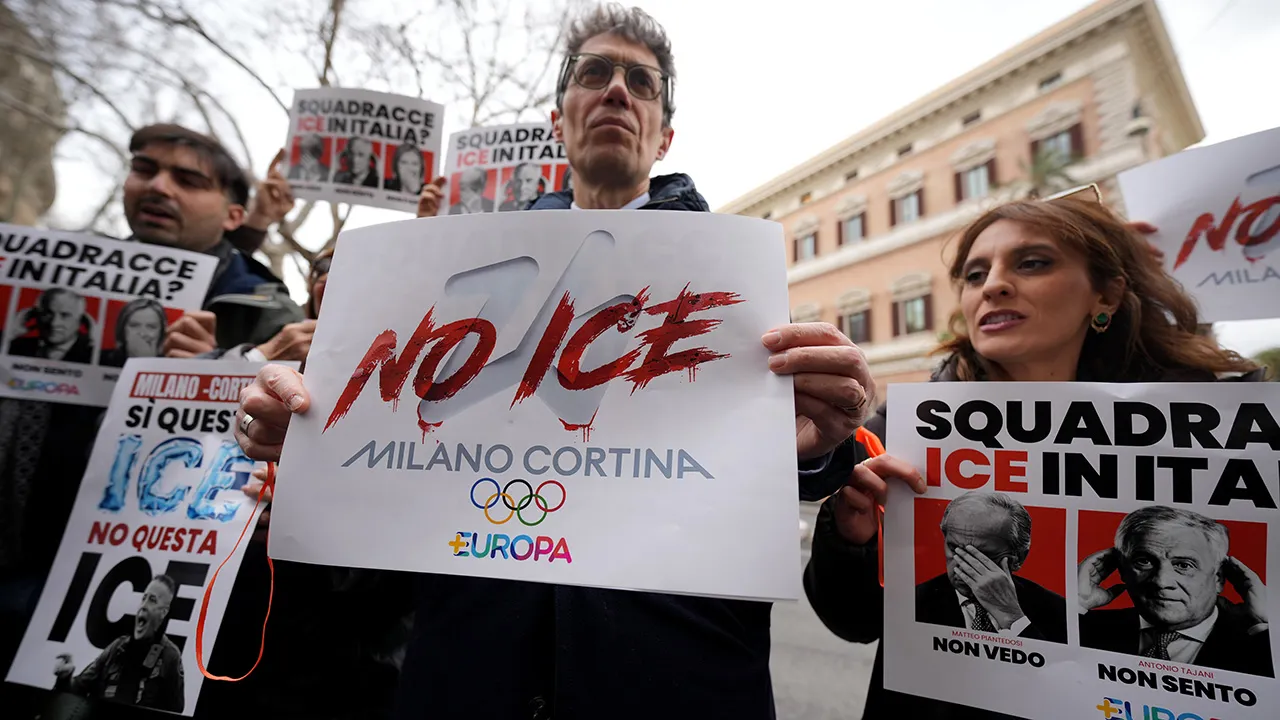
Shift gears for a moment and let’s consider the pulse of protest echoing through Italy – it’s raw, it’s passionate, and it humanizes the story in ways that no policy statement can. Amid the snowy elegance of Milan and Cortina, demonstrations erupted against ICE’s role, channeling frustrations over U.S. immigration practices into banners and chants at the heart of the Games. One striking emblem, as reported by The Associated Press, read, “No thank you, from Minnesota to the world, at the side of anyone who fights for human rights.” It’s evocative, isn’t it? Minnesota, with its own history of standing tall against injustices, reaching out globally – a reminder that activism knows no borders. Another clever play on words declared, “Ice only in Spritz,” fusing the American agency’s initials with the iconic Italian cocktail, effortlessly blending critique with a dash of humor. Picture the scene: protesters in the picturesque streets, voices raised not just against security protocols, but against a larger narrative of migrant suffering. Milan Mayor Giuseppe Sala didn’t mince words either, declaring ICE unwelcome in his city and pointing to disturbing images of masked agents in Minneapolis – a city not far from many Ice House origins. These visuals evoke pain: the tragic deaths of Renee Good and Alex Pretti, migrants lost in storms of policy and inadequacy, symbolizing how enforcement can sometimes cross lines into the inhumane. As someone who values human rights, it tugs at me; these aren’t abstract issues; they’re stories of families torn apart, lives cut short. The protests aren’t isolated; they’re part of a wave criticizing ICE’s tactics, from family separations to swift deportations that leave refugees in limbo. Yet, from a balanced view, not all agents are villains – many work tirelessly, navigating moral gray areas to uphold laws. The Italian outcry, though, underscores a universal sentiment: border control shouldn’t threaten dignity. In the lead-up to 2026, this tension highlights how sports arenas can become platforms for advocacy, much like how athletes have knelt or spoken out. It’s a call to reflect on complicity in systems that prioritize security over compassion. If you feel empathy for protesters, as I do, it’s because at their core, they’re asking for a kinder world, one where winter sports symbolize unity, not division.
Zooming out, these reactions paint a fuller picture of the human tapestry woven into the Olympics – a blend of joy, contention, and resiliencing. Fox News contributors like Ryan Morik, alongside AP reports, capture this vividly, showing how a simple rename ripples through dialogues on governance and empathy. Milan-Cortina 2026 isn’t just about podium finishes; it’s a stage for broader conversations, where the presence of ICE agents intersects with voices demanding accountability. Sala’s bold stance, referencing Minneapolis tragedies, echoes a global chorus questioning authority’s reach. It’s poignant how locations like Minnesota – a state of lakes and progress – become touchstones for worldwide dissent, proving emotions transcend geography. Personally, I appreciate how this spotlights the unsung advocates: protesters wielding banners, athletes navigating optics, officialsechoing truth. The “Winter House” rebrand reflects adaptability, aiming to insulate celebrations from conflict. Yet, it also invites scrutiny on US policies, prompting reflection on how immigration battles bleed into leisure. ICE’s role, clarified as vetting only, seeks to safeguard yet acknowledges sensitivities – a tightrope of intent versus impact. In human terms, it’s about honoring pain points while protecting participants. The Olympic spirit, historically transcendent, here contends with modernity’s divides. As fans prepare, downloading apps for immersive coverage (like the new Fox News listen feature), we anticipatemorethan games – connective narratives. This saga reminds us: behind stadium lights lie lives, urging balance between triumph and humanity’s call for justice.
In wrapping up this tale of ice, winter, and human spirits, it’s clear the 2026 Milan-Cortina Olympics embody more than athletic prowess – they’re a mirror to societal debates. The “Winter House” saga, born from renaming to counter protests, evolves into a symbol of reconciliation, blending escape with awareness. Athletes envision it as retreat, a haven for kin and kudos amidst Games’ grandeur. Critics, through emotive outcries, push for equity, linking Italy’s chill to America’s divides. Government clarifications assure security sans excess, yet empathy fuels the fire. As a viewer, I cheer the underline of campfireside conviviality, yet advocate humane policing. Sports’ magic lies in bridging divides; this incident spotlights that imperative. With NBC beaming insights and apps offering new vantages, anticipation builds. Fundamentally, it champions dialogue – athletes soaring, protesters rallying, officials adjusting – forging paths to empathy. The Olympics promise wonder; let’s embrace the warmth within the freeze, celebrating stories of perseverance and heart. Follow along, stay informed, and let the Games inspire collective betterment, one icy debate at a time.