


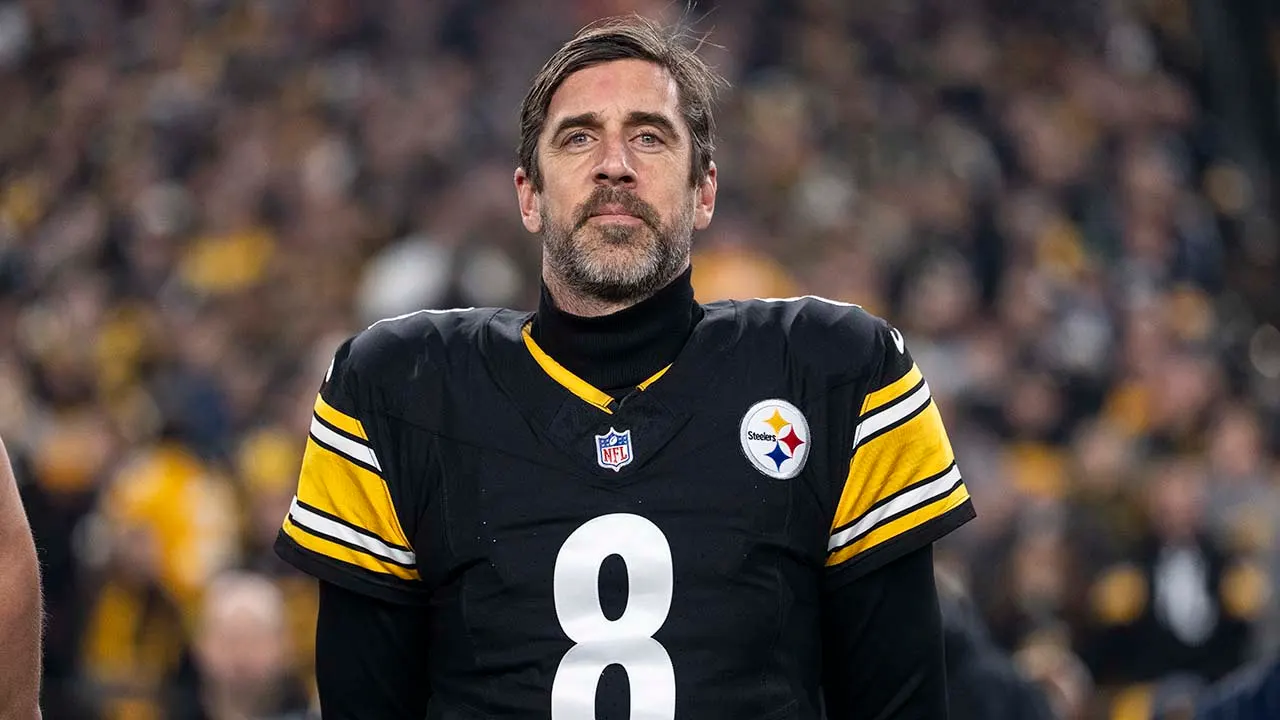
In the ever-evolving, high-stakes landscape of professional football, few narratives capture the imagination of fans and analysts quite like the unexpected reunion of legendary quarterback Aaron Rodgers and offensive mastermind Mike McCarthy under the historic banner of the Pittsburgh Steelers. While the sports world buzzed with immense speculation regarding the four-time NFL Most Valuable Player’s potential retirement, Super Bowl champion and esteemed broadcaster Joe Theismann shed light on the real driving force behind this dramatic final chapter. According to Theismann, the decision for the forty-two-year-old signal-caller to lace up his cleats for one last ride was not a difficult philosophical dilemma, but rather a practical choice heavily influenced by the presence of his longtime coach. Theismann, speaking with the authority of someone who knows the intense physical and mental toll of the position, remarked that if any other offensive coordinator had been at the helm in Pittsburgh, Rodgers likely would have walked away from the game entirely. The prospect of learning an entirely new offensive system, memorizing complex fresh terminology, and deciphering foreign playbook reads at this late stage of his life would have simply been too exhausting a mountain to climb for a veteran who has already achieved everything. However, because McCarthy was there to guide the offense, the decision became a simple equation. The deep-seated familiarity forged over thirteen remarkable, championship-winning seasons together with the Green Bay Packers provided an instant comfort level, making a potential return highly likely from the very beginning. This reunion effectively bypasses the grueling, stressful learning curve that usually accompanies a transition to a new franchise. Instead of spending invaluable Organized Team Activities (OTAs) bogged down by the frustrating minutiae of basic nomenclature, Rodgers can step onto the practice field as an on-field coach, seamlessly executing a system he already knows inside and out, thereby allowing him to focus his remaining energy on physical execution rather than mental education.
This strategic shortcut is absolutely vital when considering the current physical state of Aaron Rodgers as he enters the twilight of his legendary career. At forty-two years of age, the future Hall of Fame quarterback possesses an unparalleled football IQ, but he must naturally contend with the reality of an aging body and a noticeable decline in the scrambling mobility that once made him a dual-threat nightmare for defensive coordinators across the league. Last season, Rodgers proved he still had plenty of premium fuel left in his engine, delivering highly impressive numbers over the course of sixteen games by completing a highly efficient 65.7 percent of his passes, throwing for 3,322 yards, and tossing twenty-four touchdowns with only seven interceptions. These statistics are a remarkable testament to his enduring arm talent, vision, and ability to protect the football under intense pressure. However, as Joe Theismann pointed out, the days of Rodgers effortlessly escaping collapsing pockets and making off-platform throws on the run are largely in the rearview mirror. The modern iteration of Rodgers must win primarily from within the safety of the pocket, relying on his lightning-fast release and pre-snap premonition to neutralize aggressive defensive fronts. The margin for error has shrunk dramatically, making his cognitive connection with his coach’s offensive system more important than ever before. If he can accurately read the opposing defense before the snap and deliver the ball to his playmakers in stride within a fraction of a second, his diminished foot speed becomes secondary to his sheer intellectual superiority on the field. This dynamic creates a fascinating balancing act between a veteran superstar’s physical evolution and his absolute mastery of the offensive playbook, defining his quest to prove that elite processing speed can outrun physical decay. He must utilize every ounce of his experience to manipulate safeties with his eyes and find soft spots in zone coverages, a rare skill set that only a few transcendent quarterbacks ever truly master as they transition from raw athletes to master tacticians of the passing game.
To facilitate this highly structured style of play, the responsibility falls squarely on the shoulders of the Pittsburgh front office and coaching staff to build an impenetrable fortress around their veteran quarterback, a critical point that Joe Theismann emphasized with immense urgency. For Rodgers to be the transformative, championship-caliber savior the Steelers hope he can be, the offensive line must transcend average play and establish themselves as an elite unit of relentless protectors. Theismann made it clear that while Rodgers’ elite, quick-release capabilities can mitigate some standard pressure, he still desperately needs a secure, clean platform to hold the synthetic leather when opportunities arise to push the ball vertically downfield into tight coverage windows. If the pocket collapses prematurely, an older quarterback simply cannot consistently absorb the physical punishment that younger, more agile players might survive. Protecting Rodgers is not merely about avoiding devastating sacks; it is about preserving his physical health over a grueling, physically punishing seventeen-week campaign and keeping him comfortable enough to scan the entire landscape of the secondary without checking down early. This massive undertaking requires a highly cohesive front five that can communicate flawlessly pre-snap, pick up sophisticated stunts, and establish a deep pocket that allows Rodgers to step up comfortably and launch his beautiful spiral. The organizational investment in upgrading the offensive line is essentially a direct investment in the quarterback’s health and postseason sustainability, meaning that every block, slide protection, and double-team combo will directly dictate the fate of their championship window. Without a fortified wall of steel upfront, even the most brilliant signal-caller in NFL history would find himself vulnerable to the relentless, violent defensive coordinators of the modern league, making the performance of the offensive line the ultimate cornerstone of this bold experiment. This level of security will give Rodgers the peace of mind needed to execute McCarthy’s deep routes, transforming a potentially conservative offense into a diverse, explosive unit capable of matching the league’s high-powered passing attacks.
Adding an extra layer of intrigue to this complex puzzle is the profound cultural transformation currently unfolding within the Pittsburgh franchise itself, which finds itself stepping boldly into a brand-new era with a fresh head coaching hire for the very first time in nearly two decades of stability. Despite this historic structural shift at the helm, Joe Theismann remains entirely confident that the core identity of the organization will remain completely unchanged, passionately asserting that the proud brand of football played in Western Pennsylvania is woven deeply into the genetic fabric of the city and its loyal fanbase. The AFC North division in which they compete is notoriously ruthless and unforgiving, demanding a brand of physical dominance where success is measured in bruises, bloody noses, and cold-weather toughness just as much as points on the scoreboard. Theismann explained that the Steelers have always been defined by a unique, blue-collar brand of mental and physical resilience—a gritty determination that aligns perfectly with the quiet, defiant toughness that Aaron Rodgers has demonstrated throughout his own storied career. Even with a new coaching staff introducing modern offensive philosophies and schematic adjustments, the underlying expectation remains that the Steelers are built to win in the trenches, leaning heavily on a ferocious defense and mistake-free quarterback play. Rodgers’ ability to adapt to this hard-nosed, practical culture will be the ultimate key to his success; he must fully embrace the gritty, victory-at-all-costs brand of football that has defined the black-and-gold aesthetic for generations. This seamless synergy between a proud, historic franchise and an legendary quarterback searching for his final ring creates a compelling narrative of grit, proving that while names on jerseys change, the spirit of Pittsburgh football remains an eternal, unshakable force. The passionate Steeler nation expects nothing less than championship contention, and the combination of Rodgers’ elite football mind with the franchise’s legendary defensive backbone forms a potent formula that could easily redefine the balance of power within their fiercely competitive division.
To fully appreciate the profound depth and credibility of Joe Theismann’s analytical insights, one must look closely at his own storied legacy on the gridiron, which provides him with a highly specialized lens through which to evaluate Aaron Rodgers’ late-career journey. Theismann spent his entire illustrious twelve-year NFL career wearing the iconic colors of the Washington Redskins, carving out an enduring reputation as one of the most passionate, fiercely competitive, and resilient quarterbacks of his era. His crowning achievement came in the landmark 1982 season when he masterfully led his franchise to a resounding 27-17 victory over the physical Miami Dolphins in Super Bowl XVII, cementing his status as a champion on the grandest stage in all of sports. The very next year, in 1983, Theismann reached the absolute pinnacle of individual professional success, capturing the highly coveted NFL Most Valuable Player award and securing his second consecutive Pro Bowl nod after putting together a dazzling showcase of high-stakes quarterbacking. Over his standout tenure in the league, he compiled a highly respectable stat line, completing 56.7 percent of his passes for an impressive 25,206 yards and firing 160 touchdowns against 138 interceptions in a much more physically brutal era of defensive rules. Having personally experienced the immense weight of championship expectations, navigated complex offensive schemes, and maintained elite cognitive performance as his physical body aged, Theismann truly understands the exact mental gymnastics required to succeed at the summit of professional athletics. His expert commentary is not merely speculative media punditry, but rather the hard-earned wisdom of a legendary champion who knows precisely what it takes to guide a historic franchise through the gauntlet of an NFL season. Because he has stood in those exact shoes, facing down charging pass rushers while managing complex call-outs, his evaluation carries a weight that current players and coaches respect, making his thoughts on the Rodgers-McCarthy reunion invaluable to football enthusiasts.
While the seventy-six-year-old Joe Theismann remains a highly active, respected, and sought-after voice on all matters concerning the strategic evolution of professional football, his own famous competitive spirit has seamlessly transitioned from the high-intensity atmosphere of roaring NFL stadiums to the tranquil yet highly challenging greens of the golf course. The resilient quarterbacking legend is scheduled to showcase his skills in the upcoming and highly anticipated American Century Championship, held at the breathtaking, wind-swept Edgewood Golf Course in scenic Lake Tahoe. This premier celebrity golf tournament, running from July 10 to July 12, will be broadcast live to a passionate nationwide audience on both NBC and its streaming partner Peacock, allowing nostalgic fans to witness the enduring athletic fire of their favorite sports icons up close. The tournament itself serves as a beautiful physical metaphor for the lifelong competitive drive that defines both Joe Theismann and Aaron Rodgers; though the specific field of play changes and the physical toll shifts from heavy hits to surgical precision, the internal human desire to push limits, master a craft, and experience the thrill of victory never truly fades. As modern football fans prepare to watch another thrilling NFL season unfold on Sundays, they can comfortably look to pioneers like Theismann as a shining, inspiring example of how to transition gracefully from the brutal gridiron while keeping that infectious hunger for competition burning brightly. Whether he is expertly dissecting intricate offensive line alignments on the airwaves, offering mentorship to the next generation of quarterbacks, or aiming for a crucial birdie under the pristine skies of Lake Tahoe, Joe Theismann continues to embody the very chest-pounding heart of American sports history, proving that the pursuit of excellence is a beautiful lifetime journey with no true expiration date. His journey reminds us that champions never truly retire; they simply find new fields upon which to test their limits, cementing their legacy not just through past statistics, but through an ongoing, vibrant dedication to athletic excellence that continues to inspire fans of all generations.