


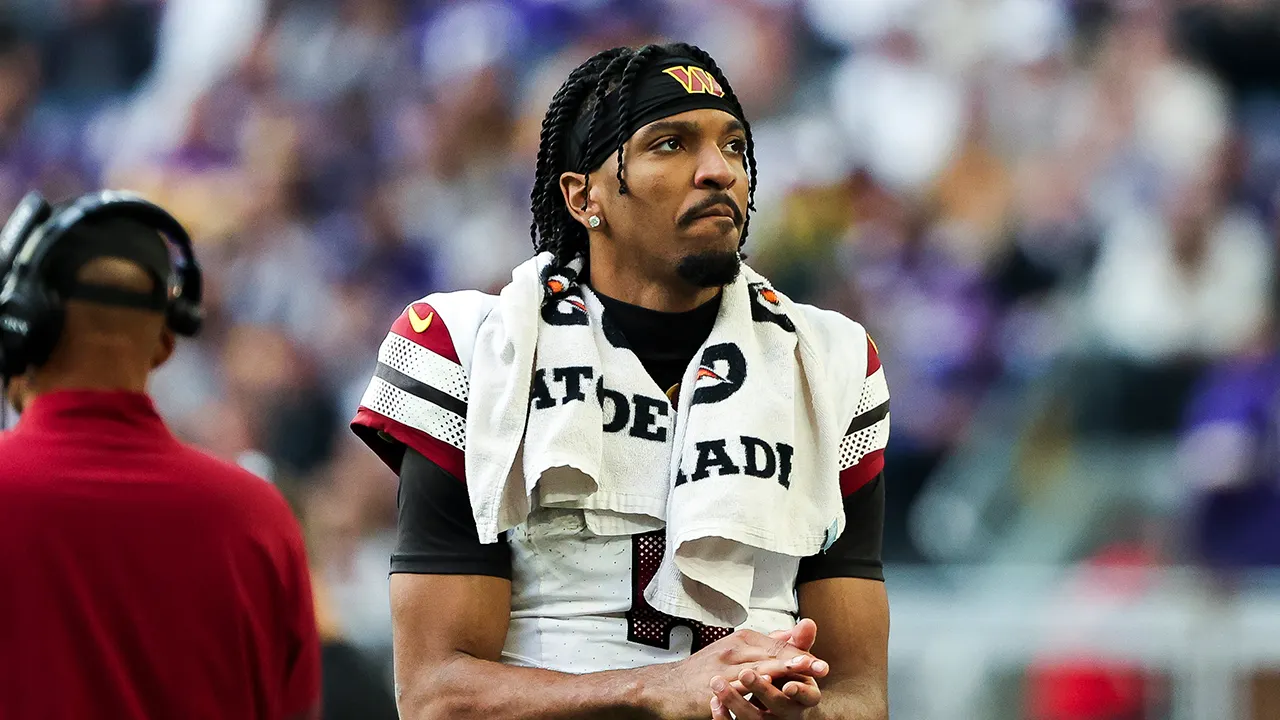
There is a unique type of wisdom that only comes from having your body battered on an NFL gridiron for over a decade, and at 76 years old, legendary Washington quarterback Joe Theismann possesses it in abundance. Looking back at the Washington Commanders’ disappointing 5-12 campaign last year, which felt like a cold shower after the high-flying excitement of their NFC Championship run in 2024, Theismann does not see a team devoid of talent, but rather a group of human beings who simply ran out of gas. Professional football is an grueling marathon, and the modern 17-game schedule extracts a heavy toll that young players often underestimate until their joints begin to ache in December. Theismann, who spent his entire career in the Burgundy and Gold back when they were known as the Redskins, watched with a sympathetic but critical eye as Washington’s roster buckled under the weight of injuries in critical positions. Even veteran additions like linebacker Bobby Wagner, whose legendary instincts remain sharp, could not entirely outrun the hands of time when forced to carry such a heavy defensive burden week after week. Theismann notes that regardless of how youthful or invincible a player might feel in September, by the time winter rolls around, the human body has a brutal way of reminding you of its limits, leaving a depleted roster gasping for air against fresher opponents.
To fix a leaky ship, you have to reinforce the hull, and Washington spent their entire offseason doing exactly that by pouring massive resources into a defense that surrendered a disastrous 26.5 points per game last year. Theismann’s excitement is palpable when discussing the defensive overhaul, starting with the draft selection of Ohio State standout Sonny Styles at number seven overall, a player he believes is destined to become the cornerstone of Washington’s defensive identity for the next decade. But rookie talent alone cannot solve a cultural defensive crisis, which is why the front office opened its checkbook to secure proven veteran game-changers who bring both physical toughness and playoff experience. The headline acquisition of former Los Angeles Chargers pass rusher Odafe Oweh on a massive four-year, $100 million contract signals a fierce commitment to winning the battle at the line of scrimmage, paired with the gritty addition of former Kansas City Chiefs linebacker Leo Chenal on a three-year deal. Complementing them is defensive tackle Tim Settle, who returns to a familiar atmosphere to bolster the interior line, creating a defensive front that is designed not just to survive the 17-game gauntlet, but to violently disrupt opposing offenses and take some of the pressure off their young, developing quarterback.
The offensive side of the ball is undergoing an equally dramatic human and tactical transformation, beginning with the return of star wide receiver Terry McLaurin as a full, distraction-free participant in this year’s offseason program. Unlike last year, when McLaurin was sidelined by the stressful anxiety of a contract holdout, his presence on the field and in the locker room provides an irreplaceable emotional anchor for a young roster searching for leadership. This stability is critical as the team transitions away from Kliff Kingsbury’s offensive system to a new philosophy spearheaded by newly promoted offensive coordinator David Blough. Theismann points out that Blough’s playbook will demand a very different rhythm, relying heavily on play-action passes and requiring the quarterback to take snaps from under center rather than operating exclusively out of the shotgun. While this transition can often overwhelm a young signal-caller, quarterback Jayden Daniels actually utilized his late-season injury rehabilitation period last year as a blessing in disguise, studying the mental nuances of Blough’s system while his body healed. Because of this dedication, Daniels enters the upcoming season significantly ahead of the developmental curve, eager to prove that his rookie campaign was just a preview of a stellar career.
Yet, as any seasoned NFL veteran knows, progress does not happen in a vacuum, and the Commanders will have to test their new identity against an NFC East division that has grown increasingly hostile. Theismann is quick to warn eager fans that while Washington has undoubtedly gotten better, their historic rivals have not been resting on their laurels. He points to the New York Giants, who have quietly rebuilt their foundations under a revitalized coaching staff while quarterback Jaxson Dart continues to mature into a genuine threat, backed by a defense that is finally beginning to play up to its immense raw potential. Meanwhile, the Dallas Cowboys have aggressively patched up their defensive weaknesses, adding the kind of depth necessary to remain a legitimate threat late into January. And then, of course, there are the Philadelphia Eagles, a perennial powerhouse that refuses to yield the division crown, led by quarterback Jalen Hurts, a player whom Theismann deeply admires for his quiet resilience. Despite a barrage of media skepticism and constant criticism, Hurts simply continues to show up every Sunday, block out the external noise, and find ways to win football games, setting a high standard that Washington must now rise to meet.
For Theismann, watching this reconstruction of Washington football is a deeply personal experience that connects his present-day analysis to a legendary legacy forged over 12 grueling seasons in the nation’s capital. He remains the emotional heartbeat of the franchise’s golden era, a two-time Pro Bowler and the league’s 1983 Most Outstanding Player who famously guided the team to a historic 27-17 victory over the Miami Dolphins in Super Bowl XVII. His career statistics—over 25,000 passing yards and 160 touchdowns—are testament to an era of football characterized by relentless physical toughness and strategic brilliance, qualities he desperately wants to see return to the modern Commanders. Having lived through the ultimate highs of championship parades and the agonizing lows of career-ending injuries, his critique of the current roster carries the weight of a man who understands the thin line between mediocrity and immortality in the NFL. When he speaks of building a locker room culture that can withstand the physical deterioration of a long season, he is drawing from the well of his own triumphs and scars, offering a blueprint for the next generation of Washington heroes to follow.
While his eyes remain firmly fixed on the gridiron, the competitive fire that drove Theismann to legendary sports heights has simply found new avenues of expression as he prepares to showcase his athletic versatility this summer. From July 10 to 12, the former quarterback will trade his helmet for a set of golf clubs to compete in the prestigious American Century Championship, set against the breathtaking, pine-lined fairways of Edgewood Golf Course in Lake Tahoe. The tournament, which will be broadcast to millions of fans on NBC and Peacock, offers a beautiful reminder that for true athletes, the desire to compete, test one’s limits, and connect with fans never truly fades with age. As he walks the peaceful fairways of Tahoe, far removed from the deafening roar of football stadiums, he will carry with him the same quiet confidence and optimistic spirit that he possesses for the future of the Commanders. For Joe Theismann, whether on the grass of a golf course or the turf of a stadium, life is an endless series of opportunities to rebuild, compete, and strive for greatness, and he is ready to watch Washington do the exact same.