


The Women’s National Basketball Association is currently navigating an era of unprecedented growth and cultural scrutiny, a transformation that has placed rookie sensation Caitlin Clark at the absolute center of a raging storm. As stadium seats fill and television ratings shatter historic records, the atmosphere on the hardwood has grown increasingly volatile, characterized by a physical intensity that frequently crosses the line into outright hostility. In the midst of this pressure cooker, popular player Sophie Cunningham has emerged as a refreshing and fiercely honest champion for fairness, speaking out against what she views as a systematic failure by the league to protect its brightest young star. Cunningham’s candid commentary on her podcast offers a window into the raw, human reality of professional athletes who must perform under the weight of immense public expectation while dealing with hostile treatment on the court. She has bluntly stated that opposing players are actively targeting Clark with physical cheap shots, creating a punishing environment that goes largely unchecked by the officials. This dynamic highlights the deeper psychological struggles of a new generation of players entering a league that is struggling to balance its newfound commercial success with the safety and well-being of the very individuals driving that success.
The boiling point of this physical hostility occurred during a recent matchup when star player Alyssa Thomas delivered a violent blow to Clark’s throat—a dangerous, non-basketball play that somehow went completely unpunished by the referees on the floor. Cunningham discussed this alarming incident on her podcast, admitting that she and her teammates did not witness the throat-punch in real-time amidst the chaotic flow of the game. She expressed profound regret over this blind spot, emphasizing a deep sense of locker-room solidarity by promising that if they had seen the assault occur, they would have immediately stepped in to defend Clark. This protective instinct speaks to the sisterhood and mutual respect that exist among players who understand the physical toll of the game, making the referees’ silence even more frustrating. Cunningham pointed out that this type of dangerous, physical targeting has become a routine ordeal for Clark in almost every single game, yet the league’s administrative and officiating bodies continue to do absolutely nothing about it, effectively leaving their most valuable asset vulnerable to serious injury.
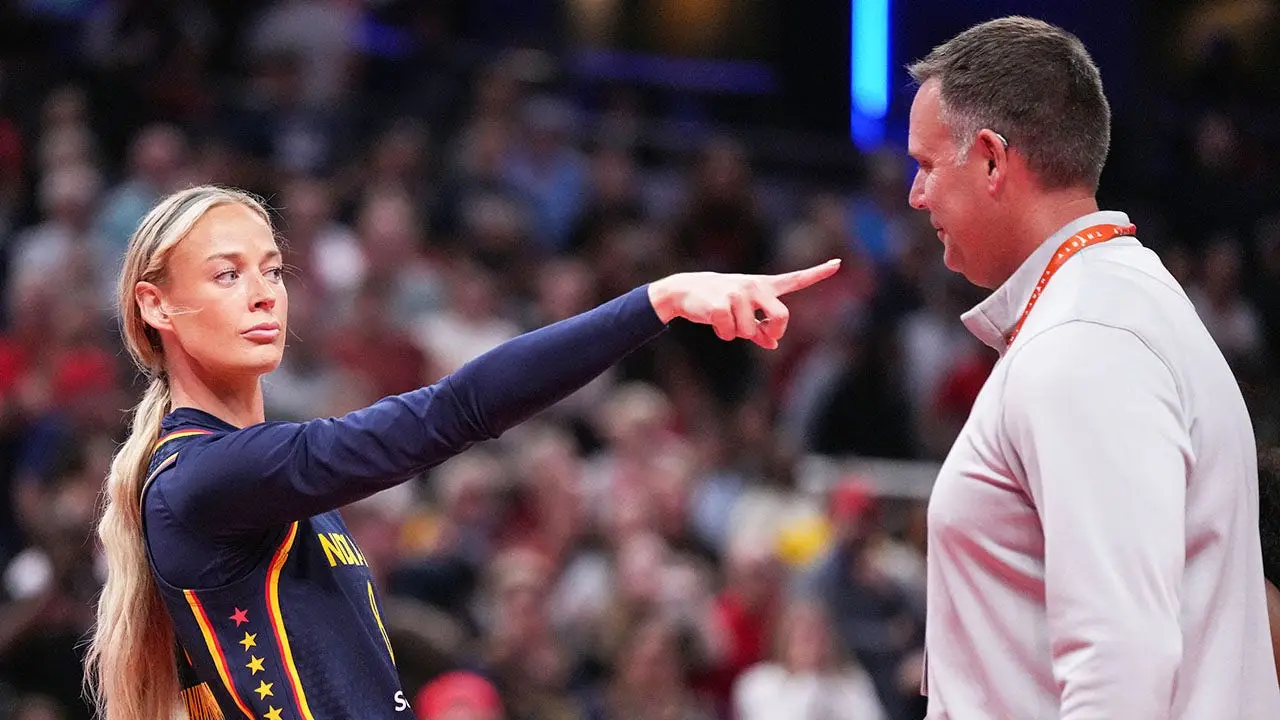
Beyond the physical danger, the high stakes of modern women’s basketball have also manifested in highly entertaining, psychological on-court dramas that quickly capture the public’s imagination. Cunningham herself recently became an overnight viral sensation during a heated exchange with star player DeWanna Bonner, a moment that perfectly captured the intense, theatrical energy of modern WNBA rivalries. During the confrontation, Cunningham repeatedly used a simple pointing gesture to state her case to the officials, a move that drove Bonner into a state of visible, explosive frustration while Cunningham remained remarkably stoic. The clip instantly transformed into one of the internet’s favorite memes, prompting Cunningham to joke about the sheer absurdity of receiving a technical foul for her actions. She described the penalty as the weakest call she had ever witnessed in her life, pointing out the humor in the fact that she was penalized simply for pointing while her opponent was completely losing her composure. This lighter moment underscores the intense mental warfare that defines elite sports, illustrating how players must navigate both physical aggression and psychological gamesmanship under the watchful eyes of millions of fans.
However, the frustrations of the players extend far beyond the court and into the corporate boardroom, particularly regarding how the WNBA manages and markets its own talent. Cunningham delivered a scathing critique of the league’s promotional strategies, directing her anger at a recent commemorative graphic released by the league that completely omitted Caitlin Clark. To make matters more bizarre, Cunningham herself was featured on the graphic, a decision she found thoroughly embarrassing and deeply insulting to the competitive integrity of the sport. She labeled the omission a complete joke and directly addressed the massive wave of social media backlash directed at Commissioner Cathy Engelbert and the league’s front office. For Cunningham, leaving a generational icon—someone who is indisputably the most influential figure to ever enter the WNBA—off a major promotional roster is not just an administrative oversight; it is a profound failure of basic business logic that alienates the very fanbase the league is trying to build.
Cunningham expanded on this marketing critique by arguing that the WNBA’s current promotional strategies are holding the sport back from reaching its true economic potential. She expressed frustration with the league’s habit of promoting random players on commercials and graphics, arguing that if decision-makers were smart, they would aggressively market the individuals who actually draw crowds and generate revenue. She named standout players like Clark, Kelsey Mitchell, and Aliyah Boston as the natural faces of the league’s promotional campaigns, questioning why the organization seems hesitant to capitalize on its most valuable assets. Cunningham’s unfiltered perspective highlights a growing divide between the organic, player-driven popularity of the sport and the corporate, sometimes politically motivated decisions of the league’s leadership. For the players, who stand to benefit directly from increased league revenue, seeing the WNBA miss easy marketing opportunities is a source of genuine confusion and frustration, especially when the path to mainstream success is so clearly illuminated by the fans’ enthusiasm.
Ultimately, Cunningham’s outspoken commentary serves as a crucial wake-up call for a league that is currently experiencing a historic inflection point. The WNBA cannot fully capitalize on its explosive growth if it fails to protect its players from physical harm on the court and neglects to market them logically off the court. By humanizing the struggles of Caitlin Clark and shedding light on the administrative disconnects within the league, Cunningham has started a vital conversation about the future of women’s professional sports. As the league continues to transition from a niche market to a mainstream powerhouse, its success will depend on its ability to evolve, protect its stars, and make business decisions that align with the desires of its rapidly expanding audience. Authentic voices like Cunningham’s are essential to this maturation process, reminding fans and executives alike that behind the television ratings, the memes, and the corporate graphics are real human beings who deserve safety, respect, and a league that champions their talents properly.