


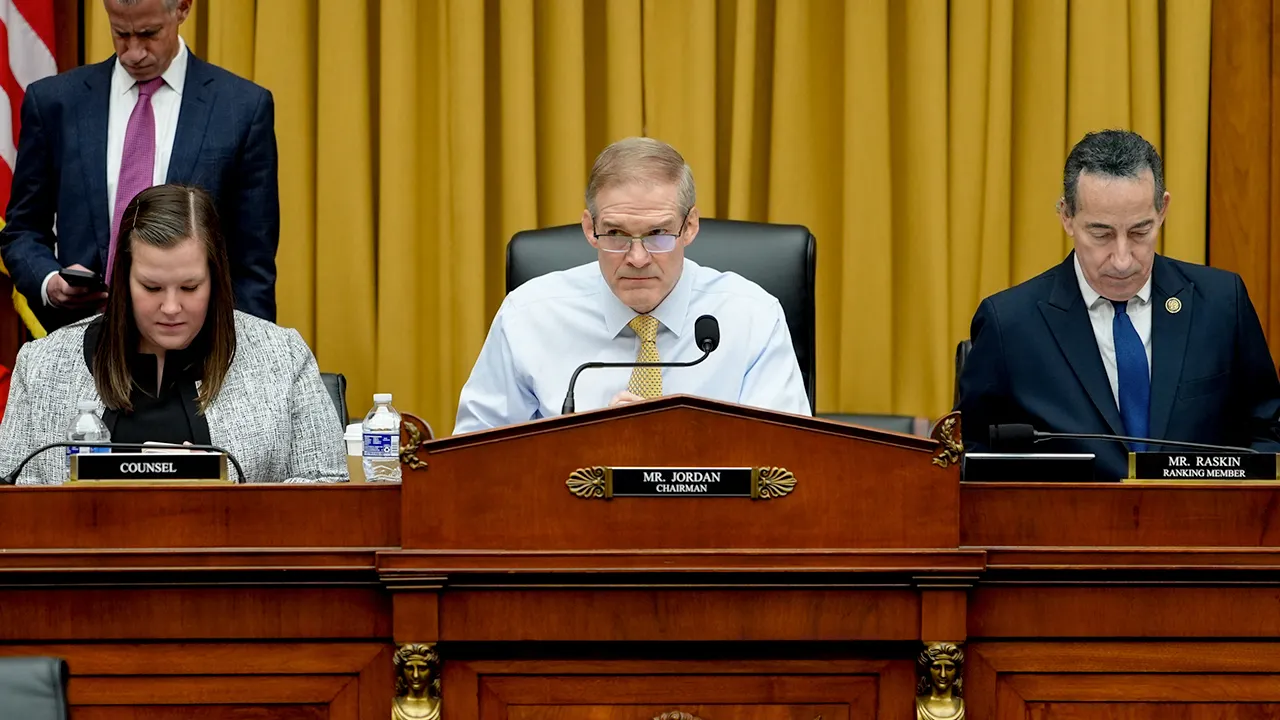
For millions of families across America, the weekly ritual of autumn is defined not by the changing leaves or the cooling breeze, but by the shared sanctuary of Sunday afternoon football. It is an emotional anchor—a chance for parents, children, and friends to gather around a screen, unified by the colors of their favorite franchise and the collective drama of the gridiron. Yet, in recent years, this deeply-grained cultural tradition has grown increasingly expensive and maddeningly complex, leaving millions of fans feeling marginalized by the very sport they love. This growing disconnect between the average fan’s wallet and the league’s insatiable financial appetite is the driving force behind a blistering new report released by the House Judiciary Committee and its chairman, Jim Jordan. The congressional document pulls back the curtain on the business practices of the National Football League, leveling a sharp accusation that America’s most popular sports league has systematically overstepped its bounds. At the heart of the committee’s argument is a single piece of legislation from the Kennedy administration: the 1961 Sports Broadcasting Act. Congress asserts that this narrow antitrust exemption, which was originally drafted to shield a struggling, mid-century league from financial ruin, has been warped into an all-powerful shield used to build a sprawling, multi-billion-dollar media empire. By stretching this legal loophole beyond its intended limits, the NFL has successfully restricted consumer choice, forced viewers into predatory subscription models, and artificially driven up the price of simply watching a game. For the everyday spectator, this is not merely an abstract debate over legal jargon; it is a direct explanation of why it has become so prohibitively difficult and expensive to sit down on a Sunday afternoon and watch their home team play without subscribing to a dizzying array of cable channels and streaming services.
To fully understand how we arrived at this flashpoint of corporate scrutiny, one must travel back to the early 1960s, a time when professional football was far from the cultural monolith it is today. When the Sports Broadcasting Act was signed into law in 1961, the NFL was locked in a fierce, existential battle with rival leagues, and many of its member franchises were actively fighting just to keep their stadium lights on. Congress stepped in with a very specific, carefully guarded olive branch: a limited antitrust exemption that allowed the league’s individual teams to pool their television rights and sell them collectively to major networks. Crucially, this exemption was built on a foundation of public good—it was designed to ensure that professional football remained highly accessible on free, over-the-air broadcast television so that everyday citizens could enjoy the games regardless of their socio-economic status. Yet, as the House Judiciary Committee’s report—pointedly titled _The Sports Broadcasting Act: A special-interest antitrust exemption gone awry_—makes abundantly clear, the spirit of that historic compromise has been thoroughly compromised. Over the last six decades, the NFL has evolved from a vulnerable sports association into an undisputed economic superpower, utilizing its unique legal status to insulate itself from market competition. Instead of preserving free public access as originally intended, the league has increasingly migrated its premium content behind expensive paywalls and exclusive streaming contracts. The report argues that this transition represents a fundamental breach of trust, as the very legal shield granted to protect the public’s access to the game is now being wielded to squeeze those same citizens for every possible dollar.
The most damaging evidence of this consumer exploitation centers around the NFL’s premium “Sunday Ticket” package, which has long been a source of both joy and financial pain for out-of-market fans. Whether it is a Chicago native living in Arizona or a lifelong Miami fan relocated to New England, millions of Americans rely on Sunday Ticket just to stay connected to their hometown teams. However, the report highlights shocking internal data and court documents from a landmark antitrust trial that reveal how the NFL actively suppressed affordable alternatives to protect its lucrative pricing structure. Most notably, page 18 of the congressional report details a proposal from sports broadcasting giant ESPN, which suggested offering a Sunday Ticket package priced at a highly accessible $70 per season. Furthermore, there was strong advocacy for a team-by-team purchasing option, which would have allowed a fan to pay a reduced rate to watch only the seventeen regular-season games of their specific favorite team. Instead of embracing these consumer-friendly innovations, the NFL aggressively blocked them, opting instead to maintain a massive, all-or-nothing bundle that currently costs fans upwards of $480 annually. The committee’s findings show that the league’s justification for this high price tag—that Sunday Ticket is an exclusive, niche product meant only for “avid” fans who want to watch every game—is fundamentally untrue. Internal data reveals that the vast majority of subscribers do not care about having access to every game across the country; they are simply displaced fans who are forced to purchase an exorbitant, bloated package because they have no other legal avenue to watch their beloved hometown team play.
In defense of its highly lucrative media model, the NFL has frequently deployed a polished public relations narrative, bragging that approximately 87 percent of its games remain available on free, over-the-air broadcast television. However, the House Judiciary Committee’s report dissects this claim with surgical precision, exposing it as an line of statistical sleight of hand that ignores the ground-level reality of the average American household. In practice, because broadcast networks are geographically restricted, a fan sitting in any given television market actually has access to significantly less than half of the league’s weekly slate of games on free TV. To watch the rest of the league, or to follow a team outside their immediate physical radius, viewers are forced to navigate a fragmented and expensive digital landscape of cable packages, premium networks, and a rotating carousel of streaming platforms. The report pulls no punches in its assessment, characterizing the NFL’s intricate, multi-billion-dollar television rights empire as a fragile “house of cards” built entirely on a highly overstretched and legally unstable interpretation of the 1961 antitrust exemption. By continuously pushing games onto paid streaming services like Prime Video, Peacock, and Netflix, the league is actively eroding the foundational covenant of the Sports Broadcasting Act. Congress is essentially warning the NFL that its current trajectory is unsustainable, as the legal and political patience for a tax-exempted monopoly that consistently overcharges and under-delivers to the American public is rapidly wearing thin.
The stakes of this congressional showdown are nothing short of existential for the National Football League, as any significant alteration to its antitrust exemption would trigger a seismic collapse of its entire economic ecosystem. Under the current system, which is secured by the 1961 Act, the league functions as a collective cartel, negotiating massive, unified television contracts with media giants that recently culminated in an astronomical $110 billion windfall. This collective pool of money is then distributed equally among all thirty-two franchises, serving as the financial engine that fuels the league’s prized “competitive parity.” It is this revenue-sharing model that allows a small-market team like the Green Bay Packers to compete on a level playing field and win championships against a big-market behemoth like the New York Giants. If Congress or a federal court decides to revoke or severely restrict the Sports Broadcasting Act exemption, this entire cooperative structure would disintegrate. Individual teams would be forced to negotiate their own independent television and streaming contracts, mirroring the chaotic and highly unequal financial landscapes of European soccer leagues or Major League Baseball. Under such a decentralized system, ultra-wealthy franchises in dominant media markets would secure staggering multi-billion-dollar local TV deals, while smaller-market teams would see their revenues plummet and their ability to field competitive rosters destroyed. This is why a high-ranking league source characterized this legal battle as “practically everything” to the NFL; it is not just about the price of a streaming package, but about preventing the total destruction of the business model that made the league the most successful sports enterprise in human history.
Ultimately, this unfolding conflict between the halls of Congress and the executive suites of the NFL represents a profound cultural crossroads for modern America, raising vital questions about the true ownership of our national pastimes. Football has always been more than just a business; it is a public trust, a shared language that bridges political, geographical, and generational divides. The House Judiciary Committee’s scathing report serves as a stern, pre-emptive warning to the league’s leadership: they must proactively reform their exclusionary media practices and prioritize the financial well-being of their fanbase before the blunt instruments of federal law or the courts force them to do so. In an era when inflation and the rising cost of living are forcing families to make difficult financial choices, the sight of a multi-billion-dollar sports league aggressively price-gouging its most loyal supporters is increasingly intolerable. If the NFL continues to prioritize short-term profit maximization over long-term public accessibility, it risks permanently alienating the very communities that built its empire. True sportsmanship extends far beyond the margins of the playing field; it involves respecting the fans who invest their passion, their time, and their hard-earned money into the sport. As this high-stakes legislative battle continues to intensify, both the league and the government must remember that the true soul of professional football does not belong in a corporate boardroom or a luxury stadium suite—it belongs to the millions of everyday fans who deserve the simple, affordable dignity of watching their favorite team play.