





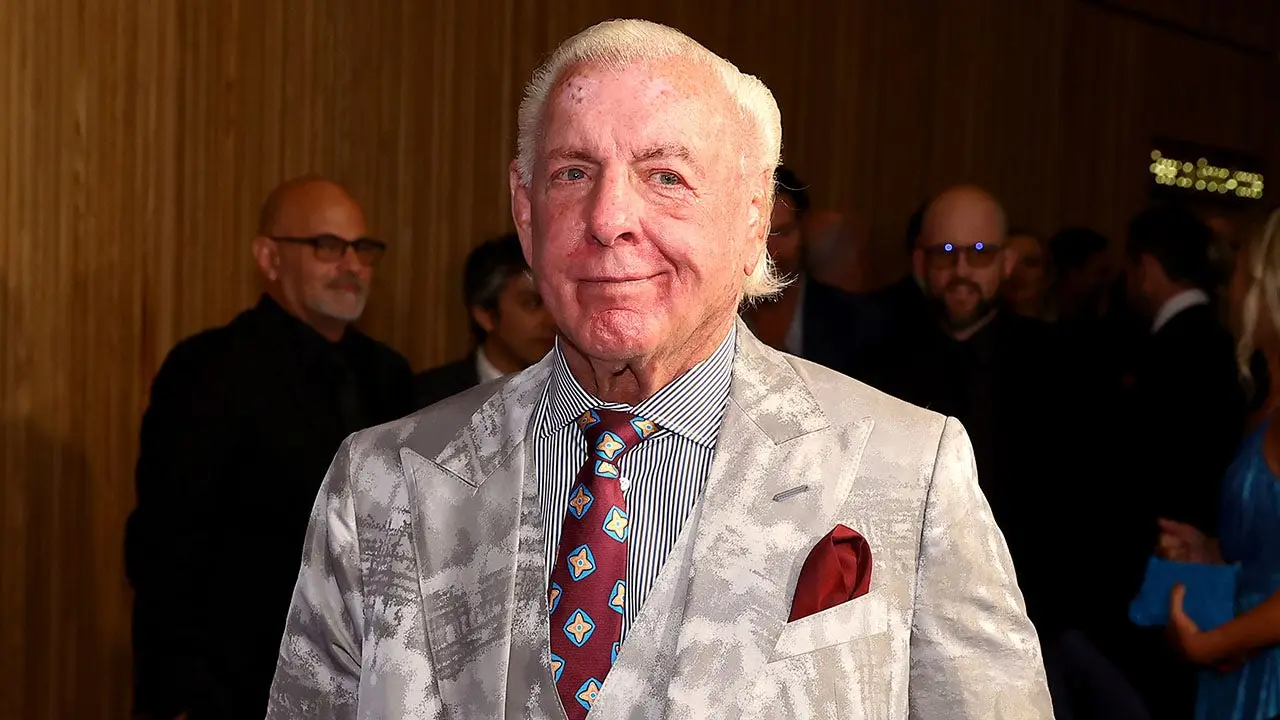
Ric Flair, the legendary pro wrestler known for his flamboyant style and unyielding toughness, has once again made headlines by criticizing Los Angeles Lakers star Luka Dončić’s injury situation. Just days before the team’s Game 4 playoff loss to the Oklahoma City Thunder, Flair called out the young basketball prodigy for sitting out due to a hamstring strain. In a candid interview on “Yahoo Sports Daily,” Flair shared his unfiltered thoughts, blending his passion for the Lakers with his own gritty experiences from the ring. He emphasized that he wasn’t trying to be harsh—just honest—and admitted he doesn’t know the full details of Dončić’s injury. But as someone who’s pushed through severe pain himself, Flair couldn’t help but draw parallels, like the time he urged a San Francisco 49ers quarterback to tough it out against long odds. His tone was playful yet firm, rooting for his team while challenging the superstar’s resolve. This isn’t the first time Flair’s spoken up; last week, he even suggested trading Dončić if he wasn’t willing to battle through the setback, sparking debates among fans about the fine line between player protection and playoff grit.
What makes Flair’s critique resonate is his storied history of overcoming injuries that would sideline most athletes. Back in 1975, he survived a terrifying plane crash in North Carolina that broke his back in three places. Doctors told him he’d never wrestle again, but Flair defied the odds, launching a career that’s now inscribed in wrestling’s Hall of Fame. Despite the pain and the warnings, he kept performing, embodying the “Nature Boy” persona that made him an icon. And it didn’t stop there—in 2011, while working for Total Nonstop Action Wrestling (TNA), he suffered another major injury that could have ended it all. Adding to his list of narrow escapes, Flair once revealed he’d been struck by lightning in 2016, brushing off the freak accident with the same resilience. These stories aren’t just tales; they’re the foundation of his worldview on toughness. For Flair, watching a young talent like Dončić exit the court time after time isn’t just frustrating—it’s personal. He shared how he’s even taken cortisone shots and wrestled on a broken ankle, proving that in his book, champions don’t wait for pain to subside; they fight through it.
Dončić’s absence has hit the Lakers hard this season. The rising Meteor from Slovenia missed the final five games of the regular season and hasn’t played in any of the playoffs so far, exacerbating the team’s struggles. His hamstring injury wasn’t something to shrug off—hamstrings are notoriously tricky, often requiring careful rehab to avoid long-term damage. The Lakers, protective of their young franchise star who signed a massive guaranteed contract, likely prioritized his health over immediate wins. But for Flair, a die-hard fan who’s bled purple and gold in his heart, this caution feels like hesitation in a hostile NBA landscape. He’s not unsympathetic; he gets that guarding Dončić’s future is crucial, especially with lucrative endorsements and a bright career ahead. Yet, his wrestling ethos screams for more fire. In the ring, injuries were badges of honor, not excuses for retreat. Flair recalls opponents he’d face, battered and bruised, who kept going because the show must go on—and the crowd demands entertainment. Translating that to basketball, he sees Dončić as the Laker leader who should be setting an example, not warming the bench.
The broader context here is the evolving nature of elite sports. Today’s athletes, surrounded by cutting-edge medical teams and performance analysts, approach injuries with scientific precision. Hamstrings in particular have become a modern scourge, sidelining players like Dončić amid pressure from leagues to use load management. Flair’s generation didn’t have such luxuries; they taped up and toughed it out, often at great personal cost. But is that better? In his interview, Flair acknowledged the evolution, saying the Lakers are just looking out for their investment with Dončić’s big-money deal. It’s not wrong, he admits, but it clashes with his fiery passion for victory. Imagine Flair as a Lakers coach—yelling for Dončić to shake it off, channeling his “Woo!” energy to rally the troops. Fans love this kind of debate; it humanizes the sport, pitting old-school grit against new-age caution. As playoffs intensify, every missed game adjusts plays and psyches, making Flair’s words a rallying cry for intensity over inactivity.
Interestingly, Flair’s comments echo a Fox News feature highlighting a new audio option: listeners can now tune into articles, making content more accessible and immersive. It’s a nod to busy lives where multitasking is key—whether you’re driving to work or hitting the gym, catching up on sports drama via voice. This innovation ties into Flair’s own larger-than-life presence, as he’s a figure whose charisma translates well to podcasts and radio shows. In his “Yahoo Sports Daily” chat, his voice likely carried that signature flair, drawing listeners in with charisma that’s earned him millions of followers. For sports enthusiasts, this audio feature turns passive reading into active conversation, letting Flair’s wisdom on Dončić resonate like a live interview. It’s a reminder that behind the criticism lies expertise: Flair isn’t just a wrestler; he’s a commentator whose life’s lessons add depth to modern debates.
Ultimately, as the Lakers navigate their playoff woes, Flair’s candor reminds us of the passion that fuels fandom. He’s not alone in questioning strategies—fans worldwide debate the balance between health and heroism. For Dončić, whose supernova talent has already redefined the game, this setback is temporary. But Flair’s takeaway is clear: true greatness emerges from embracing the fight, not fleeing it. Whether via a podcast or a Fox News app, stories like this keep sports alive, blending nostalgia with critique. As the Thunder celebrated their win, Flair’s words linger, urging athletes—and fans—to never shy from the battle. In the end, wrestling or basketball, resilience is the real champion, and Flair embodies it, sharing his truth to inspire the next generation. This isn’t just criticism; it’s a celebration of unyielding spirit in an age of calculated play.