





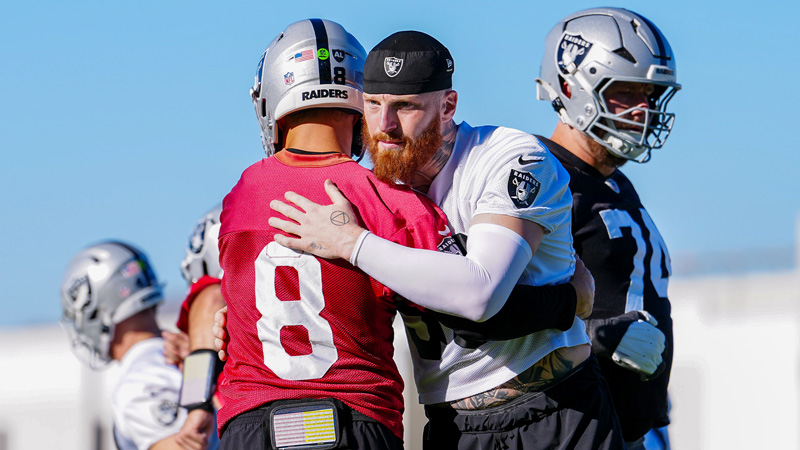
The blistering summer heat of the Nevada desert has an uncanny way of magnifying every ounce of tension on a football field, and on a fateful Friday at the Las Vegas Raiders’ training camp, that atmospheric pressure finally reached its absolute boiling point. It was supposed to be a routine team drill, a standard exercise in building chemistry for a franchise desperately searching for a new identity and a fresh start. Instead, it became a dramatic theater of human emotion, pride, and physical confrontation. Kirk Cousins, the 37-year-old veteran quarterback who has spent nearly two decades navigating the polite, highly structured world of professional sports, found himself consumed by a sudden, white-hot fury. Opposite him stood Maxx Crosby, a towering 6-foot-5, 256-pound defensive end who plays the game with a manic, unrelenting intensity that terrifies opponents and energizes teammates alike. The air was thick with the scent of dry grass, sweat, and turf rubber, a sensory cocktail that often serves as the backdrop for these high-stakes summer battles, but nobody expected the spark to catch fire so spectacularly on this afternoon. When Crosby leaped into the air and effortlessly tipped one of Cousins’ passes into the dirt, forcing an anticlimactic incompletion, something deep inside the aging quarterback snapped. Ignoring the massive physical discrepancy—Crosby stands three inches taller and carries an extra 42 pounds of pure, disruptive muscle—Cousins lunged at the defensive superstar in a desperate bid to assert himself. What followed was a chaotic, jersey-tugging melee that required a small army of shouting teammates and coaches to intervene, pulling the two prideful athletes apart before real blows could land. This was not just a simple, forgettable practice-field scuffle; it was a violent collision of two alpha males fighting vastly different internal battles, both desperate to prove their worth in an unforgiving environment where any sign of weakness can be fatal.
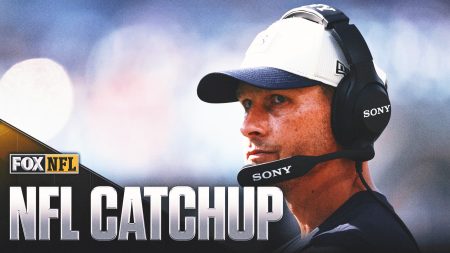
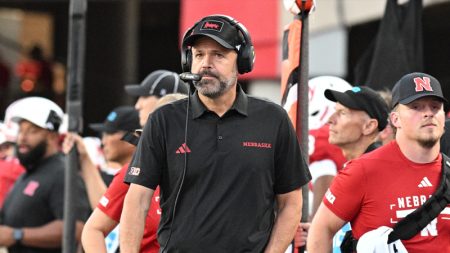
For first-year head coach Klint Kubiak, this explosive outburst presented his first true leadership crisis, a defining moment that would establish the culture he is attempting to build from the ashes of a dismal 3-14 season. In the high-stakes world of the National Football League, a head coach must walk a delicate tightrope between encouraging competitive fire and maintaining absolute organizational control. By Saturday morning, Kubiak made his stance crystal clear: both Cousins and Crosby were barred from participating in team drills, suspended to the sidelines to watch their teammates work without them. Kubiak’s public statement regarding the incident was brief, cold, and calculated, entirely devoid of any media-friendly excuses: “We have very clear expectations about how we want to practice, how you go about our business. We violated that yesterday, so we held those guys out. That’s all I’m going to say about it. We addressed it with the team and we’re moving on.” In those few direct sentences, Kubiak drew a definitive line in the sand, sending a psychological shockwave through the locker room. By penalizing his highly paid veteran quarterback and his defensive emotional anchor, the rookie head coach signaled to everyone that no individual, regardless of their resume, salary, or past achievements, is bigger than the collective unit. It was a bold, necessary gamble designed to cure the chronic self-destruction that has plagued the Raiders in recent years, forcing a locker room of professional athletes to confront the sobering reality that discipline and mutual respect are the non-negotiable foundations of victory. Kubiak understands that to build a winner, he must first eliminate the chaotic impulses of a losing team, even if that means benching his star players during critical training camp reps when every single practice minute is precious. The message was received loud and clear by the players on the field, who watched the silent, brooding figures of Cousins and Crosby standing on the sidelines, stripped of their helmets and their authority.
To truly understand Kirk Cousins’ explosive reaction on that Friday afternoon, one must look closely at the immense psychological weight the veteran quarterback has been carrying throughout the offseason. At nearly 38 years old, Cousins is entering the twilight of a highly lucrative, four-time Pro Bowl career, but his current situation in Las Vegas is far from secure. Having signed a modest two-year, $12.6 million contract with the Raiders in April, he is acutely aware that he is not viewed as the long-term savior, but rather as a highly qualified bridge. He is a man caught between eras, sharing a quarterback room with a young phenom who represents the glittering future of the franchise. For an ultra-competitive athlete like Cousins, every single practice rep is a battle against father time, a frantic daily effort to prove that his arm is still vital, his mind still sharp, and his presence still absolutely necessary. When Crosby tipped his pass, it wasn’t just a minor defensive success; to Cousins, it felt like an indictment of his dwindling physical capabilities, a public demonstration of his vulnerability in front of the entire team. The physical charge against Crosby was an act of pure defiance, a raw, instinctual assertion that he is not ready to go quietly into retirement, and that he still possesses the fierce competitive spirit required to lead a football team. This pressure cooker of self-doubt and pride is what ultimately erupted under the hot Nevada sun. Cousins has spent his entire career being underestimated, constantly fighting to prove he belongs among the elite signal-callers of his generation, and the realization that his grip on a starting job is slipping only added fuel to the fire. When he charged Crosby, he wasn’t just fighting a defensive end; he was fighting the narrative of his own decline, refusing to let his legacy be quietly swept aside by the rising tide of youth.
On the other side of the ball, Maxx Crosby’s relentless, borderline-combustive aggression is fueled by a different, yet equally painful set of emotional wounds that have defined his offseason. A five-time Pro Bowl and the undisputed heartbeat of the Raiders’ defense, Crosby found himself on the precipice of a massive career shift in March when he was slated to join the Baltimore Ravens in a blockbuster trade. However, the highly anticipated deal collapsed at the eleventh hour when the Ravens backed out, citing deep, long-term concerns regarding Crosby’s medical evaluations. To be publicly rejected on a national stage, to have your physical durability and long-term viability questioned by a premier franchise, is a devastating blow to any professional athlete, let alone one who prides himself on his relentless, iron-man work ethic. Crosby returned to Las Vegas with a profound chip on his shoulder, his play style becoming even more ferocious as he seeks to silence the doubters and prove that his body is as indestructible as ever. When he batted down Cousins’ pass, he was doing what he always does: playing with a desperate, chaotic energy designed to disrupt, dominate, and destroy. He was not actively looking for a fight with his own quarterback, but he is a man who refuses to yield an inch of ground to anyone, viewing any sign of retreat as an admission of the very weakness his critics accused him of possessing. The failed trade to Baltimore didn’t break him; instead, it forged a colder, meaner competitor who views every opponent—and occasionally his own teammates—as obstacles in his path to absolute vindication. His clash with Cousins was the natural byproduct of a man playing with an overflow of angry energy, a defensive dynamo who refuses to turn down his intensity even during the dog days of training camp. By standing his ground, Crosby was asserting his dominance as the unquestioned alpha of the Raiders’ defense.
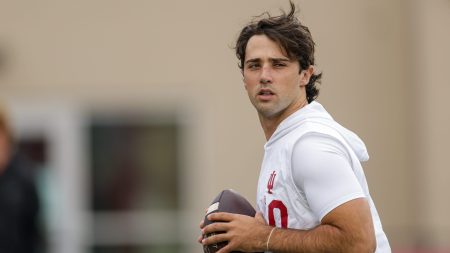
While the suspension of two franchise pillars sent shockwaves through the organization, it simultaneously blew the doors wide open for Fernando Mendoza, the rookie quarterback selected with the prestigious No. 1 overall pick in the 2026 NFL Draft. Mendoza, who entered the league with a celestial reputation after winning the 2025 Heisman Trophy, suddenly found himself thrust into the spotlight much earlier than anyone could have anticipated. With Cousins relegated to the sidelines, Mendoza was handed the keys to the first-team offense on Saturday, marking his first genuine opportunity to command the starting lineup in a high-intensity training camp environment. For a rookie, the transition from college stardom to the brutal speed of the NFL is already a psychological mountain to climb, but doing so under the shadow of a public team controversy adds an entirely new layer of complexity. Mendoza had to step into a huddle filled with veteran players who were still buzzing from the previous day’s brawl, demanding their respect not with empty words, but with his poise, his arm talent, and his decision-making. The young quarterback’s performance during this unexpected trial by fire will likely offer the Raiders’ coaching staff a vital glimpse into their future, revealing whether Mendoza possesses the emotional maturity and leadership instincts to eventually guide this historic franchise back to relevance. Mendoza’s every throw was scrutinized by coaches, reporters, and his sidelined teammates, making every completion a statement of his readiness and every mistake a learning experience. Yet, despite the immense gravity of the moment, onlookers noted a quiet confidence in the rookie’s demeanor, a calm amidst the storm that suggests he may be uniquely suited for the heavy burden of franchise savior. By stepping up when the team needed stability, Mendoza didn’t just fill a temporary void; he began the quiet, inevitable process of making this football team his own.
Ultimately, this dramatic training camp clash serves as a fascinating, raw microcosm of the turbulent journey ahead for the Las Vegas Raiders as they attempt to rebuild their fractured franchise. A 3-14 record is a heavy, humiliating burden to carry, and the process of transforming a losing culture into a winning one is rarely peaceful; it is a chaotic, painful process of breaking down old habits and forging new ones through adversity. The fight between Cousins and Crosby, while temporarily disruptive, highlights a team that is no longer complacent, a roster filled with prideful, hurting men who are desperate to win and refuse to accept mediocrity. How the Raiders respond to Coach Kubiak’s swift disciplinary action will dictate the trajectory of their entire season. If Cousins and Crosby can successfully channel their mutual frustration into a shared pursuit of excellence, and if Mendoza can leverage this sudden opportunity to accelerate his development, this practice-field brawl may one day be viewed as the exact moment the Raiders found their identity. In the high-stakes theater of the NFL, conflict can either destroy a team from within or act as the crucible that melts away complacency, leaving behind a battle-tested, unified squad ready to fight for their place in the league. As the dust settles in the desert, the Raiders are left with a simple choice: allow the heat of frustration to burn them to the ground, or use that same fire to forge a championship contender. The road back to glory for the Silver and Black is paved with obstacles, but this explosive weekend proved that the team is no longer lacking in passion or intensity. If Klint Kubiak can harness this volatile energy and mold it into a disciplined, cohesive force, the Raiders may finally escape the shadow of their recent failures.