


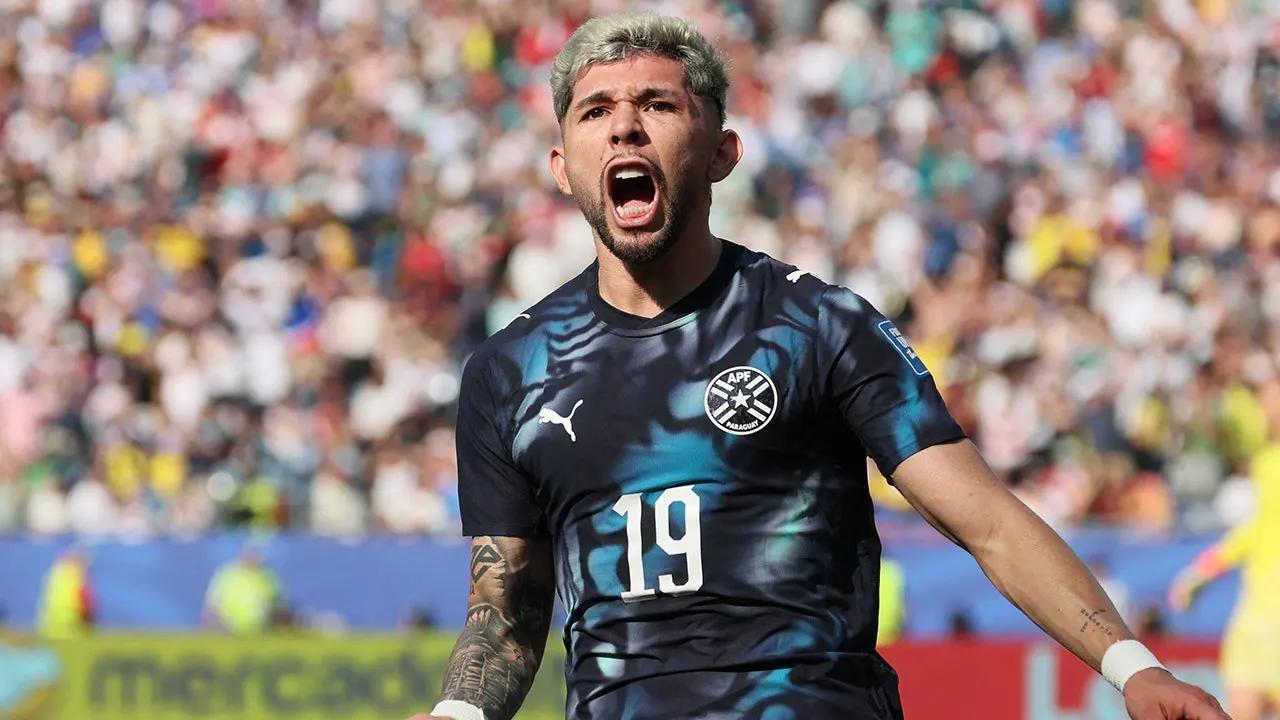
The global stage of the FIFA World Cup has always been a magnificent theatre of human emotion, but occasionally, it transforms into an arena of spectacular, heart-stopping disbelief. This was precisely the case at the historic Boston Stadium, where a soccer giant met an unstoppable force of South American passion and grit during a thrilling encounter. Germany, boasting a glittering history adorned with four World Cup trophies and a legendary reputation for cold, calculated efficiency, stepped onto the pitch as the overwhelming favorites against a highly determined Paraguayan side. For much of the opening half, the narrative unfolded exactly as many pundits had predicted, with the German machine dictating the tempo, dominating the possession charts, and weaving intricate passes that tested the absolute limits of the Paraguayan defensive line. Germany’s midfield maestros pulled the strings, orchestrating relentless transitions that forced Paraguay into a deep, defensive block. However, international football at this level rarely adheres to a pre-written script. Despite Germany’s suffocating high press and relentless attacking momentum, Paraguay harbored a quiet, dangerous resilience, refusing to be intimidated by the stature of their opponents. As the minutes ticked away toward the end of the first half, a moment of pure sporting magic shattered the status quo and shocked the entire football world. In the 42nd minute, completely against the run of play, Paraguay executed a lightning-fast counter-attack. The ball was whipped into the penalty area with pinpoint accuracy, finding the rising figure of Julio Enciso, who had timed his run to perfection. With a superb, glancing header, Enciso guided the ball past the outstretched arms of the German goalkeeper and buried it into the back of the net. The stadium erupted in a cacophony of South American joy, leaving the heavily favored Germans stunned as they walked into the tunnel at halftime trailing by a goal, suddenly forced to confront the very real possibility of an early exit.
Reacting like the wounded champions they are, the Germans emerged from the locker room for the second half with an aggressive, rejuvenated spirit, determined to claw their way back into the contest. The tactical adjustments from the German coaching staff were immediate and clear, as Germany began to flood the final third of the pitch, utilizing their rapid wing-backs to stretch the compact Paraguayan defense to its absolute breaking point. It did not take long for this relentless pressure to yield results and restore parity to the highly charged match. In the 54th minute, a beautifully constructed offensive sequence saw the ball delivered into the heart of the Paraguayan box, where the towering Kai Havertz leaped above his markers. With immense composure and technical precision, Havertz connected with a brilliant header, sending the ball looping past Orlando Gill and into the back of the net to equalize for Germany. With the score leveled at 1-1, the atmosphere inside Boston Stadium reached a fever pitch, with fans from both nations sensing that they were witnessing a historic battle. Germany looked to immediately capitalize on their newfound momentum, launching wave after wave of attack, seeking the elusive winning goal that would secure their passage to the prestigious round of 16. Yet, Paraguay refused to simply roll over and capitulate under the immense weight of the German onslaught. Anchored by an inspired performance from their goalkeeper and a backline that threw their bodies in front of every shot, the South Americans absorbed the pressure while looking for their own sporadic avenues on the counter-attack. As the referee’s whistle blew to signal the end of ninety minutes plus stoppage time, both sets of players fell to the turf in sheer physical exhaustion, knowing that their World Cup dreams would now be decided in the grueling, mentally taxative domain of extra time.
When extra time commenced, the physical toll of the match was etched on every player’s face, yet Germany’s search for victory remained fierce and unyielding. It seemed that their tireless efforts on the pitch had finally been rewarded when Jonathan Tah climbed high above everyone else during a corner kick, sending a powerful, thunderous header past Paraguay’s goalkeeper Orlando Gill. The German supporters exploded in a massive wave of celebration, believing that they had finally witnessed the definitive, match-winning blow that would avoid the lottery of penalties. However, the euphoric celebrations were abruptly cut short as the head official received a communication in his earpiece, signaling a potential foul and prompting a trip to the pitchside Video Assistant Referee (VAR) monitor. The entire stadium held its collective breath as replay after replay was shown on the giant screens, scrutinizing the chaotic movement inside the penalty area during the corner kick. The cameras slowly revealed that Germany’s Waldemar Anton had actively initiated physical contact and obstructed the natural movement of keeper Orlando Gill, effectively blocking him from attempting to defend Tah’s powerful header. To the absolute horror and disbelief of the German team and their coaching staff, the referee emerged from the monitor, signaled with his hands to annul the goal, and officially ruled that Anton’s positioning had unlawfully impeded the goalkeeper’s ability to make a play on the ball. This highly controversial decision, which will undoubtedly be analyzed and hotly debated by football analysts for years to come, sucked the life out of the German momentum and breathed new life into the Paraguayan team, ensuring the score remained deadlocked after thirty exhausting minutes.
With neither side able to break the deadlock during the remainder of the extra-time period, the stage was set for the ultimate drama in high-stakes sport: a penalty shootout. This marked the very first penalty shootout of this World Cup tournament, carrying with it an almost unbearable level of psychological pressure for both the seasoned veterans and the young stars. The air in the stadium was thick with tension, almost suffocating, as Germany’s equalizing hero, Kai Havertz, stepped up to take the very first penalty of the shootout under the glaring floodlights. In a shocking turn of events that sent shockwaves through the crowd, Havertz’s shot lacked the necessary power and placement, allowing Paraguay’s goalkeeper Orlando Gill to dive correctly and make a massive, morale-boosting save. Seizing on this massive wave of positive momentum, Maurício walked up to the spot, stared down the legendary German goalkeeper, and calmly converted his penalty, immediately putting Paraguay in a highly favorable winning position. The subsequent rounds of the shootout were a masterclass in nerve-testing composure, with both teams successfully converting their next two penalties apiece to keep the score tight. The heavy pressure shifted back to Germany, and the immense tension of the global spotlight proved too much for Nick Woltemade, whose weak, tentative effort was brilliantly saved once again by the inspired Gill, who had quickly become a national hero in the eyes of millions watching at home in South America. Suddenly, Paraguay stood on the absolute precipice of a historic victory, but the pendulum of fortune took another dramatic swing when Antonio Sanabria stepped up and missed Paraguay’s fourth penalty, dragging his shot wide and giving the desperate Germans a brief, unexpected lifeline.
Nadiem Amiri kept German hopes alive by successfully converting his fifth-round penalty, putting the absolute destiny of the match onto the shoulders of Paraguayan defender Fabián Balbuena. However, standing in his way was the legendary Manuel Neuer, a goalkeeper whose glittering international career was built on the foundation of clutch performances in the biggest moments of world football. Neuer did not disappoint his nation, guessing correctly to make a spectacular, diving save, keeping Germany alive in the shootout and sending the contest into the sudden-death rounds. With momentum swinging back in Germany’s favor, Jonathan Tah, the man who had seen his extra-time goal dramatically ruled out by VAR, stepped up to the spot with a golden chance to redeem his evening and put his country back on the path to victory. But in a tragic twist of footballing fate, Tah’s penalty was a highly disappointing one, as he got far too much under the ball and sent it flying high over the crossbar and deep into the stands, sparking gasps of disbelief from the crowd. The miss left Paraguay on the verge of glory once again, and José Canale was selected to take the decisive shot. Standing over the ball with cooler veins than anyone else in the stadium, Canale struck his penalty with absolute authority, sending Neuer the completely wrong way and tucking the ball neatly under the crossbar to secure an historic 4-3 shootout victory for Paraguay, sparking scenes of pure, unadulterated ecstasy on the pitch.
The final whistle triggered a scene of absolute, unbridled contrast on the pitch: Paraguayan players ran frantically in wild, tearful celebration, while the German squad collapsed onto the turf in utter, paralyzed shock. This monumental result marked the first time in the long and illustrious history of the FIFA World Cup that Germany had ever lost a penalty shootout, a statistic that underlines the sheer magnitude of Paraguay’s historic achievement on this night. For Germany, their highly anticipated 2026 World Cup journey comes to an unexpectedly premature and devastating end, leaving the star-studded squad, the coaching staff, and their passionate nation to ponder the agonizing “what-if” scenarios surrounding the controversial VAR decision that disallowed Tah’s goal in extra time. Meanwhile, Paraguay’s fairy-tale run continues as they advance to the coveted round of 16, where they will watch with bated breath to see who they will face next, awaiting the winner of the upcoming high-profile match between France and Sweden, which will be played at the New York/New Jersey Stadium. It was a match that perfectly embodied the dramatic, unpredictable essence of the beautiful game, proving once again that in the World Cup, historical dominance counts for nothing once the whistle blows, and that underdogs can indeed topple giants when they play with heart, belief, and an unwavering spirit.