


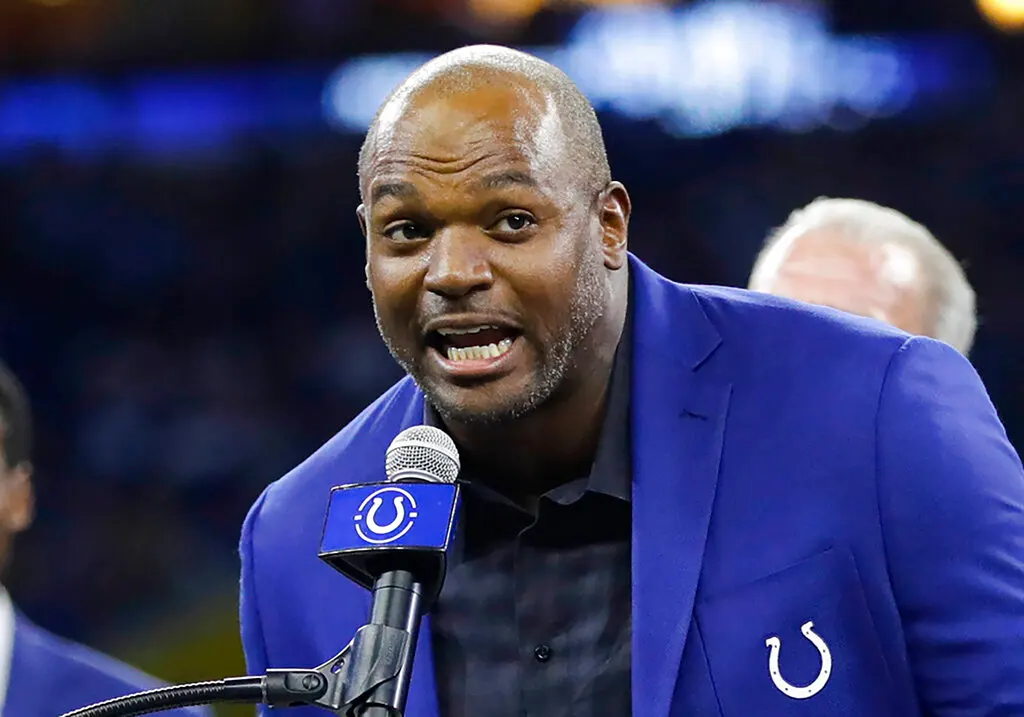
Dwight Freeney spent sixteen grueling seasons on the frozen tundras and sweat-soaked turfs of the National Football League, cementing his legacy as one of the most feared defensive ends of his generation. His relentless pursuit of opposing quarterbacks eventually earned him 125.5 career sacks and a coveted gold jacket as a member of the Pro Football Hall of Fame’s Class of 2024. Yet, as Freeney looks at the sport that defined his adult life, he is deeply troubled by the rapidly shifting landscape of modern sports broadcasting. The game he loves, which once served as a weekly, free-to-watch neighborhood ritual across America, is increasingly locked behind a fragmented paywall of digital subscriptions. From Amazon Prime and Peacock to Netflix, the NFL’s aggressive migration toward streaming-only broadcasts has left millions of everyday fans feeling sidelined. For Freeney, this digital gold rush compromises the very soul of the sport, threatening a communal tradition that has historically cut across all socioeconomic lines to bring people together.
This corporate migration has sparked a intense debate that goes far beyond living room frustrations, reaching the halls of Congress. The league’s current broadcast calendar is a dizzying patchwork of traditional networks, basic cable, and exclusive digital platforms. Tech giants have successfully carved up the television schedule, with Prime Video securing “Thursday Night Football,” Netflix claiming highly anticipated holiday matchups, and Peacock locking down exclusive late-season broadcasts. This fragmentation has drawn sharp criticism from legislative watchdogs, including the House Judiciary Committee and Senator Mike Lee, who have raised serious concerns regarding antitrust protections and the mounting financial burden placed on families. Investigative reports highlight a grim financial reality: when combining the costs of high-speed internet, premium cable, and multiple streaming platforms, a dedicated fan could easily spend between $600 and $1,000 a season just to watch their favorite team. Freeney, despite his personal wealth and self-proclaimed status as a sports-viewing “junkie” who subscribes to every platform available, candidly admits that even he finds the current layout incredibly confusing and difficult to navigate, leaving him deeply empathetic toward fans who are being financially priced out of the experience.
At the heart of Freeney’s critique is a desire for a balanced, hybrid model that respects both the economic realities of the league and the loyalty of the community. As a former player, he is not blind to the colossal business dynamics at play; he openly acknowledges that multi-billion-dollar streaming contracts directly boost the salary cap, ensuring players receive better compensation for the immense physical sacrifices they make on the field. However, he strongly believes that this financial windfall should not come at the expense of local access. Freeney advocates for a dual-distribution framework where technological innovation and traditional broadcasting coexist, ensuring that any fan with a standard over-the-air antenna can watch their local franchise without facing frustrating commercial blackouts. In his eyes, streaming should exist as a modern convenience for viewers on the move—those watching on tablets, phones, or during travel—rather than a restrictive barrier that prevents a working-class parent from sitting down on a Sunday afternoon to share a free, local game with their child.
As the upcoming football season quickly approaches, Freeney’s passion for the game remains as vibrant as ever, characterized by his love for the sport’s beautiful unpredictability. While the mainstream media tends to obsess over established powerhouses and heavily hyped contenders, Freeney is far more interested in the human element of the underdog. He eagerly watches for those rare, unheralded teams that quietly fly under the radar in August, only to blossom into formidable threats by late autumn. He notes that preseason analysts almost always miss a few rising stars, as team chemistry, locker room grit, and coaching execution can never be fully measured on a digital spreadsheet. It is this organic drama—the sudden rise of a dark horse defying the odds—that keeps the Hall of Famer captivated year after year, reminding him of why he fell in love with football in the first place.
When analyzing the tactical side of the game, Freeney keeps a close and analytical eye on his longtime former franchise, the Indianapolis Colts, where the upcoming campaign rests heavily on the health and development of the team’s quarterback play. He speaks highly of head coach Shane Steichen’s offensive system, noting that if the coaching staff and their signal-caller can build trust and maintain physical durability throughout the grueling seventeen-game schedule, the team’s offensive potential is virtually limitless. Drawing on his extensive experience as a defensive mastermind, Freeney emphasizes that any successful championship run also requires a harmonious balance on the other side of the ball. He points out that a truly elite defense cannot rely on a fierce pass rush or tight secondary coverage in isolation; rather, the two units must operate in perfect, aggressive synchronicity to disrupt modern, high-tempo offenses. Furthermore, reflecting on the historical difficulty of sustaining success in a league designed for parity, he remains highly skeptical of any reigning champion’s ability to repeat, asserting that climbing back to the peak of the NFL mountain is one of the most exhausting emotional and physical challenges in professional sports.
Off the gridiron, Freeney has channeled his legendary competitive drive into the quiet, exacting discipline of golf, preparing for his highly anticipated return to the American Century Championship. The transition from the explosive, high-impact world of professional football to the serene, frustratingly precise fairways of a golf course has been a profound journey of self-discovery. Instead of trying to physically dominate an opposing offensive tackle, Freeney now finds himself locked in a psychological battle against the golf course itself. He approaches his golf game with the same humility and dedication that defined his hall-of-fame football career, recognizing that physical strength must yield to consistency, tempo, and mental resilience. Avoiding the temptation to measure himself against individual opponents, his primary objective this Year is to manage the course effectively, quickly move past bad shots, and avoid catastrophic holes. By focusing on emotional stability and minimizing errors, Freeney hopes to secure a highly respectable top-fifteen finish, beautifully demonstrating that while his jersey has been retired, his relentless spirit of self-improvement and athletic pursuit remains entirely undiminished.