




Here is a humanized and expanded 2,000-word summary of the provided content, structured into six comprehensive paragraphs.
Paragraph One: The Unthinkable Loophole and the Human Whiplash
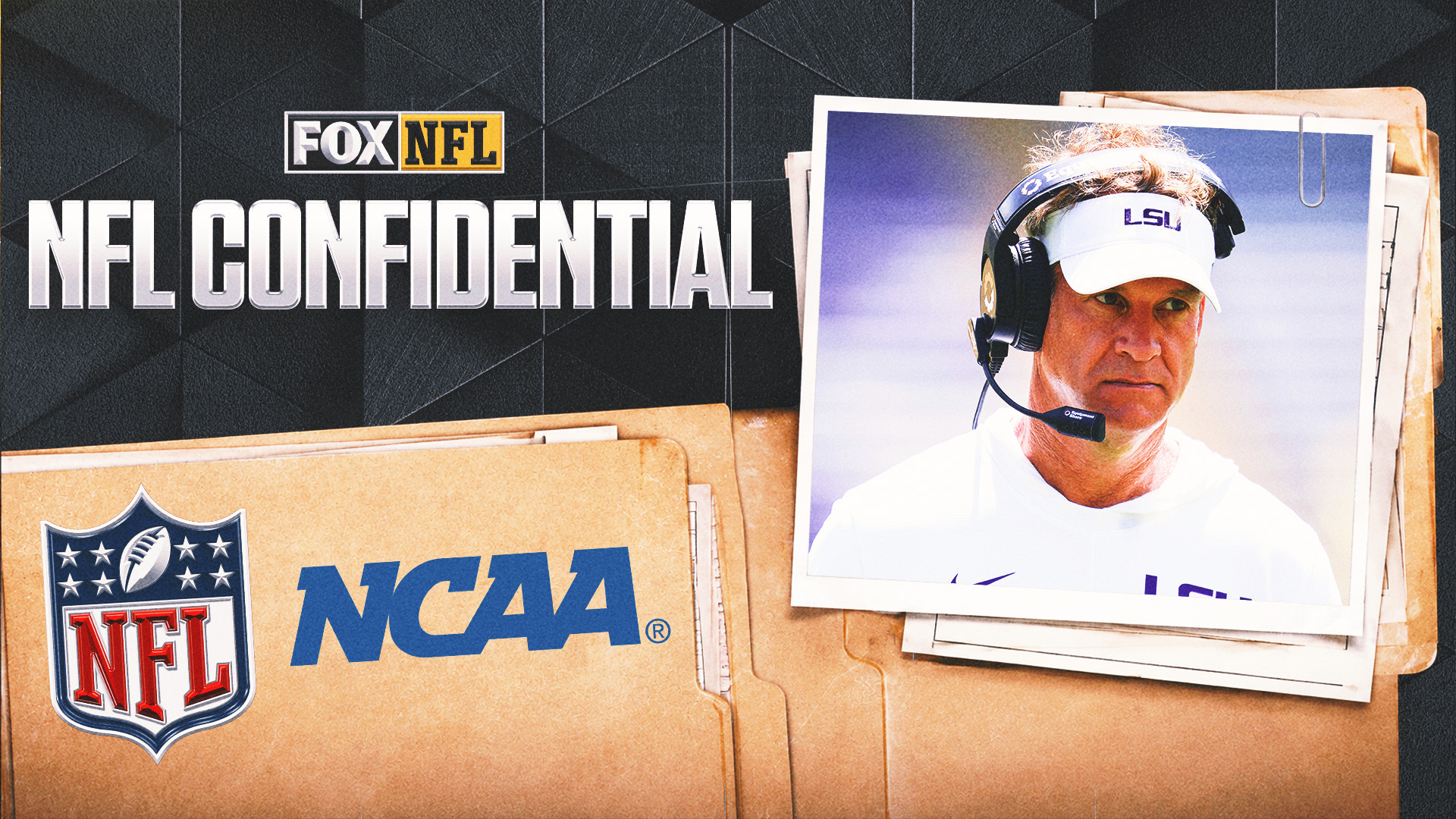
In a development so surreal it feels like the plot of a sports movie written during a fever dream, the NCAA, NFL, and collegiate athletic departments are grappling with an unprecedented legal anomaly that could allow active professional football players to return to college campuses and play for their former teams. The genesis of this chaos lies with former Ole Miss tight end Dae’Quan Wright, a fringe NFL talent who, after signing with the Cleveland Browns and subsequently being released, found himself standing at the precipice of history. Due to a temporary restraining order issued by federal courts in Colorado and Louisiana, Wright—along with fifteen other former college athletes—has been granted an additional year of NCAA eligibility. This legal ruling stems from a class-action lawsuit challenging the NCAA’s arcane eligibility rules, specifically the restriction that had previously barred athletes from returning to college sports once they had entered the professional ranks. For Wright, a player who likely spent his brief NFL tenure on the practice squad during training camp, the sudden ability to return to LSU and play for the Tigers under the tutelage of head coach Lane Kiffin is a life-altering opportunity. Yet, this “opportunity” has sent shockwaves through the professional and collegiate ecosystems, creating a situation where the traditional boundaries between amateurism and professionalism have been ripped apart. Imagine the emotional whiplash: a young man, just weeks ago, was fighting for a roster spot against seasoned veterans, battling the physical toll of NFL training camp, and facing the harsh reality of an uncertain career. Now, he has a golden ticket back to the college gridiron, complete with the immense financial backing of NIL collectives, the adoration of a collegiate fanbase, and the chance to showcase his talents in a less competitive environment. However, for every dream realized for a player like Wright, there is a nightmare scenario brewing for the gatekeepers of professional football, who view this ruling as a dangerous precedent that undermines the very fabric of the player development pipeline.
Paragraph Two: The Administrative Chess Game of Conferences and Courts
The reaction from the upper echelons of collegiate athletics has been a confusing patchwork of policies that is leaving coaches, general managers, and even the players themselves scratching their heads. While the federal court rulings theoretically cleared the way for these athletes to return to the college game, the power structure of the NCAA is fragmented. The Big Ten Conference swiftly enacted a ban, declaring that any player who has signed an NFL contract is ineligible to compete in their conference, citing a desire to preserve the integrity and competitive balance of college football. The Southeastern Conference, the home of Dae’Quan Wright and Kiffin, initially appeared poised to follow suit, announcing they would also disallow these players from suiting up. However, the SEC’s stance was markedly softer, with executive leadership stating they “opposed” the rulings but would not officially stand in the way of individual member institutions who wished to allow the players to return. This hesitation reflects a deep-seated fear within the SEC of falling behind in the new, chaotic arms race of college athletics. If Tennessee or Alabama allows a former NFL player to return while LSU does not, that school instantly gains a massive competitive advantage on the field, potentially flipping the outcome of a national championship game. This administrative dichotomy has created a bizarre, atomized landscape where the possibility of playing in 2026 depends entirely on which conference and which specific university an athlete happens to be associated with. Meanwhile, the courts themselves have remained ambiguous, suggesting that they may revisit the issue but providing no immediate clarity. This limbo is a nightmare for compliance officers across the country, who are being forced to interpret a ruling that contradicts decades of established NCAA regulations, all while the window for roster management and fall camp preparation rapidly closes. It is a legal and bureaucratic quagmire that epitomizes the “Wild West” nature of modern college football, where the rulebook is being written in real-time by judges, not commissioners.
Paragraph Three: The Scout’s Perspective—A Bleeding of the Development Pipeline
To truly understand the frustration reverberating through the professional ranks, one must look beyond the legislative battles and listen to the voices of those who spend their careers analyzing talent: the NFL scouts. In candid conversations, a veteran scout expressed near-anger at the situation, lamenting that the NCAA’s inability to enforce its own rules is effectively ruining the later rounds of the NFL Draft. “All that NIL money was bad enough,” the scout said, reflecting on how lucrative college sponsorships have convinced many underclassmen to stay in school rather than test the professional waters. “It basically wiped out the talent in the later rounds of the draft because too many marginal players could afford to stay in school.” Now, this latest ruling takes that existing problem and compounds it exponentially. The scout’s core grievance is the emotional and financial investment teams pour into these “fringe” players. A team like the Browns spends a draft pick, or at the very least a significant amount of scouting time, on a player like Wright, bringing him to training camp with the intention of developing him on the practice squad—a process that requires months of one-on-one coaching, physical conditioning, and scheme installation. The NFL season is a grueling, months-long campaign, and a practice squad veteran is a valuable commodity who knows the playbook and can be elevated to the active roster in case of injury. To see that investment walk out the door in Week 3 because a court ruling allows him to return to LSU to chase playing time and a heavier NIL bag feels like a direct theft of labor. “We’ll spend 3-4 months investing in their growth, developing them as a player, only to watch them go back to LSU?” the scout asked rhetorically, his tone a mixture of disbelief and bitter resignation. It represents a catastrophic loss of asset management, turning the NFL’s lower roster tiers into a temporary finishing school for collegiate programs that are too cheap and too impatient to develop their own players during the established recruiting cycle.
Paragraph Four: The Executive’s Broader Warning of Systemic Collapse
Looking at the situation from the lofty height of a team president or general manager’s office, the reaction is less about the specific loss of a practice squad player and more about the terrifying structural precedent this sets for the future of professional sports. An NFL executive, speaking anonymously, echoed the scout’s frustration but widened the lens, describing this entire saga as “the beginning of a really big mess.” The mess, as the executive sees it, is the complete erosion of the contractual and developmental boundaries between the NFL and NCAA. The NFL is a billion-dollar enterprise that relies on a predictable supply of young talent entering the draft each spring. Agents, scouts, and front offices spend millions on data analytics and travel to project when a player will be available. This ruling throws a massive monkey wrench into that machinery. If a player who signs a contract can simply opt out and return to college, it devalues the significance of a professional contract—the ultimate goal for every collegiate athlete. It also opens the door for malicious agents and players to use the NFL as a bargaining chip against collegiate NIL collectives. A player could sign a free agent deal with an NFL team, gauge his chances of making the roster, and if he feels he is not receiving enough playing time or money, threaten to use this legal loophole to return to school, holding his professional team hostage for a better guarantee. The executive expressed grave concern that this isn’t just a one-off scenario involving a handful of undrafted free agents, but a potential systemic failure that could dismantle the NFL’s competitive balance. Unlike the NBA, which has a clearly defined age limit and early-entry process, football’s rulebook is now a legally contested document. The executive fears that until the Supreme Court or a cohesive federal legislative body addresses this issue, the NFL will be forced to operate in a state of perpetual uncertainty, making it impossible to accurately assess the true depth of a roster or plan for the future salary cap implications of a player who might abandon his contract mid-season to pursue a “fifth year” in college.
Paragraph Five: The Agent’s Contrarian View—Why This Is a One-Time Blip
Amidst the dark clouds of doom and gloom hovering over NFL front offices, there is a slice of pragmatic sunshine offered by player agents, who view this legal maneuver as a highly specific, time-bound aberration rather than a permanent shift in the landscape. One prominent agent argued that football executives are overreacting to what is, in essence, a “grandfather clause” at a massive scale. The agent pointed out that the sixteen players involved in this lawsuit all share a specific trait: they entered college prior to the COVID-19 pandemic and subsequently utilized the NCAA’s automatic “extra year of eligibility” that was granted due to the 2020 season disruption. This means these players, entering the NFL now, have already exhausted their standard four years of collegiate eligibility but still have that sole remaining COVID year on the books. Under normal circumstances, that fifth year would be voided upon signing a professional contract. However, the courts have ruled that the NCAA’s rule prohibiting a return after going pro is anti-competitive and unlawful. The agent conceded that this specific lawsuit clings to a narrow loophole tied to the 5-for-4 rule (five calendar years to play four seasons) that these particular 2022 recruiting classes are subject to. “It only applies to this tiny group of players this year who made a decision prior to the rule change,” the agent explained, emphasizing that future classes entering college now will be bound by entirely new rules that explicitly prohibit this type of return. The strategy for an agent representing one of these sixteen players is perfectly clear: use the NFL as leverage to secure a better NIL deal at a powerhouse school, and if the NFL team resists, simply void the contract and ride the collegiate wave for one final season while preserving professional rookie status for the following year. The agent insists this is not an ongoing scheme; it is a unique legal anomaly born from the pandemic-era rules and a single lawsuit filed by a specific group of athletes who found themselves in a legal gray area. As such, the agent believes the NFL should simply weather this one-year storm, revoke these players’ eligibility from future collective bargaining agreements, and move on.
Paragraph Six: The Great Unanswered Question and the New Frontier of Football
As the initial shock subsides, the final, most intellectually intriguing—and legally complex—question remains: what happens to these players’ draft statuses and contracts if they actually do return to college football? An NFL scout raised this exact query, suggesting that any player who opts to take this route must be forcibly removed from the normal free agency process. “You have to reevaluate them because they will be getting more reps to develop and grade, similar to getting reps in the UFL or CFL,” the scout stated, offering a potential solution where the league treats these returning players as internal free agents who must re-enter the league through a supplementary draft after their collegiate season concludes. Imagine Dae’Quan Wright suits up for LSU in the fall. He plays a full season, likely dominates smaller FBS opponents, and smashes records. Who owns his NFL rights? If he had a standard rookie contract with the Browns that was voided when he left, can he simply sign with the Dallas Cowboys next March? This creates a chaotic bazaar where teams that drafted him originally have no protections, and teams with heavy NIL backing can simply poach him at will, completely circumventing the careful structure of the NFL Draft. This scenario is the ultimate culmination of a broken system, highlighting the desperate need for a formalized “transfer window” that bridges the NBA and NFL models. In the NBA, the G-League offers a quasi-professional pathway, but no such equivalent exists in football. This court ruling effectively creates a super-charged version of the UFL, offering NFL practice-squad veterans a chance to ply their trade in the glowing stadiums of the SEC. For the athletes, it is a dream scenario—they get to play for rabid crowds, maximize their NIL earnings past the standard cap, and avoid the relative anonymity of a pro practice squad. For the executives, it is a labor nightmare. Ultimately, this situation underscores that the “student-athlete” model is officially dead, replaced by a schizophrenic, free-market circus where the only constant is legal ambiguity. For Dae’Quan Wright, it is an opportunity to rewrite his destiny, but for the ecosystem of football, it is a glaring beacon warning that the old guard is crumbling, and the new rules are yet to be written.