


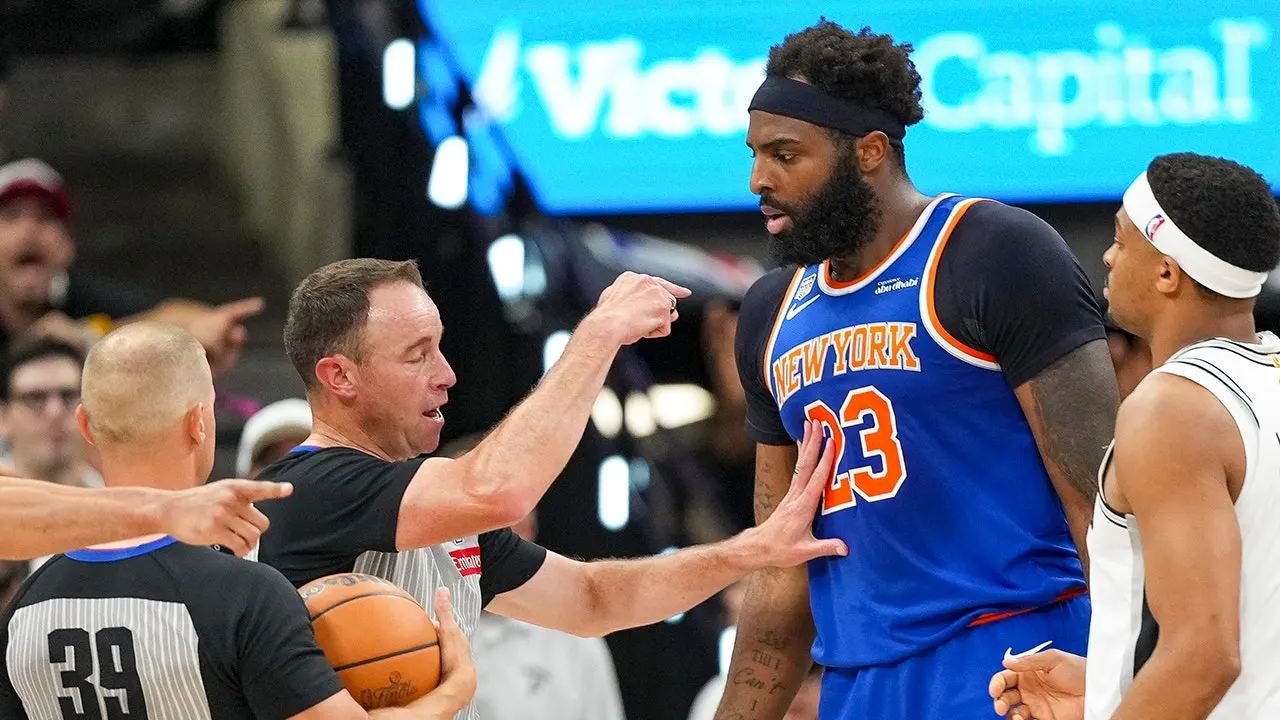
The NBA Finals have always functioned as the ultimate crucible of athletic excellence, a high-stakes, pressure-cooker environment where the margin between triumph and heartbreak is measured in fractions of a second and a single whistle can permanently alter the course of basketball history. This reality was underscored in the aftermath of a grueling, highly physical Game 2, when the league office took a retrospective look at a deeply controversial technical foul assessed to New York Knicks center Mitchell Robinson. In what turned out to be a heart-stopping, down-to-the-wire 105-104 victory that allowed the Knicks to seize a commanding 2-0 series lead over the San Antonio Spurs, Robinson found himself unjustly penalized in the heat of a classic postseason battle. During a highly physical sequence in the first half, the resilient Knicks big man was hit with a technical foul following what officials initially deemed an excessive physical altercation under the basket. However, upon post-game review, the NBA officially rescinded the technical foul, quietly admitting that Robinson had been unfairly singled out for what was simply standard, hard-nosed playoff positioning. For Robinson, a player who has made a career out of doing the thankless, bruised-rib work in the painted area, this retroactive correction was a validating moment, though it did little to erase the high-stress conditions the penalty forced upon his team in real-time. On the grandest stage in sports, refereeing errors represent far more than mere statistical anomalies; they disrupt the calculated flow of player rotations, award opponents free opportunities at the charity stripe, and inject a volatile element of frustration into an already tense atmosphere. This official vindication highlights the exhausting, often thankless warfare that occurs beneath the glass, serving as a reminder that behind the sterile box scores lie deeply human struggles of strength, leverage, and raw survival.
The specific incident that sparked the league-wide debate occurred with exactly four minutes and fifty-six seconds remaining on the clock in the second quarter, a pivotal stretch of the game where the visiting Spurs were desperately clawing to dismantle the Knicks’ early momentum. Robinson found himself matched up directly against San Antonio’s transcendental young prodigy, Victor Wembanyama, the 7-foot-4 French phenomenon whose unprecedented combination of size, skill, and global hype has completely redefined modern basketball geometry. As the two giants engaged in a fierce wrestling match for low-post supremacy, arms became hopelessly entangled and shoulders violently collided in a display of classic, old-school low-post defense. When Wembanyama, using his massive wingspan and sharp theatrical instincts, threw his hands dramatically into the air to emphasize the high-intensity contact, the referee’s whistle blew immediately, single-handedly penalizing Robinson with a technical foul. The arena erupted in protest, and the Knicks’ bench stood in collective disbelief, as Wembanyama had been just as aggressive in instigating and maintaining the physical contact as his defensive counterpart. Under the strict rules of the league, a technical foul grants the opposition a free throw and immediate possession of the basketball—a massive, potentially game-deciding swing in a contest that ultimately came down to a single point. This forced Knicks forward-thinking head coach Mike Brown into a tactical corner, requiring him to prematurely sub star center Karl-Anthony Towns back into the high-octane game to protect the frontcourt, despite Towns already battling significant personal foul trouble. Though the phantom whistle threatened to unravel New York’s defensive chemistry and derail their hard-earned lead, the resilient squad managed to weather the storm, revealing the unique, frustrating challenges of defending an athletic marvel like Wembanyama.
What makes Mitchell Robinson’s defensive stand even more remarkable is the sheer amount of physical adversity and quiet torment the veteran center is overcoming just to step onto the hardwood. Robinson is currently gritting his teeth and playing through the intense recovery process of a surgically repaired pinky finger on his right hand—a painful injury that occurred in a freak accident at his home just days before the Finals were set to begin. Having dominated and swept the Cleveland Cavaliers in the Eastern Conference Finals, the Knicks had earned a rare, coveted break to rest their bodies, but fate dealt Robinson a cruel hand, forcing him into a race against the medical clock to get cleared for the championship series. Despite the throbbing pain and the heavy packaging on his dominant hand, Robinson logged fourteen incredibly valuable minutes off the bench in Game 2, contributing a gritty, impactful stat line of seven points, three rebounds, a block, and a steal. His selflessness off the bench is the absolute heartbeat of coach Mike Brown’s defensive game plan, providing an aggressive, physical counterweight whenever Towns needs to rest or find relief from the referees’ whistles. Robinson does not demand post-up plays or complain about his touches; instead, he thrives in the unseen, blue-collar dirty work of NBA basketball, patrolling the rim like a hungry guardian, inhaling contested defensive rebounds, and igniting the crowd with explosive, momentum-shifting alley-oops. To play through a hand injury as a rebounder and shot-blocker requires a special brand of mental toughness, a disregard for personal comfort that resonates deeply with the passionate, hardworking fans of New York City who value hustle over headlines.
Recognizing a potential vulnerability in the Knicks’ lineup, San Antonio’s clever head coach, Mitch Johnson, decided to deploy one of the most psychologically taxing and controversial tactical strategies in basketball history during the second quarter: the infamous “Hack-a-Mitch.” With Karl-Anthony Towns anchored to the bench in foul trouble, the Spurs purposefully triggered the team bonus by repeatedly and intentionally fouling Robinson the moment he touched the ball, betting that his well-documented shooting struggles would stall New York’s offensive rhythm. Historically, Robinson has endured agonizing struggles from the free-throw line, converting a dismal 32% of his attempts (making just 16 of his last 50 shots) over fifteen grueling postseason games, making him an easy target for intentional hacking. Standing completely isolated at the charity stripe with millions of eyes watching is a lonely, deeply psychological ordeal for any athlete experiencing a shooting slump, turning a physical sport into a stressful, internal battle against one’s own self-doubt. This cynical defensive strategy was designed not only to stop the clock and secure cheap possessions but also to shatter Robinson’s confidence and force coach Mike Brown to sub his defensive anchor out of the game entirely. Yet, despite the intense psychological warfare and the persistent soreness in his hand, Robinson remained stoic, refusing to let the Spurs’ mental games break his focus as his teammates continuously encouraged him on the court. While coach Johnson will almost certainly look to exploit this tactical vulnerability again as the series unfolds, the Knicks have proven they possess the mental fortitude to withstand these manufactured roadblocks, showing that Robinson’s willingness to absorb the hits is a sacrifice they are willing to rally behind.
The true climax of Game 2, however, was reserved for its breathless, heart-stopping final seconds, culminating in a dramatic sequence of events that will undoubtedly be remembered in the archives of NBA Finals history. With the Knicks holding onto a fragile, one-point lead, the ball was predictably placed in the hands of the Spurs’ generational star, Victor Wembanyama, who had the golden opportunity to secure a legendary, signature game-winning moment on his home court. But the suffocating pressure of the championship stage can cause even the most gifted giants to falter; Wembanyama committed a devastating late-game turnover and was forced to immediately foul New York’s clutch leader, Jalen Brunson, who walked to the line and split a pair of free throws to put the Knicks up by two. With only seconds remaining on the game clock, San Antonio had one final possession to steal a victory, drawing up a desperation play to get the ball back into the hands of their towering young leader. Standing directly in his path was none other than Mitchell Robinson, whose defensive anticipation was tested to its absolute limit as he contested the 7-foot-4 center’s final shot. Wembanyama managed to elevate and gain a clean look at the basket, but under Robinson’s smothering, heavily contested defense, the ball clattered violently off the iron. San Antonio’s Devin Vassell managed to secure the offensive rebound and banked in a spectacular put-back shot, but the final buzzer had already sounded, leaving the Spurs just fractions of a second short of a miraculous comeback victory. It was a poetic and just conclusion to a grueling physical contest, demonstrating that despite the unfair refereeing decisions and the intensive hacking strategies, the game ultimately belonged to the defenders who refused to break under pressure.
Now, the focus of the basketball universe shifts entirely to the historic, echoing confines of Madison Square Garden, an iconic arena pulsating with decades of legendary basketball memories and a fan base desperate for a championship parade. Game 3 will mark a monumental milestone, representing the first time the Garden has hosted an NBA Finals game since the legendary 1999 series—coincidentally, a historic clash that was also played against these very same San Antonio Spurs, adding a rich layer of nostalgic drama to this modern-day battle. The excitement surrounding the Knicks’ homecoming has reached a fever pitch, with ticket prices soaring to astronomical levels and the entire city of New York buzzing with a manic, hopeful energy that has not been witnessed in a generation. Adding fuel to the cultural spectacle is the high-profile announcement that President Donald Trump is expected to attend the game, a monumental event that has reportedly fired up Mitchell Robinson and his teammates, motivating them to perform at their absolute best on the grandest cultural stage in sports. The external pressure will be immense, but this close-knit Knicks team, forged in the fires of physical road victories and persistent adversity, seems uniquely constructed for this exact type of historic spotlight. As they prepare to run out of the home tunnel in front of a deafening, sold-out crowd with a 2-0 series lead, the rescinded technical foul from Game 2 serves as a symbolic victory for a gritty roster that refuses to let arbitrary setbacks dictate their ultimate destiny. With Robinson holding down the paint, Towns providing dynamic offensive firepower, and the Garden faithful providing an unmatched wall of sound, the stage is set for an unforgettable chapter in sporting history.