


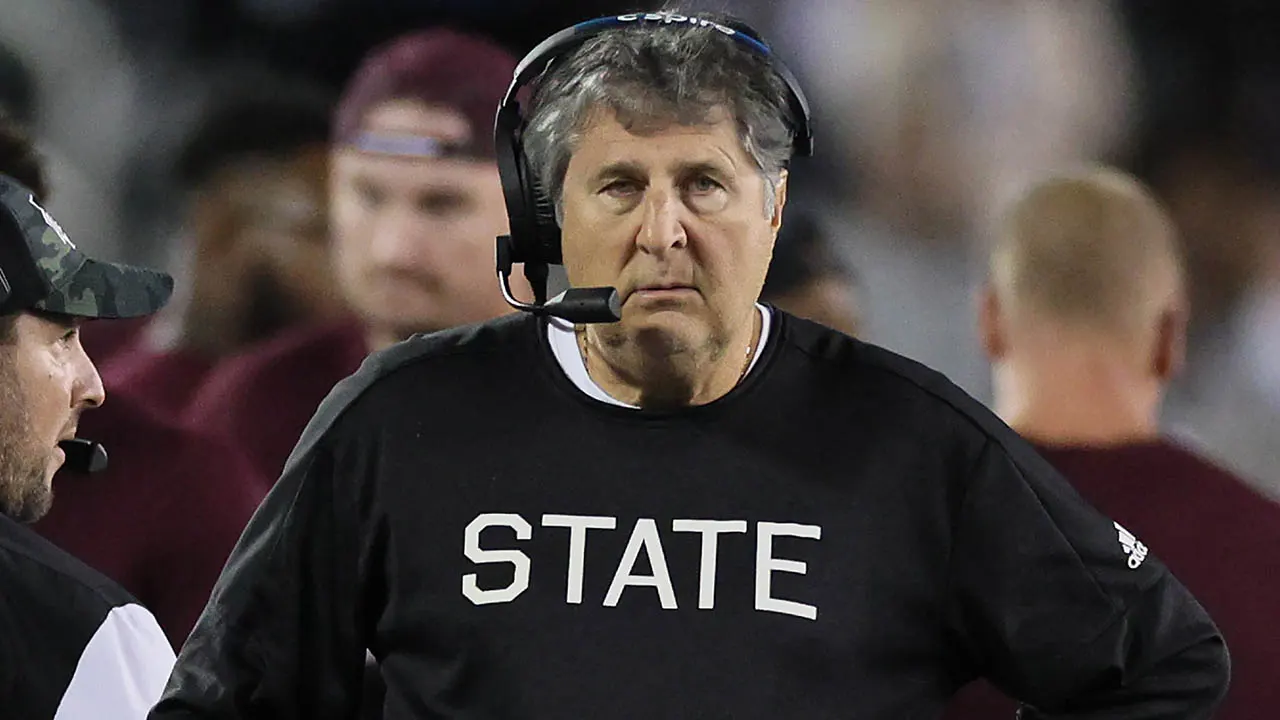
The world of college football has always been a colorful tapestry, but few figures painted with as vibrant, unpredictable, and enduring a brush as Mike Leach. Affectionately known as “The Pirate,” Leach was far more than a head coach; he was a philosopher in a visor, an eccentric storyteller, and a tactical visionary who fundamentally redesigned how the game of football is played. Nearly four years after his sudden and tragic passing in December 2022 while serving as the head coach at Mississippi State, the sport has taken a historic step to ensure his legendary legacy is forever preserved where it belongs. The National Football Foundation recently unveiled its ballot for the prestigious 2027 College Football Hall of Fame class, and standing prominently among the nominees is Mike Leach. His inclusion is not just a standard administrative update; it represents a deeply emotional milestone for a sports community that still deeply feels the void left by his absence, celebrating a man who breathed endless joy, curiosity, and innovation into gridirons across the nation.
To truly understand why Leach’s nomination is so significant, one must look at how he democratized the game through his revolutionary “Air Raid” offense, a system he co-developed and perfected to level the playing field against traditional football powerhouses. At stops like Texas Tech, Washington State, and Mississippi State, Leach did not have the luxury of recruiting rosters stacked exclusively with five-star athletes, yet his offensive schemes terrorized opposing defensive coordinators for decades. By spreading the defense from sideline to sideline and trusting his quarterbacks to fling the ball fifty or sixty times a game, he turned underdogs into absolute giant-killers. Over his illustrious career, Leach compiled a 158-107 record, but perhaps the statistic that best captures his fearless coaching spirit is that his unranked teams toppled Top 25 opponents an astonishing 18 times. He did not merely win football games; he transformed the sport’s tactical DNA, proving that intellectual curiosity and strategic audacity could overcome raw, physical disadvantages.
For a long time, however, the very bureaucracy of college football threatened to lock Leach out of the Hall of Fame due to rigid mathematical formulas that failed to capture his true impact. Under the National Football Foundation’s previous eligibility criteria, a coach was required to maintain a career winning percentage of at least .600 to be considered for induction. Because Leach spent his career revitalizing historically struggling programs rather than coasting at established blue-bloods, his final career winning percentage stood at .596—missing the arbitrary cutoff by a mere four-thousandths of a point. Recognizing how absurd it would be to exclude one of the modern era’s most influential minds based on a rounding error, the NFF recently adjusted its policy, lowering the minimum winning percentage threshold to .595 starting with the 2027 class. This quiet but monumental rule change paved the way for Leach’s rightful nomination, ensuring that the history books would prioritize a lifetime of revolutionary contribution over rigid decimal points.
Leach’s coaching journey was a masterclass in building culture and belief in places where success was never guaranteed. In the dusty plains of Lubbock, Texas, he turned Texas Tech into an offensive juggernaut and a national media darling; in the isolated hills of Pullman, Washington, he revived a dormant Washington State program and made the Cougars a consistent Pac-12 threat; and finally, in the competitive pressure-cooker of Starkville, Mississippi, he brought his signature grit to the SEC. Yet, ask any fan or former player what they remember most about Mike Leach, and they will likely bypass the game film entirely to talk about his humanity. He was the coach who would spend his weekly press conferences passionately debating the logistics of a mascot royal rumble, offering brutally honest yet hilarious wedding advice to reporters, or detailing his fascination with Native American history and pirates. He treated everyone he met with a genuine, unfiltered curiosity, reminding a self-serious sporting world that football is ultimately supposed to be fun.
The 2027 Hall of Fame ballot is a star-studded affair, emphasizing the incredibly high standards required to even be considered for this elite brotherhood. To earn a spot, a player must wait ten full seasons after their final college game, have received first-team All-America honors from a major selector, and boast a post-football record as a citizen that reflects credit back onto the sport. Alongside Leach, the ballot features iconic Heisman Trophy winners Cam Newton of Auburn and Robert Griffin III of Baylor, as well as dynamic first-time player nominees like West Virginia’s electric Tavon Austin, Wisconsin’s bruising running back Melvin Gordon, Ohio State’s defensive anchor A.J. Hawk, and Alabama’s highly decorated offensive lineman Barrett Jones. The coaching category is equally competitive, featuring heavyweights like Larry Coker, who steered the legendary 2001 Miami Hurricanes to a national title; Dennis Franchione; Ralph Friedgen; Darryl Rogers; former Mississippi State wins leader Jackie Sherrill; and former Auburn coach Tommy Tuberville.
While the official announcement of the 2027 class will not take place until January, the mere presence of Mike Leach’s name on the ballot feels like a triumphant homecoming for his family, his former players, and millions of fans. A Hall of Fame plaque will be a beautiful, well-deserved physical tribute, but those who loved him know his real monument is already built. It lives on in every high school, college, and NFL team that utilizes the spread concepts he popularized, and in the sprawling coaching tree of disciples who continue to run his plays across the continent. More than that, it lives on in the warm laughter of fans sharing clips of his legendary interviews on crisp autumn Saturdays. Mike Leach taught the football world to throw the ball deep, to think outside the box, and to never take life too seriously. As the selection committee ponders the future members of the Hall of Fame, the college football world stands united in the hope that “The Pirate” will finally sail into his well-deserved immortality.