

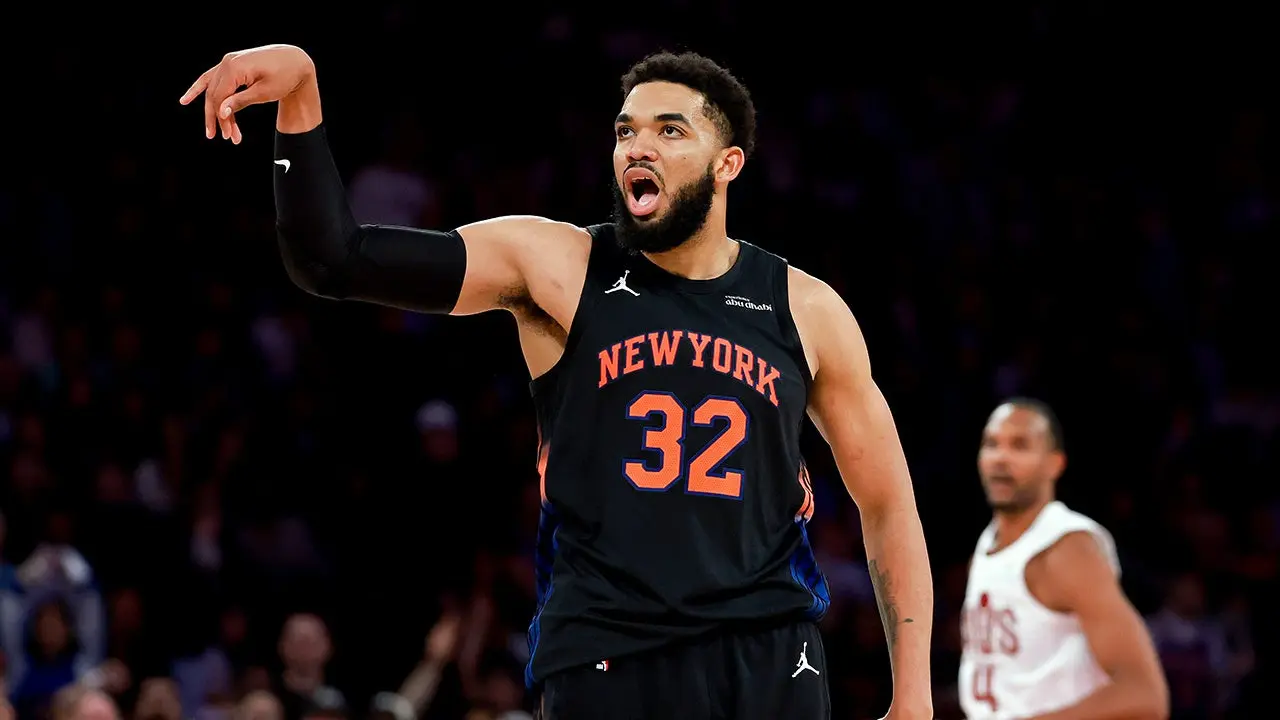
There is a unique, almost electric current that runs through the concrete arteries of New York City when its beloved basketball team is winning, a phenomenon that cannot be adequately replicated by any other franchise, city, or sport in the civilized world. It is a primal, collective heartbeat that pulses loudest at the corner of 33rd Street and Seventh Avenue, where the iconic, weathered structure of Madison Square Garden stands as a cathedral of both endless hope and crushing heartbreak. For the better part of three decades, that heartbeat has been dangerously faint, a rhythmic murmur composed of nostalgic sighs, wasted draft picks, and the bitter disappointment of empty springs. Today, however, that quiet longing has erupted into a deafening, earth-shattering roar that threatens to shake the bedrock of Manhattan itself. The New York Knicks are hovering just a single, agonizing victory away from their first NBA Finals appearance since the fading twilight of 1999, and the sheer anticipation of this moment has transformed the surrounding metropolitan streets into a boiling cauldron of pure, unadulterated human ecstasy. To step out of the subterranean depths of Penn Station after a playoff win is to be immediately swept into a surging ocean of blue and orange threads, a chaotic, beautiful tapestry of construction workers, high-flying finance brokers, lifelong outer-borough residents, and wide-eyed kids, all screaming the names of their modern hardwood heroes into the cool night air. The local police department has deployed barricades and orchestrated street closures, not to quell a hostile riot, but to safely channel an overflow of ecstatic humanity that simply wants to stand in the shadow of “The Garden” and shout their validation to the heavens. This is not merely a string of victories; it is a profound cultural renaissance for a city that defines its soul by the bounce of a ball on asphalt, a collective awakening from a generation-long slumber.
With this historic resurgence comes a staggering, almost surreal reminder of the sheer economic engine that is New York sports, where raw human passion and astronomical wealth collide to create headline-grabbing spectacles that transcend the boundaries of the hardwood court. While getting a ticket inside Madison Square Garden during the postseason requires a small fortune, what transpired recently on the secondary market has left analysts and fans alike utterly speechless. Sports reporter Darren Rovell confirmed a jaw-dropping transaction that sounds more like the purchase of a suburban home than a pair of game tickets: two coveted courtside seats for Game 3 of the NBA Finals at the Garden were sold on StubHub for an unbelievable, earth-shaking total of $279,804. Because the powerhouse Western Conference champions—either the young Oklahoma City Thunder or the veteran San Antonio Spurs—will hold the higher seed and home-court advantage, Game 3 represents the first opportunity for the Knicks to host a Finals game on their home floor. To the average, everyday working-class Knick fan, who has stuck by this team through decades of miserable losing seasons and front-office mismanagement, this eye-popping sum is an entirely foreign and alien reality, a stark symbol of how the ultimate playground game has been gentrified at its highest level. Yet, it also perfectly illustrates the terrifying, logic-defying desperation of the city’s wealthy elite to witness history up close, to breathe the same sweat-soaked air as the players, and to feel the physical vibration of a legendary arena operating under the ultimate spotlight of international sports. In a city like New York, where being in the room where it happens is the ultimate cultural currency, there are individuals who are fully willing to spend a fortune just to say they were sitting front row on the historical night the Knicks finally returned home to reclaim their crown.
To truly comprehend why a ticket would command the price of a luxury estate, one must look back into the deep archives of the franchise’s history and understand the heavy emotional toll of the fifty-three-year championship drought that has haunted this deeply passionate fan base. The last time the Knicks climbed to the absolute summit of the basketball world and hoisted the cup, the world was a completely different place; it was 1973, an era defined by the cool swagger of Walt “Clyde” Frazier in his custom mink coats, the grit of Willis Reed hobbling out of the training room tunnel on one bad leg, and the court intelligence of Phil Jackson, Dick Barnett, and Bill Bradley. Under the quiet guidance of legendary coach Red Holzman, those early 1970s teams—specifically the championship squads of 1970 and 1973—pioneered a selfless, defense-first brand of basketball that became permanently etched into the sacred lore of the city, establishing a gold standard of team play that every subsequent generation has tried, and overwhelmingly failed, to replicate. In the painful half-century since those golden years, the franchise has wandered through a barren desert of agonizing near-misses, injuries to superstars, and baffling organizational dysfunction that regularly tested the loyalty of even their most hardcore supporters. Entire generations of New Yorkers have grown up, raised their own families, and grown old without ever witnessing their beloved team wear the crown of champions, inheriting a legacy of sports-induced grief that has been passed down from parents to children like a bittersweet, heavy family heirloom. As a result, every single bounce of the ball and every scream from the rafters today carries the collective weight of those fifty-three years of waiting, making this current postseason run feel less like a modern athletic tournament and more like a collective, long-overdue exorcism of decades of sports-related torment.
This agonizing narrative of historical heartbreak is punctuated by two specific moments in modern memory where the ultimate prize was close enough to touch, only to be cruelly snatched away at the final second. The first came in the sweltering summer of 1994, when a gritty squad led by Patrick Ewing fought their way to a grueling Game 7 in the NBA Finals, only for Hakeem Olajuwon and the Houston Rockets to secure a devastating 90-84 victory that shattered the dreams of a blue-collar metropolitan fan base. Five years later, in the lockout-shortened season of 1999, an improbable eighth-seeded Knicks team captured the wild imagination of the sports world by mounting a miraculous run to the Finals, featuring Latrell Sprewell, Allan Houston, and a reliable backup guard named Rick Brunson. That magical ride met a ruthless end at the hands of Tim Duncan and his San Antonio Spurs, who extinguished the hoop dreams of New York in five games, celebrating their championship triumph right on the hardwood of Madison Square Garden. But basketball history has a beautiful, highly poetic way of folding back on itself, and the deeply human heart of this current Knicks run is anchored in those very same 1999 tears. Today, Rick Brunson sits on the Knicks’ bench as an assistant coach, watching his brilliant, fearless son, All-Star point guard Jalen Brunson, serve as the undisputed general and emotional anchor of this modern New York basketball revival. This profound father-son legacy bridges a twenty-five-year gap of organizational frustration, transforming a statistical sports quest into an incredibly intimate, intergenerational family drama of redemption, where a son attempts to finish the monumentally difficult job his father was forced to leave incomplete on that very same court.
The path to this potential redemption has been nothing short of a dominant masterclass on the hardwood, as the modern Knicks currently find themselves commanding an emphatic 3-0 series lead over the Cleveland Cavaliers in the Eastern Conference Finals. After securing a gritty road victory on Saturday night, New York has now rattled off an astonishing ten consecutive playoff victories, demonstrating a level of collective mental fortitude under pressure that has completely disarmed and demoralized their opponents. Their only stumbles in this entire postseason journey occurred way back in the opening round against a pesky Atlanta Hawks team, and even those two isolated losses came by a razor-thin margin of just a single point, illustrating just how close this team is to absolute perfection. This dominance has fueled a feverish ticket rush that makes even the highest nosebleed sections of Madison Square Garden look like prime real estate reserved for the ultra-wealthy. As of Sunday evening, a quick search on the secondary market revealed that the cheapest possible entry-level ticket just to stand inside the building for Game 3 of the Finals—located in the dizzying bench seats of Section 418—is going for an eye-watering $3,554. To put this astronomical valuation into perspective, an analogous ticket to a potential Game 1 of the NBA Finals at the Paycor Center, home of the Western Conference-leading Oklahoma City Thunder, is retailing for a comparatively modest $1,252, with their absolute premier courtside seat listed at $32,106 compared to New York’s quarter-million-dollar mark. This stark price disparity is a testament to the inescapable “Knicks Tax,” a financial reality that proves when it comes to basketball, Madison Square Garden remains the undisputed, high-stakes epicenter of the sporting universe, where normal economic rules simply cease to exist.
Everything now builds toward a historic, high-stakes Memorial Day matchup, where the Knicks have the golden opportunity to officially punch their ticket to the long-awaited NBA Finals in a crucial Game 4 battle back on Cleveland’s home court. If they can manage to secure that final victory against a desperate Cavaliers squad on Monday night, it will set off a monumental wave of celebration that will likely reverberate through every five-borough block party, every crowded subway car, and every local asphalt pickup court where children still practice their jump shots. This team, constructed not of superficial, mercenary super-team superstars but of hard-nosed, relentless, and deeply unselfish competitors who embody the tough, gritty, and resilient spirit of their home city, has managed to restore a sense of genuine local pride that no amount of money can buy. While the eye-watering, quarter-million-dollar ticket prices and the wealthy corporate elite sitting comfortably in the front row will continue to dominate the headlines, the true, beating heart of this historic moment belongs entirely to the millions of ordinary, blue-collar fans who will watch the games from packed neighborhood bars, crowded family living rooms, and public parks. They are the loyal souls who stubbornly kept the faith during the darkest, leanest years of the franchise, who wore their orange and blue jerseys with unyielding pride even when the team was the laughingstock of the sports world, and who will scream just as loudly as the fortunate individuals who paid a fortune to sit courtside. When the final horn sounds and the Knicks finally take their place on the grandest stage of their sport, it will not just be a win for the official record books; it will be a triumphant, deeply emotional love letter to New York City, a unique world where basketball is never just a game, but a sacred, beautifully shared way of life.