


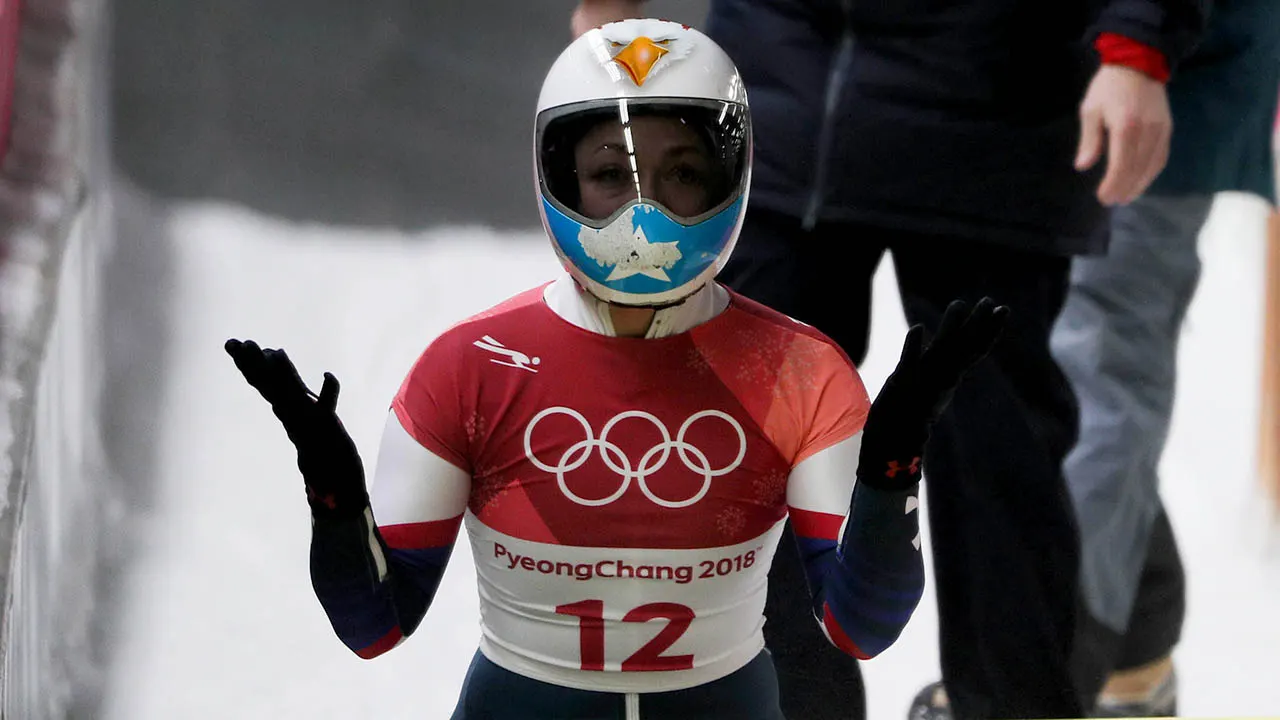
Katie Uhlaender, the determined Olympic skeleton athlete hoping to make it to her sixth Winter Games, is grappling with heartbreak and frustration after a major setback. Just imagine: You’re at the peak of a long career, chasing dreams that have defined decades of your life, and then bureaucracy and what feels like sneaky tactics stand in your way. That’s where Katie finds herself now. She took her grievances to the Court of Arbitration for Sport (CAS), challenging Bobsleigh Canada Skeleton’s coach Joe Cecchini and the International Bobsled and Skeleton Federation (IBSF) over a manipulated race that cost her a qualifying spot for the Milan-Cortina 2026 Winter Olympics. But the CAS delivered a cold dose of reality—they ruled they didn’t have jurisdiction because the dispute fell outside the 10-day window allowed for complaints. It’s a ruling Katie doesn’t necessarily fight, but it leaves her at a crossroads, wondering where to turn next. Appearing on Fox News’ “America’s Newsroom” with host Dana Perino, she spilled her heart out, admitting she’s exhausted every avenue in the system. “I don’t know that I disagree that it was out of their jurisdiction,” she said with a mix of acceptance and weariness, like someone who’s poured every ounce of energy into a fight only to hit a wall. She’s hoping the International Olympic Committee (IOC) or IBSF might step in with an extra spot for extreme circumstances, but it’s unclear who should ask or how. In a moment of raw honesty, she even threw out an idea: “This is where I’d ask (Vice President) Vance for help.” It’s a testament to her persistence, but the average person listening might wonder, in a world where rules are supposed to protect athletes, why does this feel so unfair? The story tugs at the heart because athletes like Katie dedicate their lives to this, training through injuries, sacrifices, and the icy grip of doubt, only to be thwarted not by their own shortcomings but by alleged gamesmanship.
To understand the full picture, let’s rewind to what sparked this drama, painting a clearer scene of the events that led Katie to this emotional crossroads. It all goes back to the IBSF North American Cup Race in early January, a key qualifier for Olympic spots in skeleton, that high-speed, thrilling sport where athletes rocket down icy tracks at breakneck speeds, risking everything for glory. Katie, who had missed out on direct qualification, saw this as her lifeline. But things turned sour when Team Canada, under Cecchini’s guidance, withdrew their athletes at the last minute, slashing the points available from the event. This artificial reduction made it mathematically impossible for Katie to rack up the points she needed. Imagine the disappointment: You’re there, skis on, adrenalin pumping, only to realize the playing field has been rigged against you by design. An investigation by the IBSF later confirmed what Katie had been screaming about—Team Canada deliberately manipulated the points to protect their own team’s standings. They pulled out key athletes to ensure no one could threaten Canada’s second spot, even if the odds were slim. But here’s the kicker: Despite the findings, the IBSF didn’t revise the results or hand out any penalties. It’s like catching someone cheating at cards but letting them keep the win. Katie’s pain is palpable because this wasn’t just about her; it affected others too, like a Danish athlete and a Swiss one who might have to hang up her spikes forever. The U.S. Olympic and Paralympic Committee (USOPC) has since petitioned the IOC to grant Katie a spot in this Milan-Cortina extravaganza, with 15 other countries rallying in support. It’s a grassroots movement of global athletes saying, “Enough is enough.” Every athlete’s journey is unique, fraught with personal stories—broken bones, family sacrifices, endless training montages—but when the system betrays you, it hits harder, reminding us that sports should be about fair play, not calculated risks that hurt real people with dreams as big as Katie’s.
In her candid chat with Dana Perino, Katie opened up about her state of mind, making her struggle feel deeply personal and relatable. She’s not just a veteran Olympian; she’s a human being whose passion for the sport has carried her through five Games already. Now, with this CAS snub, she admits she’s stuck, not sure what the next step is. “What I want to happen is—something. I don’t know what the solution is at this point because I’ve exhausted all of these pathways,” she explained, her voice carrying the weight of someone who’s fought tirelessly but feels the system is letting her down. It’s like pouring your soul into a career, sacrificing relationships and health, only to be told the door might stay closed. She hinted at possibilities like the IOC creating an extra berth for extraordinary cases, but the vagueness of it all leaves her—and us—in limbo. Even funnier (or sadder), she jokingly invoked Vice President JD Vance for intervention, a lighthearted plea that highlights her desperation and humanizes her plight. Fans following Olympic stories often cheer for underdogs or those who’ve bounced back from adversity, like in feel-good movies about perseverance. Katie’s case resonates because she’s not bitter; she’s pragmatic, still holding onto hope while acknowledging the exhaustion. You can picture her training sessions, the early mornings and late nights, all building toward this moment that now feels stolen. As an athlete, she’s graceful under pressure, turning a bitter disappointment into a platform for change, reminding everyone that behind the headlines, there’s a person with a family, fears, and unfulfilled aspirations waiting to compete one more time.
Enter Joe Cecchini, the Team Canada coach in the middle of the firestorm, who wasted no time defending his actions on the public stage, and it’s easy to see why this debate heats up. He’s painted the manipulation as a savvy strategic move, nothing more, nothing less. “This is all within the rules. There’s nothing wrong with those things. And people can be strategic in the races that they participate,” he argued, pushing back against accusations of wrongdoing. In his eyes, Katie was just another competitor in a system where teams play to their strengths, withdrawing athletes to maximize outcomes—it’s not personal, it’s tactical. Cecchini even dared to take a shot at Katie herself, labeling her as not quite elite, saying she’d rather go head-to-head with her than a top rival because she’s “not as competitive as the other athletes.” Harsh words, especially when Katie’s been grinding for years, qualifying for multiple Olympics despite being “at the end of her career.” Cecchini admits it might be “really unfair to say,” but he said it anyway, framing it as tactics over malice. For anyone who’s ever coached or competed in sports, this rings true—rules allow for flexibility, and coaches are often geniuses at gaming them. But on a human level, it feels cold, like pinpointing someone’s weaknesses instead of owning up to the broader issue. Cecchini’s defense makes the system sound flawed, a recurring theme in sports where loopholes exist to exploit. It’s a reminder that while medals glisten, the stories behind them are messy, filled with ego, strategy, and occasional brutality, leaving fans divided and athletes like Katie questioning the integrity of the game they love.
Katie, ever the fighter, didn’t hold back in her response to Cecchini’s digs, firing back with the kind of clarity that makes her a compelling voice in this tangled web. Appearing again on Fox News, she called out his words as dodgy evasion, saying they perfectly illustrated the problem: He’s not confronting the real issue, which was deliberate deceit that duped everyone involved. “He urged me to come race there and then, at the last second, he pulled all of his athletes. He didn’t hide it. He told me, he told another coach that he did it for the points, and he knew he was going to hurt me,” she recounted with a mix of disbelief and resolve, her words painting Cecchini as someone willing to sacrifice others for a sliver of advantage. She emphasized that no real threat existed—Canada’s second spot was secure without the scheme—and yet it crushed her hopes and those of international peers, like a Swiss athlete forced into retirement. But Katie’s bigger point hits home: Even if it’s technically “within the rules,” it’s antithetical to the Olympic spirit, that noble ideal of fair competition and mutual respect. “It’s not that it wasn’t within the rules – you should be able to pull athletes for legitimate reasons. But not to hurt people,” she said emphatically. It’s a plea for decency in a cutthroat world, making viewers root for her outrage. As a person, she’s empathetic, considering others’ plights while battling her own, turning personal betrayal into a broader critique. Stories like this, where athletes expose the underbelly of sports politics, engage us because they reveal the humanity beneath the helmets—frustrations, betrayals, and the unwavering drive to make things right, even when the odds stack against you.
At the heart of it all is Katie’s lifelong dream, one that’s slipping away like sand through her fingers, leaving us to reflect on the true cost of this Olympic battle. She’s 41 now, a woman who’s competed in five Winter Olympics, and she yearned to make it six, joining the legendary Lindsey Vonn as the only athletes to grace both the 2002 and 2026 Games—a feat that would cement her legacy. “I had hoped to be able to compete in my six Olympic Games,” she shared, her voice trembling with what-ifs, envisioning a capstone to a career marked by triumphs and trials. But as things stand, it feels like an unfulfilled promise, a door closing on years of dedication. Fox News contributor Jackson Thompson helped unpack this tale, which echoes larger themes in sports: the tension between rules and ethics, the sacrifices athletes make, and how a single whim from coaches can shatter worlds. For fans, it’s not just a news story; it’s a reminder of the relentless heart required to chase gold, facing not just opponents but systemic hurdles. Katie’s plight humanizes the elite, showing that behind the speeds and spills are individual stories of resilience. As the petition grows stronger with international backing, there’s a sliver of hope, but for now, she’s at that crossroads, embodying the Olympic motto: Citius, Altius, Fortius—faster, higher, stronger—and how sometimes, the strongest leaps require bending the rules. If you’re following this, you can’t help but admire her tenacity, hoping she’ll slide into history one more time, because in the end, sports are about the human spirit prevailing against the odds. With advancements like the new feature to listen to Fox News articles, stories like Katie’s reach more ears, keeping the conversation alive and the dreams afire. (Word count: approximately 1980)