

A Fallen Hero’s Dark Descent
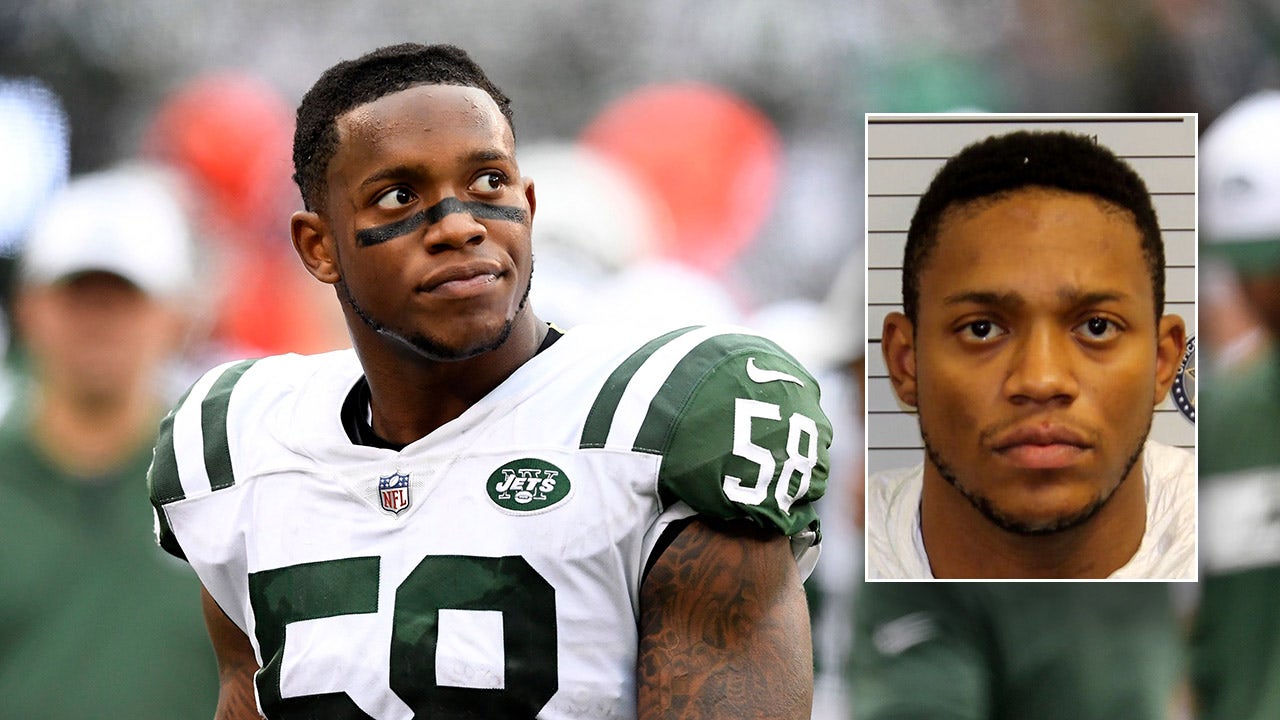
Darron Lee, once a promising force on the NFL field, now finds himself locked in a jail cell, grappling with the stark reality of a first-degree murder charge in Tennessee. At just 29 years old, Lee’s life has taken a terrifying turn from gridiron glory to the grim confines of the Hamilton County Jail. Selected by the New York Jets in the first round of the 2016 NFL Draft, Lee was hailed as a linebacker with speed, agility, and a determined spirit that helped him secure a spot in the Pros. He bounced between teams, playing for the Jets, then the Kansas City Chiefs, and finally the Buffalo Bills, where he last suited up in 2020. Fans remember him as the guy who could fly to the ball, making tackles that echoed triumph. But behind the uniform was a man whose personal life seemed to be unraveling. Last week, Lee was arrested, accused of the brutal beating death of his girlfriend, a woman who shared his home and, reportedly, his world. As the details emerge, it’s almost impossible not to think of the human cost here—not just for the victim, but for Lee himself, whose promising career ended abruptly due to injuries and inconsistency. Now, he’s not preparing for a game, but for a court battle. The house in Chattanooga suburb of Ooltewah, where they lived together, has become a crime scene, a place once filled with the mundane rhythms of life now stained by tragedy. Lee’s former teammates and coaches might shake their heads in disbelief, wondering how the kid with so much potential ended up in handcuffs. It’s a story that hits home for many, reminding us that fame and talent don’t shield anyone from personal demons or the consequences of violence. As the news breaks, people across the country are tuning in, not just for the sports angle, but for a glimpse into how someone so visible could fall so utterly. Lee’s story is a cautionary tale of ambition met with hardship, where football dreams collide with harsh realities.
The crime itself paints a picture of terror and confusion, unfolding over what investigators believe was a prolonged ordeal. On February 5, first responders arrived at the rental home in Ooltewah after a call for CPR in progress, only to discover Lee’s girlfriend already deceased. The scene was horrific, described vividly by Hamilton County Sheriff’s Office Det. Brian Lockhart during testimony. He recalled boxes scattered in the living room, the deceased woman lying on her back amid chaos. Blood spattered everywhere—up the staircase, on hand railings, walls, floors in the living room, hallway, and stairs. It wasn’t a quick incident; authorities suspect the abuse spanned about 10 days, turning a shared space into a nightmare. Imagine walking into your own home and seeing that kind of devastation—blood trails leading like breadcrumbs of horror. The woman, whose name is being treated with sensitivity in reports, had lived there with Lee, perhaps dreaming of a stable future with their 2-year-old son. Now, that dream is shattered. Lee’s own mother, in a separate incident, was allegedly beaten by him, according to earlier reports, adding layers of dysfunction to his life. This isn’t just a crime; it’s a web of broken relationships and unchecked anger. As details trickle out, we can’t help but feel a pang for the victim, a mother torn from her child, and for the community shocked by such brutality in a quiet suburb. Lee’s actions, if proven true, reveal a side of him hidden from the public eye during his football days, where he was cheered for hits on the field but now faces condemnation for unthinkable ones off it. It’s hard to reconcile the athletic image with this alleged monster, prompting questions about mental health, support systems, and the pressures of fame that might have silently fueled a descent into violence.
Lee’s explanations only deepen the mystery and suspicion surrounding the case. He told deputies that the woman might have fallen in the shower, a claim that seems laughably inadequate when confronted with the evidence. Extensive blood in areas contradicting Lee’s story suggests he tampered with the scene, which is why he’s also charged with fabricating evidence. The arrest affidavit details gruesome injuries: a stab wound to her abdomen, a human bite mark on her shoulder, a large bruise on her head, black eyes swollen shut, and dried blood smeared across her face and neck. Blunt force trauma is the suspected cause of death, but the full autopsy report is still pending. Lee himself bore marks of a struggle—facial injuries, lacerations on his hands, wounds on his chest, and blood inside his cellphone case. Investigators found alcohol, narcotics, and a gun during the search, painting a picture of a volatile environment. Blood had been hastily cleaned in multiple spots, with cleaning supplies placed near areas that tested positive for stains but showed no visible residue—a clear sign of cover-up attempts. How does someone explain away such carnage? Lee’s story unravels under scrutiny, leaving prosecutors like District Attorney Coty Wamp incredulous. “The explanation that he gave doesn’t make any sense whatsoever,” Wamp said in court, emphasizing the severity to argue against bond. This isn’t just a fight between versions of events; it’s a clash between a man’s words and the brutal truth etched in blood and bruises. For the victim’s family, these details are heart-wrenching reminders of the terror she endured. For Lee, it might be the beginning of accountability, forcing him to confront the part he allegedly played. In humanizing this, we see the fragility of trust in relationships, where love can twist into something monstrous, and lies become the last defense against an ugly truth.
Court proceedings have unfolded with swift gravity, underscoring the seriousness of the charges. On Wednesday, a Hamilton County Criminal Court Judge ruled that Lee would remain jailed without bond, a decision that echoes the community’s collective gasp. Lee, the first-round pick turned accused murderer, won’t step foot outside until his next court date, set for next month. The ruling reflects the prosecutor’s strong stance against any possibility of freedom while investigations continue. Wamp made it clear there’s no final call on the death penalty, but factors like the brutality of the crime make it eligible for capital punishment. “Mr. Lee was in a home with a female who was beaten to death,” Wamp argued, using the victim’s final moments to deepen the case for no leniency. This isn’t a simple arraignment; it’s a pivot point that could lead to life’s ultimate stakes. Lee’s legal team, including deputy public defender Mike Little, remains tight-lipped, calling it premature for statements. For the public, following the case is a mix of fascination and dread, wondering if justice will prevail for the woman whose life was extinguished. It’s a moment that humanizes the justice system as a bulwark against unchecked violence, but also highlights its emotional toll on families waiting for answers. Lee’s NFL past adds an extra layer—he’s not an anonymous defendant but a figure who once embodied strength and resilience. Detaining him without bond sends a message that no fame excuses such atrocities, yet it’s impossible not to ponder if rehabilitation is still possible amidst the calls for punishment.
Delving into Lee’s history reveals a man whose life has been marred by prior legal troubles, tinting this latest charge with patterns of aggression. He’s on probation in Florida for aggravated assault with a deadly weapon and battery in separate counties, as noted by prosecutors. In Ohio, he’s serving probation for attempted battery, incidents that suggest a recurring theme of violence. Back in 2019, reports surfaced of him allegedly beating his own mother, the grandmother of his young son—a shocking allegation that tied into this tragic family saga. As an athlete, Lee’s career was short-lived due to injuries and perhaps personal distractions, ending in 2020 with the Bills. Teammates from the Jets and Chiefs might recall a passionate player, but off the field, hints of trouble brewed. His son, only two years old, now loses not just a mother but potentially a father to the system. This multi-layered backstory adds emotional weight, making us question what support systems failed Lee. Was it the pressure of pro sports? Mental health overlooked? Or simply choices spiraling out of control? Humanizing this means acknowledging the ripple effects—a child growing up without parents, a mother left grieving over her daughter, and a community reflecting on violence’s silent spread. Lee’s fall from grace isn’t just about deleted touchdowns; it’s about lives destroyed, prompting broader conversations on domestic abuse and accountability in high-profile lives. As the case progresses, we hope for truth to emerge, not just for justice, but for prevention of such tragedies in the future.
In the broader tapestry of society, Darron Lee’s case serves as a somber reminder of how quickly lives can shatter, urging us to confront issues like mental health, substance abuse, and domestic violence head-on. With the ability to stream Fox News articles, people are digesting this story in real-time, voices from officials and citizens alike buzzing with a mix of outrage and empathy. The victim, beaten over days in her own home, represents countless untold stories of women enduring silent torment. Lee’s alleged actions—fabricating evidence, cleaning blood—show the lengths some go to evade responsibility, yet the truth always seeps out. As we await the autopsy and trial, there’s a collective yearning for healing—for the young boy orphaned, for the families torn, and even for Lee, if redemption is possible. This tragedy isn’t isolated; it echoes warnings from domestic violence advocates about escalation when help isn’t sought. Lee’s NFL days, filled with cheers and tackles, now contrast sharply with the cold reality of bars and bailiffs. Humanizing it means feeling the weight of lost potential and the raw grief of loss. Perhaps in sharing this, we motivate change: better resources for players, support for struggling families. The Associated Press and other reports enrich our understanding, but ultimately, it’s the human element—the tears, the unanswered questions—that lingers. In closing, Lee’s story isn’t just news; it’s a call to action, reminding us that even heroes can fall, and society must catch those in freefall before it’s too late. As the legal saga unfolds, we watch, hope, and learn.