


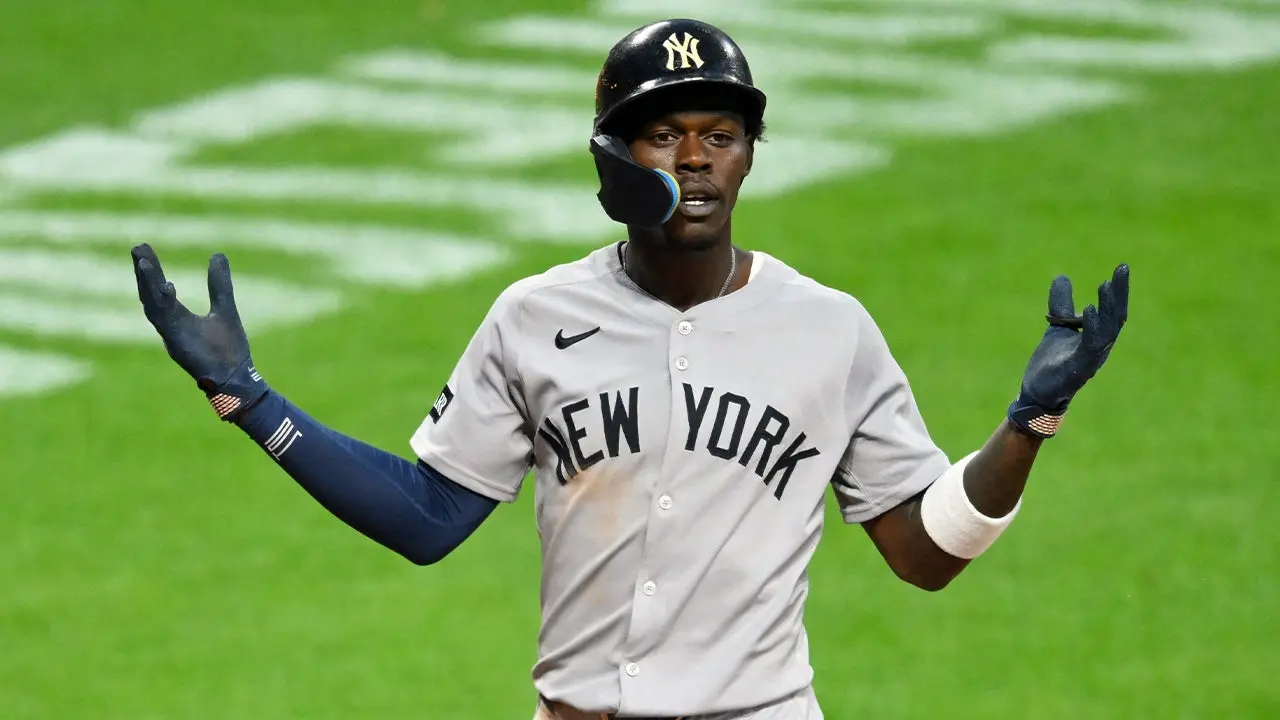
There is a universal, unspoken language among men that transcends geography, culture, and age—a silent code of empathy that is instantly triggered by the sight of another man taking a direct hit to his lower anatomy. This ancient bond of shared trauma was put on full, agonizing display recently when New York Yankees second baseman Jazz Chisholm Jr. fouled a sharp pitch directly into his own groin during a high-stakes game. In an instant, millions of male baseball fans watching the broadcast let out a collective, synchronized wince, doubling over in sympathetic agony on their couches as they watched the star athlete collapse onto the dirt in absolute, unadulterated pain. It was a visceral reminder of human physical vulnerability, momentarily stripping away the glitz, glamour, and superhuman aura of professional Major League Baseball to reveal a raw, agonizingly relatable truth. For a brief moment on the diamond, Chisholm was no longer an elite, highly paid superstar playing under the bright lights of New York; he was simply a human being experiencing one of the absolute worst, most paralyzing physical sensations known to mankind, leaving everyone wondering how such an avoidable disaster could occur on a professional field.
The immediate aftermath of the incident sparked a massive wave of curiosity across sports talk shows and social media, with fans and commentators alike asking the obvious question: why on earth wasn’t he wearing a protective athletic cup? The answer came down from Yankees beat writer Gary Philips, who shared some illuminating, albeit head-scratching, quotes from the second baseman himself regarding his lifelong policy on protective gear. It turns out that Chisholm is not, and has never been, a “cup guy,” opting instead for total physical freedom on the field, even in the wake of a catastrophe that would have sent most men running to the nearest sporting goods store. While protective cups are technically mandatory during a player’s developmental years in the minor leagues, Chisholm admitted that he routinely bypassed the rule, preferring the unencumbered range of motion over maximum security. Even more surprising was his firm declaration that this traumatic event would not change his stance moving forward, as he stubbornly intends to keep playing completely unprotected, relying entirely on his own athletic reflexes and a deep-seated belief that lightning rarely strikes the same place twice.
When asked to describe the physical sensation of the impact, Chisholm bypassed any clinical medical jargon or tough-guy athletic bravado, keeping his assessment incredibly honest and relatable by rating his pain level as a solid “million” on a scale of one to ten. He added a quiet, universally understood truth that needed no further explanation: “If you ever got hit in the testicles, you would know.” This simple statement carries a wealth of physiological import, as the brutal agony of a testicular strike is unique in its design, triggering a systemic crisis throughout the human body where the nerves send panic signals crawling up into the abdomen, causing intense nausea, sudden shortness of breath, and a temporary shutting down of one’s physical faculties. It is a pain so deeply rooted in the primal nervous system that even the strongest, most conditioned athletes in the world are instantly reduced to a helpless heap, proving that regardless of physical fitness, salary, or mental toughness, some biological vulnerabilities simply cannot be trained away or overcome by sheer will.
For the average person, Chisholm’s bold refusal to wear protective gear highlights an ongoing, subconscious mental battle that most men wage in their own daily lives to keep their lower extremities safe from a hostile, unpredictable world. We do not live our lives on a diamond facing ninety-five-mile-per-hour fastballs, but the average day is still a minefield of potential groin hazards that require constant, low-level vigilance. From the sharp wooden corners of kitchen tables and the overzealous jumps of a heavy family dog, to low-hanging branches in the yard, errant bicycle seats, and rogue toys left on the floor by toddlers, the threats are constant and everywhere. Men develop a deeply ingrained, almost evolutionary self-preservation reflex that keeps them perpetually aware of their surroundings, ready to deploy a defensive hand cover or a quick, agile hip twist at a millisecond’s notice to shield themselves from sudden disaster. It is a lifelong commitment to defensive posture, a quiet internal radar that constantly monitors the environment to prevent the kind of soul-crushing impact that leads to tears, gasped breaths, and a colorful vocabulary of desperate expletives.
There is a fascinating psychological duality at play in Chisholm’s decision, balancing extreme athletic hubris against the harsh reality of physical probability. It takes a supreme, almost delusional level of self-belief to play Major League Baseball, a sport where success is measured by hitting a tiny, spinning leather sphere with a wooden stick in front of screaming thousands, so it is perhaps unsurprising that this confidence overflows into his beliefs about his own body’s safety. Chisholm genuinely believes his defensive skills, elite hand-eye coordination, and physical reflexes are a more reliable shield than a molded piece of hard plastic, chalking up the entire incident to a freak occurrence of sheer bad luck rather than a systemic flaw in his equipment choices. While one must respect the sheer audacity of an athlete who trusts his own body to such an extreme degree, there is a fine, dangerous line between self-assured athletic mastery and a risky gamble against the unforgiving laws of physics and gravity.
In the end, while Chisholm’s determination to maintain his personal comfort and trust his athletic instincts is certainly admirable in its own stubborn way, the cold laws of probability suggest he is playing a highly dangerous game of roulette with his own anatomy. The baseball gods are notoriously indifferent to a player’s confidence, and a baseball traveling at high velocities cares absolutely nothing for defensive reflexes, reaction times, or personal comfort. We can only hope, for the sake of his career, his health, and the collective nervous systems of men watching worldwide, that this truly remains a one-time fluke stroke of misfortune rather than a recurring lesson in the absolute necessity of safety equipment. But if another stray foul ball or dynamic sliding play ever finds its way back to that exact same spot, Chisholm may find himself forced to finally swallow his pride, abandon his minimalist gear philosophy, and join the ranks of the armored players—because there are some lessons in this life that are simply too painful to have to learn twice.