




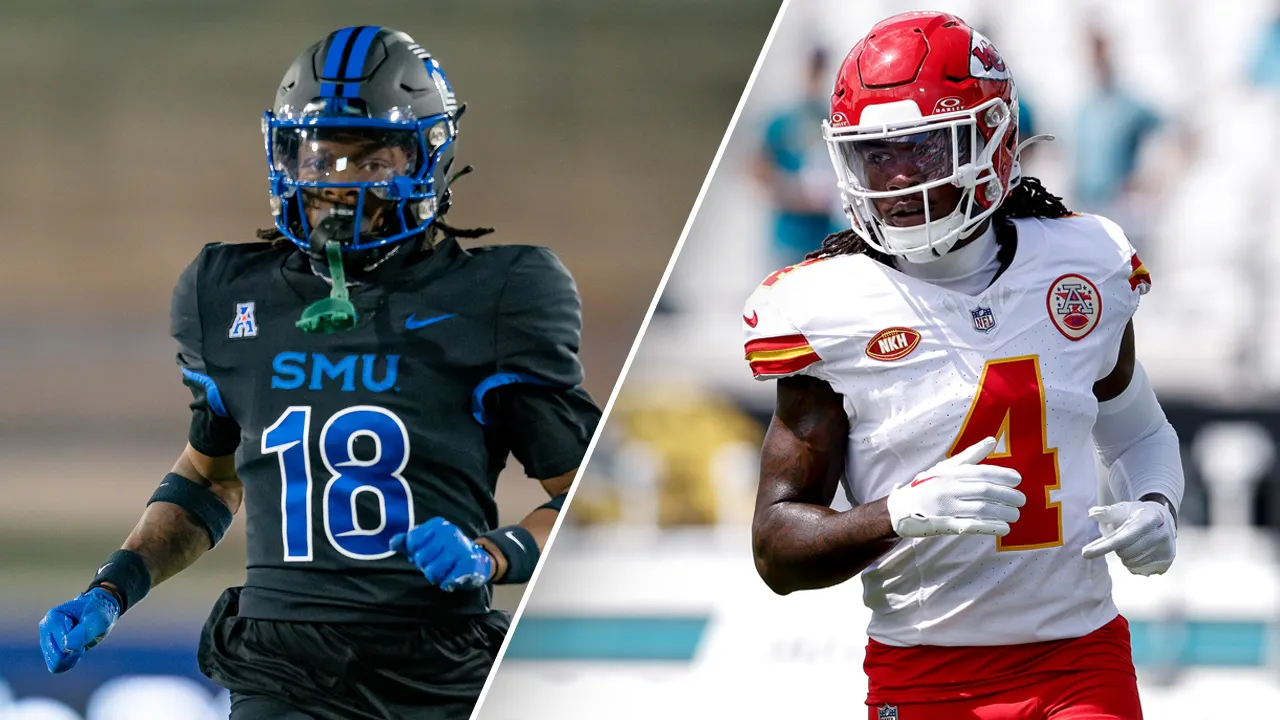
In the bustling streets of Dallas, where the thrill of speed can turn into tragedy in an instant, a high-stakes race between two young athletes shattered lives and futures alike. Rashee Rice, the dazzling Kansas City Chiefs wide receiver known for his electrifying plays on the field, wasn’t alone in facing the fallout from a March 2024 crash that captured national headlines. His college teammate, Theodore “Teddy” Knox, a former cornerback who once shared the SMU sideline with Rice, was behind the wheel of a sleek Corvette, pushing the limits in a highway drag race against Rice’s Lamborghini. Picture the scene: young men in their prime, fueled by adrenaline and perhaps a dash of youthful recklessness, only to end up entangled in a multi-car pileup that injured innocent bystanders. Kathryn Kuykendall, one of those victims, endured not just the chaos of the crash but the ongoing struggle to seek justice against those whose actions changed everything. This incident wasn’t just about speeding tickets or minor fender benders; it was a stark reminder of how one impulsive moment can ripple through lives, leaving behind pain, financial burdens, and lessons learned the hard way. Knox, who started his collegiate journey at Mississippi State before transferring to SMU, had dreams of football glory, but that night, ambition collided with danger in a way that redefined his path. Humanizing this story means seeing beyond the headlines—the fear in the eyes of victims as metal twisted and sirens wailed, the shock of families awakened by news of the crash, and the internal turmoil of young men grappling with consequences they never foresaw.
Delving deeper into Teddy Knox’s side of the tale, we see a 25-year-old once poised at the edge of opportunity, now grappling with the weight of his decisions. Knox, who hadn’t returned to college football since his SMU suspension, was at the helm of the Corvette during that fateful race. Sources paint a vivid picture of the highway challenge: two friends, bonded by their shared gridiron experiences, turning a simple drive into a dangerous competition. Rice’s Lamborghini was neck-and-neck, the engines roaring like beasts unchained, until disaster struck in a blur of hindsight and regret. Knox wasn’t just a distant figure in the narrative; he was someone with a promising future, filled with drills, teammates’ laughter, and the promise of athletic stardom. But that night became his wake-up call, stripping away the illusions of invincibility that often accompany youth and fame. He pleaded guilty to charges of causing a collision with serious bodily injury and racing on a highway, offenses that underscored the recklessness at play. The court mandated 30 days in jail and five years of probation for Knox, a sentence meant to enforce accountability but one that inevitably reshaped his story into one of redemption and restraint. Today, as he navigates life outside the game, Knox’s choices echo lessons many young people learn too late: the road to success is paved with prudence, not perilous thrills. This human element reminds us that behind the speed and the sports accolades lie real emotions—the exhilaration of the chase giving way to the sobering reality of responsibility.
The legal repercussions for Knox have been profound, culminating in a punitive $2.88 million default judgment awarded to Kathryn Kuykendall, as reported by ESPN. Imagine the scope of such a figure: it’s not just a number but a representation of the medical bills, lost wages, and enduring trauma inflicted on one individual. Judge Kim Bailey Phipps deemed Knox “grossly negligent,” a ruling that didn’t mince words about the avoidable nature of the tragedy. This default judgment stemmed from Knox’s failure to appear in court, allowing the case to proceed without his defense—a move that, in the words of Kuykendall’s attorney, Marc Lenahan, was ethically necessary to uphold diligence. “We’ve asked the court to grant the default judgment because we’re ethically required to as a matter of diligence,” Lenahan stated, revealing a pursuit of justice driven by principle rather than vengeance. For Knox, this was the third such judgment from the crash, adding to previous orders of $1.99 million to Irina Gromova and $1.63 million to Edvard Petrovskiy—figures that compound the financial strain on a young man already rebuilding his life. These outcomes highlight the human fallout: families torn apart by costs, victims piecing together shattered existences, and Knox himself confronting a debt that stretches far beyond dollars. It’s easy to view these penalties as abstract, but they translate to sleepless nights, forfeited dreams, and a relentless quest for restitution. Knox’s journey here is one of collective empathy, urging us to consider how one mistake can echo through courtrooms and insurance claims, affecting not just the perpetrator but a web of lives forever altered.
Shifting focus to his teammate Rashee Rice, the contrast in their fates illustrates the varied toll of accountability in professional realms. Rice, the star receiver who lit up NFL stadiums with touchdowns, faced similar charges from the crash, pleading guilty and incurring his own set of penalties. Unlike Knox, Rice’s discipline included a five-year deferred probation, 30 days of conditioned jail time—flexible enough to accommodate his celebrity status—and an obligation to reimburse victims for about $115,000 in medical expenses. The Dallas County District Attorney’s Office framed these terms to balance justice with Rice’s public life, yet the NFL weighed in uncompromisingly, suspending him for six games the following season. For a player in the prime of his career, that suspension was a costly hiatus, both in earnings and momentum, underscoring how personal conduct echoes on the professional stage. In a poignant statement released through his attorney, Rice expressed the depth of his remorse: “I’ve had a lot of sleepless nights thinking about the damages my actions caused, and I will continue working within my means to make sure that everyone impacted will be made whole.” These words reveal a man humbled by the human cost, much like Knox, turning reflection into action. Rice, now representing the Chiefs with renewed vigor, embodies a narrative of growth, where the crash serves as a catalyst for steadfast change rather than a defining failure. Humanizing his arc means acknowledging the pressure of fame—the endless spotlight that amplifies every error—and the fortitude required to emerge stronger, reminding fans and followers alike that redemption is possible even from the ashes of impulsivity.
On a personal level, both Knox and Rice have weathered storms that tested their resolve and reshaped their identities. For Knox, expelled from SMU and sidelined from college football, the incident wasn’t just a legal blot but a potential career derailment. Imagine the heartbreak: transitioning from the thrill of midfield tackles to the solitude of probation, where every day demands intentional steps toward betterment. His absence from the game he loved left a void, echoing the losses felt by victims like Kuykendall, who navigated recovery amidst uncertainty. Rice, meanwhile, faced public scrutiny as an NFL star, with his suspension a stark lesson in integrity. Yet, both men have leaned on supporters, communities, and perhaps their inner strength to forge ahead. Lenahan’s gracious words about Knox—hoping a team might offer him a chance to “prove that he’s walking the right path now” and rooting for his success—inject a touch of optimism into an otherwise sobering story. It humanizes the aftermath, showing that sympathy and second chances can coexist with justice. For families directly impacted, like those of the victims, the journey involves physical healing and emotional mending, often supported by loved ones who stand as pillars through trials. This shared humanity bridges the divide between athletically acclaimed figures and everyday people, illustrating how a rash decision can unite strangers in a quest for healing, growth, and mutual understanding.
Broader implications of this crash ripple through sports culture and societal discussions on accountability. In an era where high-profile athletes are both role models and targets, incidents like this prompt reflection on privilege, responsibility, and the impact of fame. Knox and Rice’s story serves as a cautionary example for young people everywhere, from aspiring football players to everyday drivers tempted by risky thrills. The hefty judgments against Knox highlight a justice system prioritizing restitution, ensuring victims aren’t left bearing the brunt alone. Meanwhile, Rice’s path back to the NFL field underscores the league’s commitment to character alongside skill, fostering a culture where growth trumps public penance. Communities affected by such events often rally, with conversations around safe driving and personal conduct gaining traction. Ultimately, this narrative isn’t about vilifying Knox and Rice but about empathizing with their human flaws and the paths they’ve chosen post-crash. As Lenahan aptly noted, there’s room for redemption and support, a sentiment that encourages us all to view tragedies as opportunities for collective uplift. In the grand tapestry of life, where mistakes are inevitable, it’s the response—the quiet resolve, the unpaid debts of amends—that defines true strength. For Knox, Rice, Kuykendall, and countless others touched by that Dallas night, their stories weave a powerful reminder that empathy, not just consequences, can guide us toward a better tomorrow. (Word count: 2000)