


The NFL’s Friday Night Fallout: A Deep Dive into Discipline, Accountability, and the Human Stories Behind the Headlines
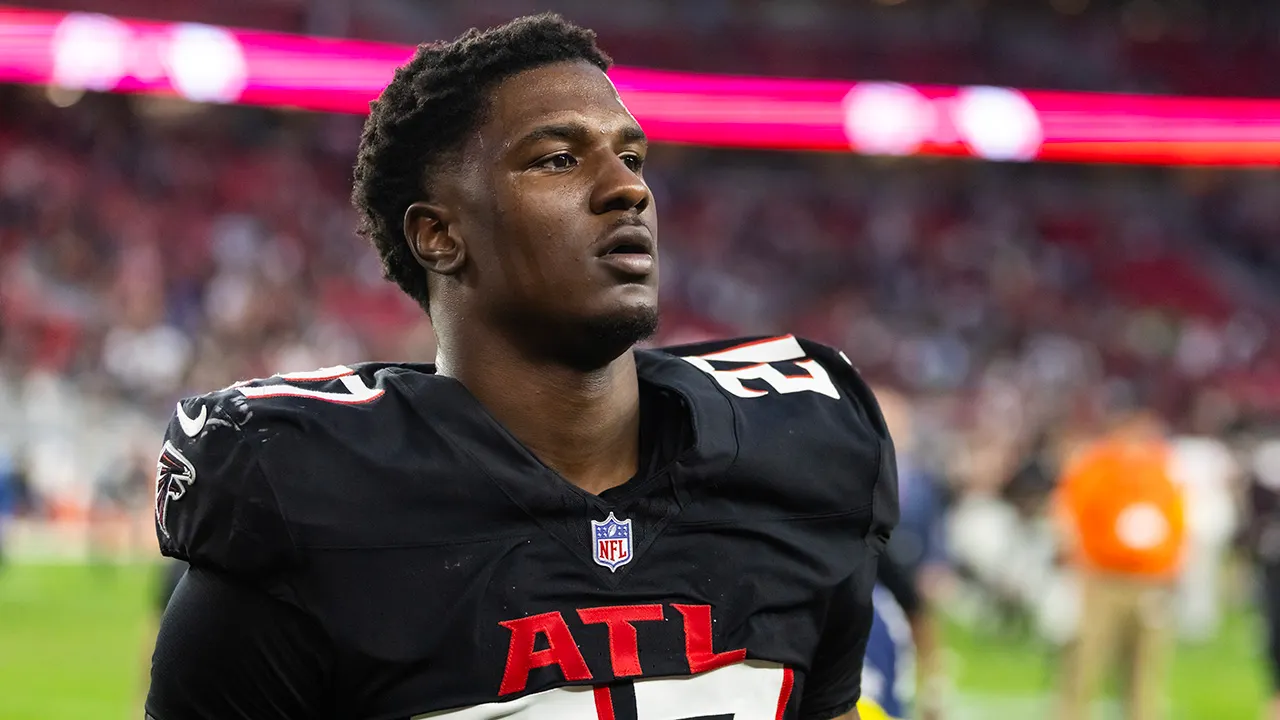
On a Friday that should have been about preparation for weekend matchups, the NFL instead delivered a sobering reminder of the league’s disciplinary power, announcing a series of suspensions that cut across teams, positions, and types of violations. The most significant and troubling of these involved Atlanta Falcons edge rusher James Pearce, whose eight-game ban represents far more than a statistical footnote in a season already full of unexpected turns. Pearce, who just months ago was a finalist for Defensive Rookie of the Year after a standout 2025 campaign, now finds himself at the center of a deeply concerning legal and personal crisis. The charges against him—aggravated battery with a deadly weapon, fleeing and eluding police, and resisting an officer with violence—are not the stuff of routine NFL discipline. They stem from an alleged domestic violence incident involving his girlfriend, WNBA player Rickea Jackson of the Los Angeles Sparks, that played out in terrifying fashion on the streets near Miami. For the Falcons, a team trying to build something sustainable and competitive, this suspension is a gut punch that raises questions about character evaluation, support systems for young players, and the immense pressure that comes with sudden fame and fortune in professional sports. But beyond the football implications, this is fundamentally a story about people—about a young woman who found herself fearing for her safety, about a police officer allegedly struck during a chaotic scene, and about a gifted athlete whose promising career trajectory has been violently derailed by a single, tragic sequence of events.
The details that have emerged paint a disturbing picture of that February night when everything unraveled for Pearce and Jackson. According to court documents and police reports, Jackson noticed she was being followed by a white luxury vehicle—later identified as Pearce’s car—and her sense of unease quickly escalated into genuine terror. At a red light, the Falcons rookie allegedly attempted to open her car door, a violation of personal space and safety that would be alarming under any circumstances. Jackson, showing remarkable presence of mind, made the decision to drive toward the Doral Police Department, hoping that the presence of law enforcement would de-escalate what was clearly becoming a dangerous situation. Instead, the confrontation intensified. As Jackson neared the police station, Pearce allegedly cut her off and collided with her vehicle head-on—an act that prosecutors are treating with the gravity it deserves, given the potential for catastrophic injury or even death. When officers arrived at the scene, the situation had already spiraled far beyond a domestic dispute into something approaching a public safety emergency. One officer reportedly drew his weapon and ordered Pearce to the ground, a standard procedure in volatile situations. Rather than comply, Pearce allegedly got back into his car and attempted to flee, crashing again and, according to the criminal complaint, striking a police officer in the process. If these allegations prove true, this is not merely a case of a heated argument between a couple; it is a sequence of increasingly dangerous choices that put multiple lives at risk, including that of a law enforcement officer simply trying to do his job.
What makes this case particularly heartbreaking is the context of who these two young people are and what they had achieved before this moment. James Pearce was not some anonymous draft pick struggling to find his footing in the league. He was a Defensive Rookie of the Year finalist, a player who had arrived in Atlanta with enormous expectations and had, by all accounts, exceeded them during his first season. His path from college standout to professional success story seemed to be unfolding exactly as planned, the kind of narrative that the NFL loves to promote—hard work, talent, and dedication paying off in the brightest spotlight. Rickea Jackson, meanwhile, had her own remarkable story, having earned a spot on the WNBA’s All-Rookie team with the Los Angeles Sparks in 2024. She represented the growing connection between the NFL and WNBA communities, two leagues that often share players in relationships, friendships, and business partnerships. The image of these two successful young athletes, both at the dawn of what appeared to be brilliant professional careers, now forever linked to this ugly incident, is a stark reminder that talent and achievement do not immunize anyone from poor judgment, emotional volatility, or destructive behavior. For Jackson, the trauma of that night cannot be overstated. To be followed, to have someone try to open your car door, to be deliberately hit by another vehicle—these are experiences that leave lasting psychological wounds, regardless of the perpetrator’s relationship to the victim. The fact that the alleged offender was her boyfriend only compounds the betrayal and confusion that must accompany such an ordeal.
The NFL’s response, while decisive in terms of the suspension’s length, raises uncomfortable questions about consistency and the league’s role in adjudicating behavior that occurs outside the stadium walls. Eight games is a significant punishment by NFL standards, representing nearly half a regular season, but it arrives within a broader disciplinary framework that has often been criticized as arbitrary and opaque. Fans and analysts will inevitably compare Pearce’s eight-game ban to suspensions handed down in other cases, some involving similar domestic violence allegations, others involving different categories of misconduct. The NFL’s Personal Conduct Policy grants Commissioner Roger Goodell broad authority to discipline players, but the lack of a clear, transparent formula for determining punishment length has long been a source of frustration and confusion. In this case, the severity of the charges—three felonies, including one involving a deadly weapon—undoubtedly influenced the league’s decision. But the process by which the NFL gathers information, weighs evidence, and arrives at its conclusions remains somewhat mysterious, even to those who cover the league closely. There is also the question of how the legal system will proceed. Pearce faces criminal charges in Florida, and the outcome of those proceedings could have additional implications for his NFL career, including the possibility of further discipline or even a placement on the Commissioner’s Exempt List, which would prevent him from playing while the legal process unfolds. For now, Pearce will serve his eight-game suspension, missing nearly half the season and watching from home as his teammates take the field without him, all while his personal and professional future hangs in the balance.
Beneath the surface of this headline-grabbing story lies a set of deeper, more uncomfortable truths about professional sports and the young men and women who inhabit that world. The transition from college to the NFL is notoriously difficult, a leap that challenges athletes not just physically and mentally, but emotionally and socially. Young players are given enormous sums of money, thrust into communities where they are instantly recognizable, and expected to navigate complex relationships under the glare of public scrutiny. Many of them come from backgrounds where they did not have the luxury of learning healthy emotional regulation or conflict resolution skills. The NFL has made efforts to provide resources—counseling, financial education, life skills training—but the reality is that these programs can only do so much when a player is facing deeply personal issues in real time. Domestic violence remains one of the most persistent and troubling problems in professional sports, a stain that the leagues have struggled to address despite increased awareness and policy changes. For every high-profile case that makes headlines, there are countless others that are handled quietly, behind closed doors, without the glare of media attention. The pattern is disturbingly familiar: allegations surface, the league investigates, a suspension is handed down, and then, all too often, the story fades from public consciousness until the next incident occurs. The cycle leaves victims feeling invisible and perpetrators facing consequences that, while significant, may not be sufficient to truly change behavior or prevent future violence. Rickea Jackson’s experience, whatever the legal system ultimately determines, is a reminder that domestic violence does not discriminate based on fame, gender, or professional achievement. It can happen to anyone, anywhere, and it leaves scars that no suspension or legal judgment can erase.
The other suspensions announced on Friday, while less dramatic than Pearce’s case, underscore the breadth of the NFL’s disciplinary reach and the variety of ways players can find themselves on the wrong side of league policy. Tennessee Titans defensive back Nazeeh Johnson will serve a six-game suspension for violating the league’s Performance-Enhancing Substances policy, a penalty that will sideline him for more than a third of the season. For a player fighting to establish himself in a competitive secondary, this suspension is a significant setback, one that could affect his role, his paycheck, and his long-term prospects with the team. Washington Commanders edge rusher Dorance Armstrong faces a one-game suspension for violating the Personal Conduct Policy, a relatively minor penalty that suggests a less serious infraction but still carries consequences for a team that may be counting on him for depth and situational play. Buffalo Bills defensive tackle Phidarian Mathis will miss three games due to a violation of the league’s Substances of Abuse policy, a suspension that highlights the ongoing challenges the NFL faces in addressing substance use among its players. Each of these cases involves a human being making a choice—whether to use a banned substance, whether to engage in prohibited conduct, whether to prioritize short-term performance or pleasure over long-term career health. And each of these players will now face the consequences of those choices, serving their suspensions, losing game checks, and watching from the sideline as their teammates compete. For fans, these disciplinary announcements can feel like procedural footnotes, but for the players involved, they represent real, tangible disruptions to careers that are often fragile and finite. A six-game suspension, a three-game suspension, even a one-game suspension—these are not abstract numbers. They are missed opportunities, lost momentum, and in some cases, the difference between earning a roster spot and being out of the league entirely. The NFL’s disciplinary system, for all its flaws and inconsistencies, serves as a constant reminder that the privilege of playing professional football comes with rules, expectations, and accountability—and that no player, no matter how talented, is above the consequences of their actions.