





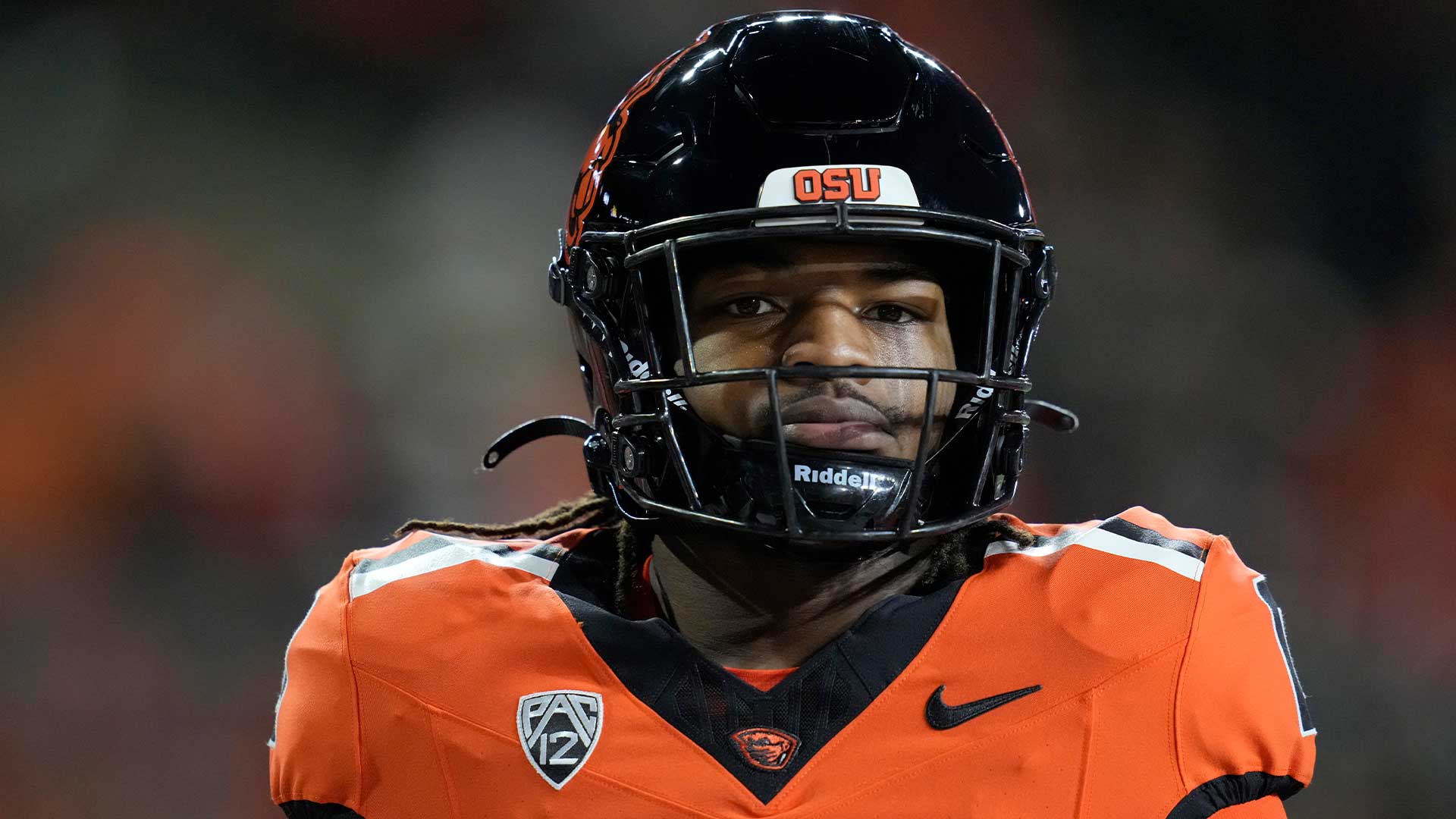
The world of professional football moves with a brutal, unforgiving speed that often leaves even the most promising athletes breathless and disoriented. For Anthony Hankerson, a gritty, compact running back who had just begun to taste the crisp, thin air of an NFL training camp, that speed became a blinding blur this week. The Seattle Seahawks, in a quiet administrative move that speaks volumes about the league’s relentless roster churn, have officially waived him. It is a stark, humbling reality for an undrafted rookie, a man who fought tooth and nail through the ranks of Oregon State University just to get a tenuous, fragile foothold in the professional game. In the grand, cold scheme of an NFL season, a waiver is simply a transaction, a line item on a spreadsheet, a soldier being reassigned or decommissioned. But for a human being, it represents a shattered dream, or at the very least, a detour so sharp and unexpected that it could give anyone severe emotional whiplash. Just moments ago, in the collective consciousness of the preseason schedule, Hankerson was out there on the artificial turf at Nissan Stadium in Nashville, taking handoffs against the Tennessee Titans, churning out ten hard-fought, precious yards on five carries and securing two passes for nine yards in a close, tightly contested 19-16 loss. He was living the ultimate childhood fantasy, breathing the rarefied air of professional athletes, feeling the violent impact of elite defenders. Yet, within a span of days since signing that hopeful, life-changing contract, the phone call came, the paperwork was processed, and he is now a free agent in the most literal sense of the word. This release, however, is not merely a somber footnote in his career statistics. It is the opening chapter of a bizarre, unprecedented, and deeply human narrative—one that sees a professional athlete granted a bizarre, almost mythical gift: the official chance to return to the dorm rooms, chalk-dusted practice fields, and raucous student sections of college football. Thanks to a lingering court battle playing out in the judicial system and a specific legal ruling that shook the college athletics landscape, the door to his past has swung wide open, offering him a second lease on a collegiate life he thought he had left behind permanently.
The catalyst for this extraordinary turn of events lies not in a coach’s office, a general manager’s war room, or even a film room dissecting game tape, but rather in a Louisiana courtroom. Last week, a federal judge issued a temporary restraining order that effectively created a monumental loophole in the rigid, archaic structure of college athletics, granting a select group of 16 players who graduated high school in 2022 an unprecedented fifth season of collegiate eligibility. These are athletes who, due to the chaotic and overlapping fallout of the COVID-19 pandemic, the explosive rise of Name, Image, and Likeness (NIL) deals, and the ongoing legal challenges to the NCAA’s longstanding, often arbitrary regulations, found themselves caught in a gray zone of bureaucratic purgatory. The ruling acts as a time machine of sorts, a legal eraser that wipes away the seeming finality of exhausting one’s four seasons of competition. For Hankerson, this means that despite inking a professional contract with the Miami Dolphins and later the Seahawks, despite stepping onto an NFL field and taking real reps, and despite the visceral, bone-jarring physicality of a professional preseason game, he could very well trade his professional cleats for a pair of college turf shoes once again. Once he clears waivers, a formality of the NFL’s personnel processing system, he can officially enter the transfer portal, a massive, digital bazaar of talent where desperate, competitive programs and ambitious, often mercenary players converge to strike deals. This is an extraordinary twist of fate, one that pits the professional aspirations of a player directly against the magnetic pull of unfinished academic and athletic business. For a young man who bled the orange and black of the Oregon State Beavers, it offers a reprieve from the harsh, win-now, cut-now environment of the NFL. It humanizes the experience of these athletes, showing that football is not just a linear career, but a complex life journey with multiple, winding pathways. Sometimes, the legal system steps in to alter the trajectory in ways that no scout, sports analyst, or even the players themselves could ever predict. The temporary restraining order is not just a dry legal technicality; it is a lifeline that offers emotional stability, a familiar uniform, and the promise of a final, glorious year of competition on a campus that already knows his name and celebrates his playing style.
To truly understand the enormity of this opportunity, one must look at the worn treads on Hankerson’s cleats and the emotional scars on his journey. His path to the NFL was never paved with the red carpet of a first-round draft selection, nor the fanfare of a high-profile free agent signing. He was an undrafted rookie out of Oregon State, a program known for producing tough, gritty, often overlooked running backs rather than flashy combine freaks with blazing 40-yard-dash times. In April, he signed a deal with the Miami Dolphins, only to be waived just a few weeks ago—a classic victim of the brutal, unforgiving preseason roster crunch. From there, the Seattle Seahawks picked him up, giving him a fleeting shot in a crowded and competitive backfield. In his brief Seattle tenure, he showed flashes of the tenacity and vision that made him a standout in the Pac-12 conference. Last season, his second in Corvallis, he rumbled for an impressive 1,086 yards and nine touchdowns, proving that he could carry a heavy workload for an entire season while providing a spark to the offense. He also displayed soft, reliable hands coming out of the backfield, hauling in 22 receptions for 123 yards, showcasing that he was more than just a between-the-tackles banger. But the NFL is a wholly different beast, a cutthroat ecosystem where marginal gains are measured in millimeters and jaw-dropping, freakish athleticism is the baseline expectation. For Hankerson, a player whose lunch-pail mentality, work ethic, and football IQ are his greatest assets, the transition to the pros was always going to be a steep, uphill climb against insurmountable odds. The waiver is a humbling blow, a stark reminder that the league’s roster construction is a brutal numbers game that values potential often over production. Yet, it is precisely this gritty, never-say-die background that makes his potential return to college so compelling and heartwarming. He is not a prized high school recruit seeking attention; he is a proven, tested, veteran presence. He has experienced the razor-thin margin between making a roster and going home, between achieving a dream and facing the crushing disappointment of a release. He has tasted the professional level, felt the speed and power of NFL defenders, and now, if he chooses, he can go back to a system where he is a known commodity, a leader who can carry a team on his back and finish what he started. Humanizing the constant ebb and flow of football, his story highlights that behind every transaction and waiver wire move is a real person navigating a chaotic, often ruthless market, desperately trying to find a place where his talents are valued and his heart feels at home—whether that platform is a Sunday in the NFL or a Saturday in a packed college stadium.
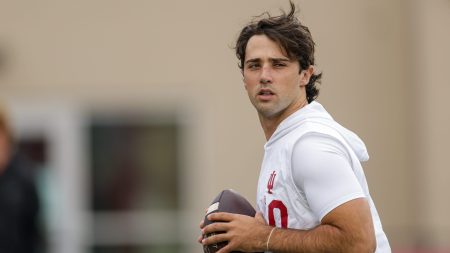
Hankerson is not walking this tightrope alone, and there is a strange comfort in shared struggle. He shares this bewildering, almost surreal predicament with another running back, a player named T.J. Harden, who was also recently cut by the Seattle Seahawks after appearing in their preseason opener against the Dallas Cowboys. Harden, who spent his last college season at SMU and went undrafted this spring, finds himself in the exact same legal and logistical limbo as Hankerson. The fact that Seattle had both of these players on their training camp roster, only to eventually release them while this court ruling loomed over the football world, creates a fascinating, almost poetic symmetry. It suggests a front office that is perhaps acutely aware of the shifting sands beneath the feet of these fringe players, or perhaps it is simply business as usual on a standard cutdown day, a day where men are paid to make emotionless, calculated decisions. For Harden, the path back to college is even more direct and immediate; he has already entered the transfer portal, actively seeking a new university home, likely fielding calls from coaches desperate for a veteran presence. This isn’t a hypothetical for him; it’s a tangible, moving goal. The shared experience of these two men underscores the remarkable fluidity of the modern football landscape. They are caught between two distinct worlds—the glitzy, corporate atmosphere of the NFL and the secure, passionate environment of the NCAA. The decision they face is deeply personal, emotionally complex, and financially significant. In the NFL, they are fighting for a practice squad spot, earning a relatively low salary but living out a lifelong dream of being a professional. In the college game, thanks to the massive influx of NIL collectives and booster-funded deals, a veteran back like Hankerson or Harden could command a substantial payday, guaranteed playing time, and the adoration of an entire college town that treats them like royalty. It’s a choice between the starving artist lifestyle of an aspiring professional versus the comfortable, celebrated life of a returning senior who gets to be a hero on campus. This duality humanizes the decision-making process, showing that modern athletes are not just pawns in a larger board game controlled by executives, but rational, thoughtful actors weighing their futures, their legacies, and their bank accounts in real-time, with a legal ruling suddenly tipping the scales in a way that favors nostalgia, stability, and the warm embrace of a familiar locker room.
Imagine the sheer psychological whiplash that must be coursing through Anthony Hankerson’s mind right now. Just a few short weeks ago, he was likely packing up his apartment in Corvallis, saying tearful goodbyes to his teammates and coaches, and feeling the life-altering surge of adrenaline as he flew to Miami, Florida, to try out for an NFL roster. He was living the dream, the culmination of years of sacrifice, early morning workouts, and grueling film sessions. Now, he is staring at a request for college transcripts, potentially facing a relocation to a brand-new campus, having to learn a completely new playbook, and readjusting to the rigid rhythms of a student-athlete’s life—study halls, mandatory team meetings, 6 AM weightlifting sessions, and the loud, youthful chatter of a locker room full of teenagers who are five or six years his junior. The emotional toll of this whiplash cannot be overstated or underestimated. One day, he is a professional; the next, he is a transfer student walking across a quad. This uncertainty wreaks havoc on one’s sense of identity, making a man question his own worth and his place in the world. He must essentially choose between pursuing the highest level of competition in the world versus securing a guaranteed, starring role in a lower, yet still highly competitive, professional-adjacent league. For his mental health, the stability and structure of a college program might be exactly what the doctor ordered. The NFL is a lonely, isolating place for an undrafted rookie; you are constantly looking over your shoulder, competing for a spot that might vanish with a single bad practice, a single injury, or a single fumble. College, on the other hand, offers a supportive network of teammates, a coaching staff that believed in him enough to recruit him, and a clear, defined path to a prominent role on offense. The human element at the core of this decision is the fundamental search for belonging and purpose. It is about feeling wanted and valued for what you bring to a team, not just what you can do on a whim. While the NFL flirts with you without any commitment, offering a temporary tryst, a college program can offer a committed marriage, a home where you are cherished. This ruling gives Hankerson and his 15 fellow athletes a rare, almost unheard-of opportunity to reject the brutal beauty of the professional game in favor of the warm, familiar embrace of academia and collegiate athletics, redefining what success means for the rest of their lives, entirely on their own terms.
Ultimately, this story is a powerful, enduring testament to the resilience of the human spirit in the face of profound athletic and emotional uncertainty. The Seattle Seahawks’ waiver of Anthony Hankerson is merely a transaction on a piece of paper, but his subsequent eligibility is a massive, life-altering plot twist that offers him a second act. Once the legal dust settles and he officially clears waivers, he holds the pen that can rewrite his own narrative, deciding between the fading echo of a practice squad scratch and the roaring chorus of a sold-out college stadium. He could vanish into the obscure depths of free agency, waiting for an injury-plagued team to call him for a workout, spending his days in limbo. Or, he could embrace this extraordinary opportunity to become a college football legend once more. Last season’s impressive stats—1,086 rushing yards and nine touchdowns—are not just a nostalgic memory from a distant past; they are valuable currency he can use to secure a starring role elsewhere, to command NIL money, and to ensure he finishes his football career with a highlight reel of touchdowns, not a waiver wire notification. This bizarre legal situation, stemming from the ongoing, high-stakes fight over athlete compensation and the NCAA’s regulatory powers, has inadvertently given these men a second childhood, a chance to finish their college careers on their own terms, with their heads held high. It doesn’t just apply to football; it fundamentally challenges how we view athletic careers, breaking the linear progression of college-to-pro. It screams that even when the doors of professional sports slam shut in your face, a window can open in the most unexpected places, painted in the vibrant colors of a college alma mater. For Hankerson, the journey is far from over; it is merely shifting venues, swapping the sterile, corporate facilities of an NFL complex for the echoing, inelegant chaos of a campus. As he weighs his options—whether to return to Oregon State, where he knows the playbook like the back of his hand, or to venture into the unknown of the transfer portal to find a new home—he carries with him the invaluable, unshakeable knowledge that he belongs on a football field, in whatever capacity that may be, with cleats on his feet and a number on his chest. He is not a failure for being waived; he is a survivor who has found a loophole in the fabric of time and sport, a man granted a rare second chance to rewrite his ending. The Associated Press reported these facts of his release and his stats, but the humanity behind them is far richer, far more textured, and far more impactful. In a world where athletes are often reduced to trade rumors, statistical performance metrics, and fantasy football point totals, Anthony Hankerson’s story is a gentle reminder that they are also just young men, navigating a complex and often unfair world, desperately seeking a home where they are valued, challenged, and allowed to play a game they have loved since childhood for just a little while longer, hopefully ending with a celebration rather than a quiet knock on the door.