






When FIFA cleared American striker Folarin Balogun to play against Belgium just twenty-four hours before their highly anticipated World Cup knockout clash, it was the perfect recipe for an international soccer meltdown. The dramatic sequence of events—complete with a controversial red card, a suspended one-match ban, rumors of Donald Trump calling FIFA President Gianni Infantino, and the United States recovering its star goal-scorer at the eleventh hour—sent shockwaves through the global football community. Critics quickly claimed that the international governing body had conjured up a brand-new loophole specifically to rescue the Americans. While the outcry is undeniably loud, a closer look at soccer history shows that FIFA did not invent any new rules; rather, they used existing policy in a way that is far from unprecedented.
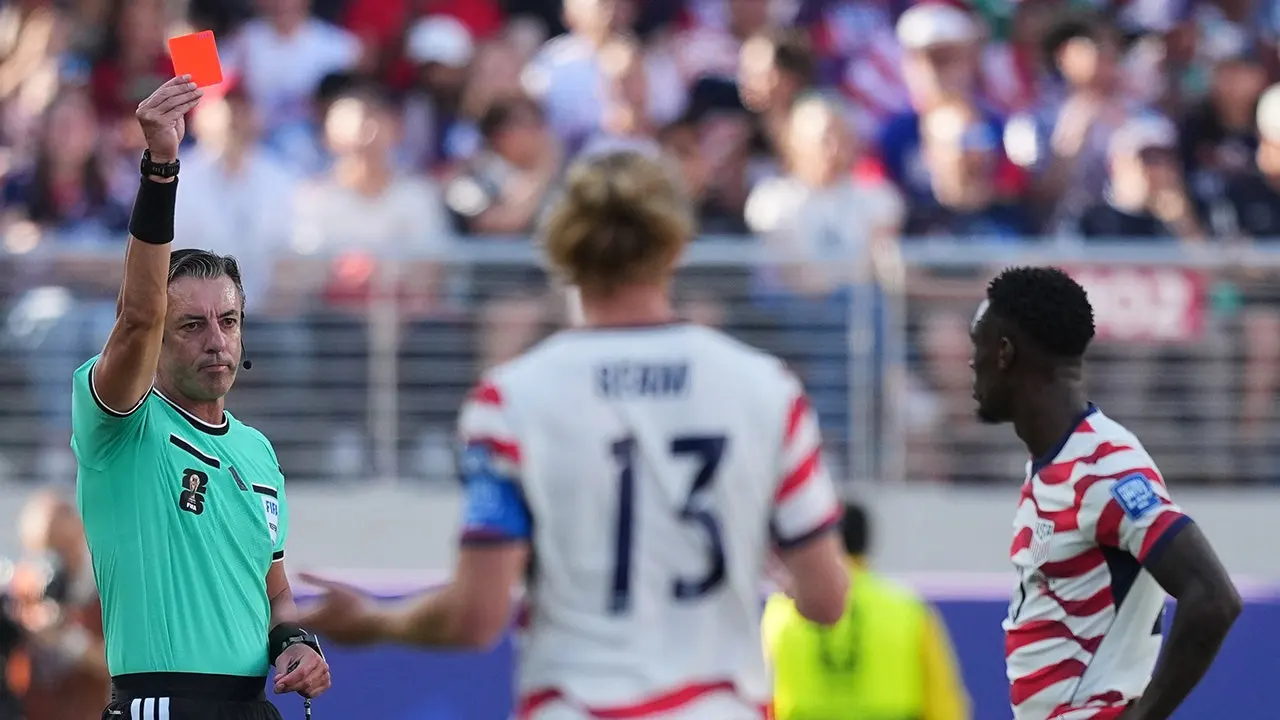
The controversy began when Balogun was sent off during the Americans’ victory over Bosnia and Herzegovina after a VAR review ruled he had stepped on the ankle of defender Tarik Muharemovic. The decision was fiercely criticized from the start, with U.S. manager Mauricio Pochettino labeling it “completely unjust” and midfielder Weston McKennie calling the referee’s logic highly questionable. Even England manager Thomas Tuchel later agreed that the incident did not warrant a red card. Typically, a sending-off triggers an automatic one-match suspension. However, FIFA stepped in and utilized Article 27 of its disciplinary code to suspend the implementation of the ban, placing Balogun on a one-year probationary period instead. This legal nuance infuriated European football federations; Belgium’s federation expressed utter astonishment, UEFA declared a “red line” had been crossed, and former FIFA president Sepp Blatter insisted that political interference should never override independent regulatory bodies.
Despite the fierce European backlash, FIFA relied on a real, written rule to defer Balogun’s punishment rather than erasing the red card altogether. This exact disciplinary flexibility has been utilized previously for some of the biggest names in the sport, most notably Cristiano Ronaldo. In 2025, Ronaldo faced missing vital World Cup matches for Portugal after receiving a red card in a qualifier against Ireland, but FIFA used the same Article 27 mechanism to suspend a portion of his ban. While critics point out that Ronaldo’s card occurred during qualifying rather than the tournament proper, the underlying regulatory logic remains the same. Furthermore, South American stars like Moises Caicedo of Ecuador and Nicolas Otamendi of Argentina have previously avoided carrying pending disciplinary actions into World Cup tournaments, proving that the system has long prioritized getting star athletes onto the pitch.
Historically, the concept of a player being sent off and still participating in the subsequent World Cup match is not entirely new either. During the 1962 World Cup in Chile, Brazilian legend Garrincha was sent off in a heated semifinal against the host nation yet was cleared by a disciplinary panel to play—and ultimately win—the final. While the rules of the game have evolved significantly since the 1960s, these historical precedents collectively dismantle the theory that Balogun’s reprieve was a unique conspiracy engineered solely for the benefit of the United States. FIFA has historically preserved a degree of judicial discretion to ensure that the tournament’s best talents are not sidelined by overly harsh or highly disputed refereeing decisions.
The real driver behind the global outrage is not the rule itself, but the terrible optics of political meddling. Former President Donald Trump allegedly called Gianni Infantino to advocate for the American striker’s reinstatement and later took credit on social media, thanking FIFA for “reversing a great injustice.” Having a world leader lean on sports administrators to influence tournament lineups is bound to make European fans and federations combust. While the backroom drama is undeniably messy, messy does not equal illegal. The U.S. team had already played the final thirty minutes of their match against Bosnia and Herzegovina with ten players, which Pochettino argued was punishment enough for an innocent, accidental challenge.
Ultimately, the Americans caught a massive, tournament-altering break by getting their leading goal-scorer back just in time for the knockout rounds. Under normal circumstances, losing a premier striker would have crippled their chances against a formidable Belgian side, but they will now field a complete squad. FIFA did not suddenly write Article 27 on a napkin to favor the United States, nor did they invent the concept of probationary disciplinary measures overnight. While Europe’s frustration with the political spectacle is entirely understandable, accusing FIFA of fabricating rules out of thin air is simply inaccurate. The Americans are moving forward to the Round of 16 with their star player in tow, and the rest of the football world will just have to accept the reality of the rulebook.