

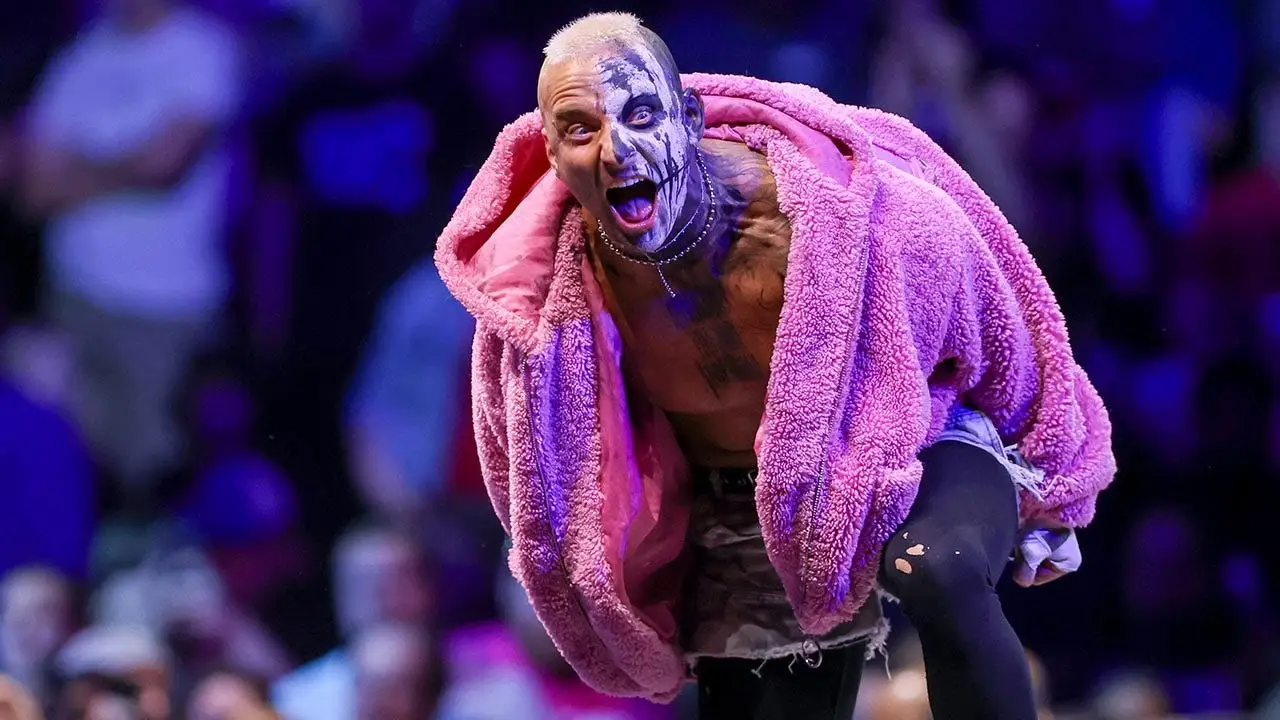
In a world where safety is often prioritized over self-actualization, Darby Allin stands as a stark, unapologetic anomaly, a human being who treats the boundaries of physical possibility not as warning signs, but as open doors. Since All Elite Wrestling first burst onto the media landscape in 2019, Allin has carved out an identity defined by a profound, almost spiritual fearlessness, a characteristic that extends far beyond the confines of a wrestling ring and into the very way he breathes, travels, and dreams. To look at his ledger of achievements is to see a man perpetually chasing the edge of the blade: he is a two-time TNT Champion, a tag-team legend who shared the final chapter of Sting’s legendary career, a conqueror of Mount Everest, and, most recently, the AEW World Champion after a historic victory over Maxwell Jacob Friedman. Yet, when you strip away the gold, the roaring crowds, and the daredevil stunts, you find a remarkably grounded human being driven by an insatiable, overwhelming lust for life. Allin openly admits to feeling as though he has lived a hundred lifetimes within his relatively short stay on earth, navigating a journey fueled by a refusal to let fear dictate his choices or limit his horizons. For Darby, every broken bone, every vertical mile scaled on the world’s tallest peaks, and every high-risk leap from the top turnbuckle is part of a grander psychological liberation—a process of shattering mental barriers to uncover what lies on the other side of terror. He operates with the rare, comforting peace of a man who has squeezed every drop of essence from his existence, declaring with absolute sincerity that if his journey were to end tomorrow, he would leave this earth with no regrets, completely at peace with what he has left behind. This radical acceptance of mortality does not make him reckless in a thoughtless way; rather, it makes him an incredibly strategic and dangerous competitor because you cannot threaten a man who has already conquered his own fear of the end. It is this unique philosophy that transforms his matches into performance art, where physical pain becomes a medium of expression and survival is the ultimate triumph.
This weekend, that very psychological armor will be put to its ultimate test in the heart of New York City, where Darby Allin is scheduled to defend his newly won AEW World Championship against his ultimate nemesis, Maxwell Jacob Friedman, at the highly anticipated Double or Nothing pay-per-view. The battleground is Louis Armstrong Stadium in Queens, a venue that promises a raucous, intensely partisan atmosphere, especially given that MJF will be performing on his home turf, backed by a crowd that views him as a local hero despite his notoriously arrogant, manipulative demeanor. The stakes of this confrontation could not be more personal or bizarre: a highly unusual “Hair vs. Title” stipulation that forces both men to put their most prized possessions on the line. If Darby falls, his historic, hard-fought reign as champion ends abruptly, and the gold returns to the waist of MJF for a third time, cementing Max’s place at the top of the food chain. However, if MJF falls, he will be subjected to the ultimate humiliation of having his head shaved completely bald in front of thousands of screaming fans. For Darby, this match is not merely about retaining the gold or inflicting cosmetic embarrassment on his rival; it is a vital, self-imposed mission to quiet the skeptics and silence the nagging voices of doubt that linger in the shadows of the professional wrestling community. He recognizes that many onlookers viewed his shocking victory over MJF in Seattle as a stroke of luck, an unpredictable anomaly in the grand scheme of AEW’s main-event landscape. Thus, his primary objective on Sunday is to definitively prove that his ascension to the top of the mountain was no fluke, but rather the logical result of his relentless, unyielding spirit. With typical dark, eccentric humor, Allin has even mused about what he plans to do with MJF’s shorn locks, joking about creating a literal voodoo doll to torment his rival for years to come, a testament to the deep-seated psychological warfare that has come to define their iconic, multi-year rivalry.
While the main event promises to be a masterclass in psychological warfare and physical sacrifice, the broader canvas of Double or Nothing is a testament to the breathtaking variety and creative chaos that AEW offers its audience. The card is a dense tapestry of narrative arcs, blood feuds, and athletic exhibitions, highlighted by a putting-it-all-on-the-line “I Quit” match for the AEW World Tag Team Championship that pits the defending champions, Dax Harwood and Cash Wheeler of FTR, against the legendary, reunited duo of Adam Copeland and Christian Cage. This match carries an immense emotional weight, as a loss for Copeland and Cage would force them into permanent retirement as a tag team, putting an end to a brotherhood and a collaborative legacy that has defined tag-team wrestling for over two decades across multiple eras and promotions. For fans who grew up watching these legendary figures, the emotional stakes are almost overwhelmingly high, as Christian and Copeland must find a way to summon their old magic against a relentless, technically flawless tag team in FTR who view the titles as their birthright. The sheer scale of the event is further reflected in massive multi-man spectacles, such as the opening five-minute tag team title eliminator featuring the powerhouse duo of Megan Bayne and Lena Kross taking on Zayda Steel and Vita Van, as well as a sprawling ten-man showcase featuring eccentric fan-favorites like Orange Cassidy, Mark Briscoe, and Roderick Strong teaming up with “Big Boom” AJ and QT Marshall to battle the formidable squad of Shane Taylor, Anthony Ogogo, Shawn Dean, Carlie Bravo, and Lee Moriarty. These matches serve as a vivid reminder of the sheer depth of the AEW roster, showcasing a beautiful collision of styles that ranges from the comedic and lighthearted to the devastatingly physical, all designed to keep the Queens crowd in a constant state of adrenaline-fueled anticipation.
Deepening the stakes of the evening are the highly competitive tournaments and singles championships that highlight the pure athletic pedigree of the roster, particularly the prestigious Owen Hart Foundation Cup Tournaments, which honor the legacy of one of wrestling’s most beloved technicians. In the men’s tournament bracket, fans will witness a colossal, hard-hitting clash of titans as Samoa Joe goes head-to-head with the transcendent aerialist Will Ospreay, a match that promises an incredible contrast of brute strength and gravity-defying innovation, while the luchador Bandido faces off against the charismatic and ruthless former world champion Swerve Strickland in another quarterfinal thriller. On the women’s side, the physical greatness of the division takes center stage as the dominant Athena battles the mesmerizing Mina Shirakawa in their own Owen Hart Cup quarterfinal, a prelude to the massive four-way war for the AEW Women’s World Championship where the champion, Thekla, defends her crown against a murderer’s row of legendary competitors including Hikaru Shida, Jamie Hayter, and Kris Statlander. This four-way collision represents the absolute pinnacle of global women’s wrestling, characterized by intense tribal loyalties, incredible power moves, and a relentless pace where any mistake could cost a champion her lifetime’s ambition. Adding yet another layer of global prestige is the international championship defense, where the enigmatic, legendary Kazuchika Okada puts his AEW International Championship on the line against the phenomenal Konosuke Takeshita in what purists are already hailing as a potential match-of-the-year contender, alongside a brutal, technically demanding Continental Championship defense where the violent, uncompromising Jon Moxley defends his title against the highly skilled submission specialist Kyle O’Reilly.
Yet, perhaps nothing encapsulates the raw, uninhibited theater of AEW quite like the return of the infamous Stadium Stampede Match, a sprawling, cinematic battle of utter devastation that will utilize every square inch of Louis Armstrong Stadium. This year’s iteration features an extraordinary gathering of legends, icons, and chaotic agents, as the team of Chris Jericho, Bobby Lashley, Shelton Benjamin, Kenny Omega, Jack Perry, Matt Jackson, and Nick Jackson square off against an action-packed, dangerous coalition consisting of Ricochet, Bishop Kaun, Toa Liona, Mark Davis, Andrade El Idolo, Clark Connors, and David Finlay. This match is designed to be an absolute sensory overload, a beautifully choreographed riot where trash cans, steel chairs, and the very architecture of the stadium itself become weapons of destruction. For the performers involved, it is a chance to step outside the traditional confines of the squared circle and engage in a form of physical storytelling that is both terrifying and liberating, blending high-concept comedy with jaw-dropping, high-risk stunts. The inclusion of elite performers like Kenny Omega and the Young Bucks alongside the raw power of Bobby Lashley and the majestic acrobatics of Ricochet ensures that the match will be a breathless, unpredictable rollercoaster ride, perfectly mirroring the chaotic spirit that first made AEW a revolutionary force in the wrestling world. It is the ultimate manifestation of the sport’s carnivalesque roots, reimagined for a modern audience hungry for spectacle, community, and the thrill of the unexpected, proving that in this promotion, wrestling is not just a sport, but a grand, beautifully chaotic theater of the absurd.
For Darby Allin, this entire spectacle—the danger, the theatricality, the absolute commitment to physical ruin in the name of art—is precisely why AEW represents the future of professional wrestling. When speaking to those who may have never witnessed the promotion’s unique brand of madness before, Allin does not offer a polished corporate pitch; instead, he promises a journey of pure, unadulterated unpredictability and complete insanity. He envisions the promotion as a living, breathing entity that refuses to conform to safe, predictable formulas, where any given Wednesday or Saturday night, or any pay-per-view showcase, can erupt into a spectacle that leaves audiences gasping for breath and questioning the limits of physical endurance. This untamed, off-the-wall philosophy is not just how Allin approaches his craft inside the ring, but how he chooses to navigate his very existence as a human being on this planet. As he prepares to walk into the hostile territory of Queens to defend his championship and attempt to shave the head of his bitter rival, he does so with the quiet confidence of a man who has looked death in the face on the slopes of Everest and found only a calm, enduring silence. Sunday at Double or Nothing is more than just a wrestling show; it is an invitation to witness a group of individuals who, led by a fearless, free-spirited champion, are willing to risk everything to feel truly alive, urging the rest of the world to step out of their comfort zones and join them in the beautiful, chaotic dance of survival. Ultimately, Darby Allin reminds us that life is too short to be lived in fear, and whether you are climbing the highest peaks or fighting for your life under the bright lights of New York, the only thing that truly matters is having the courage to show up and give everything you have.