

Professional wrestling, at its absolute core, has always been an art form driven by the profound human desire to connect, to fight, and to tell stories that transcend the boundaries of language and geography. By the summer of 2026, All Elite Wrestling (AEW) has successfully transformed this ancient spectacle into a vibrant, living canvas where the finest athletic artists from every corner of the planet converge to paint their masterpieces in sweat, passion, and gold. Walking into an AEW arena today is not merely entering a sports venue; it is stepping into a bustling global crossroads where the high-flying poetry of Mexican Lucha Libre, the bruising, honor-bound intensity of Japanese Strong Style, the technical, theatrical precision of European grappling, and the loud, charismatic swagger of American showmanship melt into a single, breathtaking crucible. No longer is pro wrestling defined by isolated regional territories or monocultural monopolies; instead, the modern wrestling fan is treated to a brilliant mosaic of global talent, all striving under one banner to push the physical and emotional limits of what professional wrestling can be. The sheer diversity of this roster reflects a changing world where fans crave authenticity over manufactured archetypes, connecting deeply with the real-life sacrifices, heritages, and personalities of the individuals who put their bodies on the line week after week. As we gaze upon the massive, star-studded roster as of June 2026, it is abundantly clear that AEW is not just a wrestling promotion, but a revolutionary sanctuary where the world’s elite come to prove their worth, leaving their hearts on the canvas for millions to witness, appreciate, and cherish.
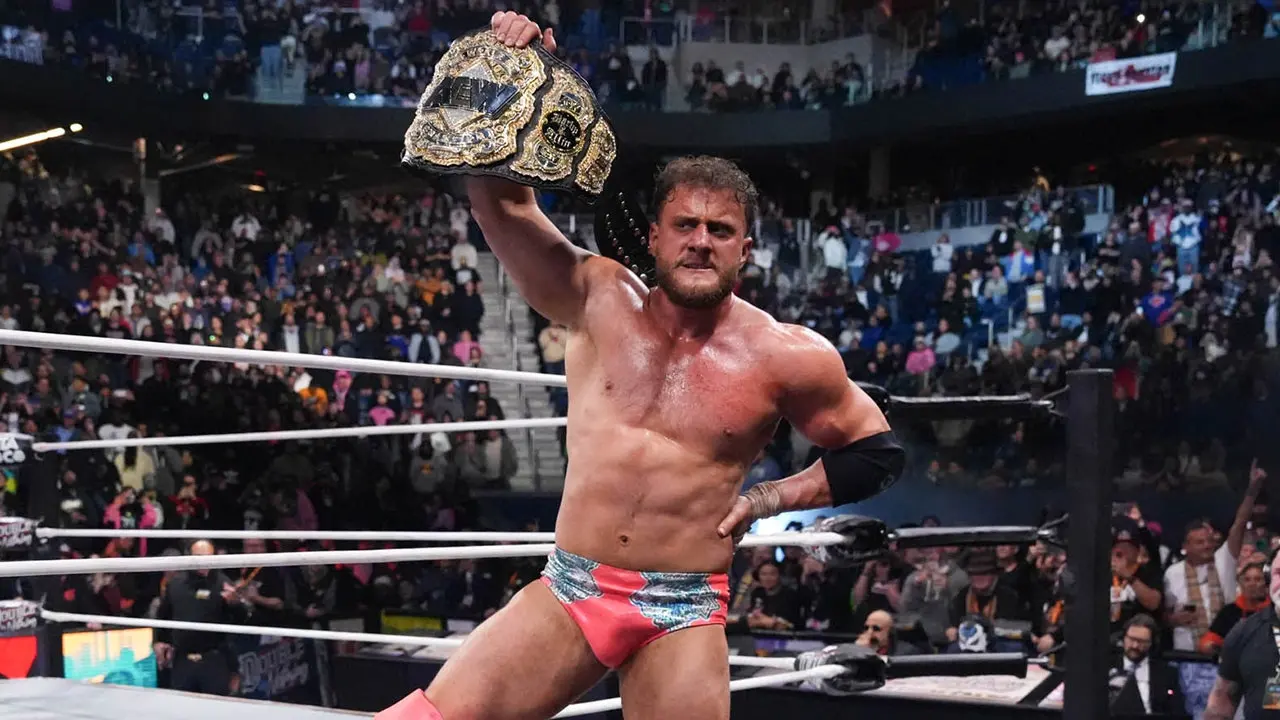
At the absolute epicenter of this cultural storm stand figures whose larger-than-life personas have come to define the very soul of All Elite Wrestling, none more so than the captivating, controversial, and brilliant Maxwell Jacob Friedman, known to the world simply as MJF, alongside the rugged, blood-soaked symbol of unyielding resilience, Jon Moxley. MJF’s journey has been an extraordinary masterclass in theatrical survival and modern psychological warfare; once a brash prodigy who wore his arrogance like a shield of armor, he has evolved into a generational icon whose sheer charisma can manipulate the emotions of tens of thousands with a single look, a cruel smirk, or a devastatingly honest promo. He represents the pinnacle of the American wrestling tradition—the master talker who backs up every syllable of his hubris with a clinical in-ring intelligence that few can match, holding court over the promotion as a living legend who demands respect. Conversely, Jon Moxley exists as the antithesis of corporate vanity, a wild, blue-collar warrior who thrives in the chaotic, bleeding margins of the sport and acts as the spiritual heartbeat of the entire AEW locker room. Moxley’s enduring appeal lies in his absolute refusal to compromise his vision of pure, unadulterated combat; he is the veteran general who has carried the company on his back through its darkest storms and brightest dawns, a man who views the wrestling ring not as a stage for celebrity, but as a sacred battleground where truth is earned through grit, pain, and mutual sacrifice. Together, the dynamic contrast between MJF’s golden-boy brilliance and Moxley’s gritty, metal-splintered defiance forms the emotional core of the company, showing that whether you fight for vanity or for survival, the path to greatness in AEW requires nothing less than giving your entire spirit to the audience.
The dramatic influx of international superstars on the 2026 roster has completely redefined the physical possibilities inside the squared circle, as exemplified by the mesmerizing rise of Japan’s powerhouse Konosuke Takeshita and the electrifying ascension of Kevin Knight. Takeshita has transformed from a widely respected, soft-spoken prospect of the Dramatic Dream Team (DDT) promotion in Japan into an absolutely dominant, terrifying force of nature in the United States, seamlessly blending the traditional, hard-hitting warrior spirit of his homeland with a modern, western flair for grand-scale storytelling. Every time Takeshita steps through the ropes, his explosive power, terrifyingly precise German suplexes, and raw athletic grace demonstrate to audiences that language is no barrier when your body speaks with such violent, undeniable eloquence. Beside him in this global vanguard is Kevin Knight, whose jaw-dropping agility, gravity-defying leaps, and effortless in-ring swagger have made him one of the most beloved and thrilling performers of the modern era, capturing the imagination of fans who watch in awe as he seems to hang in the air for eternity. Knight’s journey represents the beautiful evolution of the modern cruiserweight and tag-team styles, bringing a vibrant, youthful energy that injects every match with a sense of unpredictable magic and pure joy that leaves the arena gasping for breath. Together, athletes like Takeshita and Knight prove that the modern wrestler is no longer bound by traditional stylistic templates; they are hybrid warriors who have absorbed the history of global wrestling to create a spectacular, high-octane future that belongs to them alone.
Equally revolutionary is the meteoric evolution of the AEW women’s division, which has evolved into a global showcase of unmatched athletic prowess, psychological depth, and physical dominance, spearheaded by the likes of Thekla, Megan Bayne, and Lena Kross. Thekla, fittingly known as “The Poison Spider,” brings a chaotic, wildly unpredictable, yet deeply hypnotic European and Japanese-influenced style to the ring, utilizing her incredible flexibility and deeply unsettling psychological warfare to completely dismantle her opponents from the inside out; she is a performer who does not merely wrestle a match, but weaves an intricate, dangerous web of physical torment that keeps viewers on the absolute edge of their seats. In sheer contrast to Thekla’s arachnid cunning stands the monumental presence of Megan Bayne, a powerhouse of mythic proportions whose statuesque, goddess-like physique and overwhelming, bone-shattering strength evoke the classical legends of ancient gladiators. Bayne’s presence on the roster is an empowering testament to physical dominance, as she effortlessly tosses rivals across the ring with an easy, chilling grace that commands absolute awe and establishes her as a virtually unstoppable force in any arena she occupies. Complementing this hierarchy of power is Lena Kross, whose fierce, no-nonsense intensity and brutal, submission-based offense have carved out a reputation as one of the most feared strikers on the planet, a competitor who demands your attention through sheer physical imposition and a relentless, unforgiving combat style. These three extraordinary women do not simply represent the division; they are redefining what it means to be a champion in the modern age, breaking down old barriers of presentation to show that women can be heroes, monsters, artists, and gladiators all at once.
To understand the magic of All Elite Wrestling in June 2026 is to look past the championship gold and shining spotlights, and instead peer into the deep, invisible bonds of fellowship, culture, and shared ambition that unite this incredibly diverse locker room of dreamers. Within these walls, veteran icons who have bled on every continent sit shoulder-to-shoulder with eager young rookies from Mexico and Europe, sharing secrets of crowd psychology, physical recovery, and the delicate art of emotional connection over cups of coffee and tables stacked with athletic tape. There is a profound human beauty in watching a young luchador, who grew up in the dusty gyms of Mexico City, communicate effortlessly in the ring with a Japanese striker who trained in the snowy, austere dojos of Hokkaido, finding a rich, unspoken harmony through the shared physical language of holds, bumps, and falls. This collective spirit of mutual respect and competitive drive fosters an environment where innovation is not just encouraged, but actively demanded, forcing every wrestler on the roster to constantly evolve, experiment, and elevate their craft to keep up with the astonishing speed of the industry. The fans sit at the very heart of this ecosystem, serving as the ultimate judges and emotional fuel for these gladiators, creating a symbiotic relationship where the passion of the crowd directly inspires the reckless, beautiful courage of the wrestlers inside the ring. Ultimately, this vibrant locker room culture is a reassuring reflection of what humanity can achieve when barriers of nationality, language, and culture are cast aside in favor of a secular, burning passion to create something legendary together.
As the calendar turns to June 2026, All Elite Wrestling stands not merely as a commercial alternative in the entertainment landscape, but as a living, breathing testament to the enduring power of dreams, resilience, and the relentless pursuit of artistic freedom. Every wrestler on this massive, globally diverse roster—from the legendary, battle-tested standard-bearers like Jon Moxley and MJF, to the groundbreaking physical marvels like Takeshita, Knight, Thekla, Bayne, and Kross—carries a personal story of struggle, sacrifice, and the ultimate triumph of the human spirit over adversity. They represent a new golden era where the lines between reality and performance are beautifully blurred, allowing fans to invest their own hopes, fears, and passions into the battles that unfold within the cold steel of the ring. For the fan sitting in the cheapest seat in the arena, or the viewer watching from thousands of miles away on a glowing screen, these athletes are much more than physical performers; they are mirrors of our own daily struggles, showing us that even when we are beaten down, bloody, and exhausted, we can always find the strength to rise, fight back, and reclaim our spot in the light. This is the profound legacy that AEW continues to write with every show, every pay-per-view, and every sweat-soaked battle: a spectacular, heartbreaking, and ultimately triumphant celebration of humanity, wrapped in the glorious, immortal theater of professional wrestling.