

The heartbeat of an NFL franchise in the sweltering heat of August is often measured not in the roar of the crowd, but in the hushed, tense whispers of the training room. For the Arizona Cardinals, that heartbeat has been punctuated by a series of alarming arrhythmias over the past 24 hours, as a promising preseason opener against the Las Vegas Raiders has given way to a sobering reality check on the practice fields of Tempe. The euphoria of seeing the No. 3 overall pick in the 2026 NFL Draft, running back Jeremiyah Love, showcase his explosive talent has been replaced by the grim calculus of injury management. What began as a hopeful display of offensive firepower has devolved into a test of the team’s depth, resilience, and the very philosophy of cautious optimism that defines a franchise trying to build something lasting. The Cardinals are entering a critical juncture, where the physical toll of the sport threatens to undermine the strategic progress they have fought so hard to achieve.
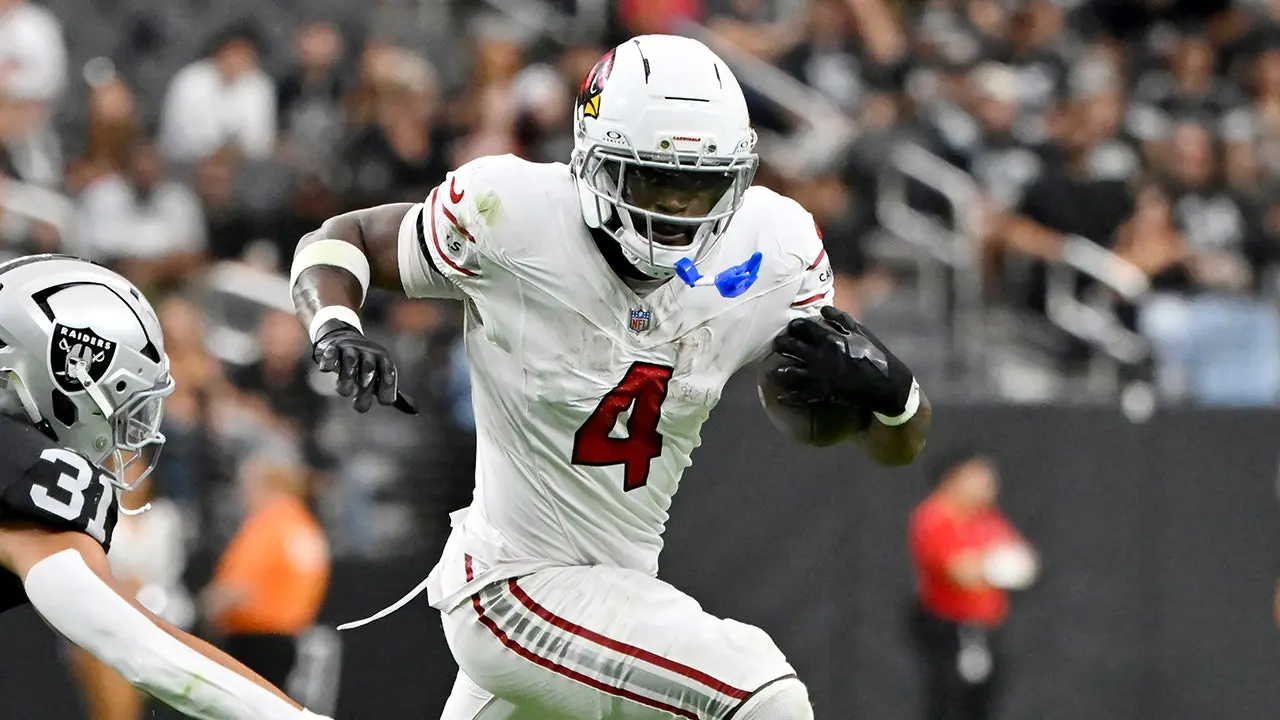
The immediate concern centers on Jeremiyah Love, the dynamic rookie whose debut performance was a tantalizing glimpse into the future of Arizona’s backfield. On Thursday night, Love was electric, weaving through the Raiders’ defense with a blend of vision and speed that validated his draft position; he carried the ball 11 times for 58 yards and added three catches for 14 yards, showcasing the dual-threat capability that made him such a coveted prospect. In the immediate aftermath, the injury to his ankle seemed ancillary, a minor footnote in an otherwise stellar outing, and Love himself exuded confidence and good spirits. However, the harsh light of Friday morning revealed a different story. Head coach Mike LaFleur, addressing the media on Saturday, confirmed that the swelling and soreness in Love’s ankle had increased significantly overnight, more than the medical staff had initially anticipated. “He was in great spirits, even Friday,” LaFleur explained, his tone measured but tinged with concern. “But we’ll keep him out this week as we let it heal. So, a little bit more sore than we were anticipating.” This admission is a stark reminder that in the brutal world of professional football, appearances can be deceiving, and an initially benign injury can quickly metastasize into a lingering issue that threatens to derail a rookie’s transition to the pro game.
This development has forced a delicate balancing act for the coaching staff, a tightrope walk between long-term development and short-term necessity. When pressed on Love’s availability for the season opener, LaFleur deftly pivoted, refusing to look beyond the immediate horizon. “This week, and then we’ll kind of go from there and reevaluate,” he stated, emphasizing a day-by-day approach. “Honestly, all the focus is on Aug. 15, Saturday. Here we are in our Tempe block (of practice). We’ll kind of reevaluate going into next week. But he will be out this week.” This cautious stance signals a strategic decision to prioritize Love’s health over his integration into the game plan. He will absolutely not play in the second preseason game against the Dallas Cowboys, effectively sidelining him for a minimum of two weeks of crucial development time. In a sport where reps are paramount for rookies learning the nuances of a complex playbook, these missed practice sessions are invaluable. The team is choosing science over sentiment, medical prudence over public pressure, but it is a decision that carries inherent risk, leaving the offensive staff to scheme without their most promising new weapon. Love’s immediate future is now a medical mystery, a waiting game where the only certainty is the uncertain nature of ankle sprains, which can linger for weeks or heal in a few days depending on the precise nature of the ligament damage.
With Love on the shelf, the Cardinals’ backfield has suddenly become a volatile equation, ripe with both opportunity and anxiety. The onus now falls upon the grizzled veterans and hungry understudies to carry the load. Tyler Allgeier will step into the starting role, a 235-pound battering ram whose bruising style is the antithesis of Love’s slick, ballet-like footwork. Behind him, “Bam” Knight and Corey Kiner will provide complementary change-of-pace options, offering a diversified, if less electrifying, ground attack. Yet, the most significant shadow looming over this positional group is veteran James Conner. Conner, a revered leader in the locker room and a proven workhorse, is still recovering from a right foot injury that sidelined him for 14 games last season, a devastating blow that undermined the team’s offensive consistency. He has yet to participate in 11-on-11 drills, leaving the starting lineup in a state of flux. The absence of both Love and Conner on the field simultaneously has robbed the offense of its two most potent playmakers, forcing offensive coordinator Drew Petzing to adjust his play-calling and rely on a rotation of less dynamic runners, significantly dulling the edge of an attack that was supposed to be a primary strength. The preseason was meant to be a testing ground for a new identity; instead, it has become a scramble for survival, a proving ground for a trio of backs who now face a sudden and critical audition.
As if the quarterback of the running back room’s situation wasn’t enough to cause sleepless nights, the offensive line—the very foundation upon which any successful rushing attack is built—has suffered a catastrophic structural failure. Second-round draft pick Chase Bisontis, a powerful and technically refined guard who was locked in a fierce battle for the starting right guard position, tore the MCL in his left knee during the same game. The news was delivered with a somber finality. LaFleur confirmed that Bisontis will be placed on injured reserve, effectively ruling him out for a significant period, with the grim possibility of a season-ending absence. “He’ll be out for a good amount of time, if not the whole year. Sucks for him. Always think about the player first. Sucks for the Cardinals too. He’s a good player, but more importantly, you hate it for the player.” This injury is a devastating blow on multiple fronts. For Bisontis, it represents a cruel interruption to a promising career trajectory, a setback that could stall his physical and mental development. For the Cardinals, it is a direct hit to their offensive line depth, forcing them to shuffle their personnel and potentially insert a less-experienced player into the starting lineup against formidable interior pass rushers. The offensive line is the great equalizer in the NFL, and losing a high-ceiling rookie like Bisontis, especially while Conner is still recovering, throws the entire unit’s chemistry into disarray before the season has even begun. The competition for the final roster spot and starting role has been irrevocably altered, a testament to the violent whims of chance that dictate so much of the league’s landscape.
In the midst of this chaos, the steady hand of Mike LaFleur has been a source of stoic stability. His approach to the concurrent crises has been methodical, a clinical evaluation of facts and a refusal to engage in panic. He understands that the NFL season is a marathon, not a sprint, and that decisions made in the heat of August panic can have catastrophic consequences in the frost of December. By prioritizing Love’s health and accepting the Bisontis loss with a philosophical, player-first attitude, LaFleur is signaling to the locker room that morale is paramount. He is attempting to weave a culture of resilience, where injuries are viewed as obstacles to be overcome collectively rather than excuses for failure. His focus remains razor-sharp on the day-to-day tasks: getting the offense to operate cleanly, developing the depth chart, and preparing for the Cowboys. The upcoming practice week will be telling; it will reveal how the backups respond to the increased pressure, and whether the offense can maintain its rhythm without its star running back. The coach’s message is simple: the show must go on, and everyone on the 53-man roster must be ready to contribute.
Looking ahead, the Arizona Cardinals find themselves at a precarious crossroads. Injuries are an unavoidable part of the NFL’s violent theater, but the concentration of damage to their offensive skill positions and offensive line is a hefty tax on their aspirations for a competitive season. The narrative has shifted from one of potential and promise to one of survival and adaptation. Jeremiyah Love’s eventual return will be a welcome shot of adrenaline, but his prolonged absence will allow defenses to key in on the passing game without the fear of a home-run hitter in the backfield. The battle between the team’s medical staff, the players’ desire to compete, and the urgency of the regular season is a delicate ecosystem. For now, the team must rely on the gritty determination of Tyler Allgeier and the veteran leadership of James Conner, who must hurry his own recovery to stabilize the running game. The preseason has become less about fine-tuning plays and more about stress-testing the roster’s depth under fire. As the Cardinals prepare to face Dallas, the focus is not on strategy, but on resilience. The true test of this franchise will not be how it performs when healthy, but how it bandages its wounds, recalibrates its expectations, and continues to march forward in the face of an adversity that has arrived far earlier than anyone could have anticipated.