



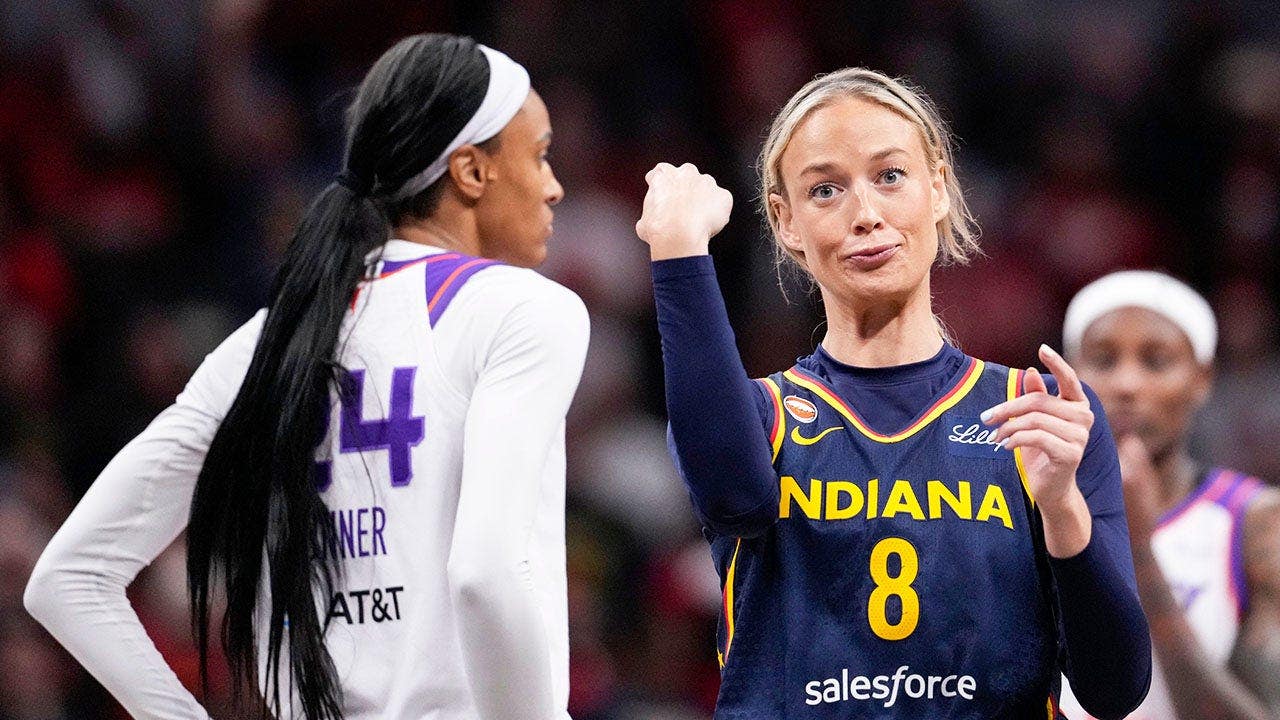
The Women’s National Basketball Association is currently navigating a historic, seismic shift in its cultural footprint, transitioning from a beloved but frequently overlooked league into a mainstream media powerhouse defined by soaring television ratings, sold-out arenas, and intense, dramatic storylines. At the very center of this revolutionary wave is the Indiana Fever’s rookie sensation, Caitlin Clark, whose transition to the professional ranks has brought an unprecedented level of fan scrutiny, media attention, and physical, highly defensive play from opposing teams. Amidst this high-pressure environment, Sophie Cunningham has emerged not merely as Clark’s on-court teammate, but as her fiercest vocal protector and confidante, demonstrating a protective instinct that has quickly endeared her to Indiana fans while ruffling feathers across the league. Cunningham, a seasoned veteran known for her unyielding grit and refusal to back down from physical or verbal confrontations, represents a new breed of WNBA athlete—one who possesses the star power, platform, and willingness to control her own narrative in real-time. By utilizing her personal podcast as a microphone to vocalize her thoughts, Cunningham has challenged the old-school expectations of athlete behavior, proving that the modern player is no longer satisfied with quiet diplomacy but is instead willing to publicly stand up for her teammates, speak her absolute truth, and inject a healthy dose of raw, unfiltered human emotion into the increasingly competitive world of women’s professional basketball.
The current storm of controversy was catalyzed by a highly physical and emotionally charged matchup involving the Phoenix Mercury, which quickly became a lightning rod for debate across the entire sports landscape. During the highly contested game, veteran forward Alyssa Thomas of the Connecticut Sun delivered a punishing, dangerous hit on Caitlin Clark—a play that initially failed to draw a severe penalty from the on-court officials but was later retroactively upgraded by the league office to a Flagrant Category 2 foul, resulting in a mandatory suspension for Thomas. While the physical nature of the hit itself drew immediate condemnation from fans who felt the league’s brightest young star was being targeted, the controversy escalated exponentially when the Phoenix Mercury’s official social media channel uploaded, and then hastily deleted, a post that seemed to mock or make light of the violent incident. This digital misstep was viewed by many as a severe breach of sportsmanship, instantly painting the Mercury as the villainous “Public Enemy Number One” in the eyes of Indiana supporters and neutral observers alike. The incident exposed deep, systemic fractures within the league’s competitive culture, highlighting the thin line between intense, physical athletic competition and personal animosity, and setting a dramatic stage for Cunningham to launch her own verbal retaliation against her former team.
Refusing to let the slight against her young teammate slide, Sophie Cunningham took to the airwaves on her popular podcast, “Show Me Something,” to deliver a scathing, incredibly candid critique of the Phoenix Mercury that sent shockwaves through WNBA circles. Leveraging her deep personal knowledge of the franchise, Cunningham declared with startling bluntness that absolutely “no one” likes the Mercury organization this year, revealing that this sentiment is shared not just by rival players but by individuals working within the Phoenix organization itself. She claimed that internal sources—including current players and administrative staff—have privately confessed that the Mercury has devolved into the “unfriendliest group” in the entire league, characterized by a toxic locker-room culture and a hostile atmosphere that alienates both insiders and outsiders. By pulling back the curtain on these private, backstage murmurings, Cunningham did something rarely seen in professional sports: she openly attacked the internal culture and character of a rival team, shattering the traditional boundaries of locker-room omertà. Her statements were not merely defensive maneuvers to shield Clark from physical play; they were a calculated, highly personal public relations strike that exposed the deep-seated dysfunction of a proud franchise, demonstrating how modern athlete-centric media can be weaponized to shape public perception and establish dominance off the court.
This raw, unfiltered disclosure did not escape the watchful eyes of the sports journalism community, immediately triggering a fierce debate about the boundaries of professional conduct and the evolving role of athletes as media creators. Prominent USA TODAY WNBA reporter Meaghan L. Hall was quick to lead the backlash, taking to X to condemn Cunningham’s podcast comments as “wildly unprofessional” and questioning how such highly personal attacks could possibly benefit the already volatile, often toxic public discourse surrounding the league. Hall argued passionately that there is no professional scenario under which an active player should be airing internal organizational rumors about a rival team, warning that bypassing traditional media ethics in favor of dramatic sensationalism threatens to undermine the credibility and dignity of the sport as a whole. This clash highlights a profound, ongoing tension within the sports world, as veteran reporters strive to maintain traditional, objective standards of professionalism while a new generation of athletes uses self-produced digital platforms to speak directly, and sometimes destructively, to their fans. The controversy raises critical questions about whether this new era of unfiltered honesty is a refreshing step toward transparency and authentic connection, or a slippery slope toward unchecked athletic feuds that distract from the remarkable physical achievements on the court.
To truly understand the depth of Cunningham’s animosity toward the Phoenix Mercury, one must look closely at her complex, six-season history with the franchise—a tenure that was marked by incredible athletic achievements but also overshadowed by severe, highly public personal trauma. Last year, Cunningham’s life and career were turned upside down when she was named in a sensitive, high-profile lawsuit alleging she had engaged in an inappropriate sexual relationship with Josh Bartelstein, the powerful CEO of both the Phoenix Suns and the Phoenix Mercury. Although Cunningham fiercely and repeatedly denied the shocking allegations and fought diligently to clear her name, the public nature of the legal battle and the sensationalized media coverage undoubtedly left deep, lasting emotional scars and severely strained her remaining ties to the franchise. This dark, incredibly painful chapter of her career provides a vital piece of human context to her recent podcast outbursts, suggesting that her criticisms of the Mercury are not merely a defense of Caitlin Clark, but also the culmination of her own unresolved grief, bitterness, and desire for retribution against an organization she feels failed to protect her. The intersection of her personal healing journey, her professional transition to the Indiana Fever, and her fierce tribal loyalty to her new teammates has created a volatile emotional mix, turning her public comments into a deeply human narrative of self-preservation and closure.
As the WNBA prepares for a highly anticipated, emotionally charged rematch between the Indiana Fever and the Phoenix Mercury on July 9, the atmosphere surrounding both teams is thick with unresolved tension, even as physical realities threaten to alter the script. Caitlin Clark’s status for the crucial game remains highly uncertain due to a nagging, painful back injury that has limited her participation, potentially robbing fans and media of a face-to-face showdown that promised to be as intensely physical on the court as it has been dramatic off of it. However, whether Clark plays or not, the unfolding drama between Cunningham, the Mercury, and the sports media represents a landmark moment in the evolution of the WNBA, showcasing a league that is rapidly growing up, casting aside its historically polite image, and embracing the raw, high-stakes narratives that define modern sports entertainment. Far from being a mere negative distraction, this public feud proves that the WNBA’s players are no longer content to quietly exist in the shadow of major men’s leagues; they are active, vocal, and deeply passionate human beings who demand to be heard, commanding the absolute attention of the global sports world through their athletic dominance, their complex personal loyalties, and their refusal to remain silent.