

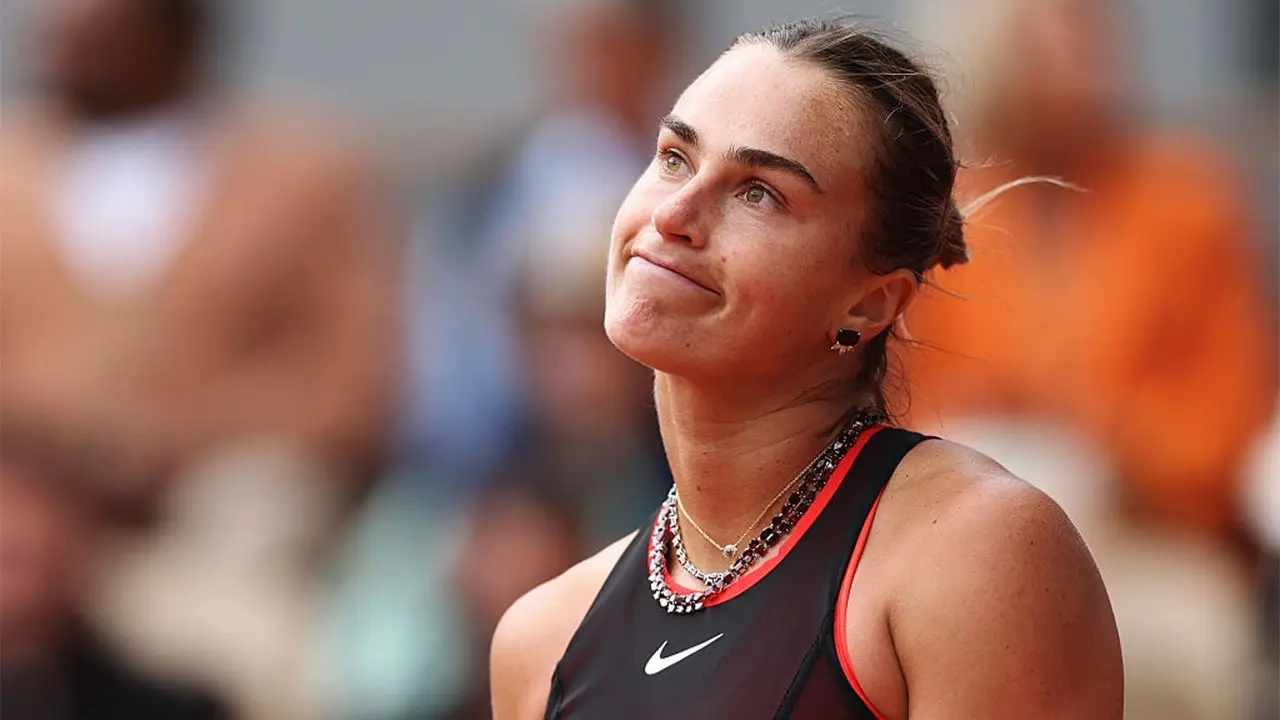
There is a distinct, heavy beauty to the French Open. The red clay of Paris has always been a surface that demands far more than just athletic prowess; it asks for psychological endurance, tactical patience, and an unwavering belief in one’s own physical reserves. For Aryna Sabalenka, the world’s top-ranked player, the path to the 2026 semifinals seemed almost preordained, a natural extension of her dominant run at the top of the sport. When she stepped onto the court against her quarterfinal opponent, everything initially seemed to be going according to script. The first set was a masterclass in controlled aggression, ending 6-3 in her favor as her powerful baseline strokes left little room for reply. When she broke her opponent again in the second set to serve for the match at 5-3, it felt like a mere formality. Spectators in the stands were already checking their watches, assuming the top seed’s passage to the next round was signed and sealed. But clay is an unforgiving surface that mercilessly exposes the slightest crack in a player’s resolve, and what followed was one of the most unexpected turnarounds in recent tennis history.
To comprehend the gravity of this shift, one must look at the young woman standing on the other side of the net. Diana Shnaider’s journey to this moment was not the typical, heavily-groomed path of European tennis prodigies who transition seamlessly from elite academies to the pro tour. Just a few years prior, she was playing collegiate tennis for North Carolina State University, balancing homework and team dynamics before making the brave decision to turn professional in 2023. Ranked 23rd in the world, she was respected but hardly feared by elite champions who hold multiple Grand Slam titles. Yet, when faced with a 5-3 deficit against the absolute best player on the planet, Shnaider did not flinch or accept defeat. Instead, she began to play with a loose, nothing-to-lose freedom that completely disrupted her opponent’s rhythm, refusing to let the match end quietly. As the Russian clawed her way back, game by game, the pressure began to shift dramatically. You could see it in Sabalenka’s eyes—the sudden realization that her opponent was not going away, the creeping doubt that can paralyze even the most physically imposing athletes. Shnaider won four consecutive games to take the second set 7-5, completely flipping the emotional energy of the entire stadium.
What happened in the deciding third set was nothing short of a sporting hallucination, a complete breakdown of a champion’s game plan. Tennis is a lonely sport; there are no teammates to hide behind, no coach allowed on the court to offer a comforting word or a tactical adjustment during the heat of battle. When momentum shifts entirely, it can feel like drowning in shallow water, and for Sabalenka, the final set was a painful, staggering collapse that ended in a shocking 6-0 shutout. The defining moment of this psychological unraveling came during a tense deuce battle in the second game, with Sabalenka desperately trying to hold her serve and draw a line in the sand. After a grueling rally, Sabalenka managed to scramble and loop a desperate forehand over the net, expecting to buy herself some time to recover her positioning. Instead, Shnaider anticipated the shot perfectly, chasing it down and executing a breathtaking response that left the world No. 1 utterly frozen at the service line. Sabalenka’s physical reaction—simply throwing her hands in the air with a look of pure, unadulterated disbelief—capsulated the tragedy of the moment. She was a giant humbled, left to watch her tournament dreams turn to dust in real-time.
For Shnaider, this victory is a life-altering milestone, propelling her into her very first Grand Slam semifinal and validating every difficult decision she has made in her young career. It is the kind of breakthrough that young players spend their entire childhoods dreaming about on empty practice courts, yet the path ahead presents its own unique brand of psychological pressure. In an ironic twist of fate, Shnaider will not have to face another top-ten titan to reach the final; instead, she will play Poland’s Maja Chwalinska, an underdog ranked well outside the top 100 who has staged her own miraculous run through the draw. This completely changes the narrative dynamic for the upcoming match. Shnaider transitions instantly from the fearless challenger with nothing to lose to the heavy favorite who is suddenly expected to win. Managing that sudden shift in expectation is often harder than pulling off the initial upset. The tennis world will watch closely to see if the former NC State star can maintain her composure, or if the gravity of the opportunity will weigh too heavily on her shoulders.
Shnaider’s stunning upset of Sabalenka is not an isolated incident; rather, it is the defining chapter of what has become one of the most chaotic and unpredictable French Opens in modern memory. The tournament has transformed into a virtual graveyard for top seeds, sparing almost no one regardless of their ranking or reputation. On the men’s side, the tennis community was plunged into disbelief when World No. 1 Jannik Sinner was knocked out in the second round by Argentina’s Juan Manuel Cerundolo, a match where Sinner held a seemingly insurmountable two-set lead before unraveling. These massive collapses remind us of the incredible physical and mental toll of playing on clay, where no lead is ever truly safe. It is a surface that offers no free points, requiring athletes to work through grueling rallies and slide through endless physical discomfort. When fatigue sets in and the legs grow heavy, the mind quickly follows, leading to the kind of dramatic collapses we have witnessed this fortnight.
As the tournament enters its final, decisive days, the competitive landscape looks entirely unrecognizable to anyone who filled out a bracket before the first ball was struck. On the women’s side, the highest-ranking player left standing is the teenage sensation Mirra Andreeva, seeded eighth, while the men’s draw sees Germany’s Alexander Zverev, the second seed, wearing the uneasy crown of tournament favorite. This unpredictability is precisely why we love sports, drawing us back year after year to watch human beings push themselves to the absolute limit. We tune in not to watch mechanical perfection or the inevitable coronation of the heavily favored, but to witness the deeply human struggle of athletes fighting their own doubts, the elements, and each other. Roland Garros has reminded us once again that rankings are merely numbers on a page, and that on any given day, a player with enough grit can stand toe-to-toe with the best in the world and walk away victorious.