


The golden sun of Northern California usually brings a sense of unyielding optimism when training camp opens in Santa Clara, a time when every team is undefeated and every draft pick represents the missing piece of a championship puzzle. But this summer, that pristine optimism was suddenly punctured by the harsh reality of the collision sport that is professional football. When rookie wide receiver Ricky Pearsall went down with a knee injury, the collective gasp that echoed through the San Francisco 49ers’ practice facility was felt by fans nationwide. Suddenly, a receiving corps that had looked deep, explosive, and ready to contend for a Lombardi Trophy was cast into a shadow of profound uncertainty. Rumors swam through the air, analysts scrambled to project the offense’s regression, and the front office felt the creeping pressure of a championship window that is notoriously difficult to keep open. For a team that has crawled so close to the mountain peak only to fall just short in recent years, this injury was not just a roster setback; it was an existential threat. In the NFL, momentum is a fragile currency, and the sudden loss of a dynamic young playmaker like Pearsall threatened to bankrupt the team’s offensive rhythm before the regular season even kicked off. It became blindingly obvious that the 49ers could not afford to wait around for a slow recovery, nor could they rely purely on unproven depth to fill the void. They needed an immediate infusion of identity, physicality, and veteran stability—a player who could not only run the complex routes demanded by Kyle Shanahan’s playbook but also inject a fierce, uncompromising attitude back into the huddle. This acute crisis forced the organization to look backward in order to move forward, leading them to call upon a familiar warrior whose history with the franchise was already etched in red and gold.
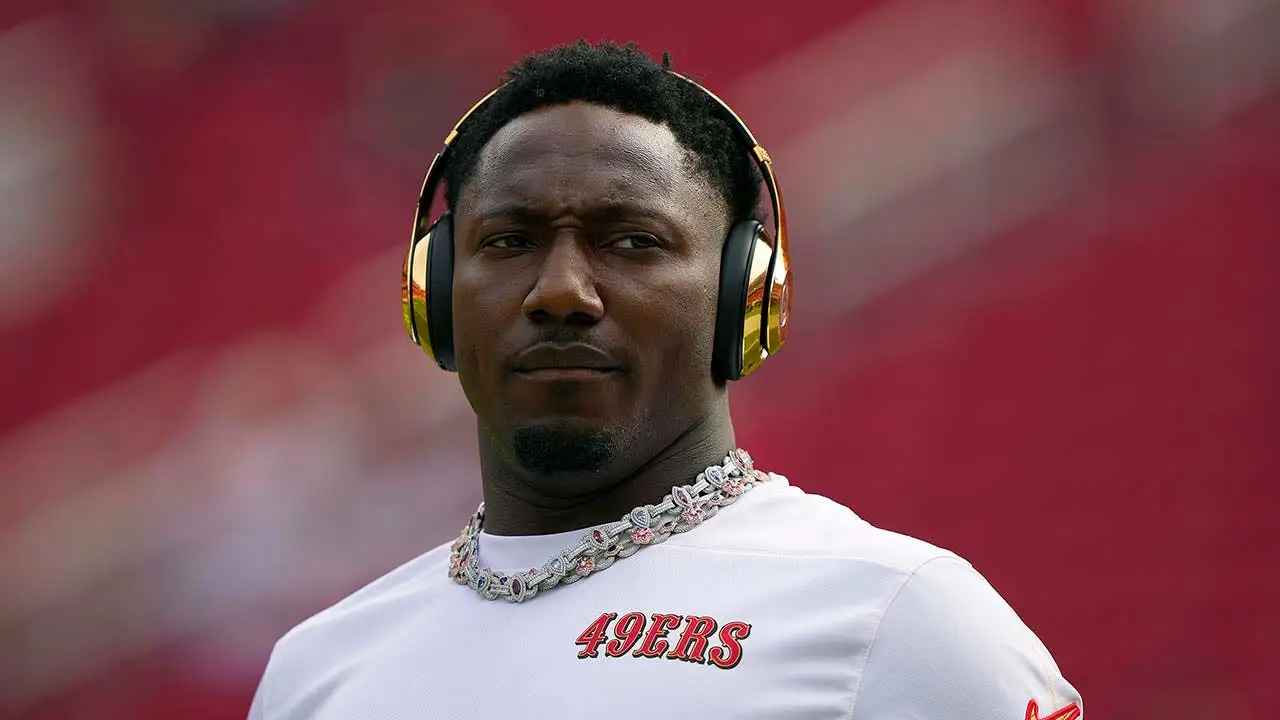
In the high-stakes, multi-billion-dollar theater of modern professional sports, sentimentality is a luxury that front offices rarely afford themselves, but some homecomings are simply too poetic to ignore. Entering this vacuum of uncertainty was none other than former All-Pro wide receiver Deebo Samuel, who finalized a dramatic return to the Bay Area on a one-year deal worth up to $7 million. News of the agreement rippled through the football world like a lightning bolt, instantly shifting the narrative surrounding the team from one of quiet desperation to electric anticipation. For Samuel, this contract represents more than just a typical free-agent signing; it is a calculated bet on himself and a mutual reconciliation with the franchise that first unlocked his extraordinary potential. From the 49ers’ perspective, spending up to $7 million is an incredibly savvy business move, providing a low-risk, high-reward buffer against the unpredictable nature of Pearsall’s rehabilitation. The deal is structured in a way that respects Samuel’s undeniable star power while protecting the team’s long-term financial flexibility, which is highly scrutinized amid ongoing contract negotiations with other foundational superstars. But beyond the cold ledger sheets of corporate spreadsheets and salary cap mathematics, this signing carries an immense emotional resonance for a fan base that has watched Samuel grow from a raw collegiate prospect into a battle-hardened NFL superstar. The roar of the crowd at Levi’s Stadium tonight is just a little louder, and the belief in the locker room just a little stronger, knowing that one of the most beloved figures in recent franchise history has put pen to paper, choosing to come back home where he is fundamentally understood.
To truly appreciate the deep emotional roots of this reunion, one must journey back to the spring of 2019, when the San Francisco 49ers used their second-round draft pick to select a bruising, high-spirited wide receiver out of the University of South Carolina. From the moment Deebo Samuel arrived in Santa Clara, it was clear that he did not play the position like anyone else in the league. Combining the breakaway speed of a traditional deep threat with the violent, downhill running style of an elite fullback, he transcended traditional position labels and inspired Kyle Shanahan to create the revolutionary “wide back” role. This tactical evolution reached its legendary zenith during the unforgettable 2021 NFL season, a magical campaign where Samuel terrorized opposing defenses to the tune of 1,770 yards from scrimmage and 14 combined touchdowns, earning prestigious first-team All-Pro honors in the process. He became the engine of the entire franchise, a human highlight reel who seemed to single-handedly drag the 49ers through muddy playoff battles and into the national spotlight. During his initial six-year tenure in the Bay Area, Samuel helped guide the team to two memorable Super Bowl appearances, establishing himself not just as an elite athlete, but as the emotional heartbeat of the locker room. He wore his heart on his sleeve, celebrated with an infectious grin, and played with a level of physicality that defined the modern identity of the San Francisco 49ers as the toughest, most relentless team in football. Yet, those Super Bowl runs ultimately ended in devastating, close-fought defeats, leaving behind a lingering sense of unfinished business that has hung over Samuel’s legacy like an unresolved melody. He left a piece of his football soul on those championship fields, and those near-misses created a tight bond between him and a fan base that suffered alongside him through every agonizing, late-game heartbreak.
However, the NFL is an unforgiving landscape ruled by cold business calculations, and even the most beloved relationships can be frayed by the reality of the salary cap and roster restructuring. In 2025, a stunning trade saw Samuel sent to the Washington Commanders in exchange for a fifth-round draft pick—a transaction that felt like a cold splash of water to 49ers fans who never wanted to see their icon wear another helmet. Suddenly, the player who had spent half a decade embodying the spirit of San Francisco found himself in the nation’s capital, adjusting to a completely different franchise culture and a brand-new offensive system. Despite the sudden upheaval and the emotional weight of playing in unfamiliar colors, Samuel proved his professional mettle by putting together a highly respectable season for the Commanders, registering 72 receptions for 727 yards and five crucial touchdowns. He fought hard for a young Washington team, showcasing the same trademark toughness and run-after-catch ability that made him famous, but to anyone watching from afar, something felt fundamentally misaligned. He was a gladiator fighting in a foreign arena, wearing burgundy and gold instead of the iconic red and gold that had served as his armor for so long. When he entered the free-agent market in March, he carried with him the wisdom of a veteran who had experienced both the highs of championship contention and the isolating realities of life on a rebuilding roster. The months of free agency were filled with quiet reflection, training sessions in relative isolation, and a patient waiting game as he searched for the perfect situation to spend the next chapter of his career, secretly hoping for a call from the area code he still considered home.
Beyond the sentimental storylines and heartwarming narratives, the reunion between Deebo Samuel and Kyle Shanahan is, at its core, a brilliant tactical masterstroke that addresses major football concerns for both parties. Shanahan’s offensive system is notorious for its steep learning curve, requiring wide receivers to possess not only elite athleticism but also a deep understanding of complex run-blocking schemes and pre-snap motions. Bringing in an outside free agent at this late stage of training camp would typically require weeks, if not months, of tedious mental conditioning and playbook integration before the player could contribute effectively on Sundays. With Samuel, however, the 49ers are acquiring a plug-and-play weapon who already has the entire strategic playbook practically hardcoded into his muscle memory. He possesses an innate, almost telepathic chemistry with quarterback Brock Purdy, knowing exactly when to sit down in zones and how to adjust his routes when play-designs break down into scramble drills. His return immediately eases the overwhelming pressure on other key offensive weapons like Christian McCaffrey, Brandon Aiyuk, and George Kittle, forces defensive coordinators to rethink their game plans, and restores the multi-dimensional threat that makes the San Francisco offense so impossible to defend. Deebo’s physical presence in the slot and on jet sweeps forces opposing linebackers to play with hesitation, opening up intermediate passing lanes and revitalizing the run game. In a league where coaches constantly search for a competitive advantage, having a player of Samuel’s caliber who can step onto the field tomorrow and execute the entire offense at an All-Pro level is an invaluable asset that cannot be overstated. It is a rare marriage of convenience and elite capability, solving an emergency crisis with a solution that actually elevates the team’s overall ceiling.
As Deebo Samuel prepares to pull the iconic number 19 jersey back over his shoulder pads, this reunion stands as a powerful testament to the volatile, circular nature of professional sports careers and the enduring pull of home. This one-year contract is far more than just a temporary patch on a wounded roster; it is a golden opportunity for redemption, a second chance for both a player and a franchise to write the triumphant final chapter of an epic story that was prematurely interrupted. The road back to Santa Clara has been winding, filled with renegotiations, trades, distant stadiums, and the quiet realization that some bonds are too strong to be broken by a change of scenery. The shared history of triumph and heartbreak between Samuel and San Francisco has forged a deep, unbreakable connection that will undoubtedly electrify the locker room and fuel their collective charge toward the ultimate prize. With Ricky Pearsall focused on his recovery, Samuel’s return ensures that the team’s championship aspirations remain firmly on track, sending a clear message to the rest of the league that the 49ers have no intention of taking a step back in their relentless pursuit of a Super Bowl title. When the stadium lights finally flicker on and the opening kickoff sails through the evening air, the thunderous cheers of the faithful will welcome back their lost star, uniting player, team, and city in a singular, passionate quest to finally capture the elusive Lombardi Trophy that has slipped through their fingers for so long. In the end, this signing proves that while football is indeed a ruthless business, it is still played by human beings whose search for belonging, legacy, and redemption can occasionally align perfectly to create something truly magical.