


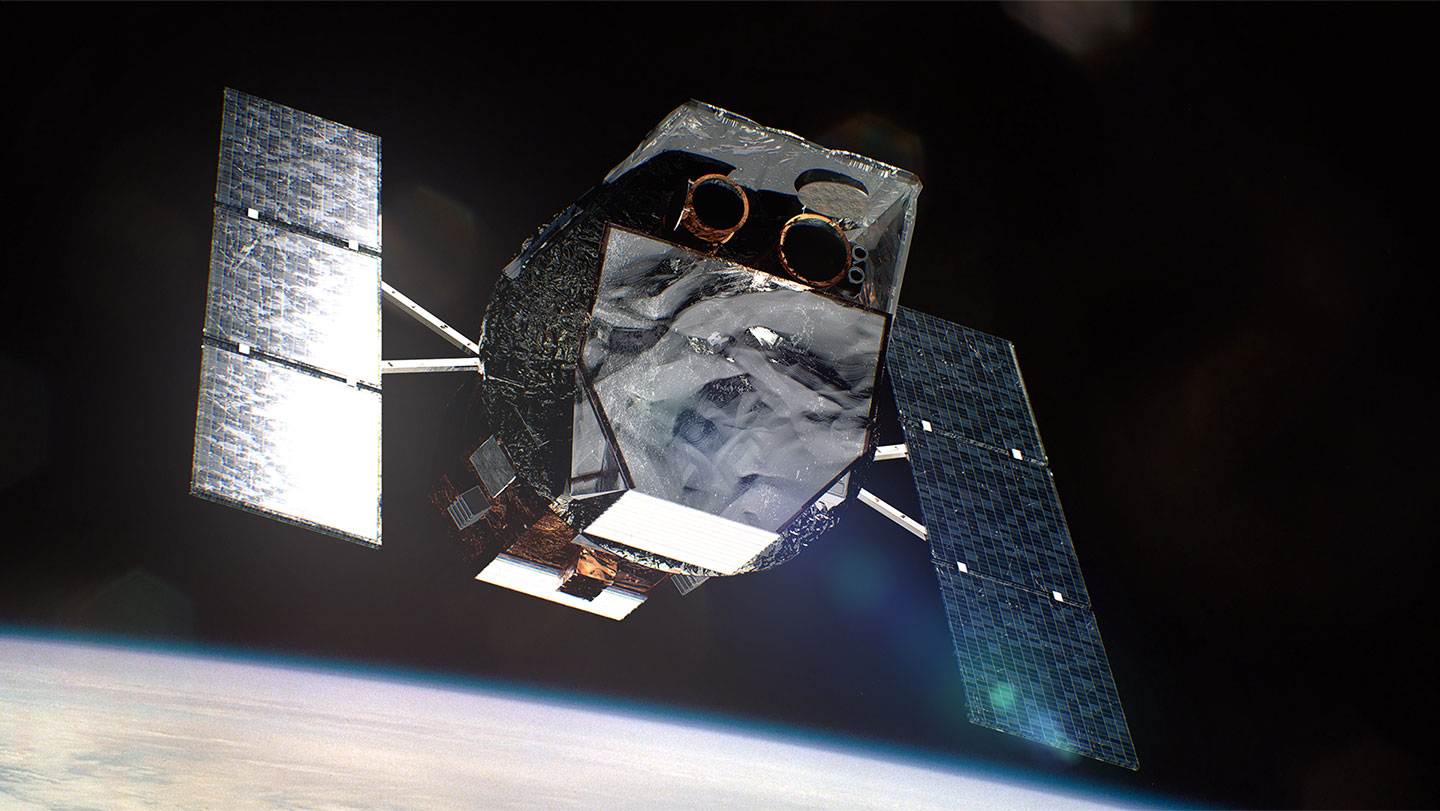
Since its launch in the crisp, hopeful autumn of 2004, the Neil Gehrels Swift Observatory has served as humanity’s premier cosmic sentinel, scanning the deep, dark expanse of the universe for the most violent and fleeting phenomena imaginable, such as gamma-ray bursts, supernovas, and the birth cries of newly formed black holes. True to its name, Swift earned a legendary reputation among astrophysicists as NASA’s ultimate “first responder,” possessing a unique, nimble capability to pivot its sensitive instruments and focus on sudden celestial explosions almost anywhere in the night sky within mere minutes—a stark contrast to heavier, more deliberate instruments like the Hubble Space Telescope, which often require at least a day to reposition. For over two decades, Swift has operated flawlessly in low Earth orbit, answering the calls of ground-based astronomers, yielding a wealth of scientific breakthroughs, and transforming our fundamental understanding of high-energy physics. Yet, despite its spectacular track record and its ongoing readiness to unlock the secrets of the cosmos, this cherished telescope recently found itself facing an existential crisis, not from a deep-space anomaly, but from the invisible, relentless pull of our own planet’s gravity. Bound by the laws of orbital decay that eventually claim all artificial satellites, Swift began descending toward a premature and fiery death in Earth’s atmosphere, threatening to turn this irreplaceable piece of scientific history into a burning streak of sky debris long before its mission was truly complete.
The crisis accelerated dramatically in early 2025, when researchers and flight controllers at NASA made a sobering discovery: the Swift observatory was losing altitude at a rate far exceeding their predictive models, setting it on a trajectory for a destructive atmospheric reentry as early as mid-2026. Paradoxically, the culprit behind this rapid descent was our own Sun, which had entered an incredibly active phase of its solar cycle starting in 2024, unleashing a torrent of solar flares and geomagnetic storms that intensely charged the outermost edges of Earth’s atmosphere. As this solar energy warmed the upper atmosphere, the gas molecules expanded outward like a giant, heated balloon, significantly increasing the atmospheric density in the regions of low Earth orbit where satellites travel. For Swift, which was designed to glide smoothly through an ultra-thin vacuum, this puffed-up atmosphere acted as an invisible, silent brake, generating unanticipated drag that steadily robbed the telescope of its forward velocity. This drag acted as a slow-motion anchor, dragging the spacecraft closer to the danger zone of the denser, friction-dense lower atmosphere. Recognizing that Swift’s invaluable mission would be cut short unless drastic action was taken, and unwilling to let decades of scientific potential burn up in a matter of minutes, NASA’s leadership realized they needed to engineer a solution that had never been attempted in the history of space exploration: a direct, active robotic rescue.
To execute this unprecedented celestial recovery, NASA turned toward the rapidly advancing commercial space sector, establishing a partnership that would push the boundaries of in-orbit servicing and satellite manufacturing. In September 2025, the space agency selected Katalyst, an agile, private American aerospace firm, to design, test, and build a highly specialized robotic tugboat named LINK, presenting the company’s engineering team with a dauntingly brief, high-stakes nine-month window to take the mission from concept to launch pad. The engineering challenges were immense, requiring the creation of an entirely new class of autonomous spacecraft capable of navigating the harsh orbital environment, locating a non-cooperative, falling satellite, and securing it without causing structural damage. Throughout the intense development cycle, engineers subjected the LINK spacecraft to rigorous testing regimes, verifying that its sophisticated guidance systems, powerful onboard computers, and highly articulate robotic arms could successfully latch onto Swift’s vintage frame. This ambitious collaboration represented more than just a salvage mission for a single telescope; it served as a trial by fire for the emerging commercial space economy, demonstrating how public-private partnerships can react with breakneck speed to mitigate orbital emergencies and safeguard critical scientific infrastructure.
The tangible fruits of this frantic engineering effort culminated on the morning of July 2, when, following a tense two-day delay caused by unfavorable local weather conditions, a rocket roared to life from its launch pad in the remote Marshall Islands, carrying the LINK robotic tugboat into the heavens. Blasting off at 5:09 a.m. EDT, the vehicle successfully separated and entered orbit, immediately initiating a critical multi-week checkout phase. During this initial period, mission controllers on the ground will carefully monitor LINK’s vital signs, verifying that its power systems, communications arrays, and thrusters survived the high-intensity vibrations of launch and are fully operational. Once declared healthy, the robotic spacecraft will begin a slow, highly calculated journey spanning approximately one month, gradually closing the gap between its own orbit and that of the descending Swift telescope. Rather than rushing in, LINK will approach the legendary observatory with absolute caution, transmitting high-resolution, real-time images back to anxious scientists and engineers on Earth, who will carefully analyze the structural geometry of Swift to identify the safest, most secure docking points for LINK’s waiting robotic arms.
Once the optimal grabbing points are selected and verified, LINK will gently utilize its mechanical limb interfaces to lock onto Swift, initiating a delicate cosmic embrace that will mark the first time a robotic rescue craft has captured an active, aging science satellite in orbit. With Swift firmly in its grasp, LINK will fire its highly efficient, low-thrust propulsion systems to execute a series of gentle, prolonged orbital maneuvers designed to slowly guide both spacecraft back up to Swift’s original, safe operating altitude of approximately 600 kilometers over the course of several months. If this highly sophisticated, real-time celestial ballet goes according to plan, it will do far more than just secure a longer lease on life for Swift; it will establish a ground-shaking precedent for the preservation of orbital assets worldwide. A triumphant demonstration of LINK’s capabilities will almost certainly pave the way for similar robotic refuel and boost missions targeting other legendary space telescopes, most notably the iconic Hubble Space Telescope, which has faced its own ongoing battles with orbital decay and hardware degradation. By transforming the way we view the lifespan of space-based instruments, this pioneering mission signals a major shift away from the legacy philosophy of treating older satellites as disposable, steering modern space exploration toward a sustainable era of active orbital servicing, maintenance, and recycling.
While the physical rescue unfolds high above our heads, the scientific and emotional stakes remain incredibly high for the tight-knit global community of astrophysicists who rely on Swift’s instantaneous cosmic alerts, none more so than Brad Cenko, the telescope’s principal investigator based at NASA’s Goddard Space Flight Center in Greenbelt, Maryland. In preparation for this high-stakes intervention, Swift’s dedicated operations team has spent months carefully adjusting the satellite’s orientation to minimize natural drag and preserve its precious altitude, going so far as to temporarily halt active scientific observations and place the telescope into a quiet, protective hibernation. Once LINK successfully delivers Swift to its newly restored orbit, the entire scientific payload will undergo a rigorous, highly coordinated reboot process to ensure that its decades-old instruments survived the physical forces of the boost. Although this recalibration period is expected to take a month or more, the payoff is immeasurable, as a revived Swift could easily continue scanning the cosmos for another decade, uncovering unprecedented details about the origins of the universe. Reflecting the collective hope of the astronomical community, Cenko expressed immense excitement for this upcoming “post-boost era,” emphasizing that the longevity of this indefatigable telescope represents our best chance to unravel the hidden, explosive mysteries of the universe for many years to come.