



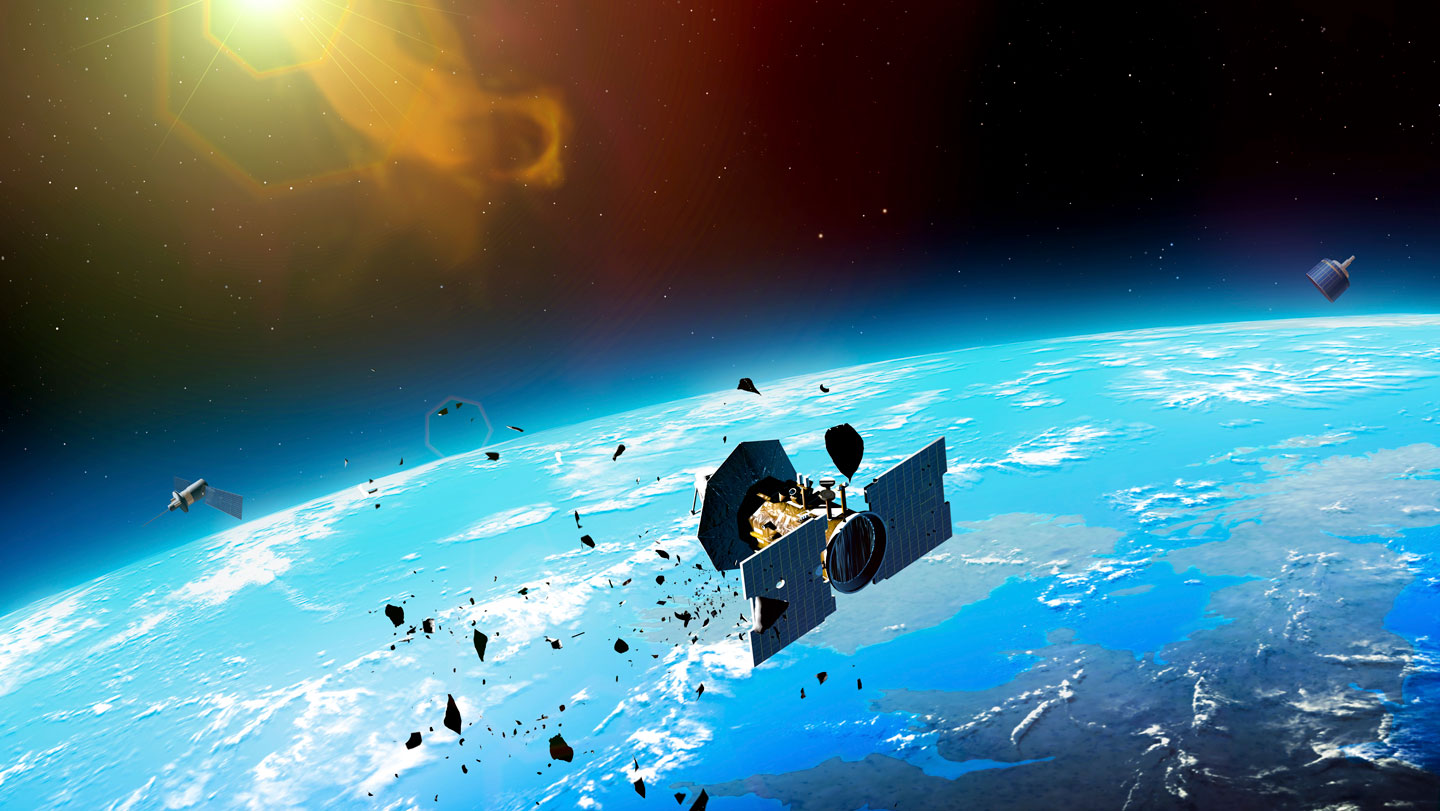
Imagine the sun as a moody teenager, going through phases of calm and explosive outbursts. Every 11 years or so, it throws a fit, peppering its surface with sunspots and blasting out intense radiation towards Earth. For decades, scientists have suspected this solar drama might be messing with the junk we’ve sent whizzing around our planet. Now, a new study published in Frontiers in Astronomy and Space Sciences confirms it: strong solar activity is nudging space debris out of low Earth orbit faster than we’d like.
Picture Earth encased in layers of atmosphere, like an onion peeled under a boiling sun. The outermost layer, the thermosphere, heats up and puffs out when the sun’s having a tantrum. This expansion makes the air denser up there, turning the usual thin whisper of atmosphere into a draggy embrace for satellites and cast-off rocket bits orbiting between 160 and 2,000 kilometers above us. Friction builds, slowing these objects down, and gravity gives them a gentle tug toward Earth. It’s orbital decay, and on busy solar days, it’s happening much quicker.
To pin down this effect, astrophysicist Ayisha Ashruf and her team at India’s Vikram Sarabhai Space Centre tracked 17 pieces of space junk for over three decades. These old remnants of Delta 1 rockets and such have been circling every 90 to 120 minutes, at altitudes from 600 to 800 kilometers. What they found was a clear tipping point: when sunspot numbers hit about 70% of their cycle’s peak, orbital decay ramps up sharply. It’s like hitting a speed bump that shoves you over into a steeper descent.
The data reveals a stepwise pattern, mirroring the 11-year solar cycles from 1986 to 2024. Each time the sun peaked, the debris dropped a few kilometers lower, bottoming out just before the cycle wound down. The exact drop varied with how intense that particular solar storm was. For one tracked object, charts show these declines like stair steps—gradual southwards until the cycle’s crest, then a marked dip.
This discovery isn’t just cosmic gossip; it could revolutionize how we plan space missions. With our skies growing clogged with human-made debris, knowing when the sun might hurry things along helps avoid collisions. Launches and satellite movements can be timed to dodge these risky periods, crucially important as we eye futures with more orbiting hardware.
So, next time you gaze at a clear night sky, remember this hidden ballet. The sun’s fiery whims are quietly shepherding our space relics back home, a reminder of the delicate dance between our star and the artificial constellations we forge. It’s a wake-up call to keep our orbital neighborhood tidy. (Approximately 450 words)