



For as long as humans have contemplated the journey of life, memory has been understood as the silent architect of our personal identity, the golden thread weaving our triumphs, griefs, and quietest joys into a coherent story of who we are. Yet, for decades, both popular culture and modern science have painted a painfully bleak picture of what happens to this internal tapestry as our hair turns gray. We have been taught to expect an inevitable, crushing fade—a steady erasure of the sharp details that make our personal histories feel real, warm, and alive. This widespread cultural fear of cognitive decline was not merely born from empty worries; it was systematically validated by a mountain of clinical, laboratory-based research. For generation after generation, scientists brought aging adults into sterile, windowless testing rooms, handed them clipboards, and asked them to recount the complex, isolated minutiae of their past under the clinical, demanding gaze of young observers. Time and again, these studies showed that older participants recalled far fewer episodic details than energetic university students. When these gaps in memory were found to be even more stark in individuals living with dementia, a definitive scientific dogma was solidified: to grow old is to lose the fine-grained resolution of your life’s movie, a decline that was treated as an unmitigated neurological deterioration.
However, a visionary team of researchers suspected that this grim scientific consensus might actually be a massive, systemic misunderstanding of the human mind—a bias created by the artificial, intimidating walls of the laboratory itself. Matthew Grilli, a dedicated psychologist at the University of Arizona, wondered if we were misdiagnosing a simple discomfort with sterile clinical environments as actual cognitive decay. To test this, Grilli and his colleagues designed an elegant, highly empathetic experiment that broke memory research out of its academic cage. They recruited 24 younger individuals aged 18 to 28 and 50 older adults aged 61 to 81, and asked them to navigate their normal lives while using a smartphone equipped with a unique ambient audio recording application. This app quietly and randomly recorded 30-second snippets of audio five times an hour, for 14 hours a day, over ten consecutive days. This yielded a rich, authentic acoustic diary of real life: clinking coffee cups, shared laughter over backyard fences, casual gossip with romantic partners, and late-night reminiscing around dinner tables. When the researchers painstakingly analyzed these real-life moments, they discovered a stunning truth. When older adults shared memories within the natural flow of their daily conversations, their ability to recount rich, vivid, and textured details was absolutely indistinguishable from that of the younger generation, completely refuting the gloomy, artificial findings collected in traditional, face-to-face laboratory interviews.
This paradigm-shifting discovery was further solidified by a second, massive study published in the prestigious journal Proceedings of the National Academy of Sciences (PNAS). In this ambitious endeavor, Matthew Grilli, along with co-author Jessica Andrews-Hanna and their research team, monitored the real-time inner thoughts of over 1,900 individuals across the adult lifespan, from early adulthood at 18 to late maturity at 89. Rather than relying on hindsight, retrospective interviews, or forced recall prompts, the researchers utilized a smartphone-based technique that periodically pinged participants during their normal daily activities, asking them to describe exactly what they were thinking about or picturing in their minds at that precise second. The resulting data revealed an even more surprising and heartening truth: not only did the senior participants match the younger generations, but they actually reported their past thoughts with significantly greater specificity, richer sensory detail, and a far more intense level of subjective vividness. When caught in the quiet, undisturbed stream of their actual lives, older adults possessed a remarkably fertile and cinematic internal landscape, quietly holding onto the deep, vibrant colors and textures of their histories with a clarity that standard laboratory tests had simply failed to register.
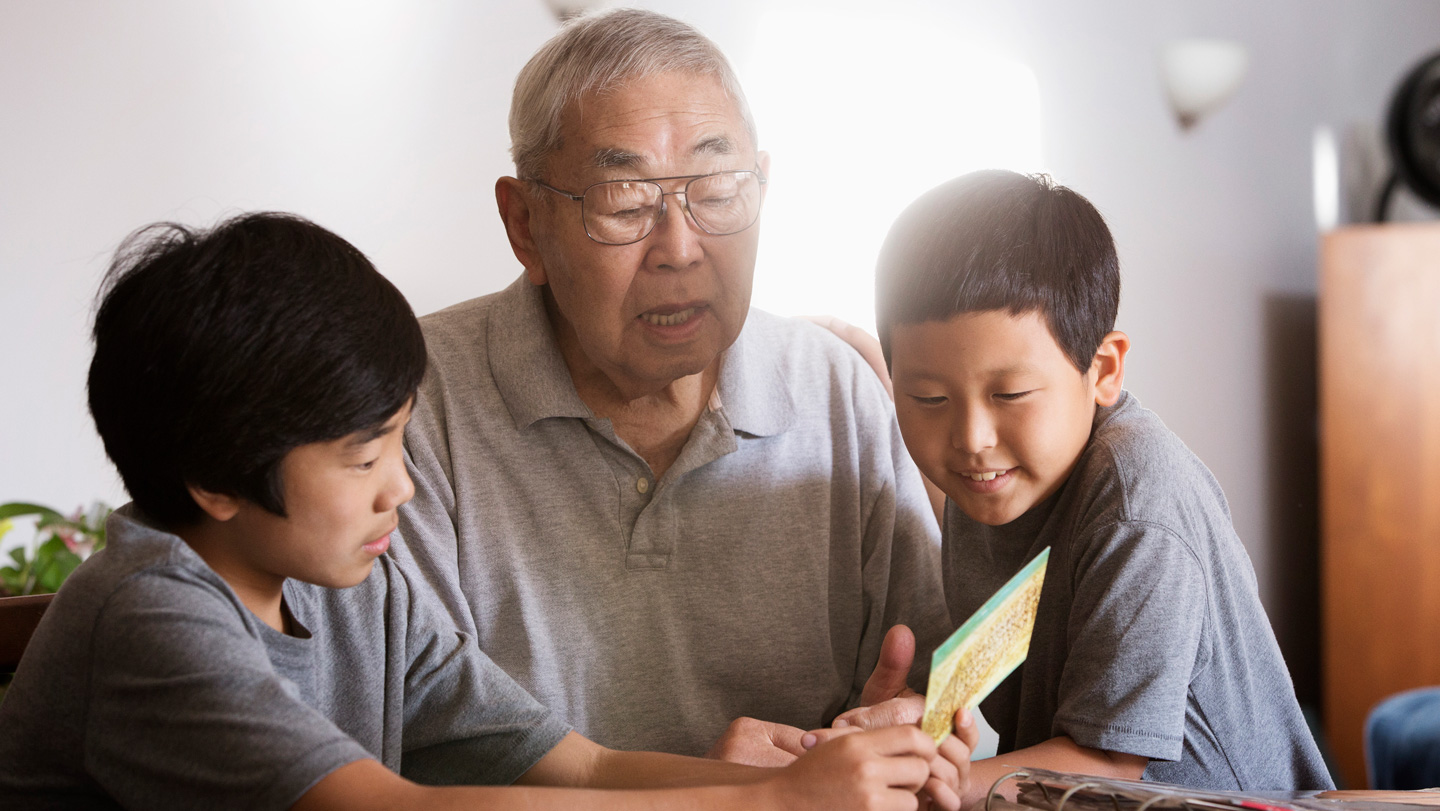
To understand why older minds flourish at home but seem to stumble in the lab, we must examine the subtle, often-overlooked social psychology of the testing environment itself. Jessica Andrews-Hanna highlights that university laboratories are highly intimidating, unfamiliar spaces designed primarily by the young, for the young. For a college student, stepping into an on-campus laboratory is a routine task; for an eighty-year-old, it can feel like a stressful, high-stakes evaluation akin to a driving test or a medical exam, triggering performance anxiety that naturally stifles recall. Furthermore, the clinical researchers conducting these interviews are almost always young graduate students. When an older adult sits across from someone who could easily be their grandchild, a profound generational and conversational mismatch occurs. Rather than diving into the raw sensory details of a memory, the senior often feels a deep, subconscious social duty to construct a broad historical and cultural context so the young listener can actually understand the story. What clipboard-wielding scientists historically mislabeled as cognitive decline was, in fact, a beautiful expression of social empathy and generational translation—an older adult striving to be a wise, relatable storyteller rather than a cold database of isolated facts.
This crucial insight forces us to fundamentally re-evaluate the very purpose of human memory, moving away from a rigid, mechanical perspective and toward a much more humanized, functional understanding. For far too long, the medical community has treated healthy memory as if it were a high-definition video recorder, judging its quality solely by its forensic, pixel-by-pixel accuracy. But human beings are not computer hard drives, and our brains did not evolve to pass trivia tests in fluorescent-lit clinical offices. As Andrews-Hanna suggests, the true value of our personal memories lies in how they make us feel, how they define our values, and how they allow us to bond with others in our everyday lives. The private, vivid internal experiences of our past, combined with how we naturally share stories to foster human connection, are arguably far more sensitive, humane, and telling indicators of true cognitive health than a stressful memory quiz. By focusing on how older adults organically use their minds in natural environments, rather than obsessing over standardized laboratory accuracy, medical professionals can begin to develop far more compassionate, accurate, and deeply respectful diagnostic tools for detecting genuine pathological decline.
This sentiment is strongly championed by independent experts like Daniel Schacter, a renowned Harvard psychologist, who calls for a sweeping scientific movement toward naturalistic, ecological approaches that study the human mind in its actual native habitat. Schacter points out that a person’s unique narrative style, comfortable communication habits, and social ease can easily explain why they might look different in a lab versus their favorite armchair at home. Ultimately, as Brian Levine from the Baycrest Academy in Toronto beautifully articulates, getting older does change how our memory operates, but these changes are often highly adaptive and wise rather than destructive. When we force elderly individuals into artificial environments optimized for youth, we create a false narrative of impairment. When we allow them to exist in spaces optimized for their comfort and needs, we see that their spirits and minds remain wonderfully intact. By stepping out of the laboratory and into the living, breathing world, science is finally beginning to recognize that our elders are not fragile vessels of fading thoughts, but the rich, deeply vibrant keepers of our collective human story, carrying past treasures that remain as beautifully vivid as they have ever been.