


For decades, the global consensus on measles was defined by a quiet complacency—a luxury born from one of the most successful public health campaigns in human history. A two-dose regimen of the measles vaccine is nothing short of a medical marvel, boasting a 97 percent efficacy rate that, when maintained at a population-wide coverage level of 95 percent or higher, creates an invisible but near-impenetrable wall of defense. This collective immunity is not just a statistic; it is a vital safety net for the most vulnerable among us, including infants who are still too young for the shot and individuals with compromised immune systems. Yet, in recent years, this protective armor has begun to rust. A perfect storm of rising vaccine skepticism, mounting distrust in medical institutions, funding cuts for international health programs, and simple lack of physical access to clinics has caused childhood vaccination coverage to slide downward across the United States, Canada, and parts of Europe. This decline has had immediate and devastating consequences. By early 2026, the United States found itself grappling with an alarming surge in cases, threatening to completely strip the country of the “measles-free” status it had proudly maintained since the turn of the millennium. The vast majority of these patients are completely unvaccinated, demonstrating how quickly this highly contagious virus can exploit the slightest crack in herd immunity. As health officials like Minnesota state epidemiologist Ruth Lynfield have recently pointed out, the historic success of the vaccine meant that developing a therapeutic backup plan was never treated as a priority. This leaves modern clinicians in a terrifying predicament: they have no specific antiviral weapons to combat the virus, leaving them only able to ease a patient’s fever, cough, and rash while hoping their immune system can survive the respiratory onslaught.
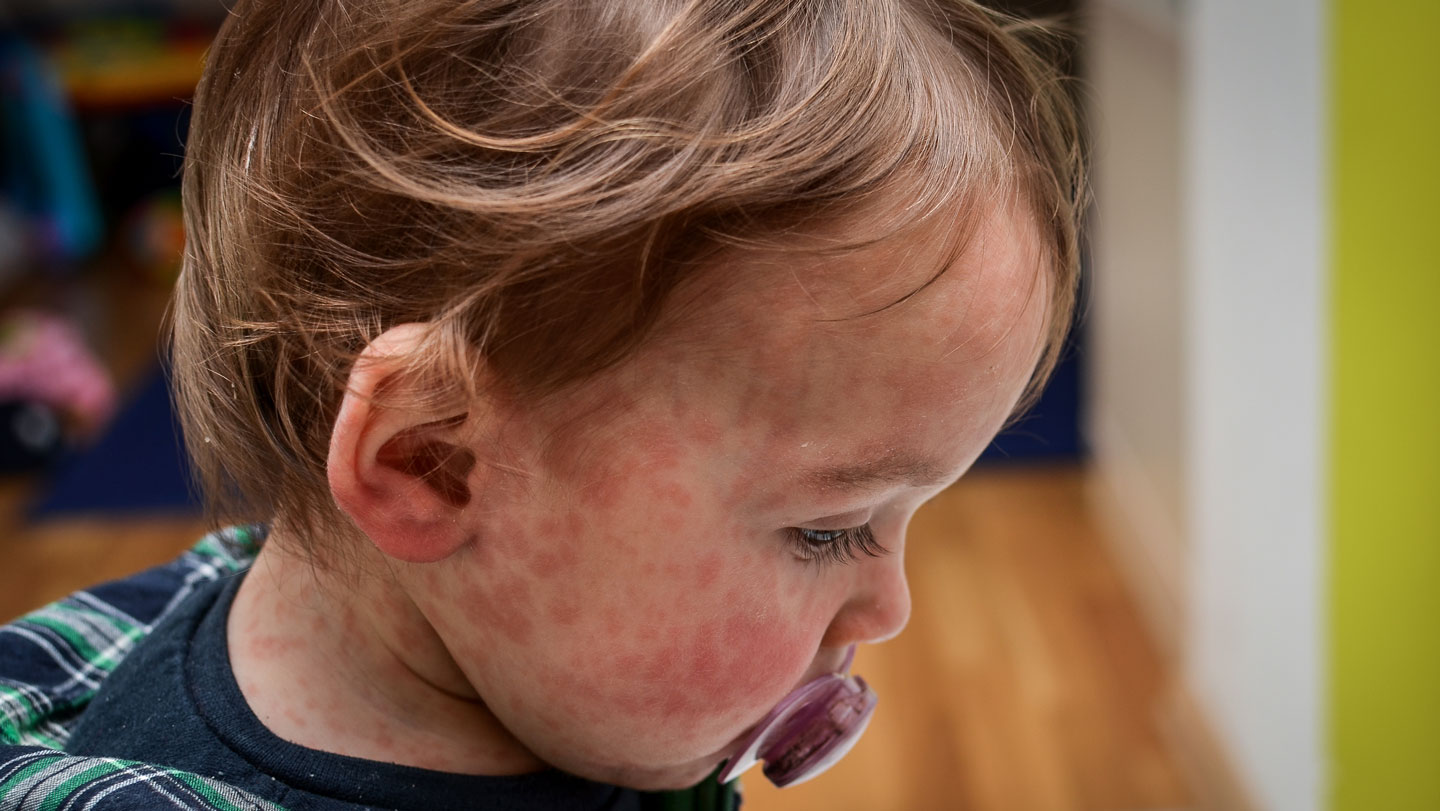
Part of the reason the drug pipeline for measles dried up is a widespread, incredibly dangerous public misconception that the disease is a mere childhood rite of passage—a mild rash that simply runs its course before resolving on its own. Experts like structural virologist Kathryn Hastie from the La Jolla Institute for Immunology are working tirelessly to dispel this myth by reminding the public of the true, brutal clinical reality of the infection. Measles does not just cause a temporary high fever and a blotchy head-to-toe rash; it is a ferocious systemic invader that can leave permanent, life-altering scars. The virus frequently leads to severe complications such as blindness, croup, and life-threatening pneumonia. More insidious still is a phenomenon known as “immune amnesia,” where the virus effectively wipes out the patient’s existing immunological memory, deleting years of acquired antibodies and leaving them uniquely vulnerable to other deadly diseases for months or even years after recovery. Furthermore, roughly one out of every thousand infected children will develop encephalitis, a severe inflammation of the brain that can cause permanent cognitive impairment, developmental delays, and lifelong physical disability. Most heartbreakingly, for every thousand children who contract measles, one to three will die from the disease, making it a critical threat to children globally. For those already sick or those who cannot be immunized due to underlying medical conditions, the lack of an antiviral treatment is not an academic problem—it is a matter of life and death, driving home the urgent need for a therapeutic breakthrough that can step in when the vaccine was never administered.
In response to this growing vulnerability, researchers are shifting their focus to therapeutic molecules that can halt the replication of the measles virus in its tracks, with some looking to repurpose existing drugs while others develop entirely new compounds. Leading this charge is Richard Plemper, a virologist and antiviral drug developer at Georgia State University, who began studying the virus decades ago when it was largely considered a solved problem in the West. Recognizing that treating measles presents a race against a fast-moving clock, Plemper’s team discovered that waiting until a patient is hospitalized is often too late, as the virus may have already finished replicating, leaving behind a wake of severe inflammatory damage. This insight guided them to look for a broad-spectrum weapon that could target the wider family of viruses to which measles belongs—the Orthoparamyxoviruses, which also include human parainfluenza and the highly lethal Nipah virus. After screening over 100,000 potential chemical compounds, Plemper and his colleagues successfully engineered a promising drug candidate called GHP-88310. By targeting a highly conserved viral protein essential for replication, this new compound effectively acts as a brake on the infection’s engine. In animal trials using ferrets infected with canine distemper—a reliable surrogate model for human measles—the researchers demonstrated that administering GHP-88310 daily, even three days after the initial infection, dramatically reduced viral replication and ensured the survival of every single subject. This molecule’s ability to defend against several related respiratory pathogens could one day make it a vital tool both for treating active infections and for preventing illness in unvaccinated individuals immediately after exposure.
Alongside small-molecule antivirals, a second revolutionary front is opening up in the bio-medicine space: the development of measles-specific monoclonal antibodies. If vaccines represent long-term education for the body’s defenses, monoclonal antibodies can be thought of as a form of “on-demand immunity,” delivering a highly concentrated dose of prime, laboratory-grown proteins that immediately neutralize the invading virus. Kathryn Hastie and her research team recently achieved a major breakthrough by mapping the precise physical structure of four highly potent human antibodies collected from a vaccinated individual. When they infused these hand-picked antibodies into infected cotton rats, the results were stunning: the treatment dramatically decreased the amount of measles virus lingering in the animals’ lungs, with one specific antibody dropping the viral load to completely undetectable levels. Because measles is an airborne disease that relies on respiratory droplets to leap from person to person, reducing the amount of virus in the lungs suggests that this antibody therapy could not only save a patient’s life but also significantly curb their ability to transmit the virus to others. While monoclonal antibodies are historically more expensive to manufacture and distribute than traditional pills, their incredible safety profiles and lack of off-target side effects make them an appealing option for protecting high-risk individuals. By placing these powerful, immediate-use proteins in the hands of pediatricians, medicine could soon have a fast-acting shield capable of intercepting measles outbreaks in real-time, protecting children who fell through the cracks of classic vaccination programs.
Despite these promising breakthroughs in the lab, translating laboratory success into a widely available human drug remains a logistical and ethical gauntlet. Clinical trials require a large, predictable, and geographically stable patient population to prove a drug’s safety and effectiveness, but the unpredictable nature of sporadic measles outbreaks makes finding these cohorts exceptionally difficult. While tens of thousands of children still suffer from measles in developing nations, these outbreaks are often heavily concentrated in conflict zones or desperately impoverished areas that lack the basic healthcare infrastructure required to safely host clinical trials. Ethically, the challenges are equally daunting; researchers cannot simply enroll children in a treatment group without first offering them the existing, highly effective vaccine, meaning that clinical trials must navigate an incredibly strict set of moral guidelines. Furthermore, because measles has long been perceived as a “solved” disease in high-income nations, attracting the significant financial funding needed to push these molecules through the expensive drug-approval pipeline is a constant struggle. Biotech companies are forced to weigh the high cost of development against a market that, ideally, should remain quite small if vaccination rates can be restored. This financial reality has left researchers searching for creative pathways to get their discoveries approved, striving to balance the desperate need for these therapies with the hard economic realities of modern pharmaceutical development.
To overcome these systemic hurdles, scientists are adopting incredibly clever, indirect pathways to bring their discoveries to the patient bedside. Richard Plemper’s team, for instance, plans to first test their broad-spectrum compound GHP-88310 against human parainfluenza virus type 3, a highly common, often irritating relative of measles that lacks its own vaccine and is particularly dangerous to immunocompromised transplant patients. If the drug proves successful in defending these vulnerable individuals against parainfluenza, it will establish a clear record of safety and efficacy in humans, leaving it readily poised for emergency deployment during future measles outbreaks. Ultimately, these innovative efforts remind us that while vaccines will forever remain our primary and most effective shield against preventable diseases, having a robust therapeutic backup plan is a moral and public health necessity. Vaccines, as Plemper eloquently noted, became victims of their own historical success, blinding us to the reality of what happens when public confidence and access to immunization falter. As we navigate an era of shifting global health priorities and rising public skepticism, we cannot afford to rely on prevention alone. By supporting the development of both broad-spectrum antivirals and lifesaving monoclonal antibodies, the global scientific community can construct a multi-layered defense system, providing us with the final, decisive instruments needed to protect the vulnerable and eventually silence the threat of measles for good.