



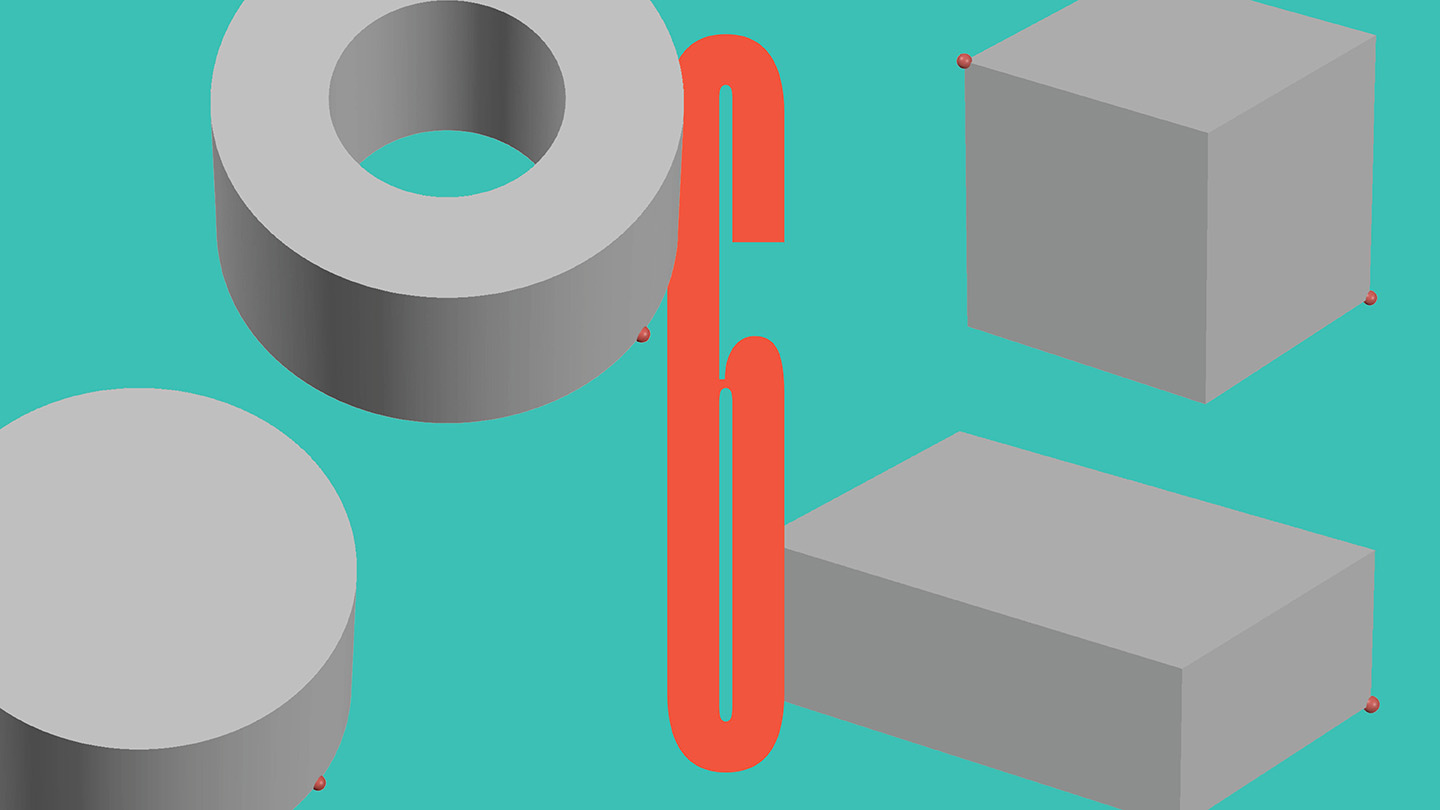
In the sun-dappled pages of our June 2026 issue, we invited readers to step out of their hurried human routines and enter the miniature, wondrously optimized world of Ada, a remarkably clever and ravenously hungry garden ant. On a warm afternoon, Ada’s highly sensitive antennae catch the sweet, irresistible scent of a single, glistening drop of wild blackberry honey located on the opposite side of a series of household objects left out on a patio table. For a creature as tiny as Ada, traveling even a few extra inches represents an exhausting expenditure of vital energy, making the quest for the absolute shortest path a matter of survival. This playful setup serves as the gateway to a classic branch of spatial mathematics: the study of geodesics, or the shortest paths between two points on curved or multi-faceted surfaces. Unlike birds or humans, who can traverse three-dimensional space through the air, Ada is bound by gravity to the surfaces of these obstacles. To conquer these challenges, she cannot simply burrow through them; she must navigate their external terrain with a blend of instinct and geometric precision. Readers were challenged to dust off their high school geometry toolkits and map out Ada’s journeys across three distinct, beautifully designed geometric obstacles—a wooden jewelry box, a sleek aluminum can, and a celebratory paper cone—revealing how seemingly complex, mind-bending routes across three-dimensional shapes elegantly transform into simple, straight lines when viewed through the lens of dimensional unfolding.
To help Ada navigate her first obstacle—a classic rectangular wooden jewel box measuring twelve inches in length, eight inches in width, and eight inches in height—we must learn to see the world as she does, bypassing our stubborn three-dimensional biases. If Ada starts at the bottom-left corner of the front face and her honey prize is located at the top-right corner of the back face, the temptation for many human observers is to instinctively guide her along the sharp, ninety-degree edges of the box, perhaps marching straight up the front seam and then running diagonally across the top lid. However, this fragmented approach ignores the fundamental mathematical truth that a straight line is always the shortest distance between two points, a rule that holds true even when that line is bent across the edges of a solid object. To unlock the secret to Ada’s optimal path, we must perform a mental act of “unfolding” or creating a flat two-dimensional template, known in geometry as a net, of the box’s surfaces. By laying the front, top, and back faces flat on a single Cartesian plane, we can draw a perfectly straight line from Ada’s starting point directly to the honey. When this flat diagram is folded back into its original three-dimensional shape, that straight line becomes a beautiful, sweeping diagonal path that slices effortlessly across the box’s edges. By applying the Pythagorean theorem to this flattened arrangement, where the combined width and length act as the legs of a right triangle, we discover that the true geodesic is far shorter than any route restricted to running parallel to the box’s edges, illustrating how a simple shift in perspective can dissolve seemingly insurmountable physical angles into a single, cohesive, and remarkably efficient vector.
Transitioning from the sharp, rigid corners of the wooden box to her second challenge, Ada finds herself at the base of a pristine, cylindrical beverage tin, presenting a vastly different mathematical landscape characterized by continuous, smooth curvature. Positioned at the absolute bottom-front of the cylinder, Ada gazes longingly toward her sweet reward, which sits at the exact top-back rim of the tin, directly opposite her current location. Visually, this appears to be a complex, wrapping journey, but the underlying geometry remains beautifully simple once we apply the same principle of flattening the three-dimensional form. By metaphorically slicing the cylinder down its back seam and unrolling it, we find that the curved surface of the can behaves precisely like a flat, ordinary sheet of paper where the height of the cylinder forms the vertical side and the circumference of its circular base forms the horizontal side. On this uncurled rectangular plane, Ada’s starting point lies at the bottom center, while the honey is located at either of the top corners of the flattened sheet. Connecting these points with a straight pencil line reveals that Ada’s shortest path is a gorgeous, sweeping helical spiral that elegant wraps around the side of the cylinder like the red stripe on a nostalgic barber pole. Calculating this path requires us to integrate the circular constant of pi into our calculations to determine the exact horizontal distance she must travel around the curve. This harmonious synthesis of linear algebra and trigonometry proves that nature’s most elegant paths are rarely straight lines in three dimensions, but rather graceful, winding spirals that masterfully adapt to the natural physical contours of our curved universe.
The third and final obstacle of Ada’s epic journey is perhaps the most intellectually dazzling: a brightly colored, conical party hat resting on its circular base, with the honey perched delicately at a specific point on the opposite slope, while Ada starts on the bottom edge directly opposite. Unlike the box and the cylinder, which unfold into simple, highly intuitive rectangles, unfolding a cone yields a circular sector—a shape resembling a single slice of a giant, cosmic pizza. This introduction of angular coordinates means that Ada’s optimal path across the cone’s surface can look wildly counterintuitive to an observer watching her from above, as her route may appear to loop upward toward the sharp, pointed apex of the cone before dipping gracefully back down toward the target, rather than tracking straight across the curved lateral surface. By unfolding the cone, we see that the straight line connecting her starting position to the honey across this flat circular sector is actually a chord of a circle. The mathematical relationship governing this path is determined by the ratio of the cone’s base radius to its slant height, which determines the overall opening angle of the unrolled sector. If the cone is tall and slender, the shortest path will sweep closely past the apex, whereas on a short, squat cone, the path will curve gently across the slope. This section of the puzzle underscores the profound beauty of developmental geometry, proving that what looks like a dramatic, high-altitude detour to a human onlooker is, in the flat reality of the cone’s surface, the ultimate manifestation of effortless, straight-line efficiency.
Beyond the immediate charm of helping a hungry ant secure her afternoon feast, these geometric puzzles tap into a rich, deeply human reservoir of scientific curiosity, philosophical inquiry, and practical engineering. Human beings have long been fascinated by the concept of optimization, and our modern world is built entirely upon our ability to find the most efficient pathways through incredibly complex, multidimensional landscapes. In the grandest scale of astrophysics, Albert Einstein’s theory of general relativity teaches us that we are all, in a sense, acting exactly like Ada the ant; we exist within a four-dimensional spacetime fabric that is warped and curved by the immense mass of stars and planets. Just as Ada must follow the inherent curves of the cylinder and the cone, light waves and orbiting planets must traverse the curved geodesics of our universe, choosing paths that represent the shortest possible cosmic distances through warped space. Closer to home, this very same branch of mathematics drives the sophisticated routing algorithms that power our global logistics networks, direct autonomous delivery drones through busy city skylines, and guide fiber-optic cables along the ocean floor. By humanizing these abstract mathematical symbols and visualizing them through the urgent, relatable quest of a tiny insect, we are reminded that geometry is not merely a collection of cold, sterile formulas confined to dusty textbooks, but is instead an active, living, and breathing system of navigation that defines how matter, energy, and life interact with the physical world.
As we conclude our journey through the solutions of the June 2026 issue, we celebrate Ada’s triumphant arrival at her well-earned drop of honey, having navigated every complex physical obstacle with the effortless, instinctual geometry that nature has so elegantly gifted her. The hundreds of creative responses, hand-drawn diagrams, and mathematical proofs submitted by our dedicated readers from all corners of the globe serve as a heartening testament to the joy of cooperative, collective human problem-solving. This delightful puzzle reminds us that we do not need access to massive supercomputers or advanced laboratory equipment to experience the deep, thrilling rush of scientific discovery; instead, we need only a spark of curiosity, a willingness to shift our perspective, and the imagination to unfold the ordinary shapes that define our daily lives. The next time you find yourself looking at a humble cardboard shoebox, a discarded soda can, or a paper coffee cup, we invite you to look closer and appreciate the invisible, elegant pathways that carve through their surfaces. By embracing the playful, inquisitive spirit of Ada the ant and learning to look past our immediate three-dimensional assumptions, we can find a deeper harmony in the geometry that surrounds us, transforming the most mundane household clutter into a magnificent, endlessly fascinating playground of mathematical wonder.