



The Mystery of Memory: How the Brain Preserves Our Past
For decades, scientists have grappled with one of the most profound puzzles of human existence: how can a working brain, weighing barely three pounds, contain the essence of a lifetime? Every sight, every conversation, every fleeting moment somehow finds a permanent home within these folds of neural tissue. When you recall your graduation day or the aroma of fresh bread from a childhood bakery, you’re accessing data stored in an organ that must simultaneously remain flexible enough to absorb new information while holding fast to old. It seems almost impossible—a cosmic impossibility masked by the everyday miracle of remembrance.
Neuroscientists have searched relentlessly for the specific cells, circuits, and structures responsible for generating and storing our memories. They’ve identified regions of the brain that are involved, but the underlying mechanics remain obscure. How does the brain decide what to keep and what to discard? And once a memory is encoded, how does it survive the constant renovation that reminds the brain is simply going through? Recent research has uncovered surprising discoveries in unlikely subjects—hibernating mice who appear to be shredding their memories and rebuilding them in ways researchers never anticipated.
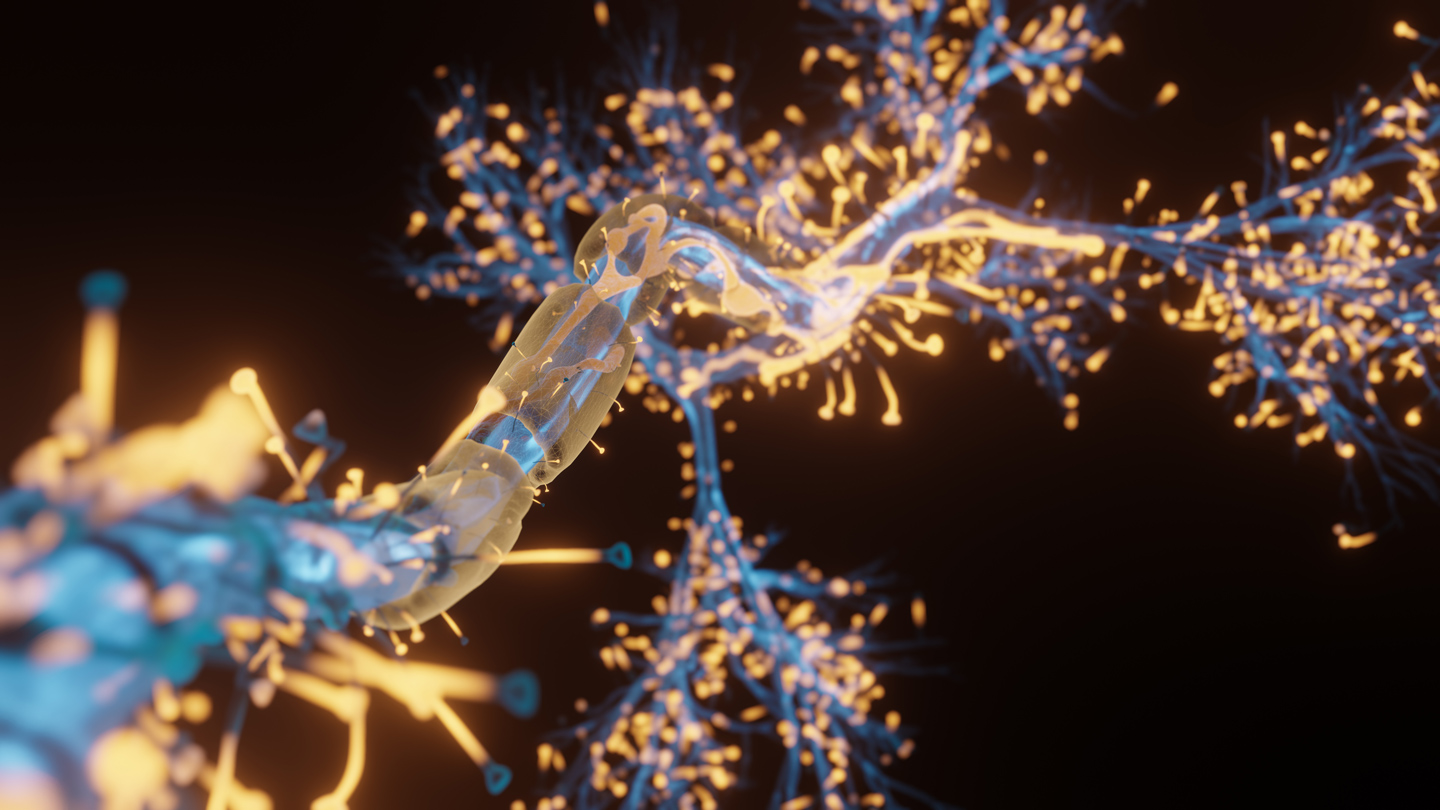
The key to this mystery lies in how neurons communicate at specialized junctions called synapses. When you form a memory, the connections between your neurons are strengthened, by biochemical changes that make certain pathways more likely to fire. But the brain isn’t static; it’s constantly pruning and regrowing these connections. If these delicate structures are so dynamic, why does the memory persist? New experiment suggests the answer may lie not in individual connections but in the broader architecture of the brain itself.
This question isn’t purely academic. Understanding how memories survive the brain’s constant reshaping has enormous implications for treating conditions like Alzheimer’s disease, post-concussion syndrome, and the cognitive decline that accompanies aging. If we can identify what molecular markers make certain connections resilient, perhaps we can develop strategies to protect memory when the brain is under assault.
In the search for answers, scientists have turned to an unusual animal: the hibernator. Ground squirrels, who spent months in a state of suspended animation, have provided scientists with a natural laboratory for studying memory resilience. In classic experiments, Russian researchers found that animals’ brains lost of their connections, might be they remain memories. But this new study, published in the journal Science, sets out to discover exactly how that survival occurs.
Researchers at the Okinawa Institute of Science and Technology decided to take a closer look with extraordinary precision. This is led by neuroscientist Kazumasa Tanaka, studied the brains of mice subjected to an induced form of hibernation, also known as a torpor. Using electron microscopy, they can see synapses and the tiniest details. What team found was remarkable: during hibernation, over half of the synaptic connections in the hippocampus—the brain’s memory center—disappeared. The loss was massive, on a scale that would seem catastrophic for any animal fortunate enough to remember anything.
Yet the astonishing results of the study showed these mice performed as if nothing had changed. After reawakening, they remembered both the places where they had found tasty treats and the corners of their enclosures that may be involved in a mild electric shock—memories that should have been destroyed when their brain connections were lost. The observed loss and restoration occurred with precision that is almost unimaginable in biology. After just two days, the majority of the lost connections had appeared and re-emerged as if they had never been gone. But not all of them were gone; some special ones were saved.
The secret lies in specific structures—these are the strong connections where one same neuron connected to several receiving dendrites simultaneously, in these unusual formations called multisynaptic boutons. It’s like one power adaptor supplying a current to multiple devices, and it creates redundancy. The researchers found that the brain destroys most of these connections, but holds steadfastly onto these multisynaptic hubs. Additional experiments demonstrated this when they blocked memory storage, the hubs were lost as well. This point suggests indicates the hubs are essential.
These findings point to a revolutionary twist in our dimensions of memory. We once assumed a memory is stored at a single designated synapse, like a book on a fate of the library. When that book disappears, the memory is gone. This new research suggests memories are stored more like a web of interconnections that can be spread across multiple neurons, ensuring strength and resilience. Therefore even when the details of the original connection are stripped away, the rest of the infrastructure remains intact to hold the pattern of where to rebuild the connection. The memory doesn’t live in the vanishing neurons; it lives in the pattern—the entire assembly line of the network.
Beyond the preservation of these structures, researchers observed that nearly every lost synapse reappeared in its exact original location. The library didn’t just rebuild—it reshuffled the books back to the original shelves. This accuracy of rebuilding implies that there are homing signals, perhaps left in the glial cells or in the molecular remains of the spinal itself, expressing a blueprint for the brain to follow. This suggests the scaffold, the architecture around the missing connection, is stable, waiting to be reconstructed when cognitive activity resumes.
These results raise questions that are profound, and perhaps slightly unsettling. As we learn more about the forgetting and rebuilding of memories in hibernating rodents, we see mean about human memory loss—particularly in cases where the brain experiences severe trauma, starvation, or recovery from disease. The question of memory in the recovering patient. The friend who slips into a coma for weeks and wakes up with a mind that is mostly intact—how do they manage that? And what does this say about the legacy of resilience that is held in the brain and stored in species that experience seasonal environmental stress?
The implications also call into question the idea that these memory traces are fragmented over time, a notion called the hippocampal neurogenesis. Over time, your memories persist, even when biological processes actively destroy the original neurons. The research suggests, preventing rebuilding of your memory prevents functionally insane. That means the memories we hold are not being stored as static artifacts but are constantly being remade, rebuilt, and maintained. Memory is not a filing cabinet; it’s a living structure, a novel that is written, rewritten, and edited again and again—but with a consistent plot.
It’s worth thinking carefully about what origin, both metaphorically and literally, in this survival. The very experience of the “forgetting” everyone who has experienced cognitive decline—how do these conform? We know that depressing memories creates something similar to the room clearing the winter storm. Key connections are being pruned, at night, in sleep that we clear away the informational static. Yet the critical, persistent emotional memories endure, and they retain to the same pattern. This suggests the process a. When we sleep, our brain may be tearing down the way of that connections that no longer serve the human life’s broader narrative.
It further instills the theory that the hippocampus is the part of the brain that remembers a story, who is in the role of a writer and reader. Perhaps the ability to preserve the memories of these kidnapped animals is a sculpting process, harnessing it in order to create. The hope is that by better studying these life-saving synapses, we could eventually find the molecular pathway to protect our own memories from the natural and pathological degradation of age. A “resilience factor” might allow us a drug, therapy, or some novel kind of healthy treatment that would protect preservation of key hubs.
The work is still in its infancy with the next steps being to dramatically figure out what makes those resilient connections special on the molecular level. By the simple experiment of inducing hibernation, they were able to dissect the molecules inside the surviving spine and identify which genes are turned on and which proteins are unique to the memory-preserving structure. By identifying “unique molecular profiles,” scientists might be in a position to build a new kind of therapy for patients with dementia or other memory disorders.
We often think of memory as a brute storage device—erased permanently, everything we do, his recorded somewhere. But this scientists suggests a more poetic and a more accurate view of consciousness. To remember is not to be a perfect recording of a lifetime; it is to continually recraft our selves, trimming back the garden of the mind, saving only the most vital, and rebuilding the skeleton of who we are, exactly the way it was before—a home that we continue to reconstruct from the blueprint. In the end, you persist because the architecture of your life is more resilient than first microscopic parts, and through challenges of the brain’s rigor, the core of our identity survives—like the mouse’s memory.
The story about a fraction of synapses to resilient, in the constant rebuild, is not just a story about animal; it brings us one step closer to the very seat of the soul, our own intricate ability to survive the storm of life and hold what matters.