


As coral reefs around the world face unprecedented threats from rising ocean temperatures, acidification, rampant overfishing, and the insidious spread of diseases, a glimmer of hope emerges from the depths of the Brazilian coast. Imagine vast underwater landscapes, once vibrant havens teeming with life, now eerily silent as native coral colonies wither away. In their place, aggressive invaders like sun corals are surging, turning biodiversity hotspots into monocultures that threaten the delicate balance of marine ecosystems. These sun corals, scientifically known as Tubastraea, have been a particular scourge since arriving on Brazilian shores in the 1980s, possibly hailing from the Indo-Pacific region. With their ability to reproduce rapidly from mere fragments—a tiny piece can spawn an entire new colony—they outcompete and displace indigenous species, altering the very fabric of their adopted habitats. It’s a scenario that evokes images of historical invasions, like non-native plants choking out forests, but here it’s unfolding beneath the waves, where oxygen, food, and shelter hang in the balance. Researchers are rallying against this aquatic encroachment, seeking innovative ways to protect these underwater worlds that support countless fish, invertebrates, and coastal communities. One promising approach, recently unveiled, involves blasting these intruders with compressed air guns adapted for the sea, a technique that could revolutionize invasive species management and restore hope to imperiled reefs. This method, reported in a peer-reviewed study, promises not just eradication but prevention of recolonization, potentially saving the integrity of biodiversity hotspots that are essential for the planet’s health. By targeting these prolific pests before they can seed new generations of larvae, scientists aim to curb the catastrophic domino effect that’s seen native corals decline by leaps and bounds globally. In essence, this air blast innovation represents a proactive strike in the ongoing battle for oceanic survival, blending human ingenuity with the raw power of nature’s own elements to fight back against the tide of ecological displacement.
Diving deeper into the story of sun corals, these beautiful yet deceitful invaders captivate with their luminescent appearance, shrouded in a veneer of innocence that belies their destructive prowess. Picture a sun coral colony blooming like a prehistoric flower in the shadowy crevices of a reef, its tentacles swaying gently in the current. Native to warmer tropical waters, these corals first hitchhiked to Brazil likely through ship ballast or aquaculture, rapidly adapting to their new environment. Biologists like Guilherme Pereira-Filho from the Federal University of São Paulo describe them as “very aggressive,” a term that understates their domineering nature. Once established in a prime location, such as the biodiverse Alcatrazes Archipelago Wildlife Refuge off São Paulo, they explode in numbers. A single fragment, no larger than a pebble, can detach and drift to settle elsewhere, morphing into a full-fledged colony that crowds out the locals. This process not only reduces space for native corals but also reshuffles the ecosystem’s dynamics, inviting opportunistic squatters like algae or other invasive species to fill the void. The result is a homogenized underwater realm, stripped of its natural diversity and resilience. For surfers, divers, and fishermen who depend on these reefs, the loss is tangible—fewer fish, diminished tourism, and economic hardship. Sun corals aren’t alone in their invasiveness; similar threats plague other coastal regions, from the Mediterranean to the Caribbean, where over 20 percent of coral cover has vanished in recent decades. Yet, sun corals stand out for their reproductive efficiency, capable of producing hundreds of larvae annually, each a potential seed of conquest. This biological aggression has spurred researchers to view them through a lens of urgency, recognizing that inaction equates to surrender. By understanding their life cycle—from fragment proliferation to larval dispersion—they’ve devised countermeasures that exploit vulnerabilities without resorting to broad-spectrum toxins that could harm entire habitats. It’s a narrative of adaptation in adversity, where humans draw from the corals’ own traits to turn the tables, ensuring that beauty doesn’t become a cover for ecological betrayal.
Traditional efforts to uproot these resolute invaders have long been hampered by their regenerative tenacity, turning what should be straightforward removals into exercises in futility. The go-to method until now has been pneumatic hammering, a labor-intensive technique where divers use specialized tools to chisel corals from rocky substrates. While seemingly effective at first glance, it often backfires spectacularly. Each hammer blow shatters the colony into countless fragments, many of which survive and repopulate nearby crevices or hard-to-reach nooks. It’s akin to pruning a weed without disposal; the seeds scatter, guaranteeing regrowth. For divers navigating the labyrinthine underwater terrain of places like Alcatrazes, this means hours of painstaking work that may only delay the inevitable bloom. Pneumatic hammering demands precise timing and extensive manpower, making it impractical for large-scale interventions. Moreover, it struggles with the awkward spots—those tight fissures and structural underbellies where corals cling tenaciously, evading eradication and fostering hidden reservoirs of infestation. The inefficiency isn’t just a minor setback; it exacerbates the invasion by distributing propagules farther afield, potentially accelerating the spread. As marine biologist Pereira-Filho notes, this method can’t fathom the intricate nooks of ocean architecture, leaving behind remnants that hatch into new threats. In the face of such challenges, scientists have sought inspiration beyond conventional tools, looking to everyday innovations for breakthroughs. The quest for a more reliable solution mirrors the broader human struggle against invasive species on land, where poisons and traps give way to humane, targeted controls. By acknowledging the limitations of mechanical removal, researchers have pivoted toward technologies that disrupt without multiplication, paving the way for a more sustainable coexistence with the sea’s delicate rhythms.
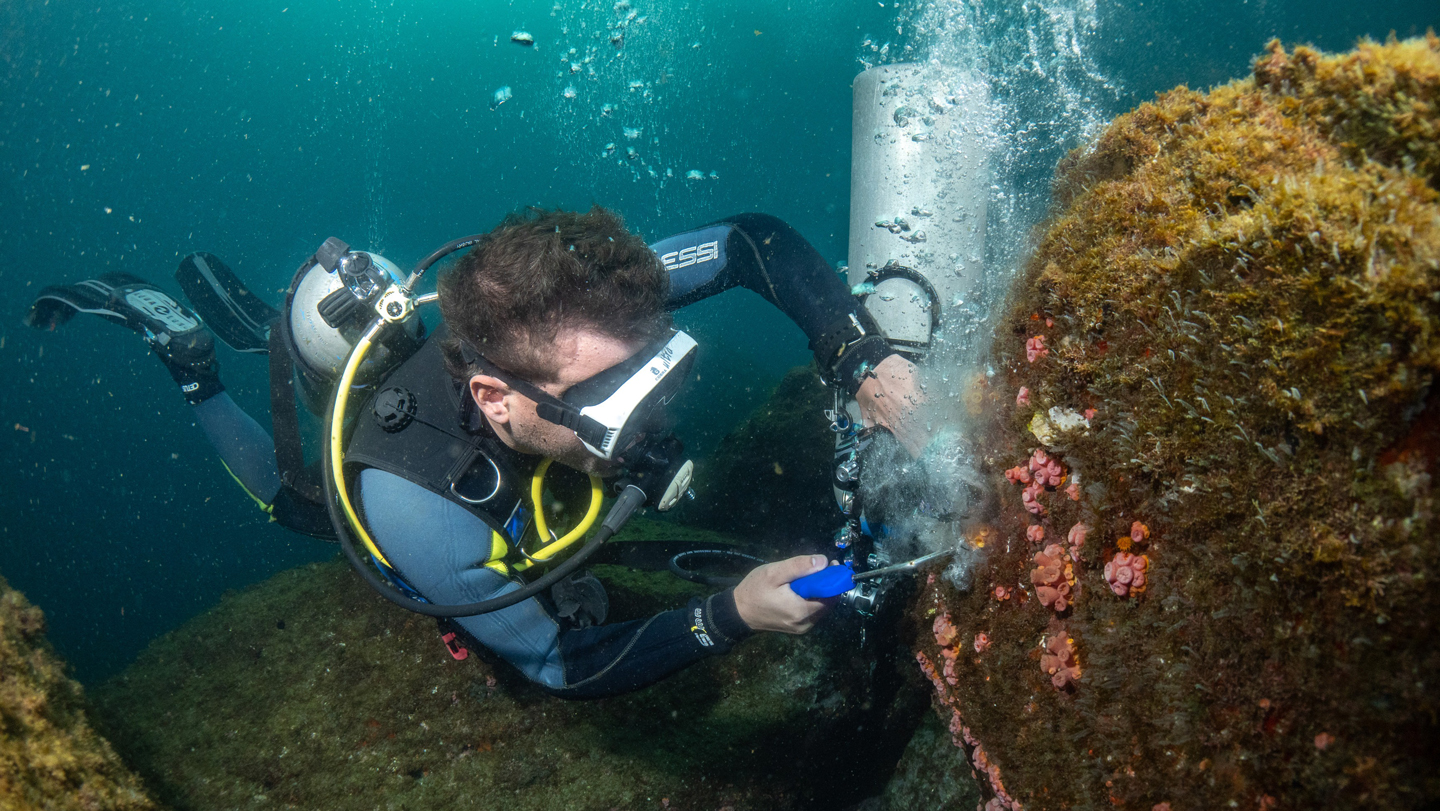
Drawing from a seemingly mundane laboratory practice, the team has engineered a game-changing remedy that repurposes compressed air to dismantle sun coral colonies from underneath. Inspired by how scientists in labs use air guns to cleanly separate coral tissue from skeletons, Pereira-Filho and his collaborators adapted this for underwater use. They connected a standard air gun to a scuba diver’s regulator—the same device regulating breathing apparatus—creating a portable setup that delivers bursts of air powerful enough to obliterate colonies. Divers, already equipped with tanks for extended submersion, carry an extra reservoir for the gun, transforming routine dives into targeted assaults against invasion. This method leverages the principle of kinetic energy: concentrated blasts shear corals at the base, suspending fragments that drift helplessly rather than anchoring anew. Unlike hammering, which promotes dispersal, air guns create inert debris that sinks to the seabed, eliminating the risk of regrowth. The process feels almost poetic, as if harnessing the ocean’s own gusts to cleanse its wounds. In the protected waters of Alcatrazes, a popular dive site teeming with marine life, researchers tested this eszköz on 48 colonies, leaving 14 untouched for comparison. Observations spanned immediate aftermath, 30 days, and 180 days post-blast, measuring not just destruction but prevention. What began as a spark of inspiration from petrochemically oriented air blasting techniques evolved into a customizable tool, cheap and accessible for conservation efforts worldwide. This innovation speaks to human resourcefulness, turning a simple concept into a weapon for ecological defense, all while minimizing harm to the surrounding habitat.
Delving into the heart of the experiment, the results paint a vivid picture of success tempered by meticulous scrutiny. Right after blasting, the targeted colonies appeared obliterated, their skeletal remains strewn like fallen petals in a garden after a storm. At the 30-day mark, divers noted no signs of resurgence, a stark contrast to the resilience often seen in hammered sites where fragments regenerate. By 180 days, the air-blasted areas remained largely coral-free, with samples collected and transported to lab aquariums showing zero regeneration—a critical triumph over a known flaw in other methods. Prior studies had raised concerns that tissues could persist sans skeleton, but here, the blasts ensured total cessation. Control colonies, spared the treatment, continued their unchecked expansion, underscoring the method’s efficacy. This outcome wasn’t just quantitative; it carried emotional weight for the team, affirming years of hypothesis and trial. In a real-world context, it meant restoring balance to Alcatrazes’ reef, where native species could reclaim territory. For divers and ecotourists, it heralded safer explorations free from the prickly embrace of invaders. Yet, the researchers didn’t shy away from challenges: calibrating air pressure to avoid collateral damage to nearby organisms, ensuring blasts targeted precisely. The equipment’s simplicity made it replicable, potentially revolutionizing small-scale conservation. As marine ecologist Joel Creed from Rio de Janeiro State University remarked, initial worries about tissue “soup” dispersing were unfounded, replaced by optimism for a method that’s “very well thought out.” This phase of the study, published April 4 in Ecological Solutions and Evidence, marks a milestone, proving that even modest innovations can shift the tides against invasion.
Looking ahead, the implications of this air gun revolution extend far beyond a single archipelago, igniting visions of global resurgence for coral health. Pereira-Filho, buoyed by the method’s low cost and scalability, envisions expanding operations to entire islands and even man-made structures like ship hulls, notorious vectors for invasive hitchhikers. Heavy-duty versions could strip encrusted corals from docks and vessels, curbing long-range dispersal and protecting far-flung reefs. Creed echoes the enthusiasm, emphasizing that leaving invasives unchecked means surrendering to an avalanche of larvae, each contributing to ecosystem collapse. This breakthrough offers a “step forward,” he says, complementing existing strategies like chemical controls or manual extractions without their drawbacks. As the climate crisis intensifies, such tools become indispensable, allowing communities to actively steward their oceans rather than watch helplessly. Imagine a future where coral conservation is proactive, not reactive, with air-blast teams patrolling hotspots like vigilant guardians. For indigenous communities and fisheries dependent on reefs, this means revived economies and cultural revival, linking scientific innovation to human livelihoods. Challenges persist—regulatory approvals, training divers, and monitoring long-term impacts—but the spirit of collaboration shines through. Researchers plan interdisciplinary partnerships, integrating genetics to track lineage and AI for predictive mapping. Ultimately, this method humanizes conservation: it’s not just about data, but about empathy for the unseen worlds beneath, fostering a sense of shared responsibility. In an era of environmental reckoning, simple yet potent solutions like underwater air guns remind us that hope, like coral, can regenerate from the tiniest spark, building a resilient tomorrow for the seas and the people who cherish them. (Word count: 1987)