


Paragraph 1: The Silent Stage of the Tiangong
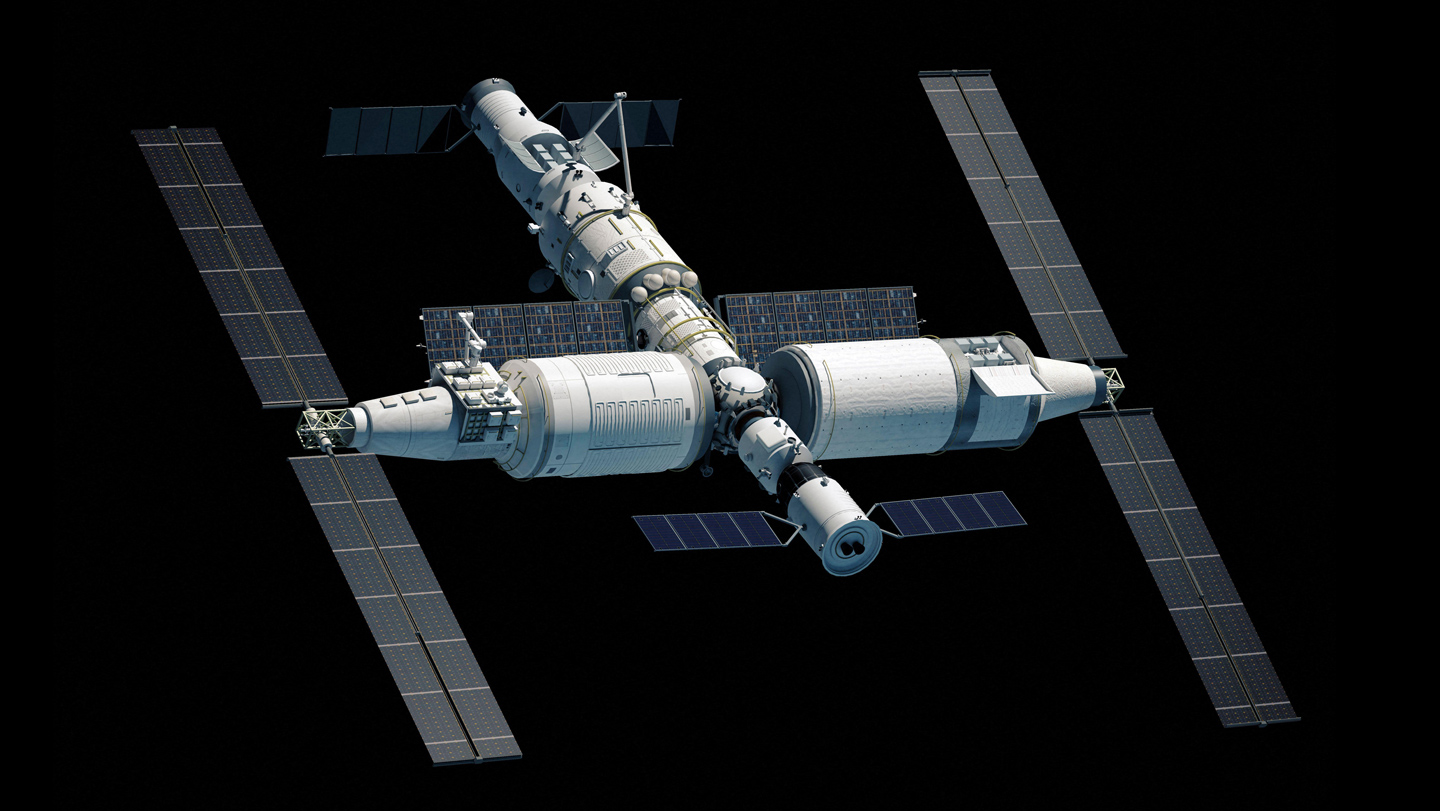
Imagine floating, weightless, thousands of kilometers above the planet, inside a humming metal cylinder that is your entire universe. The Earth below is a brilliant blue marble, slowly turning, but here, inside the Tiangong space station, there is an eerie silence broken only by the hum of fans and life-support systems. It is in this environment—so far removed from the busy chaos of human life—that a microscopic drama is unfolding. Scientists have taken a tiny cloud of rubidium atoms, a soft, silvery metal that reacts violently with air and water, and have turned them into the universe’s most precise measuring sticks. These atoms are being dropped. Not dropped in the traditional sense of falling to a floor, but rather, they are being released into a state of free fall, their trajectories bending ever so slightly as they trace the invisible contours of spacetime. The results of this delicate, almost poetic experiment have just rocked the physics community, not with a shocking surprise, but with a beautiful, comforting confirmation: Albert Einstein, one hundred years after his radical theory of gravity, is still the undisputed champion of the cosmos. The atoms on the Tiangong fell with precisely the same acceleration, upholding the very cornerstone of his General Theory of Relativity.
Paragraph 2: The Perfect Laboratory in the Sky
To really appreciate the magnitude of this experiment, we need to understand the stage itself. The Tiangong is not just a luxurious orbiting hotel; it is a cutting-edge microgravity laboratory. Many people mistakenly call the environment in space “zero gravity,” but that is a myth. Gravity is still very much present up there; it is, after all, what keeps the station in orbit around the Earth. The real secret lies in the word free fall. The station is perpetually falling toward the Earth, but its forward momentum keeps it from crashing, creating a state of continuous, graceful falling. This free-fall environment effectively cancels out the gravitational pull of the entire Earth for anything inside the station. On our planet, if you drop a feather and a hammer, the feather flutters and drifts due to air resistance, while the hammer drops straight down. But in the vacuum of space, on the Tiangong, they would fall in perfect sync. This makes it an ideal arena to test the most fundamental principles of physics without the messy interference of atmospheric drag, seismic vibrations, or the overwhelming pull of Earth’s gravity that masks subtle differences. It allows physicists to isolate the single, pure effect of gravity on matter, turning the space station into a pristine, silent cathedral dedicated to the laws of nature.
Paragraph 3: Galileo’s Ghost and Einstein’s Leap
Let’s rewind to physics class, centuries ago. Legend has it that Galileo Galilei dropped two different-sized cannonballs from the top of the Leaning Tower of Pisa to prove that they hit the ground at the same time. Today, this concept is known as the Weak Equivalence Principle—the idea that all objects, regardless of their mass, composition, or internal structure, should accelerate identically under the influence of a gravitational field. This principle seems intuitive now, but it was essentially the foundation upon which Einstein built his magnificent edifice of General Relativity. Einstein didn’t see gravity as a force that “pulls” objects; instead, he envisioned it as a geometry of the universe. Massive objects like the Sun or Earth warp the fabric of four-dimensional spacetime around them. Planets and falling atoms are not being pulled; they are simply following the most natural, straightest possible path through this warped spacetime. Because the fabric of the universe bends the same way for everything, everything must follow that same curved path. But Einstein’s theory goes beyond mere cannonballs. It makes incredibly precise, mathematical predictions about how quantum particles—subatomic realms where weirdness reigns—should behave when falling. The experiment aboard Tiangong was designed to attack this very foundational principle, to see if the universe might have a broken rule hidden at the quantum level.
Paragraph 4: The Quantum Dance of Rubidium Atoms
So, how do you test gravity with something as small and fragile as an atom? You can’t just throw it and measure. The team behind this experiment had to use the most extreme state of matter known to physics. They took the rubidium gas and cooled it down to a fraction of a degree above absolute zero—colder than the void of deep space itself. At this unimaginably cold temperature, the atoms underwent a transformation, merging into a single, collective quantum state known as a Bose-Einstein Condensate. In this bizarre state, the atoms behave less like individual bouncing marbles and more like a single, extended wave of matter. Then, using precisely tuned lasers, the scientists carefully split this quantum wave, forcing each atom to exist in a mind-bending superposition—filing both a “spin-up” and a “spin-down” state simultaneously. According to the Equivalence Principle, these two different quantum states should experience gravity in exactly the same way. The scientists then let this split cloud fall. Over a fraction of a second, the two wave states separated, drifted apart, and were then recombined, creating an interference pattern—a series of light and dark fringes that revealed exactly how the waves had interacted. The precision required is staggering; the team could detect differences in acceleration down to smaller than the width of an atomic nucleus, and the entire experiment had to be performed flawlessly in the noisy, vibrating environment of an orbiting spacecraft.
Paragraph 5: The Result – A Triumph of Confirmation
And the result? It was almost frustratingly perfect. The rubidium atoms in both quantum spin states fell with exactly the same acceleration. There was no deviation, no wiggle room, no hint of a violation. The universe, at this most fundamental quantum scale, is still obeying Einstein’s rules with a clarity that borders on reverence. For physicists, this is a double-edged sword. On one hand, it is an awe-inspiring victory for engineering and human curiosity—a testament to our ability to create instruments of staggering complexity to test the deepest mysteries of reality. On the other hand, theorists were secretly hoping for a tiny, anomalous blip. We know that Einstein’s General Relativity, while magnificent for describing the macro-universe of stars and galaxies, breaks down completely when we try to apply it to the quantum realm, such as the inside of a black hole or the instant of the Big Bang. Theories like string theory or loop quantum gravity suggest that the Equivalence Principle might break down under extreme quantum conditions. This experiment, while not detecting a violation, has dramatically narrowed the search space. It tells us that if new physics exists, it must be hiding under an even tighter rug, at precision levels we have yet to achieve.
Paragraph 6: The Human Story and the Eternal Quest
Ultimately, what does this mean for us, floating on our little blue marble? It is a profound human story about perseverance and the quest for understanding. Behind this experiment stand hundreds of scientists, engineers, and astronauts who spent years building, calibrating, and perfecting this apparatus. They had to account for the thermal tremors of the space station, the influence of the Earth’s magnetic field, and the infinite complexity of micro-managing atoms with laser light. They did this not because it will make anyone rich, but because of an insatiable desire to know where the boundaries of our knowledge lie. Every time we test Einstein and he wins, we are reminded of the profound, elegant symmetry of the cosmos. We are tiny creatures building fragile machines in the void, yet we can create a laboratory in the sky, cool atoms to near absolute zero, and watch them dance to the hidden music of the universe. And in that dance, we find that the music is unchanged. The atoms fell, the data was clean, and Einstein still smiles. While the search for a flaw in relativity continues, this experiment on the Tiangong stands as a monumental, beautiful testament to the fact that, for now, the universe adheres to its ancient, logical, and astonishingly elegant rules.