





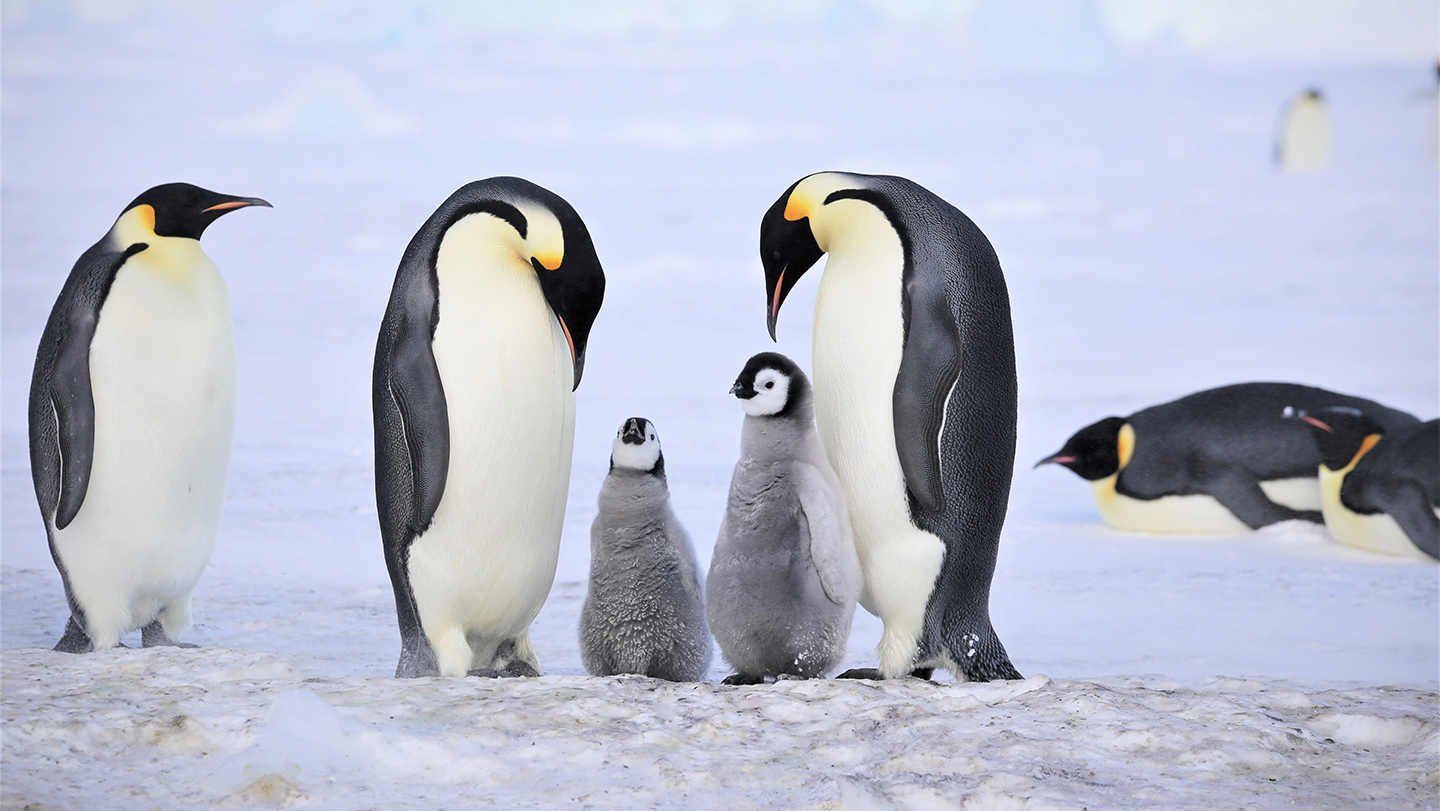
Deep within the vast, frozen, and unforgiving wilderness of the Antarctic continent lies Coulman Island, an isolated, volcanic outpost surrounded by sheer ice cliffs and endless expanses of frozen sea. This remote and breathtaking landscape is home to one of the largest and most ecologically significant emperor penguin colonies on our planet, a bustling community of thousands of birds that have adapted to survive in some of the most extreme conditions known to humanity. Every winter, as temperatures plummet and fierce blizzards sweep across the ice, these magnificent birds embark on a monumental journey to breed and raise the next generation of their species, relying on a delicate balance of nature to sustain them. However, the breeding season of 2025 brought with it a quiet, devastating tragedy that shocked the global scientific community and highlighted the fragile nature of polar life. When researchers began analyzing routine aerial photographs of the island to monitor the health and progress of the colony, they expected to see the usual thriving nurseries of fluffy, grey chicks huddled together in massive crèches for warmth against the bitter wind. Instead, they were met with a heartbreaking reality captured in high-definition pixels: the count of surviving chicks had plummeted by an astonishing 69 percent compared to the previous year. The colony, which had successfully reared 21,242 healthy chicks in 2024, saw that number drop to a mere 6,658 in 2025. For the polar scientists who have dedicated their careers to studying and protecting these iconic animals, the sudden and catastrophic collapse was a sobering reminder of how quickly a thriving ecosystem can be brought to its knees by physical changes in their environment.
To comprehend how such a massive ecological failure occurred, it is essential to understand the highly coordinated, high-stakes parental partnership that defines the early life of an emperor penguin chick. Once a chick hatches into the freezing Antarctic air, its survival becomes a race against time, requiring a flawless, tag-team relay between both parents. While one adult stays behind to cradle the vulnerable chick on its feet, shielding it from the lethal cold beneath a warm fold of feathered skin, the other parent must trek across miles of treacherous, shifting sea ice to reach the open ocean, where they dive into the freezing waters to hunt for fish, squid, and nutrient-rich krill. Upon returning, bellies swollen with food, the hunting parent feeds the hungry chick, allowing the other adult to finally depart for its own foraging journey. It is a system built on precise, relentless timing, where even a delay of a few hours can mean the difference between life and starvation for the young. In July 2025, just as this crucial feeding cycle was ramping up and chicks were hatching across the colony, a colossal iceberg that had broken off from a massive ice shelf further south drifted silently into the area. Instead of passing harmlessly by, the titanic block of ice ran aground, anchoring itself firmly to the shallow seabed just north of Coulman Island. This frozen monolith, which would remain trapped in place until early January 2026, completely disrupted the penguins’ traditional hunting routes, increasing the shortest distance between the nesting grounds and the open water from a manageable 9.3 kilometers in 2024 to a grueling, exhausting 14.9 kilometers in 2025.
While the sheer physical distance added hours of exhausting travel to the parents’ journeys, the true tragedy lay in the highly unusual and deceptive shape of the grounded iceberg itself, which functioned as a physical trap for the homeward-bound birds. As exhausted parent penguins waddled back from the ocean, heavy with the precious food destined for their hungry chicks, they encountered the southern face of the grounded iceberg. Unlike typical icebergs that present sheer, vertical walls of blue ice, this particular structure possessed a gentle, inviting slope on its seaside flank. Guided by their natural instinct to take the most direct path back to their colony, the unsuspecting penguins climbed up the icy incline, believing it to be a simple hill that would lead them home. However, once they reached the crest of the iceberg, they were confronted with a terrifying and unsurpassable obstacle: a sheer, 20-meter drop-off, an icy cliff that was absolutely impossible for them to descend safely. Trapped high above the ground and unable to proceed, the disoriented birds had no choice but to turn around, slide back down the long slope they had just spent hours climbing, and begin a massive, time-consuming detour around the entire perimeter of the grounded giant. This agonizing delay added critical hours and days to their return trip, proving fatal for thousands of waiting chicks whose parents simply did not make it back in time to save them from starvation.
Unlocking the secrets of this natural disaster required a sophisticated combination of modern satellite technology, aerial photography, and geographic forensic work. Polar researcher Jeong-Hoon Kim and his dedicated colleagues at the Korea Polar Research Institute in Incheon, alongside an international team of scientists, began piecing together the timeline of the disaster by analyzing high-resolution images taken from space and aircraft. By meticulously studying the shadows and contours of the grounded iceberg, the researchers were able to construct a highly detailed three-dimensional model of the ice, which revealed the precise layout of the gentle slope and the deadly cliff that had confused the birds. The aerial photographs also revealed a poignant and deeply unsettling sight: thousands of adult penguins gathered in dense clusters on top of and along the edges of the iceberg, looking out over the sheer drop toward their colony, seemingly unable to understand the physical barrier that separated them from their young. Marine biologist Michael Polito from the University of California, Santa Cruz, who was not involved in the study but reviewed its findings, noted that the creation of this 3D reconstruction was a groundbreaking scientific achievement, providing clear, visual evidence of how the physical structure of ice can directly dictate the survival rates of wildlife populations in the polar regions.
For the scientists who spend months in the field monitoring these remote colonies, witnessing such a catastrophic loss firsthand was a deeply emotional and sobering experience that left a lasting impact on their lives. These researchers develop a profound respect and connection to the animals they study, and standing amidst a silent, half-empty colony that should have been alive with the constant, energetic calling of thousands of young chicks was a heavy burden to bear. Jeong-Hoon Kim expressed the deep sorrow felt by his entire team, noting that he had always hoped they would never have to document such a heartbreaking tragedy at one of the primary colonies they monitor, describing it as a haunting experience that he would carry with him for the rest of his life. Yet, even in the face of such profound loss, the natural world offers a glimmer of hope and a testament to the incredible resilience of these ancient birds. Because the grounded iceberg eventually broke free from its seabed mooring and drifted away into the open ocean in early January 2026, the physical pathway between Coulman Island and the rich hunting grounds of the sea has finally been restored to its natural state. Since the adult breeding penguins themselves survived the ordeal, there is every reason to believe that the colony can recover and experience highly successful, vibrant breeding seasons in the coming years, provided they are given the time and space to heal.
Nevertheless, this localized tragedy serves as a powerful and urgent warning about the much larger, systemic environmental changes currently sweeping across the polar regions due to human-induced global climate change. While the grounding of this specific iceberg was technically a natural event, the underlying atmospheric and oceanic warming trends are making these events far more common and severe. As global temperatures continue to rise, the massive ice shelves that protect the Antarctic continent are warming from both the air above and the ocean currents below, losing their structural stability and fracturing at unprecedented rates. This destabilization means that colossal icebergs are calving off and drifting into critical wildlife corridors with increasing frequency, threatening to turn what was once a rare, once-in-a-generation natural anomaly into a constant, deadly hazard for emperor penguins and other marine species. Protecting these magnificent animals and ensuring their long-term survival in an uncertain future will require not only dedicated local monitoring and localized conservation efforts but also a unified, global commitment to addressing the root causes of climate change. Only by safeguarding the stability of the Antarctic ice sheets can we ensure that the traditional pathways of the southern ocean remain safe, predictable, and open for the generations of penguins yet to come.