



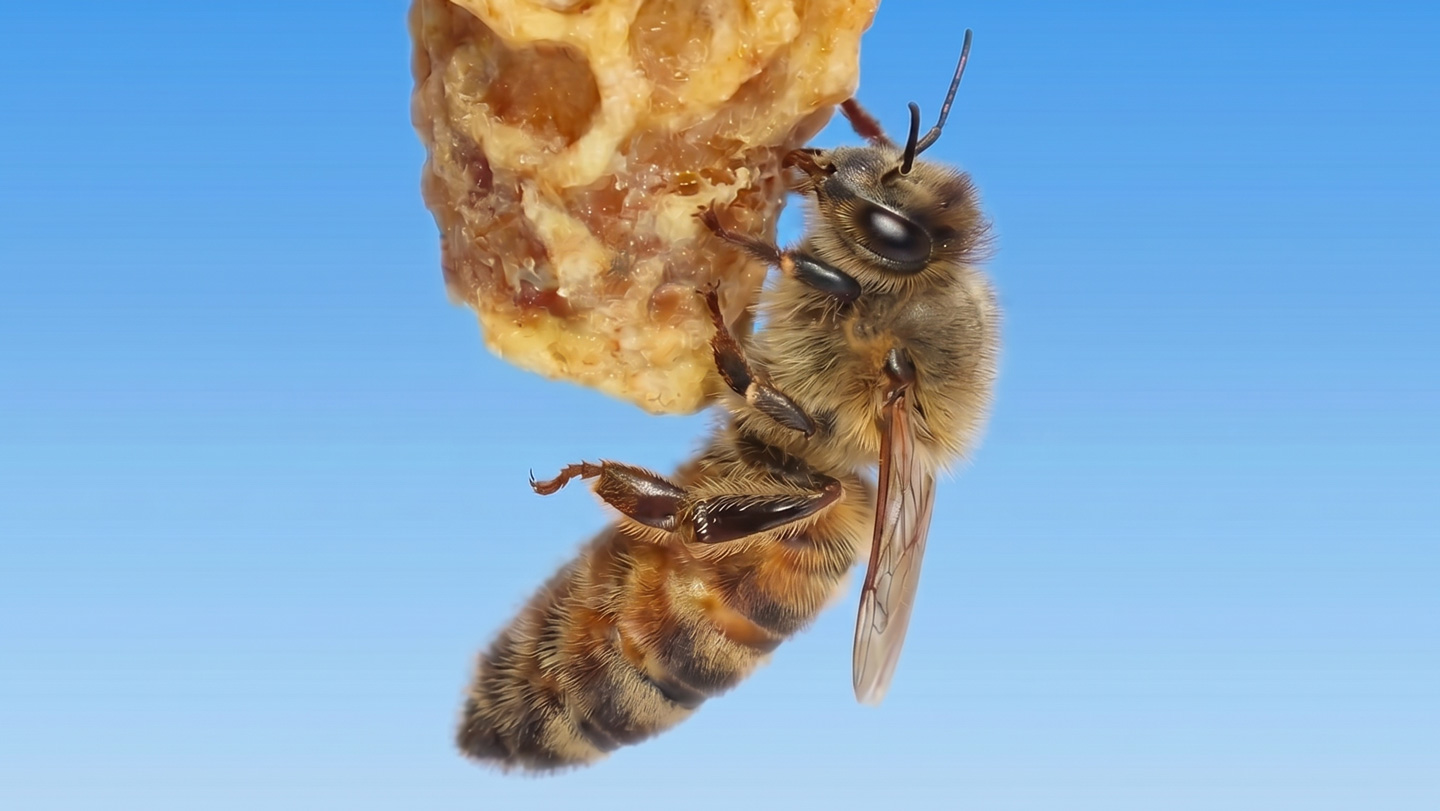
For centuries, the story of the honeybee queen has been told as a fairy tale of chemical destiny, centered entirely around the legendary power of royal jelly. According to this long-held scientific orthodoxy, any humble female honeybee larva could be elevated to the throne simply by being fed this rich, milky secretion produced by nurse bees. The royal diet was believed to act as a master switch, triggering the physical and reproductive metamorphosis that turns an ordinary worker into a long-lived, highly fertile queen. However, a groundbreaking study published on June 3 in the journal Nature reveals that this royal transformation is far more complex and holistic than previously imagined. A dedicated team of researchers has discovered that the physical cradle itself—the peanut-shaped, downward-hanging wax chamber where the queen develops—exudes custom physical and chemical properties that actively steer her growth and survival. By proving that the structural environment is just as critical as the diet inside it, this discovery fundamentally reframes our understanding of hive biology and challenges the singular myth of royal jelly.
This scientific paradigm shift began with the curiosity of Boris Baer, an entomologist at the University of California, Riverside, who spent decades observing the meticulously coordinated chaos of his own bee colonies. Baer could not help but notice the sheer amount of time, physical resources, and collective energy that worker bees invested in building the large, highly distinct queen chambers, which stood out clearly among the repetitive hexagonal grids of the hive. It felt evolutionarily illogical that the bees would construct such complex, textured spaces as nothing more than glorified, oversized food bowls. Suspecting that the chamber walls held an active role in the developmental process, Baer and his team launched a comparative study of the western honeybee (Apis mellifera) and the eastern honeybee (Apis cerana). Their initial analytical clues emerged directly from the wax itself, which they harvested and subjected to rigorous physical and chemical testing. The results were striking: the wax used to build queen chambers was significantly softer, lighter, and less dense than the rigid wax used for worker beehive cells, and it contained a highly distinct cocktail of specialized chemical compounds. This unique composition caught the attention of Cornell University biologist Thomas Seeley, who, though not involved in the study, noted that the specialized wax allows chemical odors from the developing queen to permeate the chamber walls, marking the spot as sacred so that workers recognize it and avoid causing accidental structural damage.
As the researchers dug deeper, they made the unexpected discovery that the construction of these royal nurseries is carried out by a highly specialized guild of builders operating under intense physiological conditions. These “royal nurses,” tasked with carving and molding the future queen’s home, did not behave like standard construction workers. Baer explained that these bees spend significantly longer stretches of time carefully crafting the queen cells, running physically hotter than their hive mates, and displaying highly distinct patterns of gene activity while they work. This suggests that the builders undergo a dramatic physiological shift, essentially running a metabolic fever that allows them to secrete and work with the softer, chemically altered wax required for the queen’s development. This level of biological customization indicates that the hive does not merely build a nursery; it mobilizes a passionate, genetically primed labor force dedicated to engineering a precise maternal microclimate, ensuring the physical cradle is biologically tailored to nurture royalty.
To prove that this specialized wax was truly essential to the queen’s development, Baer and his team designed an elegant but stark experiment that isolated the structural environment from the diet. They allowed queen-destined larvae to feed happily on royal jelly for four days, ensuring they received the standard nutritional requirements for monarchy. However, they then partitioned the larvae into artificial chambers capped with two different types of wax: some were sealed with authentic, soft queen-cell wax, while others were closed off using rigid, ordinary worker-cell wax. The developmental consequences were immediate and catastrophic for the larvae placed under the worker-style wax, as up to two-thirds of them perished before reaching maturity, compared to a mere one-third mortality rate for those sealed under genuine queen wax. Furthermore, the surviving larvae in the worker wax developed into stunted, significantly smaller pupae, whereas those reared beneath the native queen-cell wax emerged as robust, perfectly formed queens. The results demonstrated that even with an unlimited supply of royal jelly, a queen cannot successfully fulfill her developmental destiny without her custom-designed architectural environment.
The exact mechanical and chemical pathways that connect the structural properties of the wax to the growing larva’s internal biology remain an intriguing mystery that scientists are eager to untangle. Kai Wang, an apiologist at the Chinese Academy of Agricultural Sciences in Beijing, points to the unique chemical scents embedded in the queen wax as a particularly fascinating avenue of study. He wonders if these chemical signatures might act as a sensory training ground for the developing queen, stimulating her developing nervous system and preparing her senses for mating flights and colony leadership long before she ever chews her way out of the cell. There is also the tantalizing possibility of a two-way dialogue, where the future queen produces her own chemical signals that seep through the softer, porous wax, communicating her health and developmental stages to the workers tending the outside of the chamber. Rather than being a passive recipient of food in a dark void, the developing queen may be actively interacting with her sisters through the very walls of her cradle.
Ultimately, this discovery carries profound implications that stretch far beyond the mechanics of honeybee development, offering a beautiful new perspective on how superorganisms function as cohesive, intelligent units. The study shows that honeybees do not rely on simple, automated cues to sustain their societies; instead, they collectively coordinate a highly complex division of labor to actively mold and orchestrate the biology of their next generation. By demonstrating that the physical architecture of the hive is dynamically woven into the genetic and physical destiny of the queen, Baer and his colleagues have shown that the life of a honeybee is shaped by a holistic network of diet, labor, chemistry, and structure. It reminds us that in the natural world, the spaces we build are never neutral, and that the cradle we are raised in possesses a quiet, powerful hand in shaping who we ultimately become.