


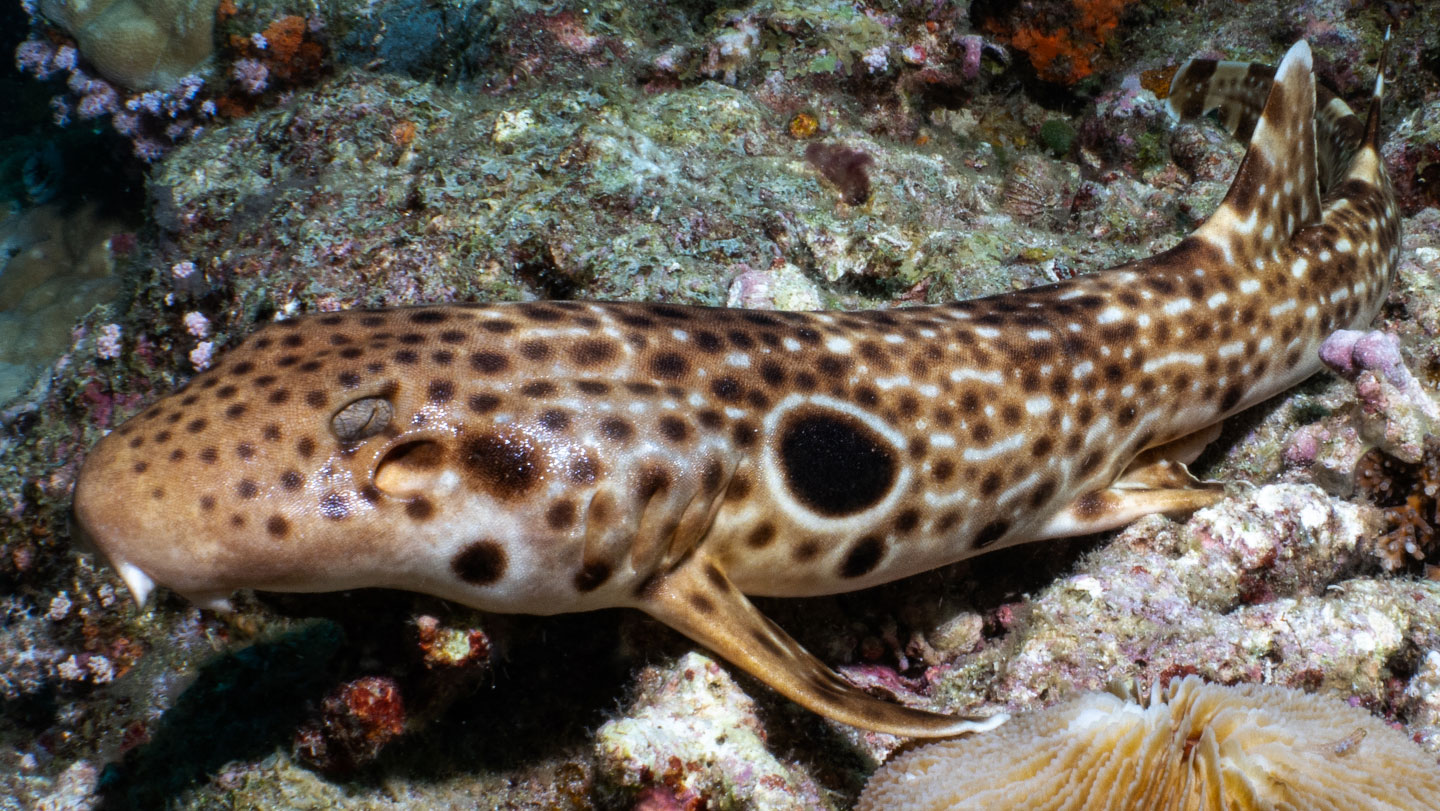
Picture a scene pulled directly from the pages of a fantastical science fiction novel or a suspenseful nature documentary: a mysterious shark that possesses the uncanny ability to walk across the ocean floor. To the uninitiated, the concept of a walking shark might sound like the ultimate evolutionary nightmare, conjuring up vivid, alarming images of ancient apex predators leaving the ocean depths to colonize the dry land. In reality, however, these tiny, gentle creatures are far from terrifying; indeed, as marine scientist Jessica-Ann Blakeway of the University of the Sunshine Coast enthusiastically points out, walking sharks “are the cutest sharks that you will ever see” in our planet’s vast, blue oceans. Imagine her profound professional thrill and childlike wonder when she and her dedicated research team came upon a walking shark displaying highly unusual, never-before-seen markings while executing a highly methodical night dive on a pristine reef in Milne Bay, situated tucked away in the easternmost corner of Papua New Guinea. The tropical ocean was quiet and remarkably still that night, save for the rhythmic, soothing hiss of the divers’ scuba regulators, when their underwater torches illuminated a slender, patterned creature nestled quietly among the corals. This particular specimen stood out immediately because it lacked the bold, leopard-like spots of the other walking sharks they had been systematically surveying in the region. Instead, this mysterious, elegant traveler boasted “little white dashes along its body and lots of smaller brown dots,” a striking and unique aesthetic that signaled to the experienced marine researchers that they might be witnessing something truly extraordinary and previously undocumented by modern science. The sheer beauty of the creature, combined with the realization that they were likely the first humans to deliberately observe this specific variation, filled the dark water with an electric sense of discovery that would fuel their efforts for days to come, turning an ordinary scientific survey into an unforgettable adventure under the waves.
Driven by the tantalizing possibility that they had stumbled upon an entirely new, undescribed species, the scientists embarked on an intensive, highly focused search across the neighboring coral reef ecosystems over the course of the following two days in March 2025. Their persistent efforts, late-night underwater trackings, and keen observational skills paid off handsomely when they ultimately located twelve of these uniquely patterned sharks residing within the shallow, labyrinthine structures of the local reefs, as Blakeway later recounted with immense pride. Back in the laboratory, rigorous genetic analysis, detailed tissue sampling, and morphological examinations confirmed their initial field suspicions: this beautifully decorated, slow-moving fish was indeed an evolutionary entity completely new to science. Named the Dudgeon walking shark (Hemiscyllium dudgeonae), this fascinating creature represents only the tenth known species of walking shark on Earth, a monumental finding that the research team officially published on June 15 in the prestigious Journal of the Ocean Science Foundation. The scientific name pays a beautifully fitting tribute to Christine Dudgeon, an exceptionally dedicated marine scientist at Australia’s University of the Sunshine Coast who has spent more than two decades unraveling the biological mysteries of walking sharks, and who was actually the very first person to spot this unusually patterned marvel. Meanwhile, the indigenous communities of Milne Bay, who have coexisted with these reef dwellers for generations, refer to this slow, deliberate shark by the local moniker kadedekedewa, a charmingly descriptive term that translates in their language to “dog shark” or “lazy shark,” perfectly capturing the animal’s gentle, slow-moving nature and its habit of casually lounging on the seafloor rather than darting away from human presence, revealing a deep, historical connection between the local people and their unique marine neighbors, a bond that scientists hope will foster a lasting conservation partnership.
To watch one of these sharks in motion—such as the closely related Halmahera walking shark—is to receive a captivating masterclass in evolutionary adaptation, as they move deliberately across the seafloor in a manner that instantly explains how this unique group of elasmobranchs earned their descriptive name. Rather than relying on the powerful tail-swishing swimming movements characteristic of open-ocean sharks like the Great White or the Tiger Shark, walking sharks utilize their highly specialized, muscular pectoral and pelvic fins as pseudo-limbs, walking along the uneven terrain of the reefs with a charming, undulating crawl that closely resembles a salamander traversing a forest floor. These diminutive, bottom-dwelling sharks, which rarely grow longer than a few feet, are not only master navigators of the complex coral topography, but they have also evolved a suite of mind-boggling physiological survival mechanisms that allow them to occupy ecological niches completely unavailable to other marine predators. Perhaps their most astonishing superpower is their ability to survive out of the water for several hours at a time by drastically slowing down their metabolic rate, dropping their heart rates, and breathing at a fraction of their normal levels to conserve vital oxygen. This allows them to withstand extreme hypoxia, essentially turning off non-essential brain functions to stay alive while stranded on dry reef flats. This miraculous adaptation allows them to remain highly active, calm, and safe even when the receding tide leaves them temporarily stranded in tiny, oxygen-depleted rock pools, where they can easily feast on crabs, marine worms, and small fish that have been tragically trapped by the low tide. It is a brilliant, highly specialized hunting strategy that turns what would be a lethal environmental hazard for almost any other fish into an exclusive, highly productive buffet line for these hardy walking survivors, demonstrating the absolute resilience of life in the face of harsh tidal shifts.
What makes the discovery of the Dudgeon walking shark even more compelling is that it was not the primary target of the expedition, but rather an unexpected, joyous surprise encountered while the scientific team was conducting extensive surveys to map the exact geographical distributions of two other closely related local species, specifically the leopard walking shark (Hemiscyllium michaeli) and the Papuan walking shark (Hemiscyllium hallstromi). One of the most fascinating ecological revelations of this fieldwork was that, despite living in relatively close maritime proximity, these distinct species of walking sharks do not seem to share the same neighborhoods, as information gathered from interviews with local fishing communities and direct scientific observations suggest their territories do not overlap in the wild. The scientific explanation for this strict territorial segregation lies deep in the region’s chaotic geological history, where intense tectonic activity, volcanic eruptions, and shifting sea levels over millions of years repeatedly isolated small populations of these reef-bound sharks from one another. Because these sharks are bottom-dwellers that prefer the safety of shallow, warm waters and completely lack the physical capacity or desire to swim across deep marine trenches, any newly formed deep-water channel acted as an impassable geographic barrier, effectively trapping populations on localized reefs. Over vast stretches of evolutionary time, these isolated pockets of sharks slowly drifted apart genetically, adapting to their specific local environments and diverging into distinct, highly specialized species that remain uniquely endemic to their tiny, home-reef territories today, making each reef a literal cradle of unique, irreplaceable life.
However, the very same evolutionary factors that make walking sharks such fascinating subjects of scientific inquiry also place them in a state of extreme ecological vulnerability, as their incredibly small geographical ranges mean they have no backup populations if their localized habitats are destroyed. Unlike migratory species of sharks that can easily travel thousands of miles across open oceans to escape unfavorable conditions, a localized population of walking sharks is entirely dependent on the health of its specific, home coral reef, making them highly susceptible to localized disturbances. As human-induced climate change drives rising ocean temperatures and severe coral bleaching events, and as coastal developmental pressures, destructive fishing practices, and overall reef degradation continue to accelerate globally, these unique creatures find themselves standing on the frontlines of a rapidly escalating conservation crisis. It is a sobering reality that should cause alarm for conservationists worldwide: currently, five of the ten known walking shark species are officially listed as threatened with extinction on the International Union for Conservation of Nature’s (IUCN) Red List of Threatened Species. This high rate of endangerment highlights the precarious state of these newly discovered animals, which could easily slip into extinction before humanity has even had the chance to fully understand their biology, their behavior, or their roles within the delicate web of life that sustains these incredibly diverse tropical reef ecosystems, reminding us that we are losing biodiversity faster than we can discover it, and making the protection of these isolated habitats a matter of immediate and vital global concern.
This alarming conservation trend is a clear warning sign that extends far beyond the immediate survival of the walking sharks themselves, serving as a powerful indicator of the broader structural decline of our planet’s marine environments. As Jessica-Ann Blakeway astutely and urgently points out, walking sharks are incredibly hardy, resilient, and adaptable creatures, meaning that “if they’re struggling to survive, other, more sensitive marine species will undoubtedly be struggling as well.” The discovery of the Dudgeon walking shark in the beautiful, biodiverse waters of Papua New Guinea is a profound reminder that our planet still holds breathtaking biological secrets waiting to be uncovered, provided we are wise and caring enough to preserve these habitats before they are lost forever. Humanity shares a deep, inescapable responsibility to protect these docile, captivating creatures and their fragile reef homes, not just for the sake of scientific curiosity, but because the health of our oceans is inextricably linked to our own global survival. Ultimately, the story of kadedekedewa, the lazy, walking dog-shark of Milne Bay, is a beautiful testament to the wonders of evolutionary creativity, urging us to look closer, tread more gently, and act decisively to safeguard the magnificent but highly vulnerable tapestry of life that crawls, swims, and thrives beneath the waves, ensuring that future generations can marvel at the wild diversity of our world. By rallying local communities, scientists, and policy-makers to protect these marine sanctuaries, we can ensure that these remarkable walking sharks continue to stroll peacefully through the shallow reefs of the Indo-Pacific for eons to come.