


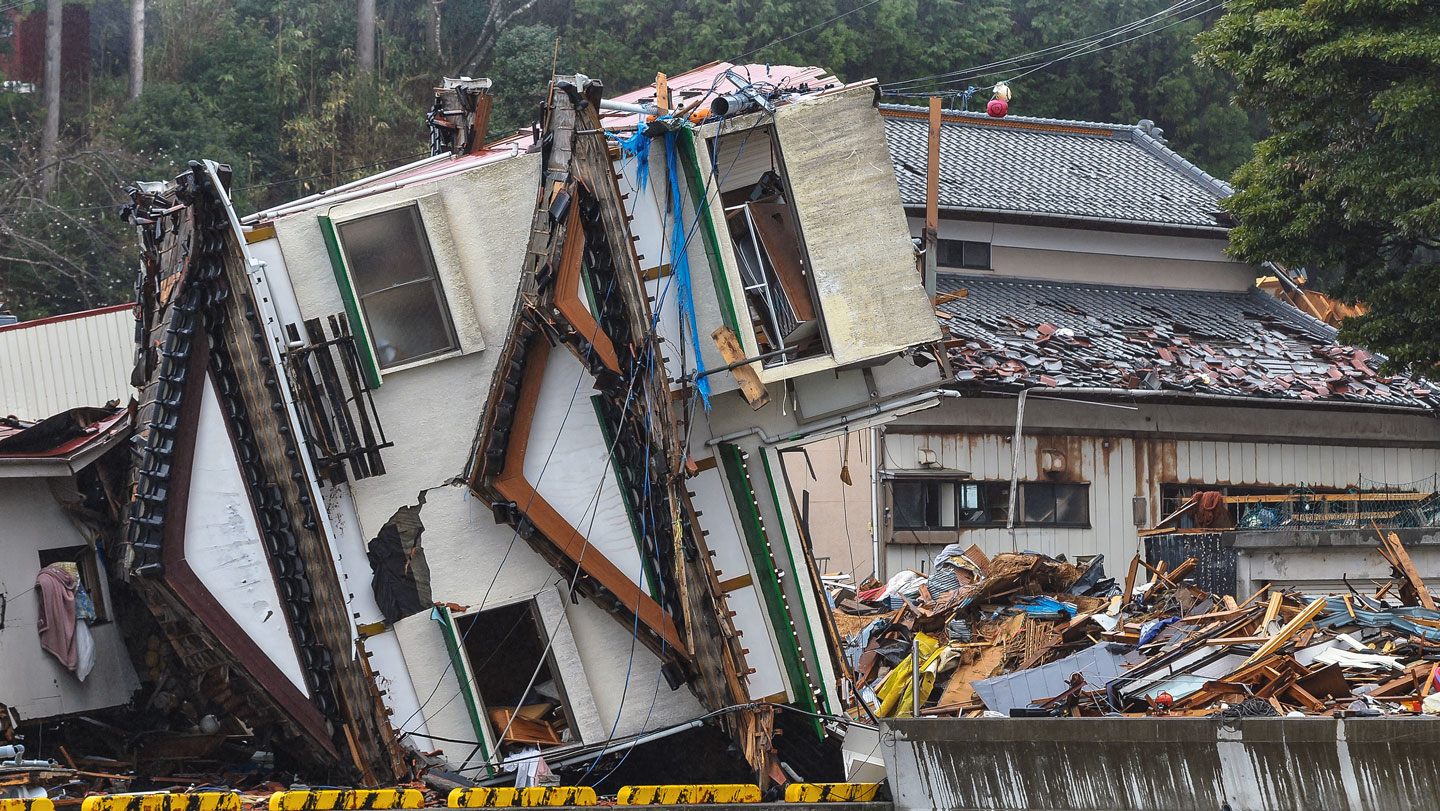
The catastrophic earthquake that struck the Tohoku region of Japan on March 11, 2011, remains etched in global memory as one of the most powerful and devastating natural disasters of the modern era. Registering a staggering magnitude of 9.0, the mainshock unleashed unimaginable energy, triggering massive tsunamis, shifting Earth’s physical axis, and fracturing coastlines. Millions of lives were altered in an instant as communities faced the overwhelming fury of the sea and the violent, relentless shaking of the ground. Yet, long after the immediate violence of the disaster had subsided and the nation began the painful process of recovery, a subtle, almost ghostly phenomenon occurred that baffled scientists and reshaped our understanding of the planet’s inner workings. The entire country of Japan—from the snowy, rugged northern peaks of Hokkaido to the subtropical, volcanic domains of Kyushu—physically shifted a few millimeters to the east. Published in the prestigious journal Science, a groundbreaking study has finally revealed the mechanism behind this collective geographical leap. While earthquakes regularly reshape the local landscape immediately surrounding a fault line, moving an entire sovereign nation in unison is a geological phenomenon of a completely different magnitude. Researchers discovered that this collective drift was not caused by the primary shockwave ripping through the outer crust, but rather by a secondary, delayed seismic wave that took a long journey down to the very core of our planet, bounced off its molten edge, and returned to the surface. This historic event represents the first documented instance of a core-reflected seismic wave possessing enough residual energy to trigger massive, widespread fault slippage.
To comprehend how a wave could travel to the center of the Earth and return with enough strength to move an entire landmass, one must visualize the structural majesty and chaotic interior of the planet itself. When a massive earthquake strikes, it releases different types of seismic energy, including shear waves, or S-waves, which vibrate the ground perpendicular to the direction the wave is traveling. These S-waves plunge downward through the Earth’s rocky mantle, embarking on a deep descent of approximately 2,900 kilometers through intense heat and pressure. At this immense depth, the mantle ends, meeting the outer boundaries of the Earth’s liquid iron core, a region known to geologists as the core-mantle boundary. While some seismic waves can pass into the fluid outer core, S-waves cannot travel through liquids and instead strike this boundary, reflecting backward toward the surface much like a loud shout echoing off a massive canyon wall. Until now, geophysicists viewed these core-reflected S-waves as relatively benign echoes—fading whispers of energy that were highly useful for mapping the interior of the Earth but far too weak to cause any physical damage or geomorphic changes at the surface. The 2011 Tohoku event shattered this long-held scientific assumption, showing that the deep interior is not merely a passive acoustic chamber. The sheer, colossal scale of the original earthquake generated an exceptionally powerful S-wave that plunged deep into the abyss, bounced off the liquid core, and emerged fifteen minutes later at the surface with enough lingering, concentrated mechanical force to disturb tectonic boundaries that had been locked in place for centuries.
The discovery of this planetary echo was made possible through the meticulous scientific detective work of seismologist Sunyoung Park from the University of Chicago and her research colleagues. In the years following the Tohoku disaster, the team minutely analyzed vast repositories of archival seismic records alongside high-precision GPS data to piece together the sequence of events. Japan boasts one of the most sophisticated, densest geodetic sensor arrays on Earth, known as GEONET, which tracks the minute movements of the country’s crust in real-time with millimeter-level accuracy. While reviewing the GPS logs captured on that fateful March afternoon, Park and her team noticed a peculiar, highly coordinated anomaly that did not align with the initial shock. Approximately fifteen minutes after the mainshock had ended, hundreds of GPS sensors across the entire Japanese archipelago registered a sudden, synchronized, and permanent physical offset toward the east. This was not a temporary vibration or a brief sway; the ground had moved, settled, and remained in its new position. Park described the moment of discovery as a revelation, noting that the precise convergence of the seismic arrival times with the physical shifting of the stations left little doubt that the returning core-reflected wave had directly altered the physical geography of the island nation. Historically, seismologists assumed that once the initial violent rupture of an earthquake passed, the immediate structural shifts were largely complete, but this research proved that the Earth continues to slide in response to its own internal echoes.
The physical scale of this triggered movement is almost difficult to conceptualize, pointing to a massive “unzipping” of tectonic boundaries beneath the ocean floor. For the entire Japanese landmass to move in unison, the underlying fault slip could not have been confined to a single localized region or a single fault line. Instead, Park’s team concluded that the deep-core echo triggered slippage along at least two vast, distinct plate boundaries. This rupture zone stretched over an astonishing 3,000 kilometers, extending all the way from the northernmost reaches of Hokkaido down through Honshu to Kyushu in the south. To put this into perspective, this triggered slippage represents a geographic extent more than twice the length of the rupture zone of the catastrophic 2004 Sumatra earthquake, which was one of the largest tectonic events in recorded history. Typically, a fault rupture of this magnitude would trigger a secondary cataclysmic earthquake, but in this unique scenario, the movement occurred with quiet, mysterious stealth. The energy delivered by the core-reflected S-wave was distributed over an incredibly vast area, causing the faults to slide slowly over the course of approximately three minutes. Because this movement was so gradual and spread out, it did not produce the violent high-frequency shaking that humans can feel or that collapses buildings. It was a silent geological epoch compressed into a few minutes, changing the map of Japan forever without a single citizen realizing it was happening as they stood amidst the wreckage of the main event.
This remarkable finding has received strong validation from the wider scientific community, including independent experts like Caltech seismologist Zachary Ross and Purdue University geophysicist Andrea Donnellan. Ross, who was not involved in the original study, emphasized that a permanent physical displacement of the ground over such a massive area is definitive proof of deep fault slippage rather than simple seismic reverberation or temporary shaking. Donnellan echoed this sentiment, explaining how tectonic boundaries function like tightly wound springs over geologic time. Over decades, centuries, or even millennia, the slow, relentless drift of the Earth’s tectonic plates builds up colossal, agonizing amounts of stress along locked fault lines, waiting in a state of precarious, unstable equilibrium. When the core-reflected S-wave returned to the surface, it acted as the ultimate trigger, delivering a brief nudge of dynamic stress that temporarily reduced the friction holding the plates in place. This subtle reduction in friction was all the built-up tectonic energy needed to liberate itself, initiating a slow-motion slide. The research paints a vivid picture of how interconnected our planet truly is, showing that a crisis on the surface can descend into the deep heart of the Earth, only to return to the surface and unlock forces miles away, proving that seismology must look far deeper than local fault lines.
Ultimately, this discovery introduces an entirely new paradigm into global seismic hazard assessment, prompting scientists and safety engineers to rethink the ways we prepare for future disasters. Prior to this study, hazard models focused almost database-exclusively on the direct, outward spread of seismic waves along the earth’s crust, treating the deep interior of the planet as a passive sink where energy simply went to die. We now understand that the core-mantle boundary acts as a giant, hyper-efficient planetary mirror, capable of focusing and bouncing dangerous seismic energy back up to the surface in unexpected locations. While the slow slip triggered by the Tohoku core-reflected wave was fortunately gentle and slow enough to prevent further disaster, there is no guarantee that future events will be quite so benign. If a returning core-reflected wave strikes a fault that is perched on the absolute precipice of a devastating rupture, it could theoretically trigger a sudden, violent secondary earthquake hours or even days after the initial event, catching coastal populations completely off guard and compounding an ongoing tragedy. By revealing this hidden channel of planetary communication, Sunyoung Park and her team have given humanity a vital new lens through which to view our ever-shifting home. As we continue to inhabit the fragile boundaries of a restless Earth, understanding these deep, silent echoes from the core will be essential for building more resilient societies, updating structural engineering codes, and listening more closely to the hidden heartbeat of our planet.