


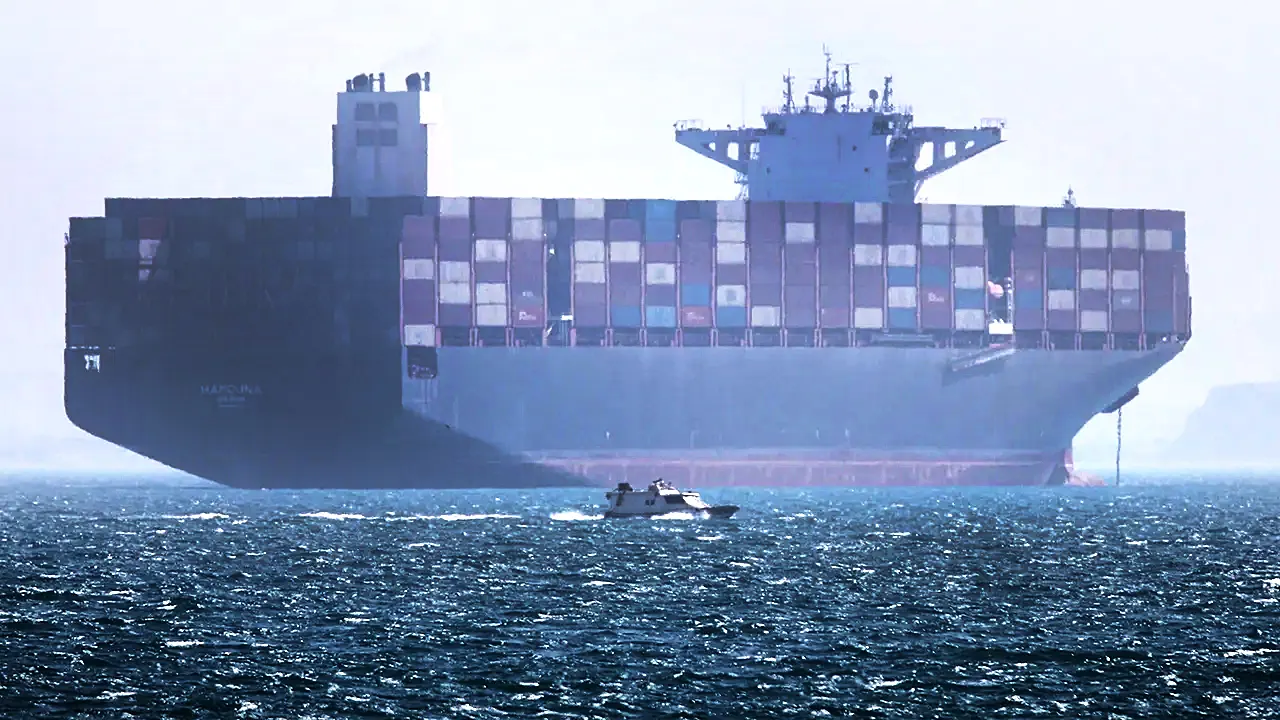
It has been more than five months since the United States and Iran first plunged into open conflict, and while the headlines have been dominated by fiery rhetoric, missile strikes, and diplomatic standoffs, the quiet crisis unfolding in the waters of the Persian Gulf is just as consequential. The Strait of Hormuz, that narrow artery between the Persian Gulf and the Gulf of Oman, is not just a strategic chokepoint on a map; it is the bloodstream of the global energy economy. Roughly two-thirds of the region’s oil and gas exports flow through its shipping lanes, and the entire world depends on those tankers moving safely on time. Yet according to the United Kingdom Maritime Trade Operations, or UKMTO, the number of ships transiting that strait has collapsed to levels that are almost unimaginable. AIS data, which tracks vessels via their Automatic Identification Systems, suggests that traffic is now roughly 90 percent below the pre-conflict baseline. There was a slight rebound in late June, but that recovery was short-lived. Projectile attacks, ongoing security fears, and a surge in enforcement activity have pushed commercial shipping operators to seek the northern route, which lies closer to Iranian-controlled waters, largely because the alternative has become too dangerous. The strait has not been closed in the formal sense, but its rhythms have been utterly transformed. We are living through a kind of slow-motion strangulation of global trade, and most people do not realize just how close to the edge we have come.
The numbers tell a stark story, but they also shift from week to week, which makes the situation feel even more volatile and unpredictable. Trade intelligence firm Kpler reported that on August 13, maritime traffic through the Strait of Hormuz picked up modestly, with 13 confirmed crossings—a 44 percent day-on-day increase from nine. But of those 13 vessels, nine used what is called the Iranian Unilateral Scheme, meaning they were traveling under Iranian routing arrangements rather than the internationally recognized Traffic Separation Scheme. Four routes remained undetermined. That kind of data suggests a fractured and opaque operating environment, where traditional shipping rules have been replaced by ad hoc arrangements and a great deal of uncertainty. John Stawpert, the marine director of the International Chamber of Shipping, offered a more grounded perspective in an interview. He acknowledged that traffic is significantly lower than it was before the war, but said it has not completely stopped. Instead, he described a cyclical process: whenever there is a ceasefire announcement, there is an uptick in vessels entering and exiting the Persian Gulf. Then, when those ceasefires break down, the traffic drops off again. It is a grim seesaw, and each cycle leaves the seafarers who crew these enormous vessels in a state of persistent anxiety. They never know whether the next voyage will be smooth sailing or whether they will find themselves caught in the crossfire of a geopolitical grudge match that has nothing to do with them. Stawpert pointed out that the threat of floating mines remains a serious concern, and that has a direct impact on how much traffic can safely enter and exit the region. You cannot just tell a captain to dodge a minefield; the entire risk calculus changes, insurance premiums soar, and many shipping companies simply decide that the financial reward is not worth the mortal hazard.
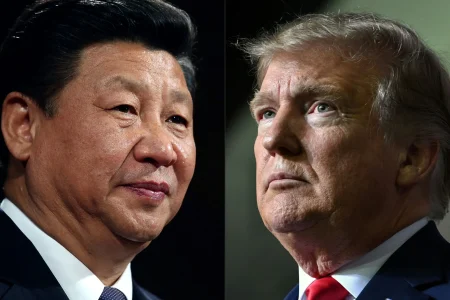
The division of control over the Strait of Hormuz has become one of the most contested questions of this conflict, and both sides make claims that sound simple but are profoundly complicated in practice. Stawpert explained that there is a northern route, which is essentially controlled by Iran, and a southern route through Omani waters, which is overseen by the U.S. Navy. So when leaders say they have “total control” of the strait, they are really talking about a partial grip on a fragmented waterway. President Donald Trump, never one for nuance, took to social media to proclaim that the United States has total control over the Strait of Hormuz and that an American naval blockade is being called “a wall of steel.” He boasted that Iran has no navy, no air force, unpaid soldiers, and a decimated Islamic Revolutionary Guard Corps. His post was full of triumphant language, painting a picture of an enemy in terminal collapse. But the Islamic Republic of Iran’s Persian Gulf Strait Authority fired back within hours, insisting that claims by U.S. officials do not change the reality: the strait remains blocked and will not reopen until Iran’s conditions are accepted. There is an almost surreal quality to this exchange, because both sides are speaking past each other. One declares victory and total domination; the other insists in the language of absolute certainty that the passage is closed and will remain closed until the other side bends to its will. Iranian Foreign Minister Seyed Abbas Araghchi posted that the U.S. has long miscalculated due to intelligence failures, calling the current situation an even bigger miscalculation than the war itself. His message ended with a religious invocation, reminding his audience that Allah is greater than any power on Earth. The newly appointed leader of the Iranian Basij paramilitary unit also entered the fray, telling Reuters that the passage is under Iran’s control and management. In this atmosphere, the truth is almost impossible to verify, because information itself has become a weapon.
Amid the bluster, there are practical realities that resist the binary narrative of open or closed. U.S. Energy Secretary Chris Wright offered a different version of events, seeking to reassure the public and the markets that oil is flowing. He claimed that the seven-day average for oil leaving the Strait of Hormuz was up to nearly 9 million barrels per day, and that when combined with additional oil leaving via upgraded pipelines and export facilities, total flows were averaging about 15 million barrels per day. On a single Sunday, he said, over 20 million barrels left the Arabian Gulf region, which he described as above the pre-conflict average. He also attributed discrepancies in private data to the fact that many ships are moving covertly through the waterway, turning off their tracking systems to avoid detection. This is a fascinating detail, because it suggests that the same AIS data used to measure the decline in traffic may not be capturing the full picture. The U.S. Department of Energy, working with the military, claims to have better monitoring capabilities than private companies. But that claim raises its own set of questions. If ships are traveling covertly, why are they doing so? Are they trying to evade American or Iranian authorities? Are they oil tankers under duress? Or are they simply trying to avoid becoming targets? The absence of transparent data means that every statistic becomes a tool of propaganda, and observers have to choose which authority they trust at their own peril. What is clear, regardless of whose numbers you believe, is that the seafarers on these ships are the ones absorbing the danger. They are not geopolitical icons or political figures; they are ordinary men and women from the Philippines, India, Indonesia, and dozens of other countries, spending months away from their families, moving crude oil and liquefied natural gas across a battlefield in giant steel boxes that are particularly vulnerable to attack.
Perhaps the most important point Stawpert made, and the one that cuts through all the rhetoric, is the human cost. He told Fox News Digital that we need to bear in mind that there are human beings on board these ships, and the risk they face is unacceptable. That is the heart of the matter. Too often, discussions about the Strait of Hormuz devolve into abstract debates about barrel counts and naval power and geopolitical dominance. But every vessel that transits those waters carries a crew of twenty, thirty, or forty people. They are the ones who have to navigate through hostile waters, unsure whether a small fast boat approaching the hull is a pirate, a terrorist, or a naval patrol. They are the ones who sleep with one eye open, listening for alarms that might signal an incoming projectile or a submerged mine scraping against the hull. They are the ones who cannot simply go home when the temperature rises, because they have signed contracts and responsibilities to their employers. And when a ship is attacked, as we have seen multiple times since the war began, it is these individuals who suffer the most. Some have been injured, some have been killed, and many more will carry the psychological trauma for the rest of their lives. Stawpert said that this is why the conflict needs to end, for those humanitarian reasons more than anything. A ceasefire that everyone actually believes in, an end to the Iranian threat, an end to the U.S. blockade, and a clear understanding of which waters are safely navigable—those are the prerequisites for returning the Strait of Hormuz to something resembling normality. But those conditions seem distant when every day brings fresh accusations, new military maneuvers, and further entrenchment on both sides.
In the end, the struggle over the Strait of Hormuz is not just a military standoff; it is a test of global resilience and human compassion. The ships that pass through that narrow waterway are carrying more than just oil; they are carrying the fuel that heats homes, powers factories, and keeps the wheels of civilization turning. When the strait is effectively shut down, the consequences ripple outward through supply chains, driving up prices for fuel, food, and virtually every manufactured good. The average person in a country thousands of miles away might not know the difference between the Iranian Unilateral Scheme and the Traffic Separation Scheme, but they will feel it at the gas pump and in the cost of groceries. In that sense, the conflict in the Persian Gulf is a shared global burden, even for those who never see a news bulletin about it. And yet, the burden falls heaviest on those who are physically present, the mariners and the people living along the coast of the Persian Gulf. They are the ones who have to adapt their daily routines to the possibility of air raid sirens and missile strikes. They are the ones who watch tankers burn on the horizon and wonder who among their friends and neighbors might be aboard. The words of President Trump and the Iranian foreign minister will be forgotten in a matter of days, replaced by the next round of accusation and counter-accusation. But the deckhands and engineers who sign on to these vessels will remember the weeks they spent in the Persian Gulf, holding their breath, praying for a safe passage. If there is any hope for a return to normal life, it will require leaders on all sides to put aside their posturing and recognize that the real measure of strength is not the ability to dominate a waterway, but the willingness to protect the human beings who depend on it. Until then, the Strait of Hormuz will remain a place of fear, a vast stretch of blue water where the fate of nations and the lives of ordinary workers hang in the same fragile balance.