


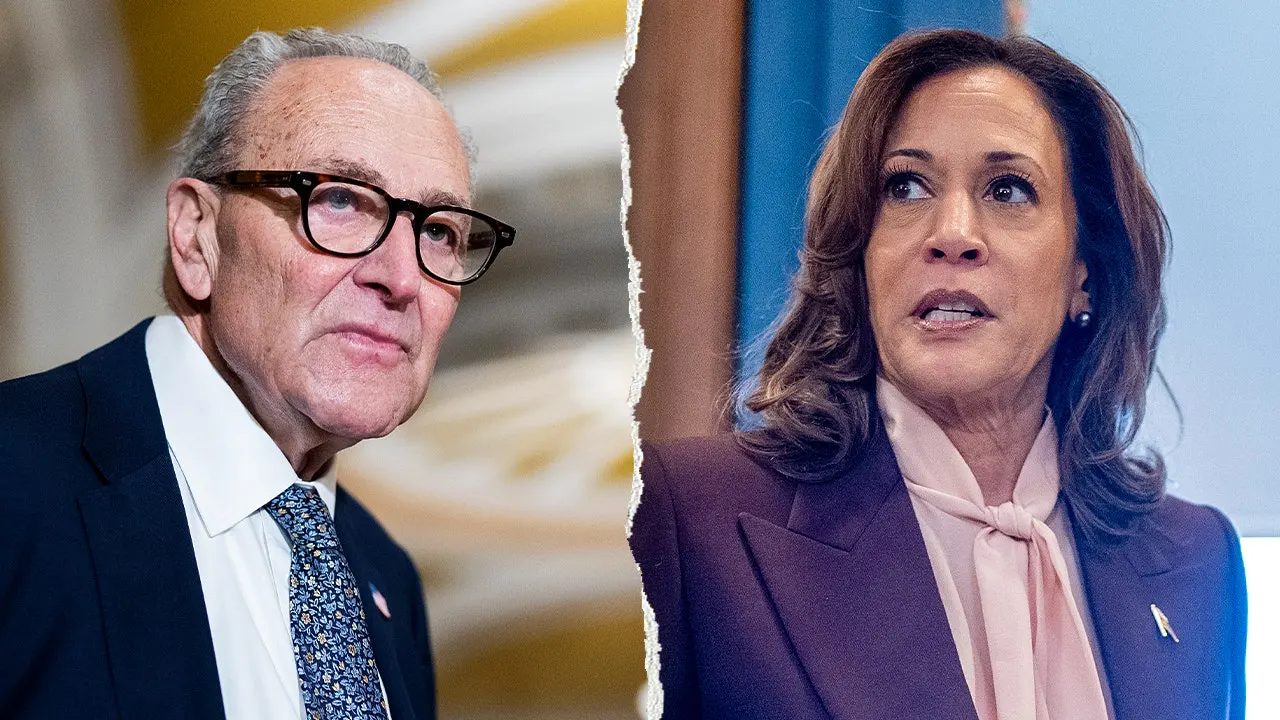
1. There is something almost unbearably human about watching a politician stand at the edge of a cliff, looking out at a future they can neither claim nor release. That is exactly where Kamala Harris finds herself these days, and she seems to know it. The former vice president stepped back onto the campaign trail last week, appearing in Detroit alongside Abdul El-Sayed, the Democratic nominee for Michigan’s Senate seat. She smiled, she rallied, she urged everyone to focus on the here and now. But the question that hangs in the air, the one that follows her from room to room like an old song she cannot stop humming, is whether she will run for president again in 2028. Harris has not said no. She has not said yes. She has said something far more human: she has not decided. And then, with the weariness of someone who has learned that tomorrow is built on today, she warned that 2028 will not matter if Democrats fail in 2026. It was a reminder, both to herself and to her party, that the future is not a promise. It is a reward for showing up when it counts. You could hear the tension in her voice, the careful balance between ambition and duty. She was not asking for permission to dream. She was asking for patience to work.
2. The Democratic senators who spoke with Fox News Digital after Harris’s return to the trail seemed to be speaking a shared, unspoken language: we love her, but we are not ready to commit. Senator Richard Blumenthal of Connecticut put it plainly. He said he had backed her before, but there would be other contenders this time, and he had made no decisions about who he would support. It was a polite way of saying that loyalty and curiosity can live in the same heart. Senator Elissa Slotkin of Michigan went further, painting a picture of a primary that would be very, very, very messy and very big. She said it would be every Tom, Dick and Harry, and that was probably where it should be. There is something refreshingly honest about that. A party that has just lost a presidential election cannot simply anoint the same candidate again and pretend the world has not changed. It needs to argue with itself, to wrestle with its own contradictions, to let the wounds heal in public. Senator Chris Coons of Delaware, a man known for his measured words, said there were a lot of people who were going to run, and the party should sort that out after the midterms. That is the voice of experience. It is also the voice of someone who knows that endorsements made too early are like promises whispered before dawn. They feel meaningful in the dark, but they often vanish by noon.
3. And who might those other contenders be? The name that keeps rising, almost like steam from a kettle, is Alexandria Ocasio-Cortez. The New York congresswoman represents the progressive wing of the party, and she describes herself as a democratic socialist. She has not announced a campaign, but she does not need to. Her presence is felt in every conversation about the future of the Democratic Party. There is also Gavin Newsom, the governor of California, who has been circling the possibility of a presidential run with the careful grace of a man who knows how to wait. But Newsom said something last month that surprised many people: he would not run if Harris entered the race. That is a rare thing in politics, a kind of deference that feels almost old-fashioned. It suggests that the relationship between Harris and Newsom, whatever its history, is not simply a rivalry. It is a recognition that two Californians cannot both claim the same lane without tripping over each other. Senator Jeanne Shaheen of New Hampshire said the party should have a lot of candidates running so there could be a very broad discussion about the future of the country. That is the optimistic view, the belief that a crowded primary is not a sign of weakness but a sign of health. It is democracy doing what democracy is supposed to do: opening doors, raising questions, demanding answers.
4. The numbers, though, tell a more complicated story. A July poll from the University of New Hampshire Granite State Poll found something that made people sit up and take notice. Among likely Democratic primary voters in New Hampshire, Ocasio-Cortez was leading the prospective 2028 field with 22 percent support. Harris registered just 5 percent. That is a stunning gap, especially for a woman who was the party’s nominee just a year before. But polls this early are not predictions. They are photographs of a moment, frozen in time, before the real campaign begins. They capture the energy of visibility, not the weight of endurance. Ocasio-Cortez has been a constant presence in the media, a voice of clarity and passion in a party that sometimes feels lost in the fog. Harris, meanwhile, has been quieter, more introspective, waiting for the right moment to speak. The poll does not mean Harris cannot recover. It means she has work to do. It means the love that Democrats feel for her in their hearts has not yet translated into the kind of excitement that fills a primary ballot. It is a reminder that affection is not the same as momentum. You can admire someone deeply and still want something different for the future. That is not betrayal. That is discernment.
5. Harris seems to understand this better than anyone. That is why she is not running toward 2028 with her arms wide open. She is running toward 2026 with her sleeves rolled up. She is trying to be the person who helps her party win back the House and the Senate, not the person who stands on a stage and demands attention. Senator Angela Alsobrooks of Maryland, who has a personal friendship with Harris, spoke with warmth and admiration. She said she loves Kamala Harris, that she is amazing and obviously very well qualified. But then she said the words that every political operative knows by heart: we need to focus on 2026. That is the discipline of a party that has learned, sometimes painfully, that elections are not just about the person at the top of the ticket. They are about the people who show up in the off-years, the volunteers who knock on doors, the donors who write checks when no one is watching. Harris’s warning that 2028 will not matter without success in 2026 is not just a slogan. It is a truth that every seasoned politician understands. A presidential campaign is built on the foundation of smaller victories. If Democrats cannot win the midterms, they will enter 2028 as a party in crisis, not as a party with options. Harris is trying to build that foundation, even if it means postponing her own dreams.
6. In the end, this is a story about a party trying to find itself. Democratic senators are not rushing to line up behind Harris, not because they do not respect her, but because they know that a primary is supposed to be a conversation, not a coronation. Senator Ed Markey of Massachusetts called it democracy at its best. Everyone who wants to run should be able to run, he said. That is the spirit of a party that believes in open doors and honest debate. The road to 2028 will be long and winding, filled with unexpected turns and surprising alliances. There will be moments of frustration and moments of hope. There will be candidates who rise and candidates who fall. But beneath all the strategy and polling and fundraising, there is something simpler and more human. There is the desire to believe that the future can be better than the present. There is the hope that the right leader will emerge, not because they are perfect, but because they are honest. Harris has not closed the door on 2028, and perhaps she never will. But she is also not pretending that the door is the only thing that matters. She is standing in the room where the work happens, doing the slow, unglamorous labor of building trust and winning elections. And that, more than any poll or endorsement, is what will ultimately decide her fate. The party is watching. The country is watching. And somewhere in the quiet space between ambition and duty, Harris is still deciding what she wants to be.