


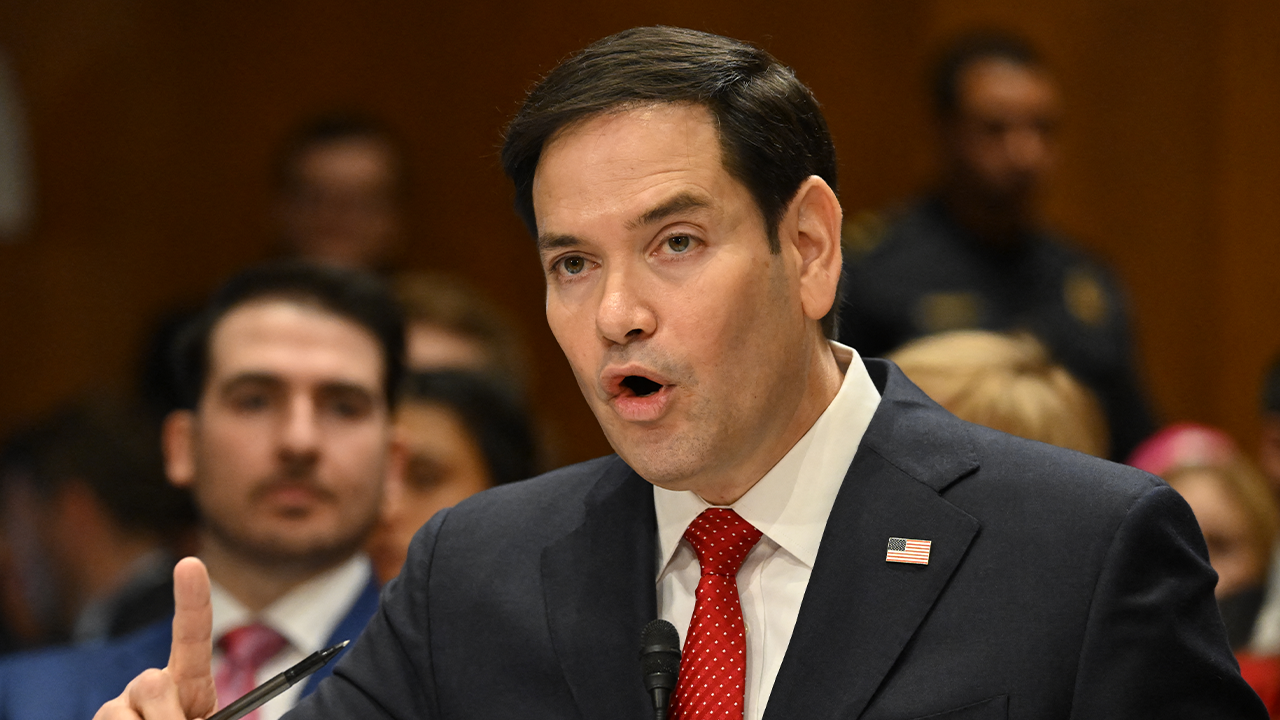
Marco Rubio’s journey from a young boy listening to his grandfather’s stories of pre-revolutionary Cuba in West Miami to standing at the podium as the Secretary of State of the United States is a testament to the enduring, deeply emotional saga of the Cuban exile experience. When Rubio stepped forward on Tuesday to announce a sweeping new round of sanctions against the Havana regime, it was more than just a routine diplomatic briefing; it was the manifestation of a lifelong crusade against authoritarianism. The announcement, which takes aim at the financial organs of the Cuban government, carries with it the heavy weight of decades of tragedy, exile, and hope that define the Cuban diaspora. Rubio’s words were sharp, calculated, and deeply personal, reflecting an administration determined to squeeze the financial lifelines of a regime that has managed to survive through decades of economic isolation and public discontent. By implementing these measures, the United States is signaling a renewed, aggressive posture towards the island, aiming to directly dismantle the intricate financial networks that keep the ruling elite in luxury while the general population struggles for basic sustenance. For the millions of Cubans living both on the island and in exile, this move represents a critical juncture in the ongoing battle for human rights and democracy, framing America’s foreign policy not merely as a set of cold, bureaucratic regulations, but as an active shelter for those yearning for self-determination. The significance of having a Secretary of State of Cuban descent lead this charge cannot be overstated; it injects a level of personal urgency and cultural understanding into Washington’s foreign policy apparatus that reshapes how the United States engages with its Caribbean neighbor, transforming cold geopolitics into a deeply human story of struggle, survival, and the relentless pursuit of freedom.
To understand the true impact of these latest sanctions, one must look closely at the shadowy, military-run conglomerate known as Grupo de Administración Empresarial S.A., or GAESA. For decades, GAESA has functioned as the ultimate financial muscle behind the Cuban regime, operating not as a legitimate business enterprise designed to uplift citizens, but as a multi-billion-dollar shield for the island’s repressive state security apparatus. In his announcement, Secretary Rubio designated five Cuban entities, pointing out that three of these are directly tethered to GAESA’s sprawling economic empire. Among these designated targets are two GAESA-linked financial institutions, which serve as the primary conduits for moving foreign currency and laundering wealth on behalf of the regime, alongside a GAESA-affiliated logistics corporation that essentially carries out the logistical whims of the repressive elite across the island. For the average Cuban citizen, GAESA represents an economic monopoly that controls everything from luxury tourist resorts and imported goods to international financial transactions, leaving local entrepreneurs and families with virtually nothing. By placing these specific financial and logistical arms on the sanctions list, the U.S. government is attempting to sever the invisible threads that allow the regime to process transactions, manage its secretive wealth portfolios, and fund the very security forces that patrol the streets of Havana to suppress peaceful dissent. This is a targeted strike designed to expose how deep GAESA’s tentacles stretch into everyday economic life and to ensure that foreign capital can no longer easily flow through these militarized channels to prop up a system of systematic domestic oppression.
Beyond the financial fortresses of GAESA, the new round of sanctions pierces deep into the natural wealth of the island, targeting two additional entities that extract revenue from Cuba’s rich metallic and mineral reserves, including the state-owned enterprise GeoMinera. Historically, natural resources are supposed to belong to the people, serving as the bedrock for public infrastructure, healthcare, and education, but in Cuba, these reserves have long been exploited by the state to feed the regime’s bank accounts at the expense of its citizens and its natural environment. GeoMinera, which oversees the extraction of precious metals and industrial minerals, acts as another critical, though less visible, source of hard currency for a government desperate to bypass traditional international trade barriers. By designating these entities, Secretary Rubio is effectively putting a global freeze on the regime’s ability to export its copper, gold, and other mineral wealth, which has frequently been used as collateral or trade chips in backchannel deals with foreign allies who are eager to exploit Cuba’s geopolitical vulnerabilities. This move directly addresses a vital component of the regime’s survival strategy: the extraction of the island’s physical sovereignty to pay for the tools of domestic repression. The human cost of this exploitation is felt deeply by Cuban miners and laborers who work under perilous conditions for meager, government-set wages, while the profits from their labor are funneled directly into maintaining the lavish lifestyles of the ruling class and sustaining the police state, making the disruption of GeoMinera’s operations a vital step in cutting off the regime’s alternative revenue streams.
The most symbolically potent and deeply personal aspect of this latest diplomatic salvo is the direct targeting of the extended Castro family, specifically through the designation of the wife of Alejandro Castro Espín. Alejandro Castro Espín, a powerful figure within the Cuban intelligence and military apparatus who had already been designated under previous sanctions, represents the dynastic continuity of the regime’s iron-fisted rule. By extending these sanctions to his wife, the United States is sending an unequivocal message that the privileges of the ruling elite’s inner circle are no longer safe from international scrutiny and consequence. In authoritarian regimes, family members are frequently used as financial proxies, holding offshore bank accounts, managing foreign assets, and enjoying luxurious lifestyles abroad that are completely divorced from the daily hardships of the citizens they govern. Sanctioning the spouses and close relatives of these high-ranking officials serves a dual purpose: first, it actively disrupts the familial networks used to hide stolen national wealth, and second, it cracks the facade of invincibility that has long protected the Castro dynasty. Humanizing this aspect of the policy means acknowledging the profound inequality in Cuba, where the children and spouses of the revolutionary elite vacation in European capitals and shop at exclusive boutiques while ordinary Cuban families stand in line for hours just to secure a single carton of eggs or a bottle of cooking oil. This designation pierces the veil of the regime’s top leadership, reminding them that their complicity in the suffering of their people carries a steep personal cost that will isolate them not only politically, but socially and financially on the global stage.
The legal architecture enabling this aggressive action is rooted in President Donald J. Trump’s Executive Order (E.O.) 14404, issued on May 1, 2026, which is formally titled “Imposing Sanctions on Those Responsible for Repression in Cuba and for Threats to United States National Security and Foreign Policy.” This executive order represents a major shift in the geopolitical strategy of the United States, moving away from broad, indiscriminate economic embargoes that could inadvertently harm the general public, and instead utilizing highly localized, surgical financial-sanctions instruments. Executive Order 14404 provides the Treasury and State Departments with the flexible, robust authority needed to identify and isolate specific bad actors, military conglomerates, and corrupt individuals who are directly complicit in domestic human rights abuses. This policy framework acknowledges that the Cuban regime’s survival is not just a localized tragedy, but a direct threat to the wider security of the Western Hemisphere, particularly as Cuba continues to export its repressive methodologies, security advisors, and intelligence networks to destabilize neighboring democracies in Latin America. By linking these sanctions to the specific date of May 1, 2026, the administration underscores a newly hardened, long-term commitment to hold the Cuban government accountable for its actions in real-time, demonstrating that the United States is actively monitoring developments on the ground and will swiftly adjust its economic levers to counter threats to regional stability and reinforce its commitment to human liberty.
Ultimately, the true value of these high-level political maneuvers is measured by their impact on the ground, in the humble homes and bustling streets of cities like Havana, Santiago, and Camagüey. The primary objective of Secretary Rubio’s new measures is not to inflict additional suffering on an already exhausted Cuban population, but to dry up the resources that are weaponized against them by their own government. Every dollar that is denied to GAESA, every metallic export blocked from GeoMinera, and every asset frozen from the Castro dynasty acts as one less resource available to buy tear gas, fund surveillance state infrastructure, or pay the salaries of the secret police who stifle protests. For the courageous activists, independent journalists, and everyday citizens who risk their lives daily to speak out against the regime, these sanctions offer a powerful glimmer of hope, proving that their struggles are seen, heard, and validated by the international community. As the geopolitical landscape of the Americas continues to shift, these decisive actions by the United States reassert its role as a beacon of democratic values and human rights, challenging the narrative of inevitability that the Cuban dictatorship has long projected. The roadmap forward remains fraught with challenges, but by systematically dismantling the financial networks of its oppressors, the United States is paving a realistic, human-centric path toward a future where the Cuban people can finally reclaim their sovereignty, rebuild their nation, and live in the dignity and freedom they have so long been denied.