

For decades, the standard response of any self-respecting news organization facing a crisis of public confidence was to invite its worst critics deep inside the castle walls. This was the era of the news ombudsman—the “public editor”—a highly respected, fiercely independent internal critic whose sole job was to investigate their own employer’s journalistic failures and air the dirty laundry in broad daylight. This tradition was built on a simple, counterintuitive truth: that the only way to retain public trust was to show a willingness to be publicly humiliated by one’s own standards editor. Yet, when CBS News appointed Kenneth R. Weinstein to a similar role last year under pressure from federal regulators, the network quietly flipped this historic script on its head. Instead of a bold champion for the audience’s concerns, CBS created a silent, internal-only advisor designed to whisper criticisms to executives rather than speak truth to the public. As CBS News find itself fractured by intense internal civil wars, leadership shakeups, and allegations of editorial meddling, this new model of accountability is facing fierce condemnation. Media analysts and ethicists warn that Paramount, CBS’s parent company, has engineered a safe, corporate illusion of oversight—a watchdog that has been systematically stripped of its ability to bark.
The human cost of this silence is felt deeply by the journalists working within CBS News, who have increasingly found themselves navigating a turbulent newsroom without an independent referee. Since taking up the position nine months ago, Weinstein has not issued a single public statement, nor has he sent any staff-wide guidance, emails, or memos to address the mounting controversies engulfing the network. Former NPR ombudsman Jeffrey Dvorkin, who literally wrote the handbook on media standards, points out that an ombudsman’s primary duty is to stand as an visible bridge between the cloistered elite of the newsroom and the everyday citizens who consume their work. To relegate this role to a private executive consultancy is to completely miss the point of public accountability. Under the current structure, when viewers flag potential bias, their concerns do not lead to public correction or educational columns; instead, Weinstein quietly forwards his findings to Paramount’s executive suite, leaving it entirely up to corporate leaders to decide whether the newsroom should ever hear about them. This insulated pipeline turns a sacred journalistic check-and-balance into a shielded corporate compliance department.
This lack of public dialogue has become particularly painful as CBS News experiences a brutal internal existential crisis. The tension peaked with the arrival of Bari Weiss, the network’s controversial new editor-in-chief, who stands accused of injecting aggressive political bias into the network’s most sacred institution, “60 Minutes.” The ensuing locker-room warfare resulted in the firing of three highly respected, veteran correspondents who dared to challenge Weiss’s editorial direction, leaving the remaining staff traumatized, paranoid, and disillusioned. Word from inside the network is that the remaining correspondents only opted to stay out of a desperate, protective love for the legendary program, fearing that their departure would signal the final death knell for “60 Minutes.” Throughout this unprecedented purge of journalistic talent and integrity, Weinstein’s silence has been deafening. When major voices like CNN’s Brian Stelter and media ethicist Eric Deggans publicly wondered if the newly minted CBS ombudsman would finally speak up on these internal executionings, they were met with nothing but an empty airwave, illustrating just how powerless—or indifferent—this new brand of corporate protector truly is.
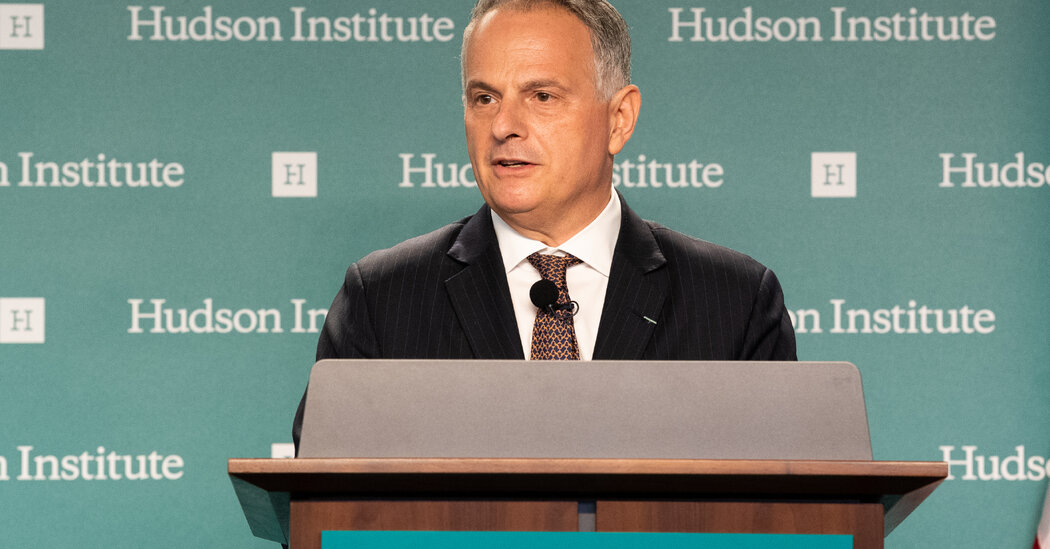
To understand how CBS arrived at this toothless compromise, one must look at the highly politicized bureaucratic maneuvers that birthed the role in the first place. The position was not created out of a sudden burst of ethical soul-searching by CBS executives, but rather as a shotgun wedding mandated by the Federal Communications Commission (FCC) during its review of Skydance’s acquisition of Paramount. FCC Chairman Brendan Carr, a conservative regulator, had been waging a highly public investigation into a “60 Minutes” interview with Vice President Kamala Harris, which critics accused of being deceptively edited to favor the politician. To push the massive corporate merger through, Paramount agreed to employ a dedicated ombudsman for two years to evaluate claims of bias. Yet the selection of Weinstein—a veteran of the right-leaning Hudson Institute who had no prior experience in investigative newsrooms, but did have cozy political ties to Paramount’s incoming leadership—signaled from the start that the position was designed to appease political regulators rather than champion journalistic ethics. This political transaction has laid bare a depressing modern reality: that regulatory efforts to enforce media transparency often result in performative, toothless offices that protect corporate transactions while doing nothing to shield everyday journalists from editorial interference.
This retreat from external accountability at CBS is part of a much larger, self-inflicted wound across the American media landscape. Over the last two decades, major pillars of journalism—including The New York Times, The Washington Post, The Boston Globe, and ESPN—have systematically dismantled their public editor positions. Many executives argued that in an era of instantaneous social media feedback, a dedicated ombudsman was a redundant, expensive relic of a bygone age. They claimed that the public could now act as their own collective ombudsman via Twitter and online comments. However, as the ecosystem has grown more polarized and hostile, the loss of these objective, dedicated internal self-critics has left newsrooms increasingly vulnerable to bad-faith political campaigns and corporate overreach. Without an institutional figure whose sole job is to defend the audience and hold editors accountable, news organizations have turned inward, treating public criticism as a hostile public relations threat to be managed by lawyers and spokespeople rather than an opportunity for honest, humbling self-reflection. Today, NPR and PBS stand as the lonely survivors of a dying breed, maintaining full-time public editors who still possess the courage to openly take their own employers to task.
The ultimate tragedy of the silent watchdog is the slow, agonizing erosion of trust that it leaves in its wake. When citizens find themselves bewildered by complex, high-stakes reporting—such as the network’s deeply controversial coverage of the devastating war in Gaza—they are invited to submit their grievances through an anonymous online portal, trusting that someone is listening. Yet, when powerful public figures like Democratic Representative Jamie Raskin demand transparency regarding edited interviews with figures like Donald Trump, they are met not with an objective ethical evaluation from Weinstein, but with defensive, highly polished letters from Paramount’s general counsel. Even FCC Chairman Brendan Carr, who originally championed the role as a beacon of accountability, recently shrugged off the silencing of the “60 Minutes” correspondents, indicating that he saw no reason for the ombudsman to venture into these internal disputes. In an era where trust in the free press has plummeted to historic lows, the decision to muzzle the very guides meant to restore that faith is a dangerous gamble. When the public realizes that the watchdogs hired to protect them are only permitted to speak in whispers behind closed boardroom doors, the fragile bond between the newsroom and the community it serves is broken, perhaps forever.