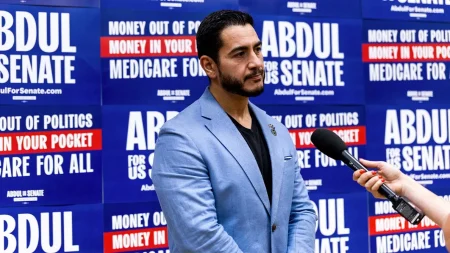





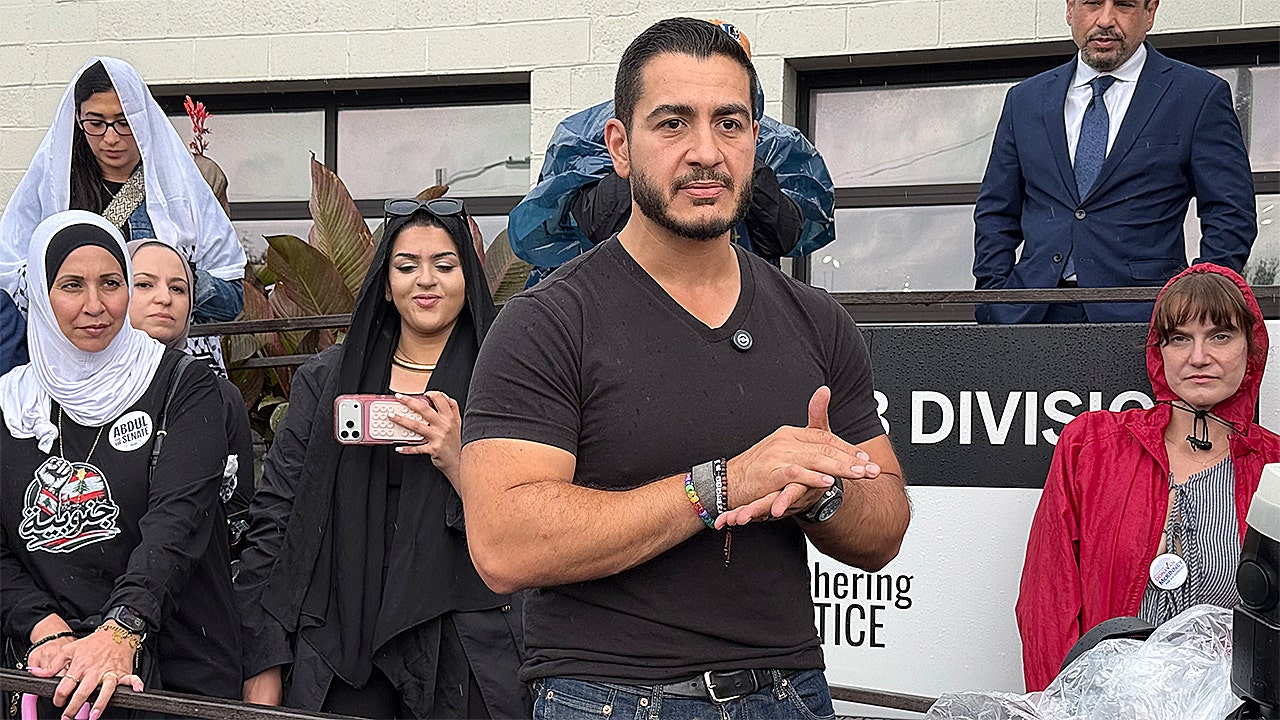
The shifting tides of American political campaigns often bring long-forgotten policy proposals back into the harsh glare of the public spotlight, serving as a reminder of how deeply personal ideologies can intersect with the complex machinery of governance. Such is the case for Abdul El-Sayed, a prominent Democratic figure in Michigan whose previous bid for the governor’s mansion in 2018 has resurfaced in the context of his current aspirations to serve in the United States Senate. At the heart of this renewed scrutiny is a passionate argument El-Sayed made six years ago, asserting that undocumented immigrants residing in Michigan should be granted the legal right to obtain state driver’s licenses. For El-Sayed, denying these individuals a basic license was not merely a bureaucratic detail, but a form of systemic discrimination that actively paralyzed families and prevented them from participating in the basic rhythms of daily life. Today, as he seeks a seat in one of the world’s most powerful legislative bodies, this archival position has re-emerged as a flashpoint, highlighting a profound ideological divide over how local and state governments should treat those who have crossed borders without legal authorization, and whether providing state-sanctioned identification represents a compassionate necessity or an unauthorized legitimization of illegal immigration.
To fully comprehend El-Sayed’s perspective in 2018, one must understand the daily lived reality of undocumented immigrants in a state like Michigan, where sprawling suburbs, industrial hubs, and vast agricultural landscapes make personal transportation an absolute necessity rather than a luxury. In his campaign interviews from that era, El-Sayed spoke of these residents not as abstract statistics, but as neighbors who were fundamentally “stuck” due to their lack of legal identification. Without a driver’s license, a simple task like driving a sick child to the doctor, commuting to a job to put food on the table, or buying groceries becomes an exercise in intense anxiety, carrying the constant threat of arrest, vehicle impoundment, or even deportation. El-Sayed argued that by withholding these basic documents, the state was creating an artificial underclass and perpetuating a system of discrimination based strictly on documentation status. His vision was rooted in a belief that everyone residing within a community contributes to its social and economic fabric, and therefore deserves access to the basic tools of survival and mobility that the state is uniquely equipped to provide.
However, this compassionate lens is met with fierce resistance from critics and policy experts who view the issuance of state driver’s licenses to undocumented immigrants as a dangerous erosion of federal immigration law. Hans von Spakovsky, an elections and legal expert with Advancing American Freedom, argues that in the United States, a driver’s license is far more than a simple permit to operate a motor vehicle; in the absence of a centralized, European-style national identity card, the state-issued driver’s license serves as the de facto master key to American society. Von Spakovsky points out that a license acts as a vital gateway, enabling individuals to open bank accounts, secure housing leases, board domestic flights, and navigate countless daily transactions that require official verification. Furthermore, when it comes to securing employment, the federal I-9 verification process relies heavily on state-issued photo identification to establish identity, meaning that a driver’s license can inadvertently facilitate unauthorized employment, thereby undercutting the very legal frameworks designed to regulate the national labor market.
This debate exposes a fundamental disagreement over the ultimate objective of local immigration policy: integration versus deterrence. From the conservative viewpoint championed by figures like von Spakovsky, the most logical and humane way to address illegal immigration is to encourage “self-deportation” by making it systematically difficult for undocumented individuals to live and work in the country. By ensuring that those without legal status cannot rent apartments, open bank accounts, or legally drive, the state creates an environment where remaining in the United States becomes untenable, prompting individuals to return to their home countries voluntarily. From this perspective, providing driver’s licenses is a massive counterproductive step that effectively rewards unlawful entry, dilutes the value of legal citizenship, and signals tacit government approval of an individual’s unauthorized presence. To critics, El-Sayed’s proposal is not a cure for discrimination, but an erosion of the rule of law that places the interests of non-citizens ahead of legal residents and taxpayers.
El-Sayed’s stance on driver’s licenses is not an isolated policy opinion, but rather a reflection of his broader, government-first political philosophy, which seeks to redefine the relationship between the state and the individual. While he has historically eschewed polarizing labels such as “progressive” or “far-left,” his platform consistently champions robust public systems designed to level the socio-economic playing field for all residents. He has been a vocal advocate for ambitious reforms such as Medicare for All, the elimination of corporate tax loopholes, and tuition-free higher education, viewing these initiatives as essential pillars of a moral society. In El-Sayed’s view, the government should not act as a passive bystander or a mere enforcer of rules, but as an active partner in guaranteeing the basic necessities of life, ensuring that every person—regardless of their background, wealth, or documentation status—has an equal opportunity to thrive. This philosophy aligns him with a growing wing of the Democratic Party that believes the future of American politics lies in expanding, rather than restricting, the reach and generosity of public services.
As the primary election approaches and El-Sayed prepares to face off against Representative Haley Stevens, the debate over his past remarks underscores the delicate political tightrope that modern Democratic candidates must walk. When questioned recently about his 2018 comments and whether his campaign still advocates for granting state licenses to undocumented immigrants, his campaign representatives chose not to provide an immediate comment, illustrating the sensitive nature of the topic in a battleground state like Michigan. This silence speaks volumes about the current political climate, where immigration remains one of the most polarizing and emotionally charged issues on the national stage. As voters head to the polls to decide who will represent them in the general election, they are faced with a choice that extends far beyond the candidates themselves; they are deciding between two vastly different visions of America—one that seeks security through strict adherence to legal boundaries and systemic deterrence, and another that seeks progress through inclusion, collective investment, and a deeply humanized approach to community-building.